

Indiangrass
Table of Contents
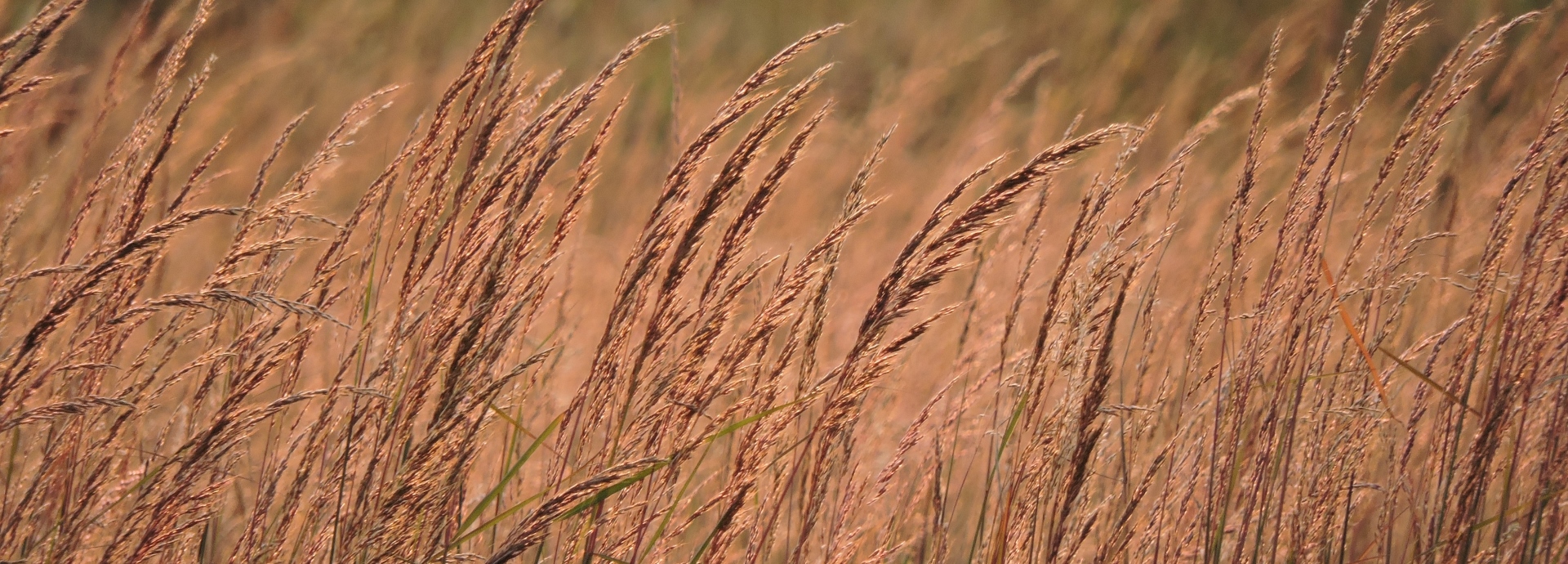
Sorghastrum nutans (L.) Nash
Alternate Common Name: yellow Indiangrass
Scientific Synonyms: Andropogon nutans L., Sorghastrum avenaceum (Michx.) Nash
Family: grass family (Poaceae)
Functional Group: warm season grass
Description
- Life cycle and growth form
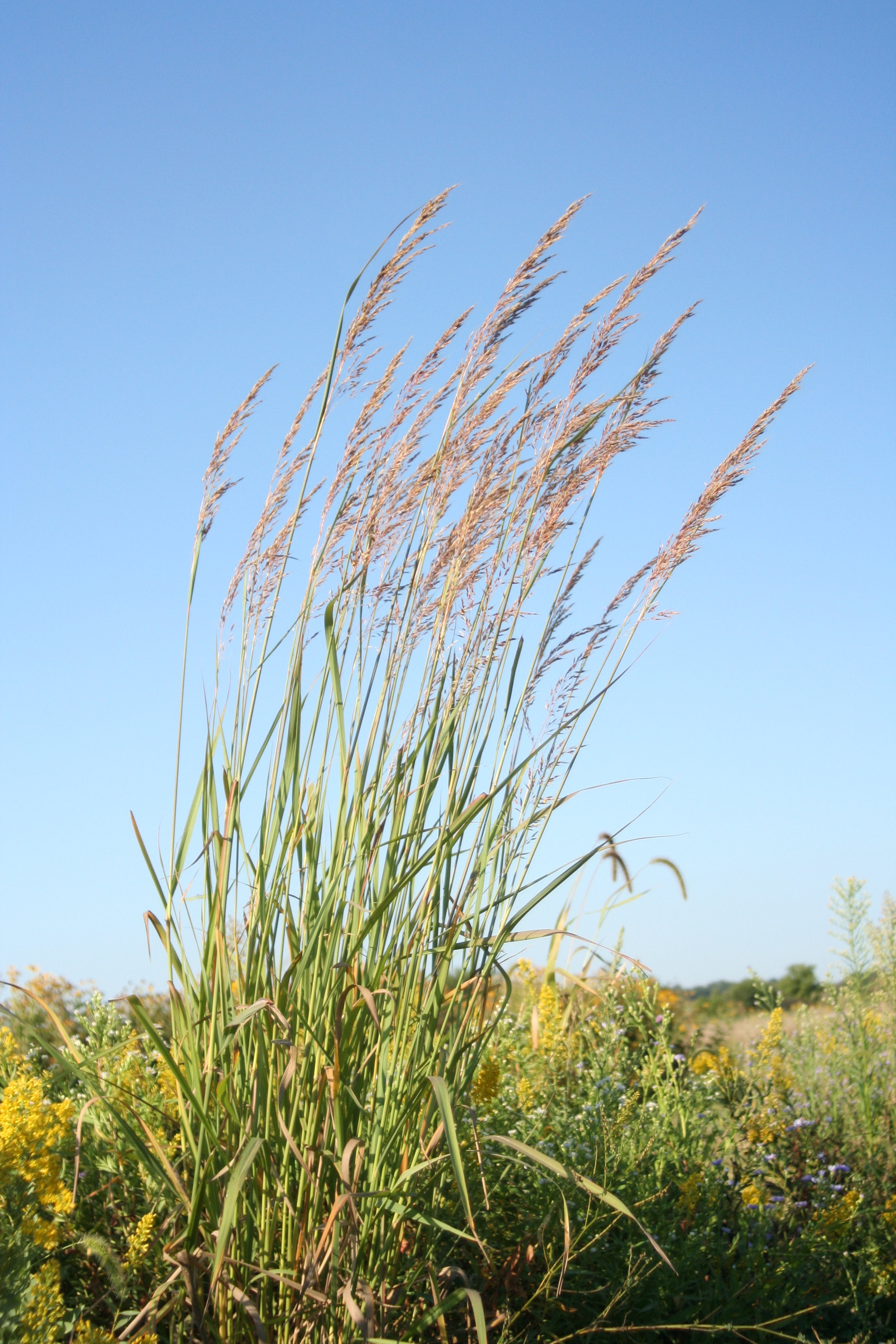
Perennial warm-season bunchgrass with short, scaly rhizomes.
Height: 3-7 ft
- Leaves and stem
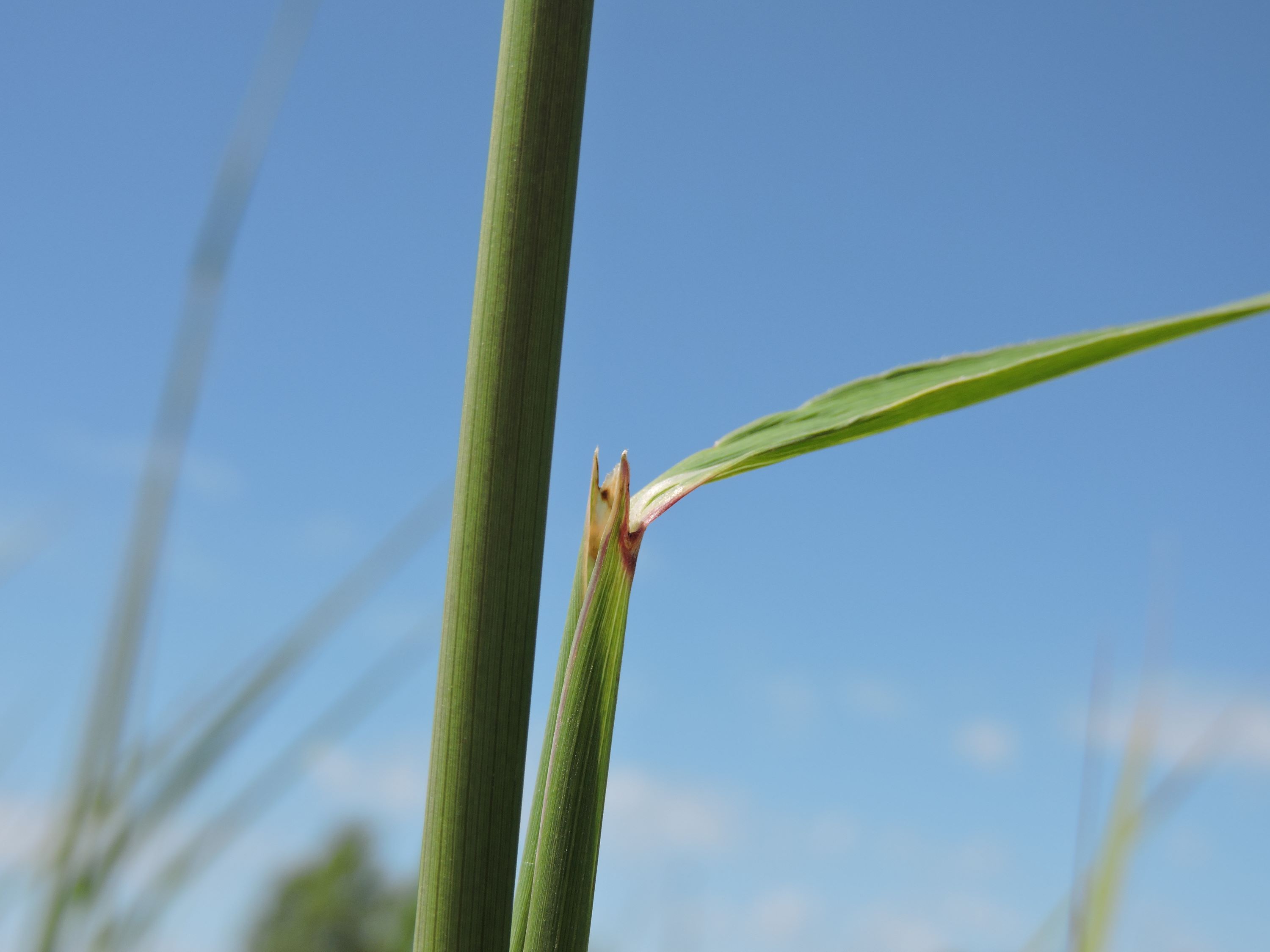
Leaf blades up to 12 in long, constricted at the base, then widening to about 3/8 in, and tapered to a point, whitish midrib prominent near the leaf base; ligule with prominent pointed leaflike projections on either side which are sometimes referred to as the ‘mule-ears’, ‘boot straps’, or ‘gun-sight’ character of Indiangrass; stem is erect, hairless, and hollow.
- Flower, fruit and seedhead
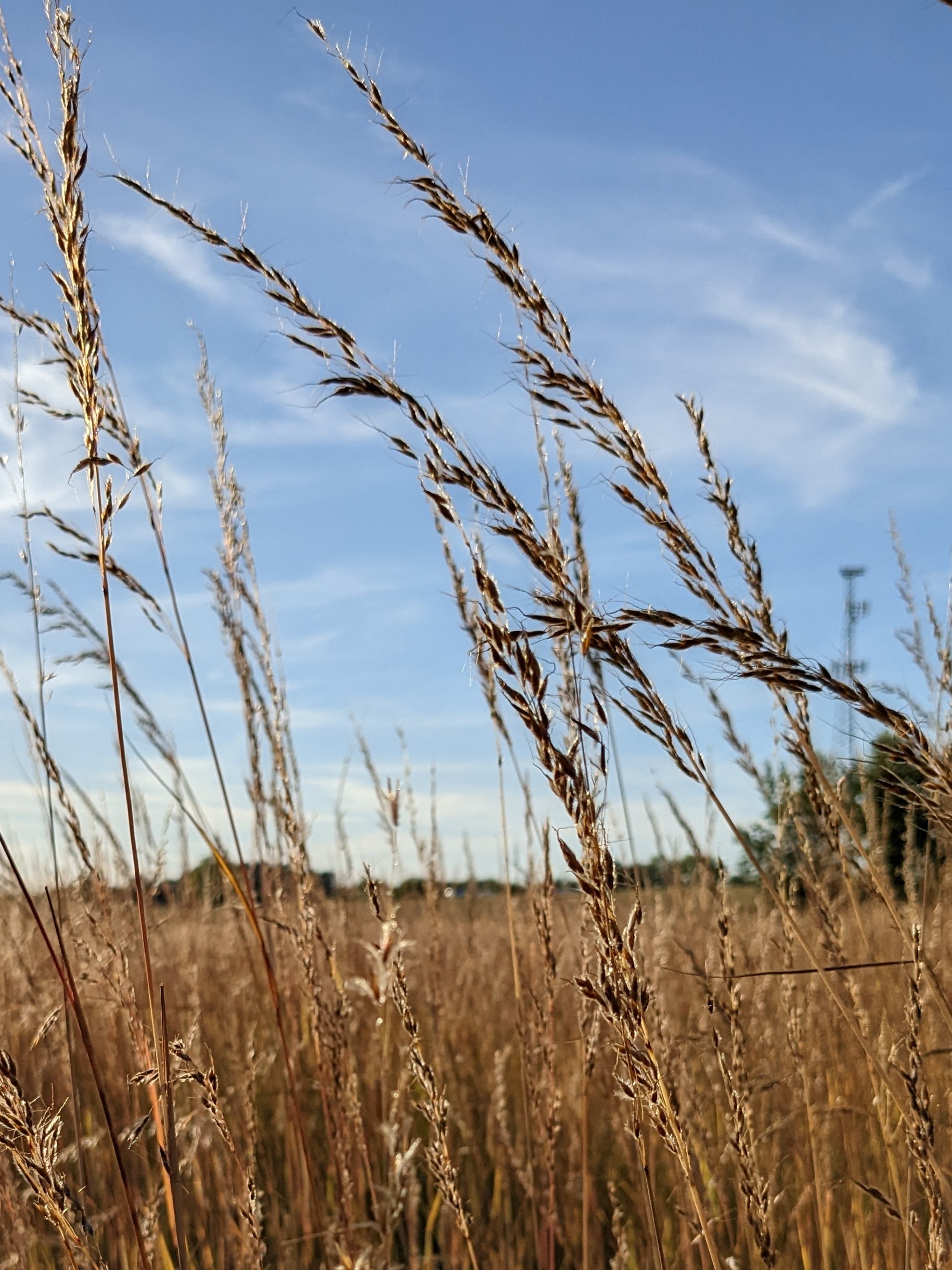
Fruit/seedhead: Seedhead is a dense, golden-brown, plume-like panicle up to 1 ft long. Entire spikelets fall off when mature, leaving a bare stalk.
Pollination: wind
- Seed
Seed characteristics
Seed weight:
Seeds per ounce: 12,000 (IA NRCS)
1000 seed weight: 2.03 g (Seed Information Database)
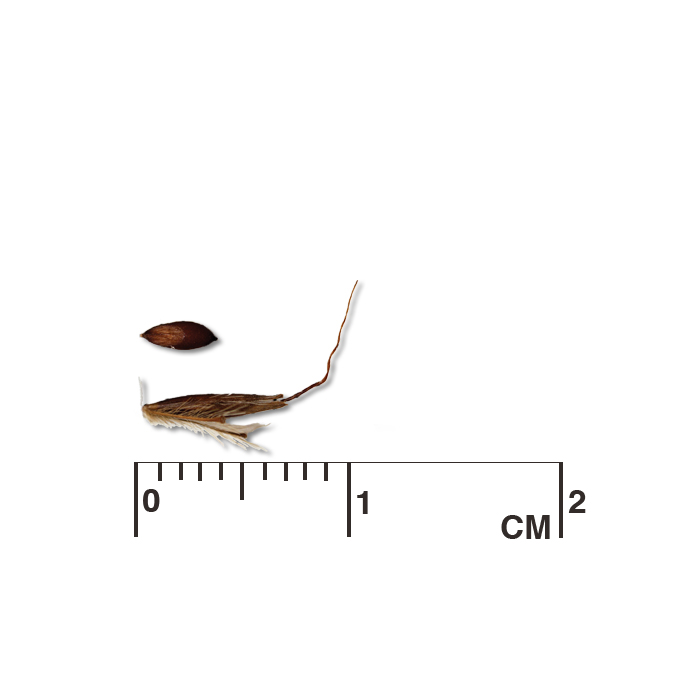
Description: Seed unit is a fertile spikelet with a bent, twisted awn, about 1/2 in long, attached stalks (rachis and pedicel), hairy prior to debearding or brushing. Caryopsis smooth, brown, thickened, about 3-5 mm long.
Typical seed test
PLS: 87%
Purity: 92%
Germination: 22%
Dormant: 74%
(averages obtained from 12 tests of purchased seed lots)
- Habitat and range
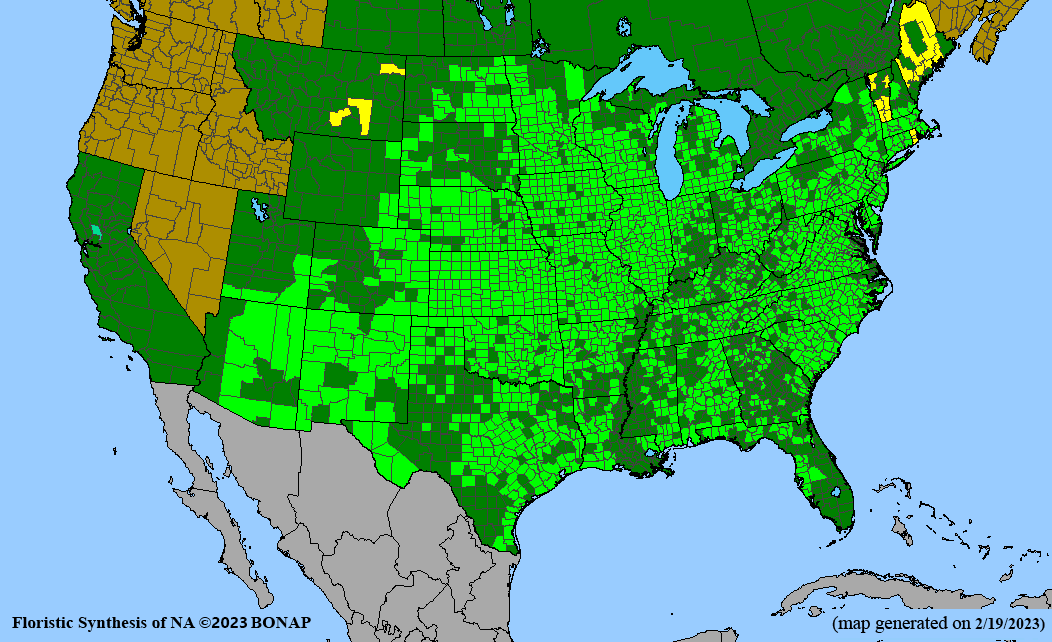
Habitat: Dry-mesic to wet-mesic soil; full sun; prairies, grassy fens, scrubby barrens, savannas, roadsides, along railroads; Wetland Indicator Status is Facultative Upland (FACU) for the Midwest; deep, moist, well-drained soils preferred for seed production.
Conservation status: Global- G5, secure; Maine, Rhode Island, and Utah- S1, critically imperiled; Wyoming- S2, imperiled; Vermont- S3, vulnerable (NatureServe)
General Comments
Indiangrass is a dominant component of the tallgrass prairie ecosystem. This species generally establishes readily from seed, if good seed bed preparation and good weed control are achieved (i.e. following a glyphosate-resistant crop, for example). Two to three years are needed to develop a productive stand by direct seeding.
Recommendations for Seed Production
- Establishment for seed production
Direct seeding
Row spacing: 36 in 24 in 12 in Solid Stand PLS lbs/acre: 3.3 5.0 10 10-12 Seeding depth: 1/4-1/2 in
Seeding method: native seed drill
Seeding time: late spring to early summer.
Weed control: Prepare clean, very firm, weed free seedbed prior to seeding.
Greenhouse
Seed pre-treatment: No stratification necessary. Germination of grass seed usually improves with proper storage (cool, dry conditions) throughout the first year after harvest.
Sowing: Sow seed in greenhouse two months before last frost free date at 1/4 in depth.
Transplanting: Transplant after all danger of frost.
- Stand management
Weeds: Mow stands high (6–12 in) first growing season to prevent weed canopy from shading seedlings. Established stands – Plateau (imazepic) for grass and broadleaf control, Atrazine for grass control. Always read and follow label instructions.
Pests: None noted.
Diseases: None noted.
- Seed production
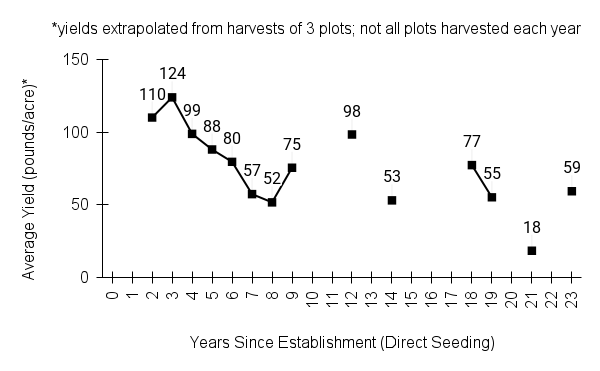 First harvest: Flowering and seed set at end of second growing season from direct seeding, three years for stand to fill out.
Yield: 50-130 bulk pounds/acre (yields extrapolated from harvest records of three plots, not all of which were harvested every year)
Stand life: Peak harvests occur in the third year and after. If seed yields decline, stands can be chiselled to reinvigorate. Annual late spring fire helps control weeds and increase flowering and seed production. Fertilizer application may also improve seed yield. (Note: These recommendations are strictly for production fields, NOT REMNANT PRAIRIES). Productive stand life is 10-20 years.
Flowering date: Mid-August to mid-September.
Seed maturity/Harvest date: Late September to early October.
Seed retention: Shattering occurs soon after maturity. Very susceptible to seed shattering from wind. A single, windy afternoon when seed is mature and dry can take most of the crop. Monitor fields frequently. As seedheads near maturity, the awns and hairs fluff out. When this begins to happen, check for shattering and observe the stage of development of the grains.
Harvest date range at TPC (2003-2022): Sept 23 - Oct 21
Recommended harvest method: Seed stripper or combine at medium to hard dough stage.
- Seed cleaning and storage
Cleaning process: Air-dry material, remove awns with a debearder or brush machine, then air-screen. Protect eyes, airways, and skin from the irritating hairs released during harvest and cleaning processes.
Seed storage: cool/dry (33-50° F, 30-50% RH)
Released Germplasm
Source Identified material: Natural Selections/Iowa Ecotype Project: Zone 1 (northern Iowa), Zone 2 (central Iowa), and Zone 3 (southern Iowa)
NRCS releases: Coastal Germplasm, Newberry Germplasm, Northern Missouri Germplasm, Southlow Michigan Germplasm, Suther Germplasm, Western Missouri Germplasm
Selected germplasm: Prairie View Indiana Germplasm (IN), Wynia Germplasm (AR, OK)
Informal: Cheyenne (OK)
Cultivated varieties (cultivars): Americus (AL, GA), Llano (NM), Lometa (TX), Osage (KS, OK), Rumsey (IL), Tomahawk (ND, SD); Horticultural varieties may also exist
- References
Chayka, K. (n.d.). Sorghastrum nutans (Indian grass). Minnesota Wildflowers. https://www.minnesotawildflowers.info/grass-sedge-rush/indian-grass
Hilty, J. (2019). Indian grass - Sorghastrum nutans. Illinois Wildflowers. https://www.illinoiswildflowers.info/grasses/plants/ind_grass.htm
Houseal, G. A. (2007). Grasses warm season. In G. A. Houseal (Eds.), Tallgrass Prairie Center’s native seed production manual (pp. 74–75). Tallgrass Prairie Center - University of Northern Iowa.
Kartesz, J.T., The Biota of North America Program (BONAP). 2023. North American Plant Atlas. (http://bonap.net/napa). Chapel Hill, N.C. [maps generated from Kartesz, J.T. 2023. Floristic Synthesis of North America, Version 1.0. Biota of North America Program (BONAP). (in press)]
NatureServe. 2024. NatureServe Network Biodiversity Location Data accessed through NatureServe Explorer [web application]. NatureServe, Arlington, Virginia. Available https://explorer.natureserve.org/. (Accessed: February 29, 2024).
USDA NRCS National Plant Data Team. (n.d.). Sorghastrum nutans (L.) Nash. USDA plants database. https://plants.usda.gov/home/plantProfile?symbol=SONU2
Species Guide Updated 12/11/2025