

pinnate prairie coneflower
Table of Contents
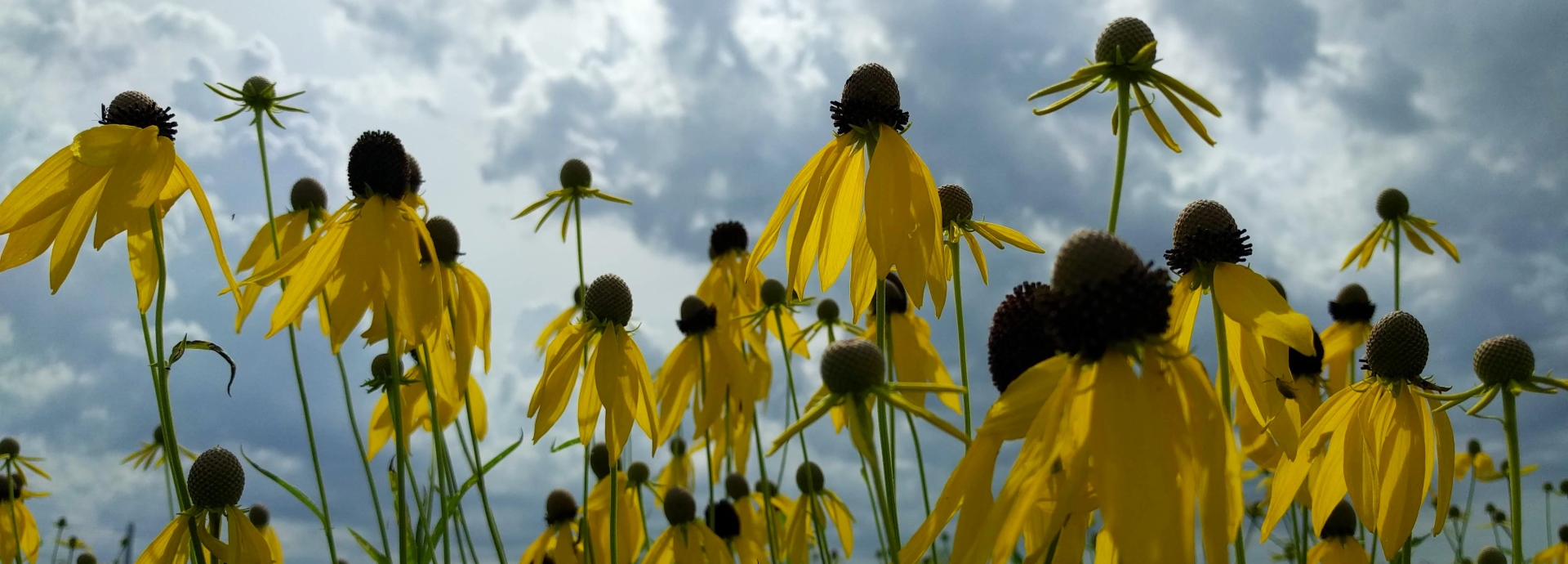
Ratibida pinnata (Vent.) Barnhart
Alternate Common Names: gray-headed coneflower, yellow coneflower, globular coneflower, drooping coneflower, gray coneflower, prairie coneflower, weary susan, grayhead coneflower, drooping yellow coneflower
Scientific Synonyms: Lepachys pinnata (Vent.) Torr. & A. Gray, Rudbeckia pinnata Vent.
Family: aster family (Asteraceae)
Functional Group: forbs (wildflowers)
Description
- Life cycle and growth form
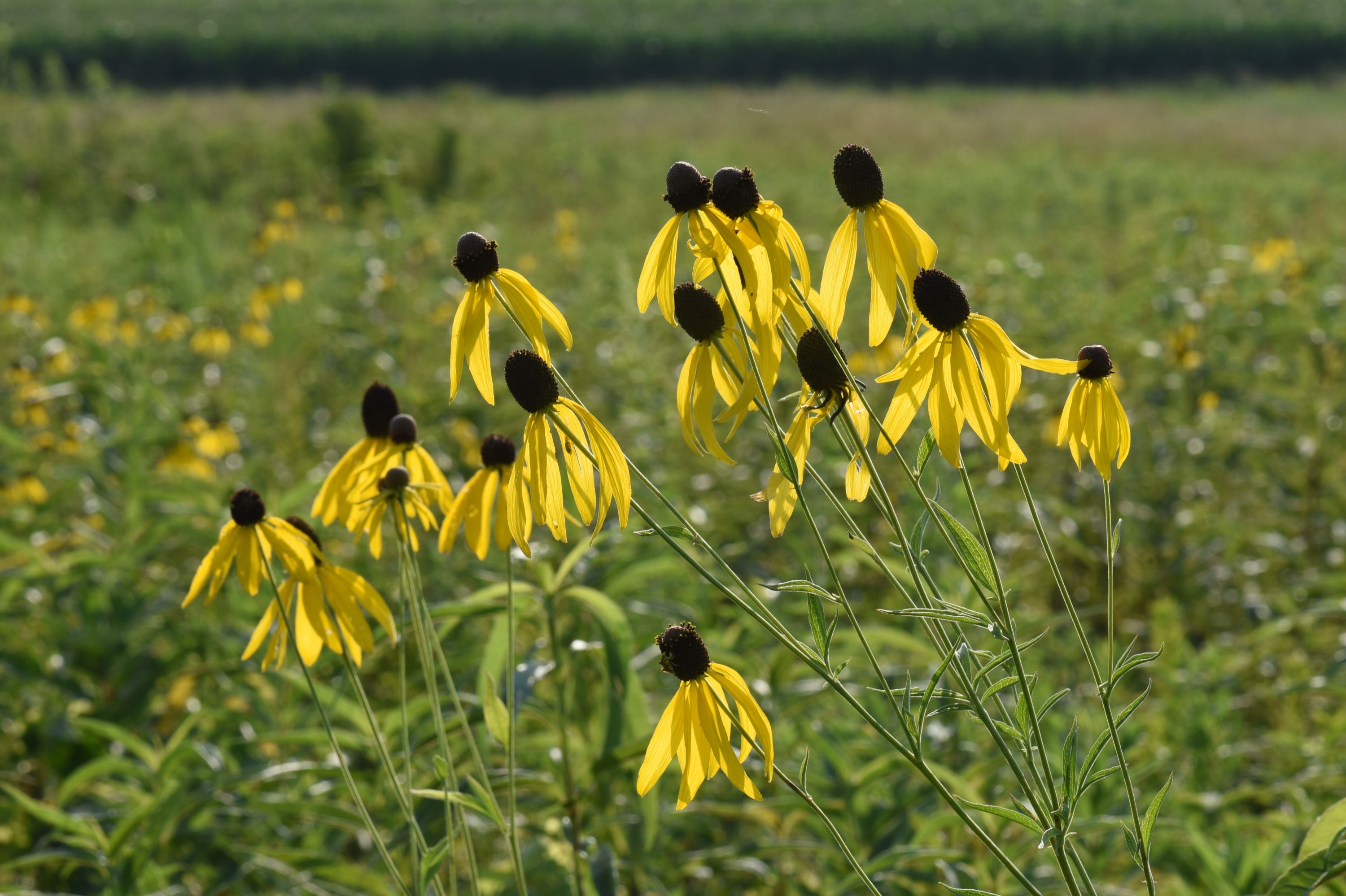
Perennial that forms tight clumps or colonies.
Height: 3-7 ft
- Leaves and stem
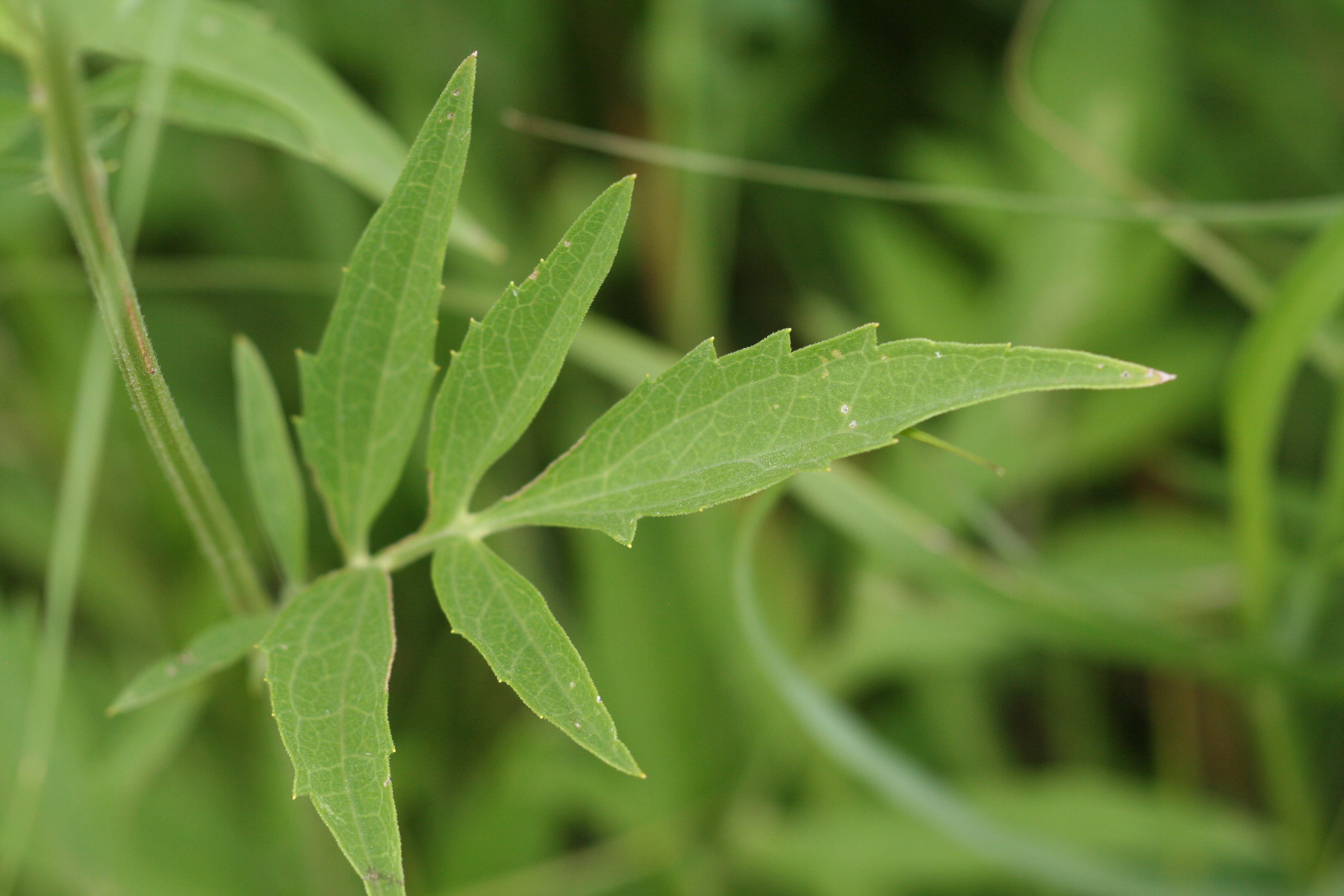
Leaves are alternate, irregular in shape and pinnately divided into 3-7 lobes, with short, rough hairs; stems are long, stiff, and slender, unbranched except near the top.
- Flower, fruit and seedhead
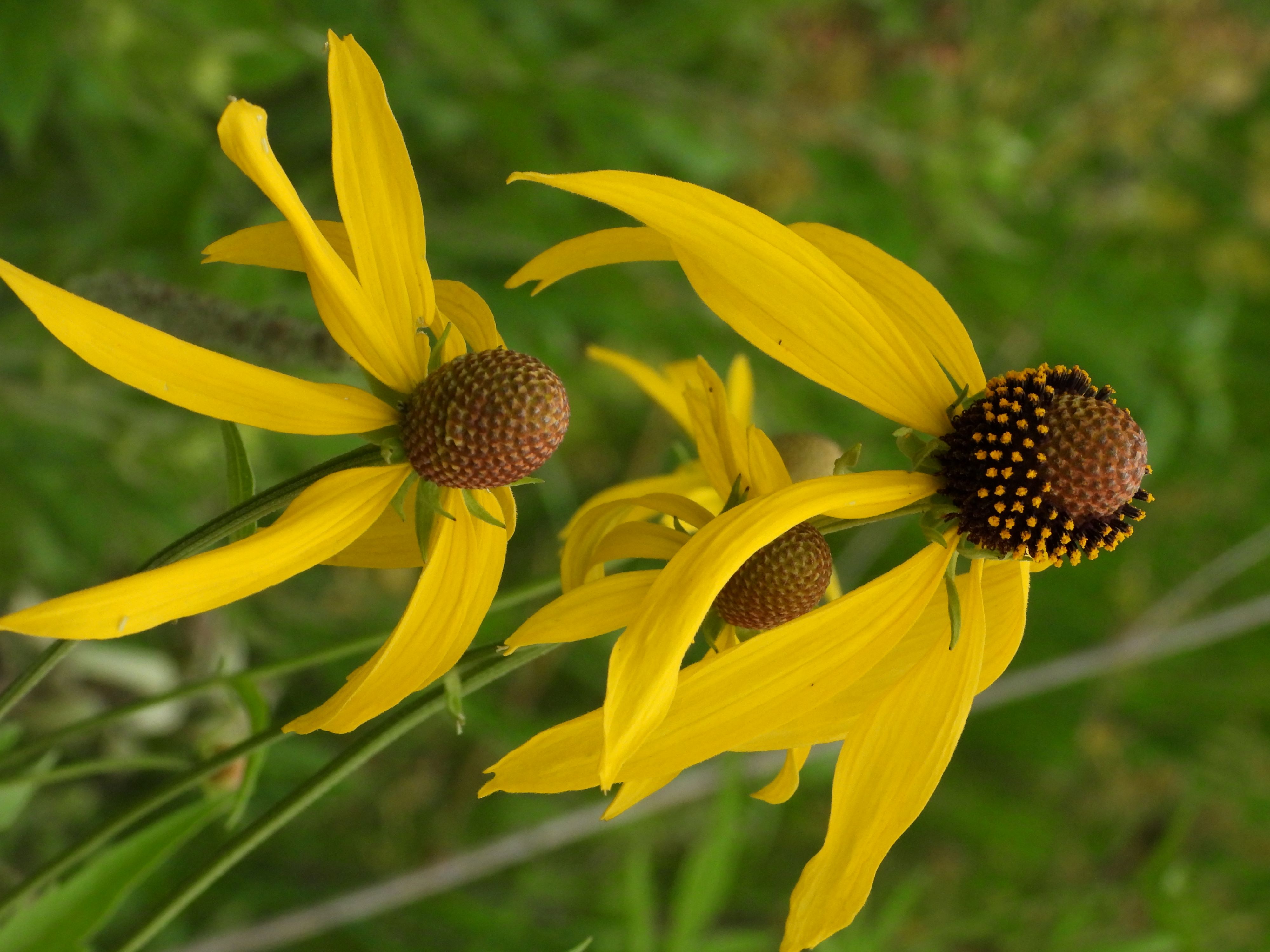
Flower: Composite flower heads borne singly at the tips of long stalks with drooping 1 in long yellow petals (rays) surrounding the egg-shaped dome of disk flowers.
Fruit/seed head: Firm, dense seedheads often hold some seed into late fall and winter and release an anise or citrus scent when crushed.
Pollination: Insects including bees, butterflies, flies, wasps, and beetles.
- Seed
Seed characteristics
Seed weight:
Seeds per ounce: 30,000 (IA NRCS)
1000 seed weight: 0.87 g (Seed Information Database)
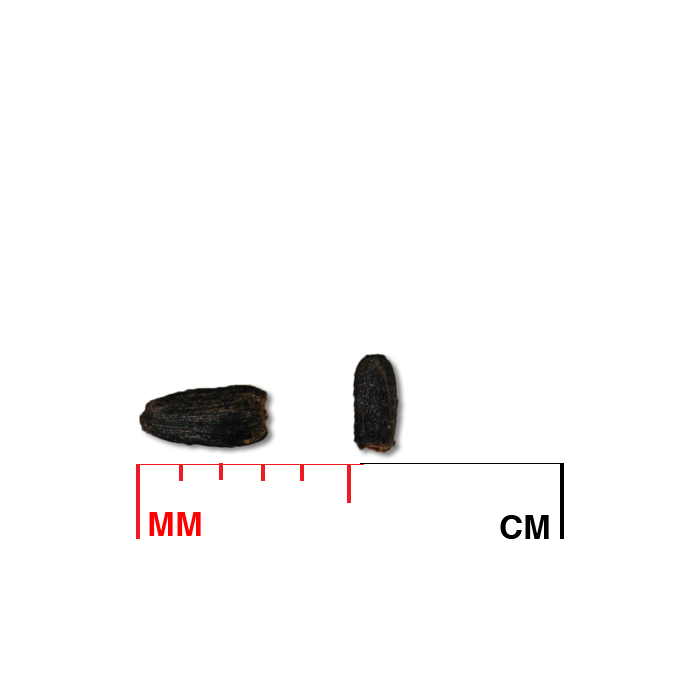
Description: Seeds (achenes) develop from fertile disc flowers. Achenes are brown to black and about 1/16 in long.
Typical seed test
PLS: 93%
Purity: 99%
Germination: 76%
Dormant: 8%
(averages obtained from 11 tests of purchased seed lots)
- Habitat and range
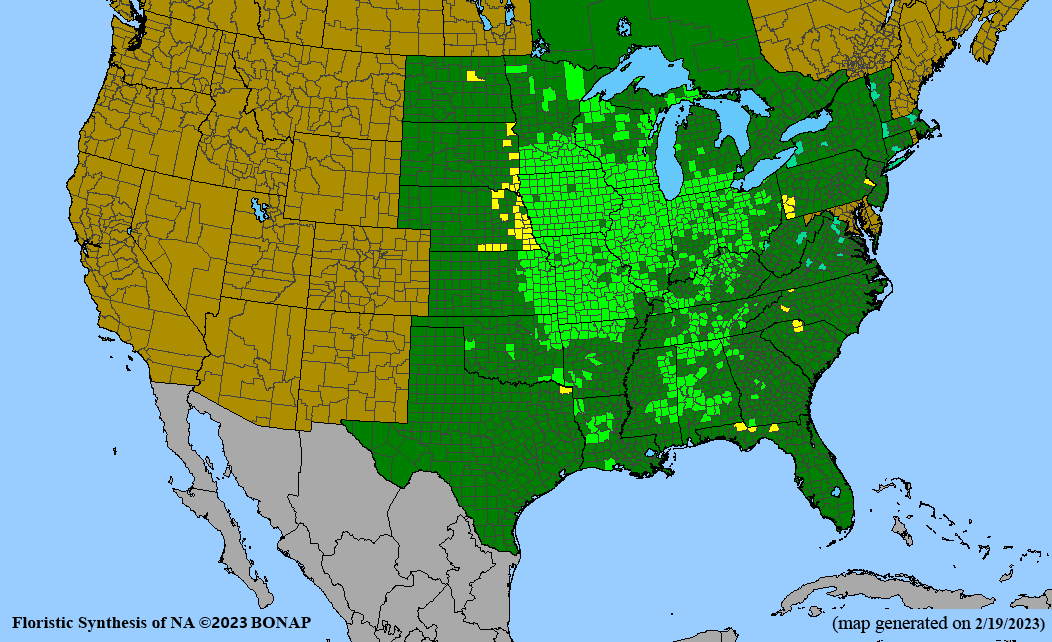
Habitat: Wet-mesic to dry-mesic loamy soils; full sun; usually common on medium to high quality prairies; remnant prairies, thickets, woodland edges, prairies, limestone glades.
Conservation status: Global- G5, secure; West Virginia- SH, possibly extirpated; Pennsylvania and South Carolina- S1, critically imperiled; Florida and Louisiana- S2, imperiled (NatureServe)
General Comments
Pinnate prairie coneflower is typically common on Midwestern prairies and establishes readily from seed in reconstructed prairies. Some seeds generally stay in the seedheads through fall and into winter are eaten by songbirds. Seed harvesting and cleaning are relatively straightforward if good weed control is maintained.
Recommendations for Seed Production
- Establishment for seed production
Direct seeding
Row spacing: 30-36 in rows
PLS pounds/acre: 3.6-5.0
Seeds per linear foot: 40
Seeding depth: 1/4 in
Seeding method: native seed drill
Seeding time: dormant season
Weed control: Prepare clean, firm, weed free seedbed prior to seeding.
Greenhouse
Seed pre-treatment: Wet stratify 8-12 weeks at 40° F.
Sowing: Sow seed in greenhouse two months before last frost free date.
Transplanting: Harden-off, transplant into bare soil in rows or weed barrier at 8-12 in intervals after all danger of frost.
- Stand management
Weeds: Mow/cultivate between rows. Post emergence grass herbicide, tillage, roguing.
Pests: None noted.
Diseases: None noted.
- Seed production
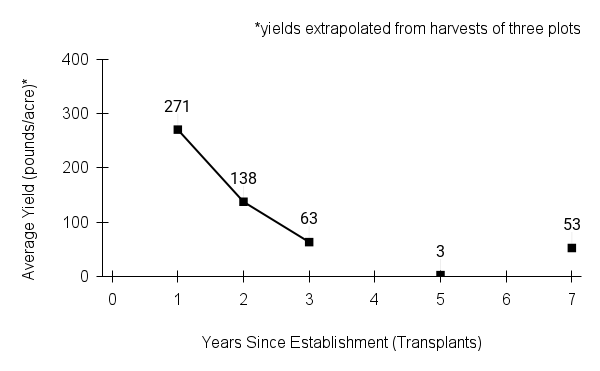 First harvest: Remain vegetative the first year, abundant flowering and seed production second year.
Yield: 100-250 bulk pounds/acre
Stand life: Peak harvests second year. Good harvest third year. Stand persists but seed production may decline significantly fourth year and after.
Flowering date: Flowering occurs early July to mid-August.
Seed maturity/Harvest date: Late September
Seed retention: Shattering occurs mid to late October.
Harvest date range at TPC (2004-2010): Sept 3 - Oct 27
Recommended harvest method: combine
- Seed cleaning and storage
Cleaning process: Pre-clean by scalping through 1/2 in and 1/4 in mesh to remove large particles and make flowable, then air-screen. Foxtail can be removed from most of the seed with scalping screens, followed by a final cleaning with a belt-sorter or velvet roller of scalped material. (Brushing is not needed as there are no awns or appendages to remove).
Seed storage: cool/dry (33-50° F, 30-50% RH)
Released Germplasm
Source Identified material: Natural Selections/Iowa Ecotype Project Zones 1 (northern Iowa), 2 (central Iowa), and 3 (southern Iowa); Northern Missouri Germplasm
Cultivated variety (cultivars): Sunglow (KS)
- References
Chayka, K. (n.d.). Ratibida pinnata (gray-headed coneflower). Minnesota Wildflowers. https://www.minnesotawildflowers.info/flower/gray-headed-coneflower
Cochrane, T. S., Elliot, K., & Lipke, C. S. (2014). Yellow coneflower. In Prairie plants of the University of Wisconsin-Madison Arboretum (3rd ed., p. 105). University of Wisconsin-Madison Arboretum.
Hilty, J. (2019). Yellow coneflower - Ratibida pinnata. Illinois Wildflowers. https://www.illinoiswildflowers.info/prairie/plantx/yl_coneflowerx.htm
Houseal, G. A. (2007). Forbs wildflowers. In G. A. Houseal (Eds.), Tallgrass Prairie Center’s native seed production manual (pp. 48–49). Tallgrass Prairie Center - University of Northern Iowa.
Kartesz, J.T., The Biota of North America Program (BONAP). 2023. North American Plant Atlas. (http://bonap.net/napa). Chapel Hill, N.C. [maps generated from Kartesz, J.T. 2023. Floristic Synthesis of North America, Version 1.0. Biota of North America Program (BONAP). (in press)]
NatureServe. 2024. NatureServe Network Biodiversity Location Data accessed through NatureServe Explorer [web application]. NatureServe, Arlington, Virginia. Available https://explorer.natureserve.org/. (Accessed: February 29, 2024).
Runkel, S. T., & Roosa, D. M. (2009). Yellow coneflower. In Wildflowers of the tallgrass prairie: The upper Midwest (2nd ed., pp. 154–155). University of Iowa Press.
USDA NRCS National Plant Data Team. (n.d.). Ratibida pinnata (Vent.) Barnhart. USDA plants database. https://plants.usda.gov/home/plantProfile?symbol=RAPI
Species Guide Updated 12/5/2025