

roundheaded lespedeza
Table of Contents
Lespedeza capitata Michx.
Alternate Common Names: rabbit foot, round-headed bush clover, round-headed bush-clover, dusty clover
Scientific Synonyms: Lespedeza bicknellii House, Lespedeza capitata Michx var. stenophylla Bissell & Fernald, Lespedeza capitata Michx. var. velutina (E.P. Bicknell) Fernald, Lespedeza capitata Michx. var. Vulgaris Torr. & A. Gray
Family: legume and pea family (Fabaceae (Leguminosae))
Functional Group: legumes
Description
- Life cycle and growth form
Perennial from a central taproot.
Height: 2-5 ft
- Leaves and stem
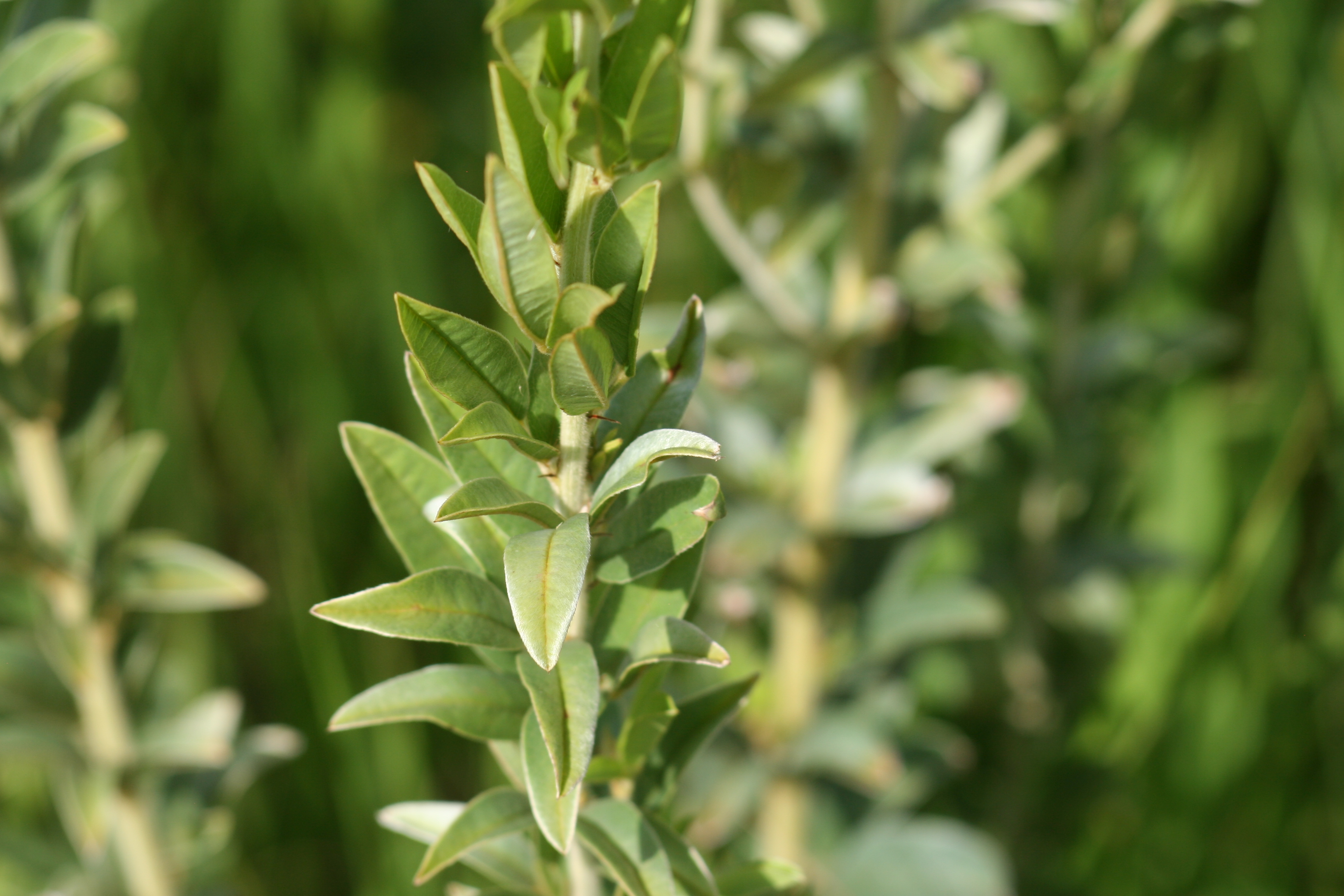
Leaves alternate and compound, divided into three leaflets with prominent mid-veins and silky hairs; stem is erect, densely covered in stiff white hairs, usually unbranched; may be multiple stems from the base.
- Flower, fruit and seedhead
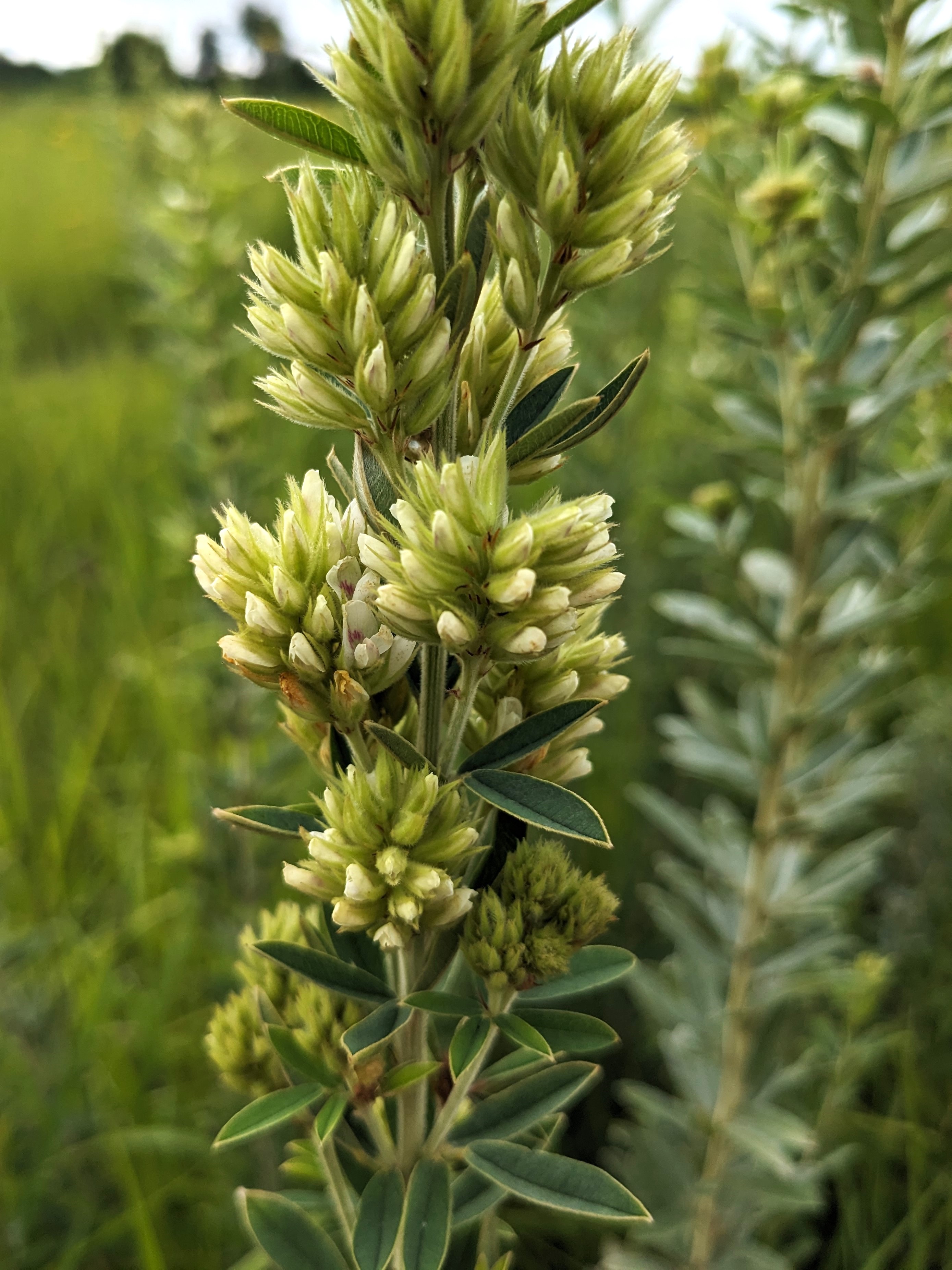
Flower: Small cream to white petals with purple spots at the throat, clustered into greenish, rounded heads at stem tip and in upper leaf axils.
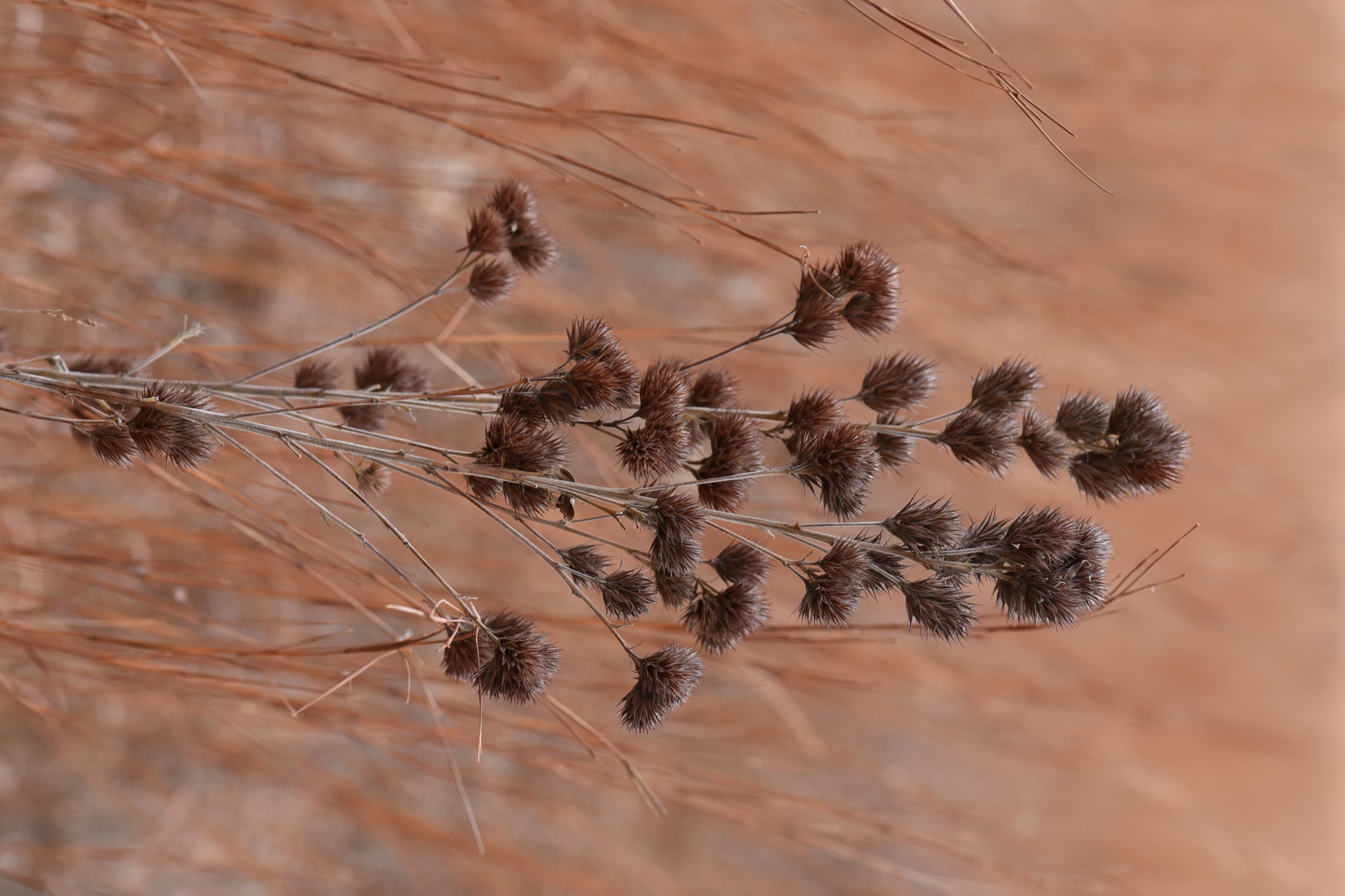
Fruit/seedhead: Brown seed heads last through winter though seed is shed in fall; fruit is a fuzzy one-seeded pod.
Pollination: bees
- Seed
Seed characteristics
Seed weight:
Seeds per ounce: 8,000 (IA NRCS)
1000 seed weight: 2.87 g (Seed Information Database)
Description: Fruits are a one-seeded legume, seeds are a small bean, 4-5 mm (about 3/16 in) long.
Typical seed test
PLS: 95% (n = 11)
Purity: 99% (n = 11)
Germination: 79% (n = 10)
Dormancy: 7% (n = 10)
(averages obtained from n tests of purchased seed lots)
- Habitat and range
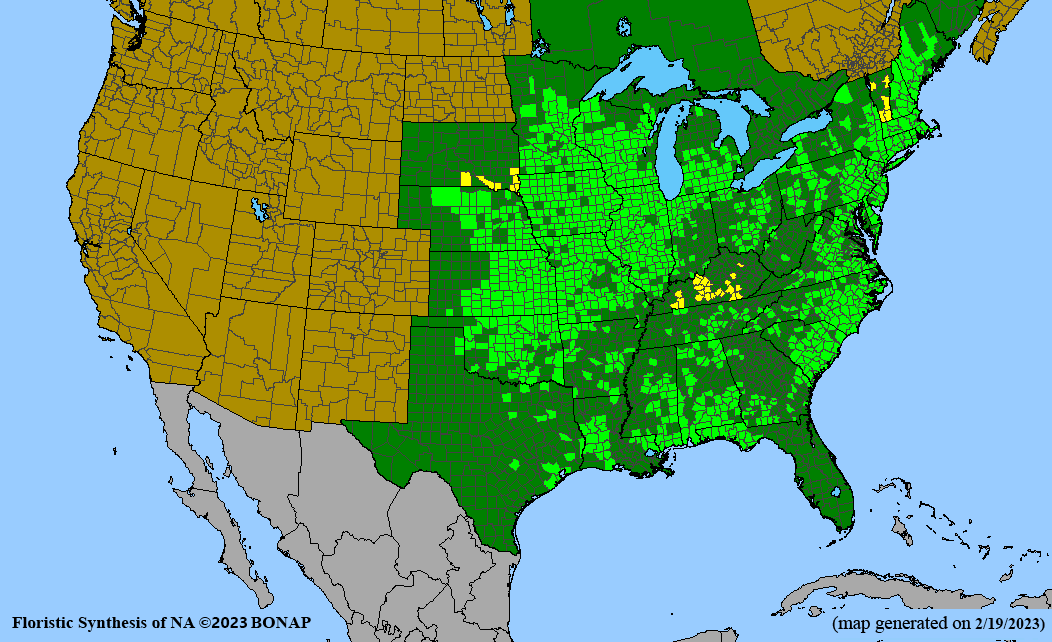
Habitat: Dry to mesic, sandy soil; full sun; prairies, loamy or sandy savannas, dunes, roadsides, along railroads. Wetland Indicator Status is Facultative Upland (FACU) for the Midwest. Very well-drained loamy soils are preferred for seed production.
Conservation status: Global- G5, secure; West Virginia- SH, possibly extirpated; South Dakota- S2, imperiled; Kentucky and Vermont- S3, vulnerable (NatureServe)

General Comments
Roundhead lespedeza is commonly encountered in remnant prairies and establishes reliably in prairie plantings. It has high wildlife value, providing forage for mammalian herbivores, seed for songbirds and gamebirds, and floral resources for pollinators.
Recommendations for Seed Production
- Establishment for seed production
Direct seeding
Row spacing: 30-36 in rows
PLS pounds/acre: 4.0
Seeding depth: 1/4-1/2 in
Seeding method: native seed drill
Seeding time: Dormant fall seeding of unscarified seed. Scarify and inoculate seed (EL inoculum) for early spring planting.
Weed control: Prepare clean, firm, weed free seedbed prior to seeding.
Greenhouse
Seed pre-treatment: Scarify seed (see Propagation of Native Species: Seed Treatments) and wet stratify 10 days to 2 weeks at 40˚ F.
Sowing: Sow inoculated seed in the greenhouse two months before the last frost free date. Damping off (fungal pathogen) can be a problem on seedlings if soil is kept too moist, or seedlings are planted too thickly. Avoid excess moisture on the soil surface by amending the sterile potting mix with additional perlite, applying a thin layer of chick grit over the top of the soil, improving air circulation with fans, thinning seedlings, and/or watering from the bottom of the containers only. Seedlings form a fleshy taproot with few lateral roots, unless allowed to grow until taproot is air-pruned as it reaches the bottom drainage holes of the container. Plug trays with vertical grooves and wide drainage holes encourage root pruning and plug development.
Transplanting: When seedlings have sufficient root growth to form robust plugs and danger of frost is past, transplant into bare soil in rows convenient for tillage equipment or into a weed barrier at 8-12 in intervals. We have also had success transplanting seedlings into an existing Indiangrass stand that was weakened by mowing.
- Stand management
Weeds: Mow stands above seedling height during establishment year. Poast (sethoxydim) herbicide can be used to control weedy grasses. Prowl (pendimethalin) after establishment for grass control. Plateau should NOT be used on this species. Always read and follow label directions. Roundhead lespedeza can be planted with a warm-season grass such as Indiangrass for weed suppression and to support prescribed fire.
Pests: Herbivory may be a problem.
Diseases: Damping off can be serious in a greenhouse environment (see above).
- Seed production
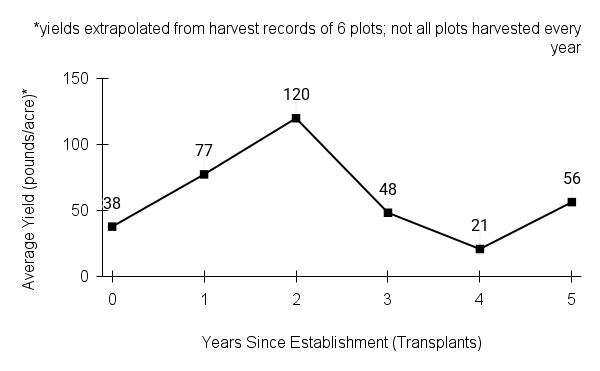 First harvest: Though some plants may flower the first year, two growing seasons are required for stand establishment and seed production. Peak production at TPC has been in the second and third years after planting.
Yield: 20-120 bulk pounds/acre (yields extrapolated from harvest records of 6 plots)
Stand life: 5-10 years; seed production typically decreases after 5 years.
Flowering date: mid-August - early September in northern Iowa
Seed maturity/Harvest date: October in northern Iowa
Seed retention: Shattering begins in late October into November
Harvest date range at TPC (2005-2023): Sept 26 - Oct 27
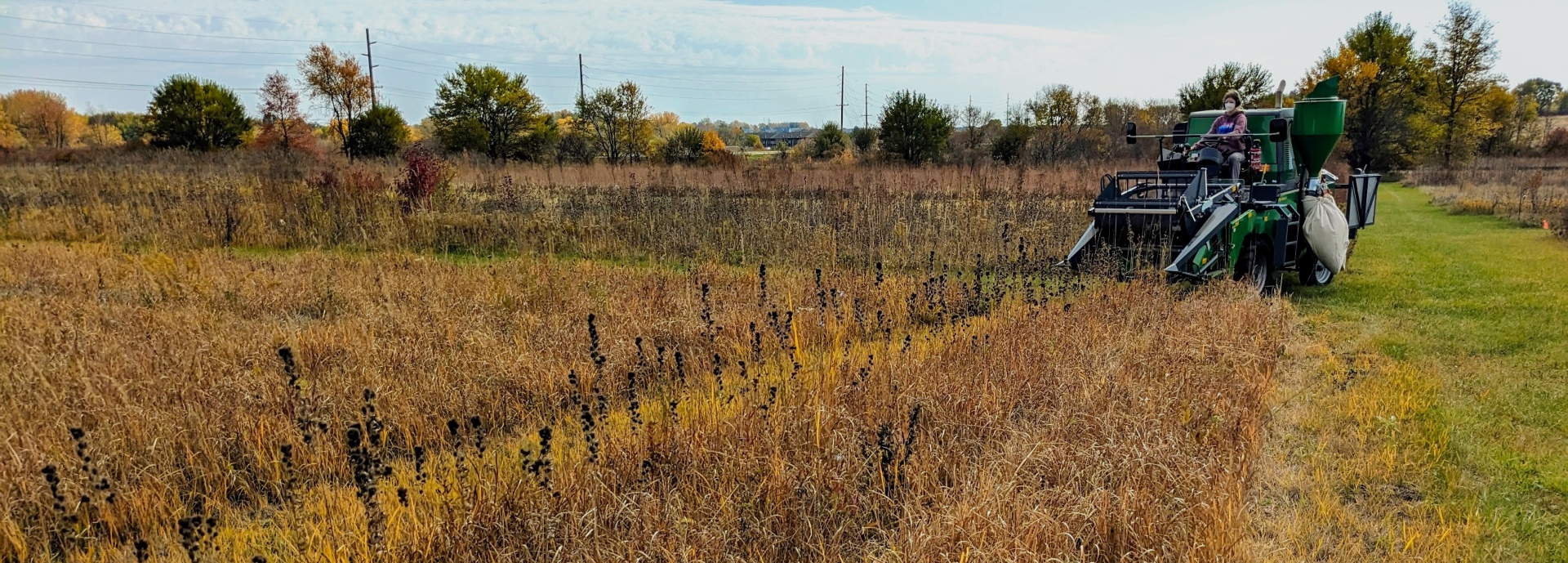
Recommended harvest method: combine
- Seed cleaning and storage
Cleaning process: Use brush machine/huller-scarifier to remove hulls, then air-screen (see Appendix C for settings).
Seed storage: cool/dry (33-50° F, 30-50% RH)
Released Germplasm
Source Identified material: Natural Selections/Iowa Ecotype Project Zone 1 (Northern Iowa), Zone 2 (Central Iowa), and Zone 3 (Southern Iowa)
Cultivated variety (cultivars): Kanoka (KS)
- References
Chayka, K. (n.d.). Lespedeza capitata (round-headed bush clover). Minnesota Wildflowers. https://www.minnesotawildflowers.info/flower/round-headed-bush-clover
Cochrane, T. S., Elliot, K., & Lipke, C. S. (2014).Round-headed bush-clover. In Prairie plants of the University of Wisconsin-Madison Arboretum (3rd ed., p. 188). University of Wisconsin-Madison Arboretum.
Hilty, J. (2019). Round-headed bush clover - Lespedeza capitata. Illinois Wildflowers. https://www.illinoiswildflowers.info/prairie/plantx/rh_bushcloverx.htm
Houseal, G. A. (2007). Forbs legumes. In G. A. Houseal (Eds.), Tallgrass Prairie Center’s native seed production manual (pp. 64–65). Tallgrass Prairie Center - University of Northern Iowa.
Kartesz, J.T., The Biota of North America Program (BONAP). 2023. North American Plant Atlas. (http://bonap.net/napa). Chapel Hill, N.C. [maps generated from Kartesz, J.T. 2023. Floristic Synthesis of North America, Version 1.0. Biota of North America Program (BONAP). (in press)]
NatureServe. 2024. NatureServe Network Biodiversity Location Data accessed through NatureServe Explorer [web application]. NatureServe, Arlington, Virginia. Available https://explorer.natureserve.org/. (Accessed: February 29, 2024).
Runkel, S. T., & Roosa, D. M. (2009). Roundhead lespedeza. In Wildflowers of the tallgrass prairie: The upper Midwest (2nd ed., pp. 228–229). University of Iowa Press.
USDA NRCS National Plant Data Team. (n.d.). Lespedeza capitata Michx. USDA plants database. https://plants.usda.gov/home/plantProfile?symbol=LECA8
Species Guide Updated 12/4/2025