

purple prairie clover
Table of Contents
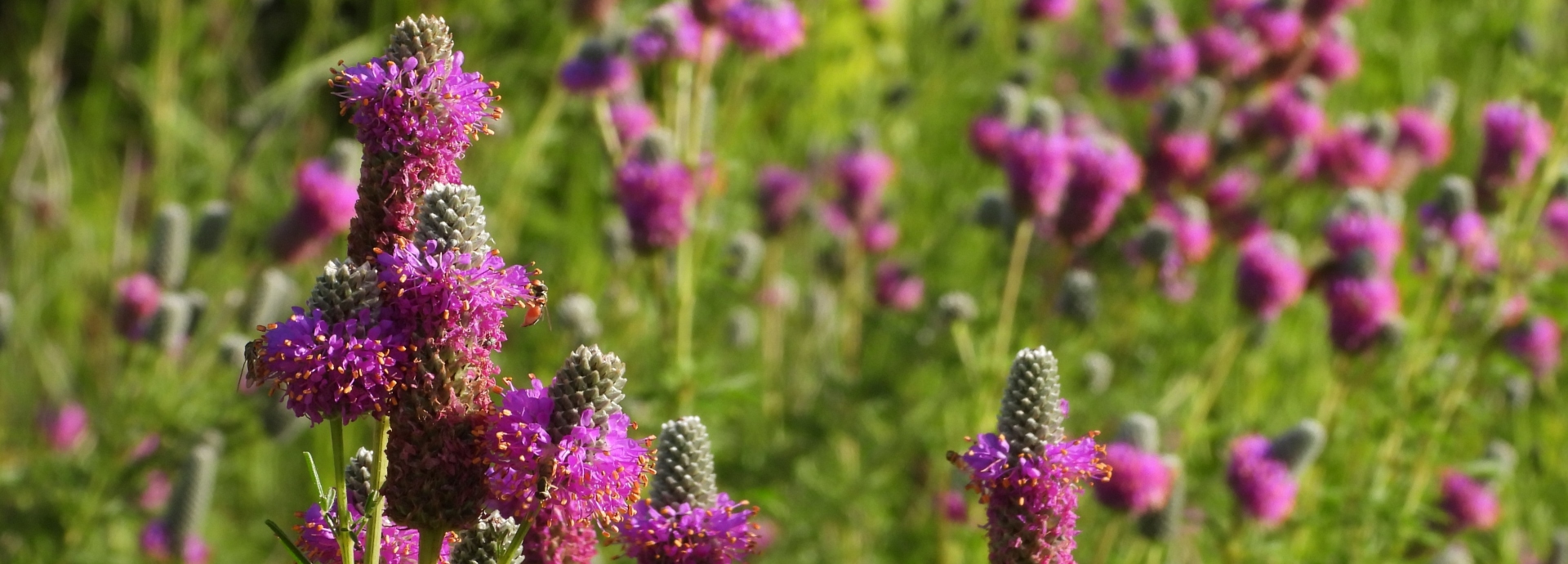
Dalea purpurea Vent.
Alternate Common Names: violet prairie clover, thimbleweed, red tassel flower, purple prairie-clover
Scientific Synonym: Petalostemum purpureum (Vent.) Rybd.
Family: legume and pea family (Fabaceae (Leguminosae))
Functional Group: legumes
Description
- Life cycle and growth form
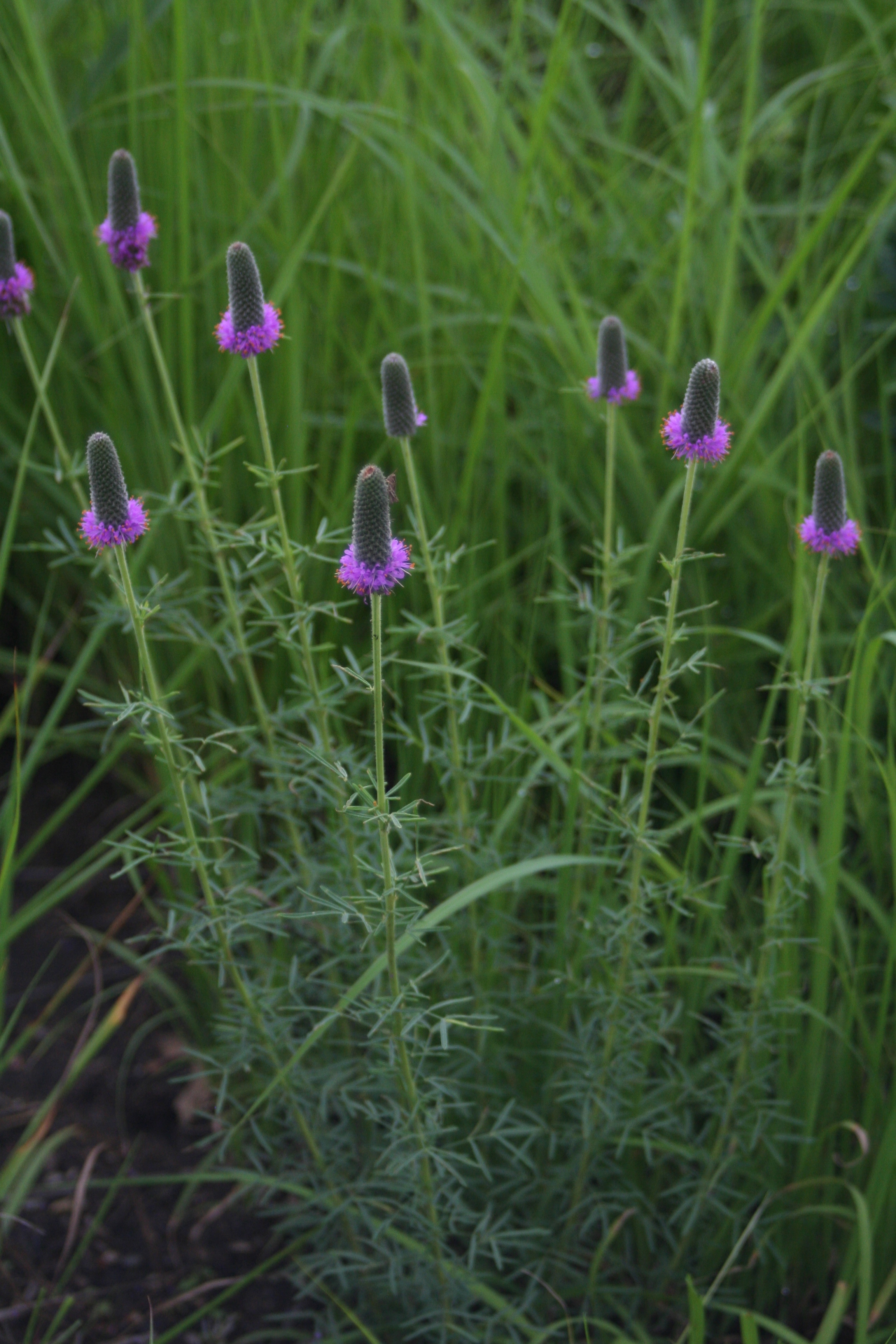
Perennial, with woody, branched taproot.
Height: 1-3 ft
- Leaves and stem
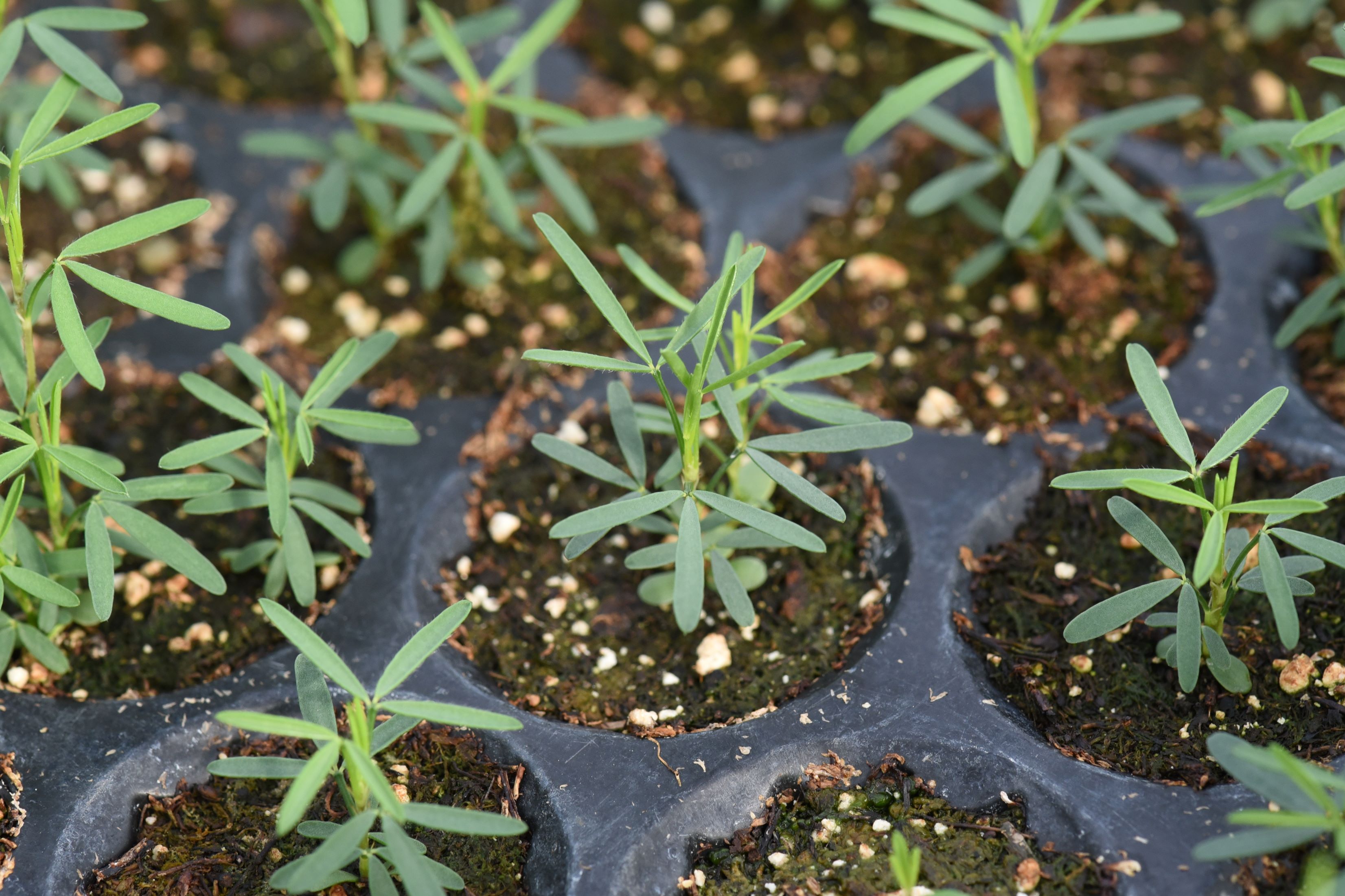
Leaves 1.5-3 in long, alternate, odd-pinnately compound with 3-7 very narrow leaflets, smooth but with black dots on lower leaf surface and a strong citrus odor when crushed; stems hairless to hairy and slightly ribbed when dry.
- Flower, fruit and seedhead
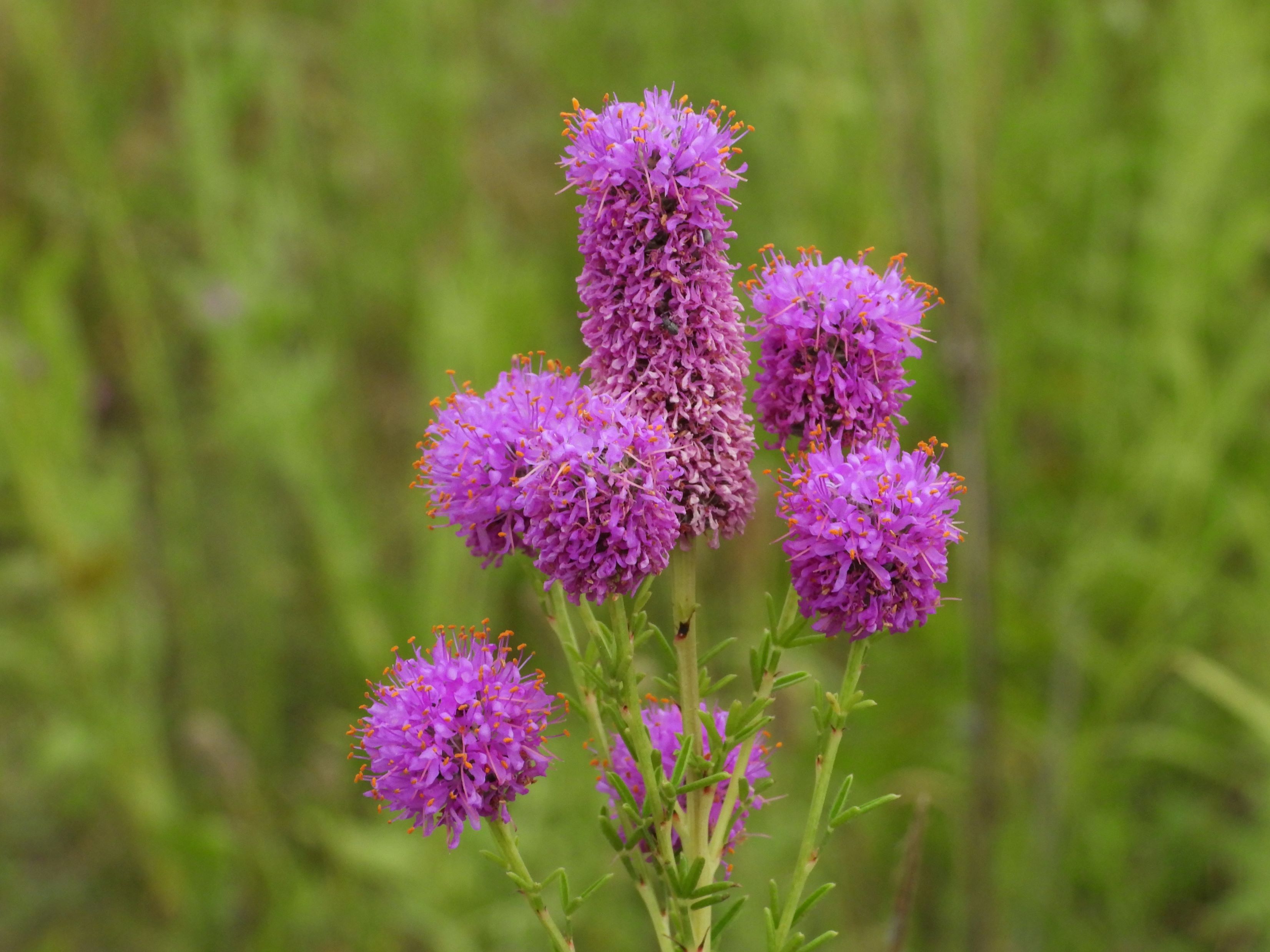
Flower: Individual flowers densely packed into a cylindrical spike about 1/2-3 in long; flowers open in whorls from the bottom to the top; tiny, 5-part flowers have purple petals and prominent, golden stamens.
Fruit/seedhead: Seed head is an elongate, compact head at the stem tip, composed of numerous dry, hairless pods which stay attached to the calyx until dislodged; strong scent when crushed.
Pollination: Insects, particularly bees, wasps, small butterflies, skippers, and beetles.
- Seed
Seed characteristics
Seed weight:
Seeds per ounce: 18,000 (IA NRCS)
Seeds per pound: 288,000 (IA NRCS)
1000 seed weight: 3.19 g (Seed Information Database)
Description: Fruits are a 1-2 seeded legume. Seeds are small beans, about 2 mm (1/16 in) long, olive green to tan or brown.
Typical seed test
PLS: 97% (n = 11)
Purity: 100% (n = 11)
Germination: 83% (n = 10)
Hard: 14% (n = 10)
(averages obtained from n tests of purchased seed lots)
- Habitat and range
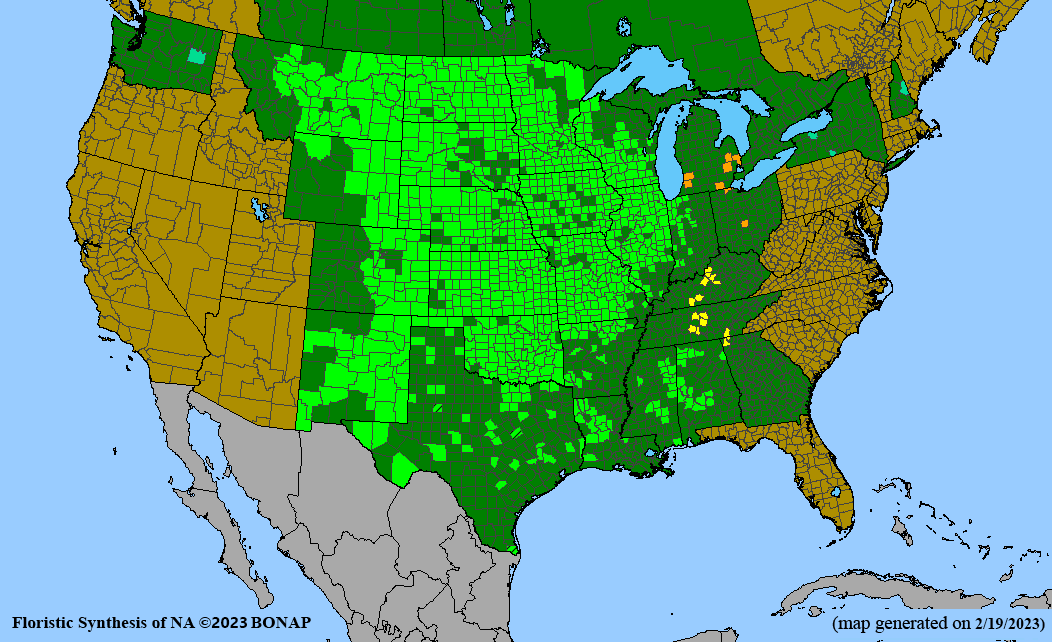
Habitat: Dry to mesic, rocky or sandy soil; full sun; prairies, dunes, savannas. Very well-drained, loamy soils are preferred for seed production.
Conservation status: Global- G5, secure; Michigan and Ohio- SX, presumed extirpated; Georgia and Tennessee- S1, critically imperiled; Kentucky- S2, imperiled; Indiana- S3, vulnerable (NatureServe)

General Comments
Purple prairie clover is an important component of mesic to dry upland prairies. It tends to increase following spring burning (Bidwell 1990), though burning production fields is usually not an option because of a lack of continuous grass fuels to carry fire. Purple prairie clover seed should be dehulled when cleaned for the commercial market. Seed tests are more accurate on a dehulled seed, and seed count per pound is higher.
Recommendations for Seed Production
- Establishment for seed production
Direct seeding
Row spacing: 30-36 in 7 in rows or solid stand PLS lbs/acre: 2 6 Seeding depth: 1/4 in
Seeding method: native seed drill
Seeding time: Dormant fall seeding of unscarified seed. Scarify and inoculate seed (Dalea, F inoculum) for spring planting.
Weed control: Prepare clean, firm, weed free seedbed prior to seeding.
Greenhouse
Seed pre-treatment: Scarify seed (see General Information: Propagation of Native Species). Moist stratification is not required, but seed should be stored in cold, dry conditions until planting time. A short stratification of 10-14 days may result in faster, more uniform germination.
Sowing: Sow seed 1/4 in deep in the greenhouse 2 months before the last frost free date. Damping off (fungal pathogen) can be a problem for seedlings if soil is kept too moist, or seedlings are planted too thickly. Avoid excess moisture on the soil surface by adding additional perlite to the sterile soil medium, applying a thin layer of chick grit (crushed quartzite or granite) over the top of the soil, improving air circulation with fans, thinning seedlings, and/or watering from the bottom of the containers only.
Transplanting: When root growth is sufficient to produce sturdy plugs, transplant seedlings into bare soil in rows convenient for tillage equipment or into a weed barrier at 8-12 in intervals after all danger of frost is past.
- Stand management
Weeds: Mow stands above prairie clover seedling height during establishment year. Poast (sethoxydim) or Prowl (pendimethalin) herbicide after establishment can be used to control weedy grasses. Plateau is labeled for pre- and post-emergence application. Note: These herbicides may not be labeled for this species in your state, always check the label and follow recommendations.
Pests: Herbivory by rabbits or deer may be a problem. Voles can kill many plants within a plot by feeding on the roots. Weevils may infest seed heads, reducing seed yield.
Diseases: None noted under field conditions. Damping off can be serious in a greenhouse environment (see above).
- Seed production
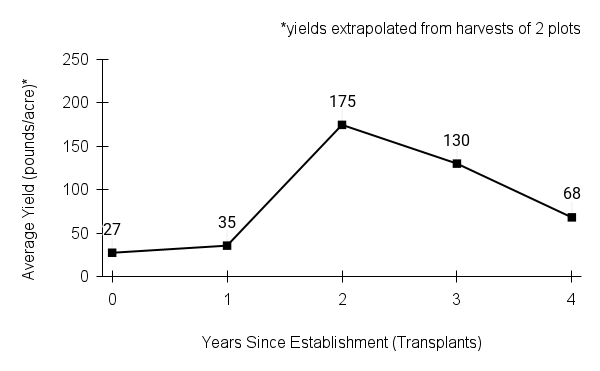 First harvest: Flowering and seed set occur at end of second growing season from greenhouse grown transplants and well-managed direct seeded stand.
 Yield: 27-175 bulk pounds/acre (extrapolated from harvests of 2 plots)
Stand life: 5-10 years. Peak harvest third year.
Flowering date: July - early August in northern Iowa
Seed maturity/Harvest date: September in northern Iowa
Seed retention: Shattering potential is low. Seed heads hold seed into October.
Harvest date range at TPC (2004-2023): Sept 5 - Nov 5
Recommended harvest method: Combine. If plants still retain green leaves, do not cut any lower than necessary to harvest seed heads.
- Seed cleaning and storage
Cleaning process: Pre-clean air-dried material by scalping through 1/2 in and 1/4 in mesh to remove large particles. Use a brush machine with stiff bristles to remove hulls, then air-screen. Re-brush any seed still in the hull, if necessary, and air-screen.
Seed storage: cool/dry (33-50° F, 30-50% RH)
Released Germplasm
Source Identified material: Natural Selections/Iowa Ecotype Project Zones 1, 2, and 3
Selected Germplasm: Bismarck Germplasm (SD), Cuero Germplasm (TX).
Cultivated variety (cultivars): Kaneb (KS)
- References
Chayka, K. (n.d.). Dalea purpurea (purple prairie clover). Minnesota Wildflowers. https://www.minnesotawildflowers.info/flower/purple-prairie-clove
Cochrane, T. S., Elliot, K., & Lipke, C. S. (2014). Purple prairie-clover. In Prairie plants of the University of Wisconsin-Madison Arboretum (3rd ed., p. 183). University of Wisconsin-Madison Arboretum.
Hilty, J. (2019). Purple prairie clover - Dalea purpurea. Illinois Wildflowers. https://www.illinoiswildflowers.info/prairie/plantx/ppr_cloverx.htm
Houseal, G. A. (2007). Forbs wildflowers. In G. A. Houseal (Eds.), Tallgrass Prairie Center’s native seed production manual (pp. 60–61). Tallgrass Prairie Center - University of Northern Iowa.
Kartesz, J.T., The Biota of North America Program (BONAP). 2023. North American Plant Atlas. (http://bonap.net/napa). Chapel Hill, N.C. [maps generated from Kartesz, J.T. 2023. Floristic Synthesis of North America, Version 1.0. Biota of North America Program (BONAP). (in press)]
NatureServe. 2024. NatureServe Network Biodiversity Location Data accessed through NatureServe Explorer [web application]. NatureServe, Arlington, Virginia. Available https://explorer.natureserve.org/. (Accessed: February 29, 2024).
Runkel, S. T., & Roosa, D. M. (2009). Purple prairie clover - White prairie clover. In Wildflowers of the tallgrass prairie: The upper Midwest (2nd ed., pp. 176–177). University of Iowa Press.
USDA-NRCS. (n.d.). Conservation plant releases. Natural Resources Conservation Service. https://www.nrcs.usda.gov/plant-materials/cp/releases
USDA NRCS National Plant Data Team. (n.d.). Dalea purpurea Vent. USDA plants database. https://plants.usda.gov/home/plantProfile?symbol=DAPU5
Species Guide Updated 12/3/2024