

prairie dropseed
Table of Contents
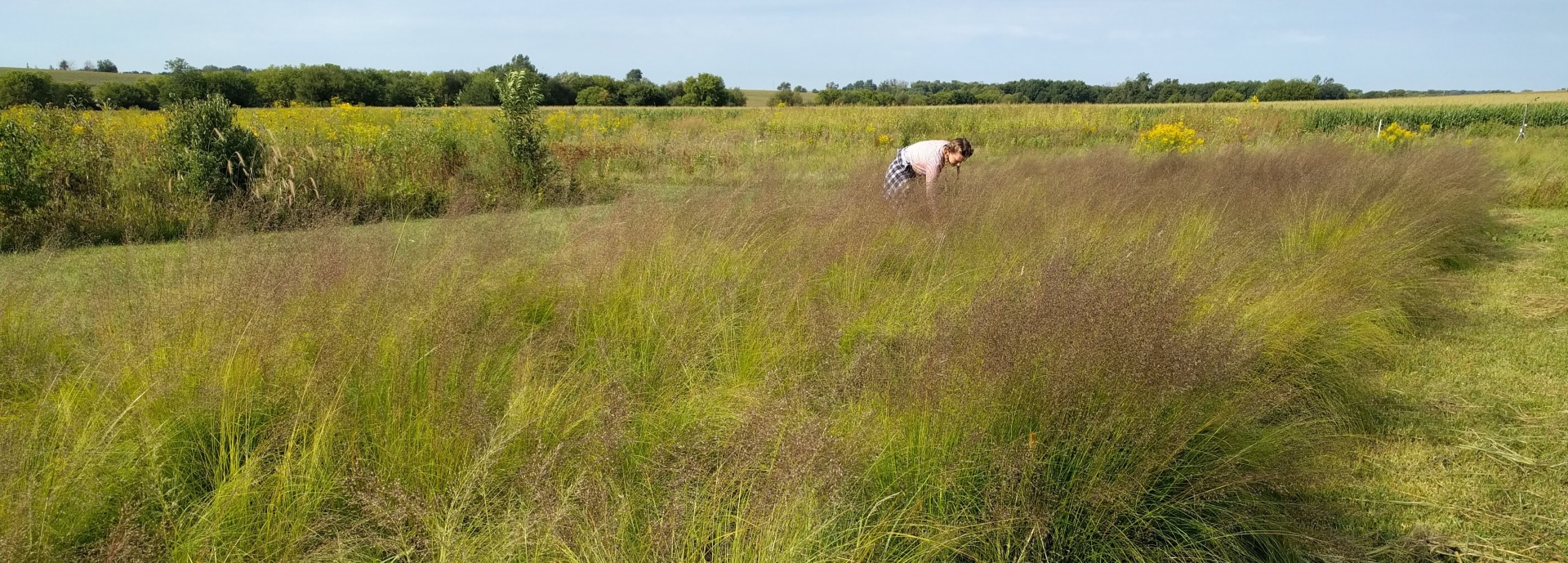
Sporobolus heterolepis (Gray) Gray
Alternate Common Name: northern dropseed
Family: grass family (Poaceae)
Functional Group: warm season grasses
Description
- Life cycle and growth form
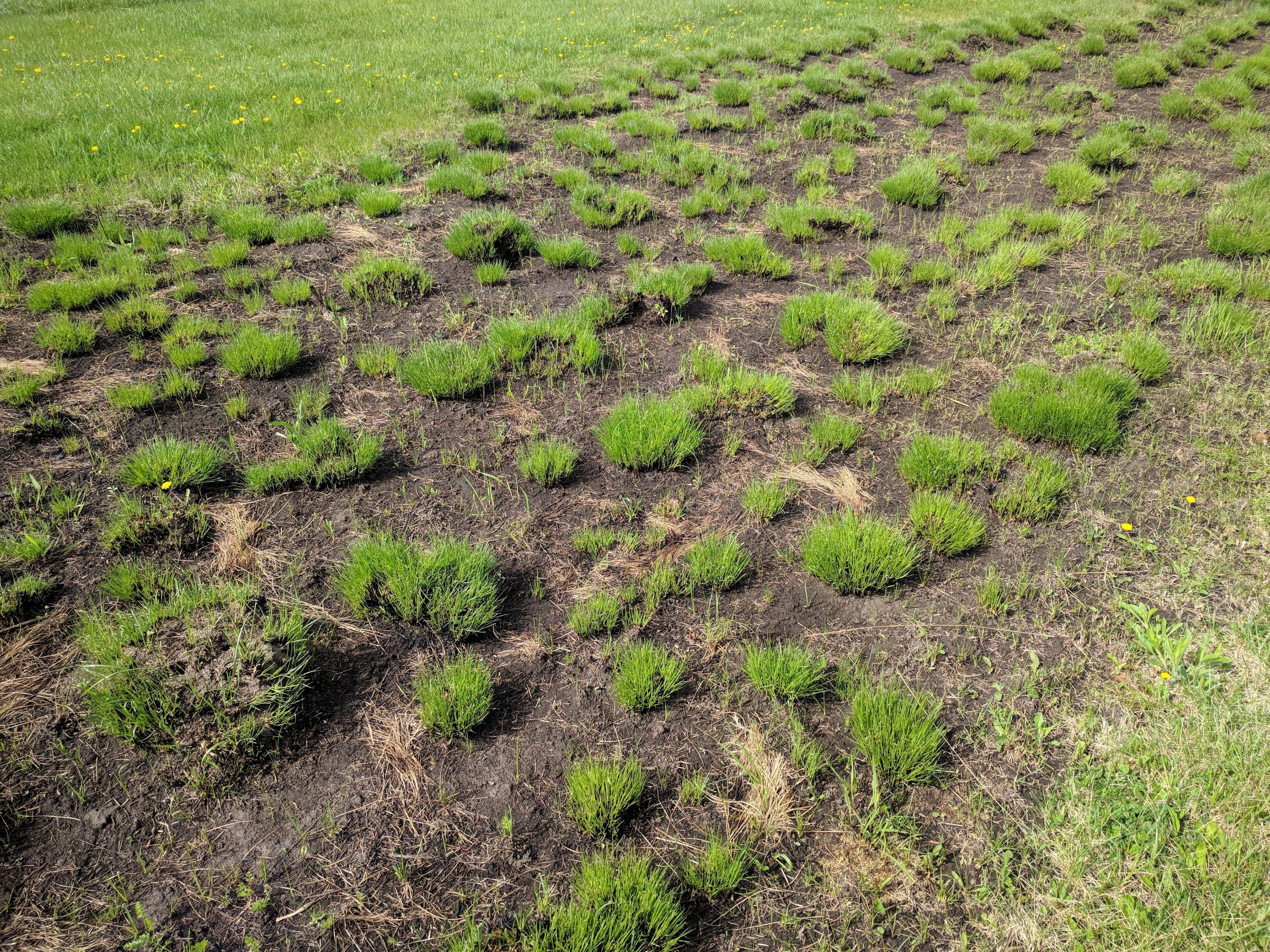
Perennial warm-season grass forming long-lived dense bunches of many stems that become hummocky over time.
Height: 1-3 ft
- Leaves and stem
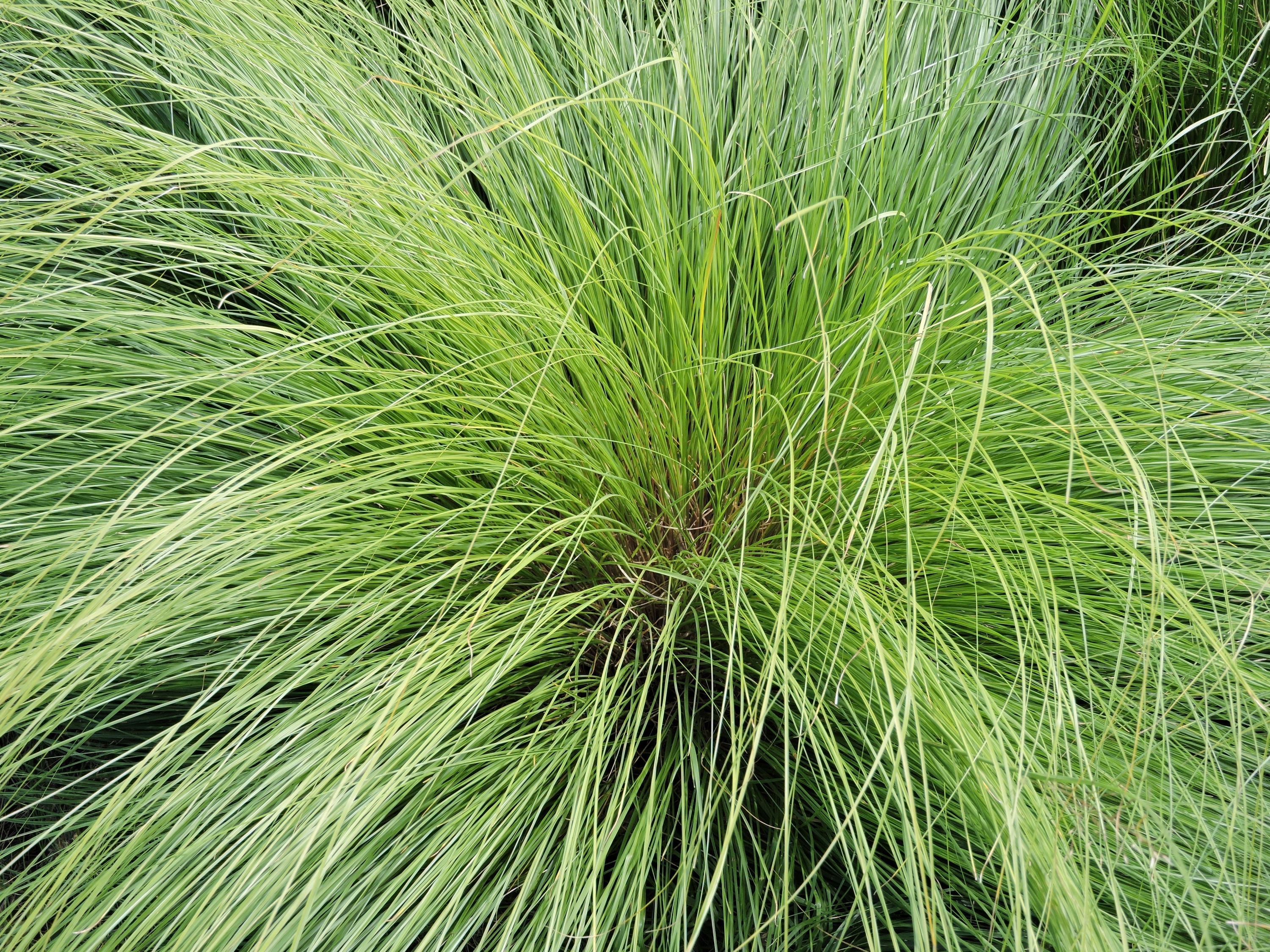
Leaves with hairless blades about 1/16 in wide and up to 2 ft long, tapered to a thread-like tip; leaf sheath smooth except for a tuft of hairs at the collar; stems are slender and hairless.
- Flower, fruit and seedhead
Fruit/seed head: Seedhead is a diffuse, openly branched panicle. Glands at the base of branches in the panicle give off a somewhat rancid buttery odor when in flower and setting seed.
Pollination: Wind-pollinated, though small flower flies visit the flowers to feed on pollen.

- Seed
Seed characteristics
Seed weight:
Seeds per ounce: 16,000 (IA NRCS)
1000 seed weight: 1.90 g (Seed Information Database)
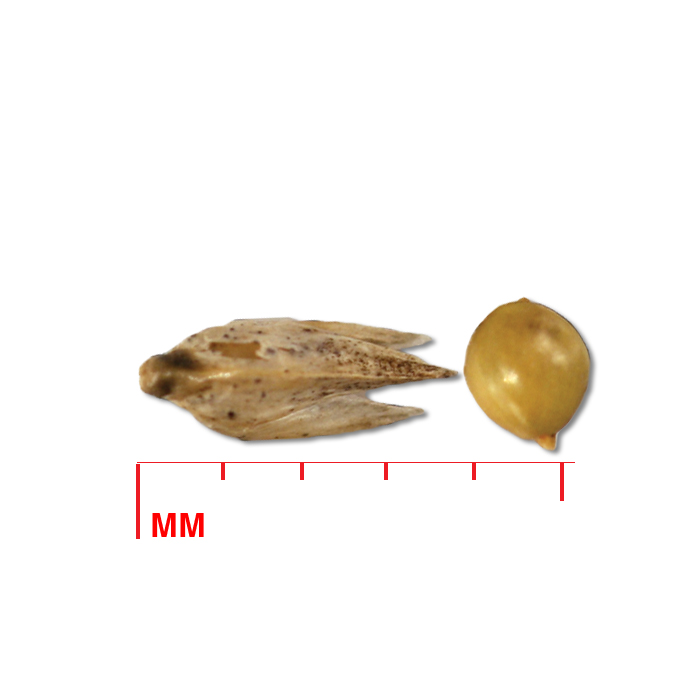
Description: Spikelets are one-flowered, no awns present, about 4 mm long (5/32 in), grain round, firm about 2.5 mm (3/32 in) long.
Typical seed test
PLS: 86% (n = 10)
Purity: 96% (n = 10)
Germination: 20% (n = 6)
Dormant: 55% (n = 7)
(averages obtained from n tests of purchased seed lots)
- Habitat and range
Habitat: Dry to moist soil; full sun; high quality remnant prairies, limestone glades, savannas; Wetland Indicator Status is Facultative Upland (FACU) for the Midwest.
Conservation status: Global- G5, secure; Massachusetts- SH, possibly extirpated; Wyoming, Connecticut, Georgia, Kentucky, Maryland, North Carolina, Ohio, Pennsylvania, Tennessee, and Virginia- S1, critically imperiled; New York and Oklahoma- S2, imperiled; Illinois- S2/S3, Colorado, Kansas, and Michigan- S3, vulnerable (NatureServe)

General Comments
This species is seldom abundant in prairies, occurring in groupings of scattered clumps. The long, slender leaves, bunching habit, and airy seedheads create a fountain-like effect, making this species desirable for horticultural landscape plantings. Seedlings develop slowly, so this species is best propagated in the greenhouse and transplanted in rows convenient for tillage equipment in a well-prepared, weed-free, and firmly packed increase field. Plants are very long-lived, forming large clumps after 2-3 growing seasons. Spring burning stimulates prolific flowering and seed production, but bunches can also be killed or damaged by burning if soil conditions are excessively dry. Timing of seed harvest is critical, since seed drops soon after maturity.
Recommendations for Seed Production
- Establishment for seed production
Direct seeding
Not recommended for this species due to slow seedling development
Greenhouse
Seed pre-treatment: Moist stratify seed at 35-40° F for 4 weeks.
Sowing: Sow seed in greenhouse 2 months before last frost-free date at 1/4 in depth. Warm temperatures in the greenhouse appear to improve germination.
Transplanting: Transplant (after all danger of frost) into rows convenient for tillage equipment or into weed barrier or plastic mulch at 8-12 in spacing.
- Stand management
Weeds: Transplant into well-prepared, weed-free increase field. Pre-emergent herbicides may be used after transplanting. Be sure to water in transplants to help seal soil around roots so pre-emergent won’t chemically damage root systems. Cultivate, hoe, and hand rogue around young plants later in the season, if necessary. Weed barrier or plastic mulch, if used, suppresses weeds in the first year or two, and buildup of thatch between burnings suppresses some weeds. Remove plastic to allow burning in subsequent years. Some native seed producers use a companion planting such as buffalo grass to suppress weeds between prairie dropseed rows.
Pests: Voles like to nest in prairie dropseed thatch and will cut and eat (or store) the base of flowering stems before seed matures, potentially decimating yields.
Diseases: None noted.
- Seed production
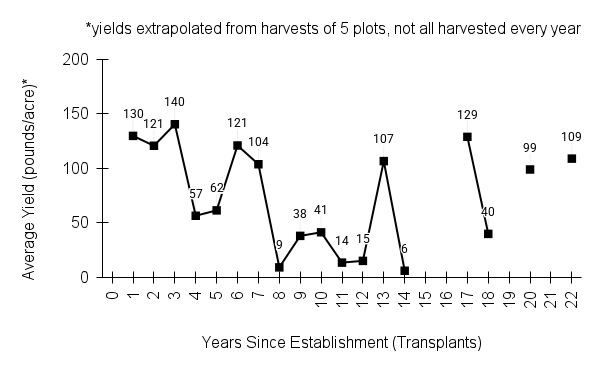 First harvest: Flowering and seed set occurs at the end of the second growing season from greenhouse grown transplants.
Yield: Typically around 50-150 bulk pounds/acre with much year to year variation (per acre yields extrapolated based on harvests from 5 plots). Spring burning may stimulate flowering and seed set, though bunches can be killed by fire if soil is very dry.
Stand life: Stands remain productive for 10-20 years, although yields fluctuate greatly.
Flowering date: mid-August - early September in northern Iowa
Seed maturity/Harvest date: late September - early October in northern Iowa
Seed retention: Shattering occurs soon after maturity. Check plots frequently as seed matures. A useful method to determine maturity is to crush seeds and observe for a crumbly, starchy center (no longer milky or creamy). The taste also changes from slightly sweet to starchy as seed matures.
Harvest date range at TPC (2003-2023): Sept 22 - Oct 18 (harvests after this date produced very little seed)
Recommended harvest method: combine
- Seed cleaning and storage
Cleaning process: Pre-clean air-dried material by scalping through 1/2 in and 1/4 in mesh to remove large particles, if necessary. Air-screen to clean.
Seed storage: Seed reportedly has a high oil content that can shorten viability in storage. Some producers recommend storing seed at freezing temperatures for extended storage after proper drying and cleaning. Store seed in moisture-proof containers before freezing. Seed should not be left at room temperatures for more than a few weeks after harvest. Refrigerated conditions (33-50° F, 30-50% RH) are adequate for at least a year after harvest.
Released Germplasm
Source Identified material: Natural Selections/Iowa Ecotype Zone 1 (northern Iowa), Zone 2 (central Iowa), and Zone 3 (southern Iowa).
Cultivated varieties (cultivars): Horticultural varieties selected for particular traits include Tara, Morning Mist, and Wisconsin Strain.
- References
Chayka, K. (n.d.). Spororbolus heterolepis (prairie dropseed). Minnesota Wildflowers. https://www.minnesotawildflowers.info/grass-sedge-rush/prairie-dropseed
Hilty, J. (2019). Prairie dropseed - Sporobolus heterolepis. Illinois Wildflowers. https://www.illinoiswildflowers.info/grasses/plants/pr_dropseed.htm
Houseal, G. A. (2007). Grasses warm season. In G. A. Houseal (Eds.), Tallgrass Prairie Center’s native seed production manual (pp. 78–79). Tallgrass Prairie Center - University of Northern Iowa.
Kartesz, J.T., The Biota of North America Program (BONAP). 2023. North American Plant Atlas. (http://bonap.net/napa). Chapel Hill, N.C. [maps generated from Kartesz, J.T. 2023. Floristic Synthesis of North America, Version 1.0. Biota of North America Program (BONAP). (in press)]
NatureServe. 2024. NatureServe Network Biodiversity Location Data accessed through NatureServe Explorer [web application]. NatureServe, Arlington, Virginia. Available https://explorer.natureserve.org/. (Accessed: February 29, 2024).
USDA NRCS National Plant Data Team. (n.d.). Sporobolus heterolepis (A. Gray) A. Gray. USDA plants database. https://plants.usda.gov/home/plantProfile?symbol=SPHE
Species Guide Updated 12/11/2025