

prairie cordgrass
Table of Contents
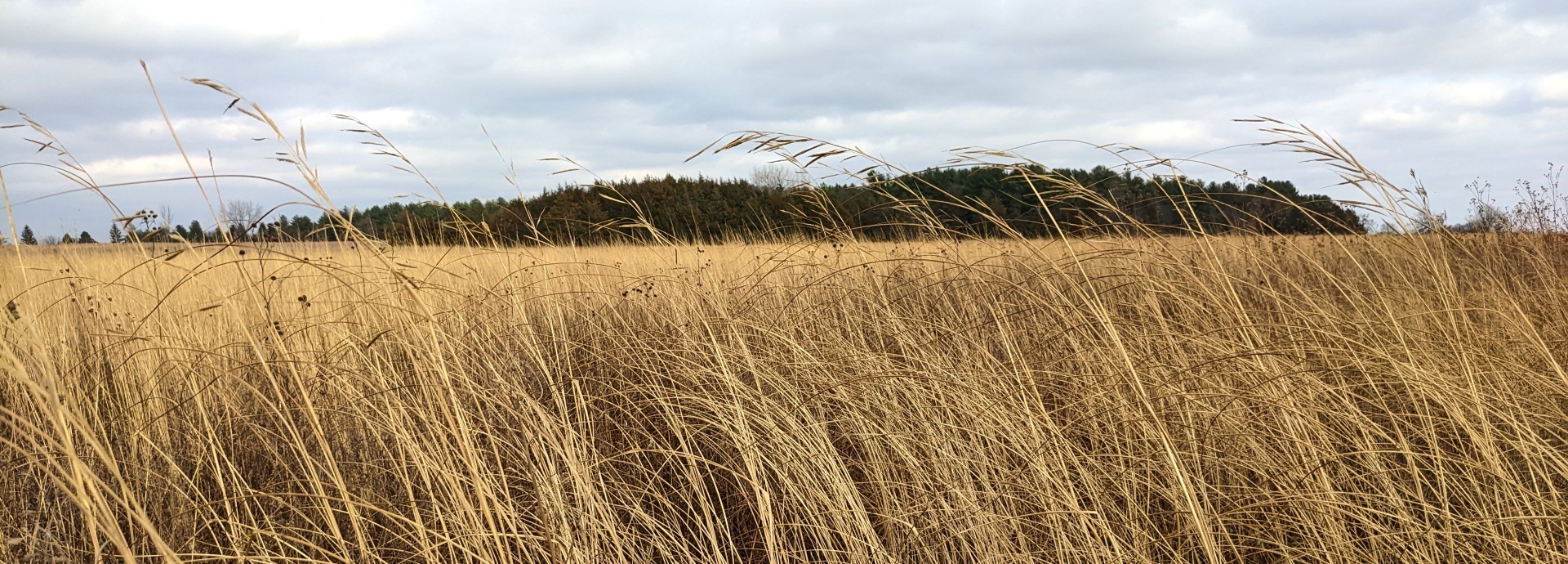
Spartina pectinata Bosc ex Link
Alternate Common Names: slough grass, marshgrass, ripgut, fresh water cordgrass
Scientific Synonyms: Sporobolus michauxianus (Hitchc.) P.M. Peterson & Saarela, Spartina michauxiana Hitchc., Spartina pectinata Bosc ex Link var. suttiei (Farw.) Fernald
Family: grass family (Poaceae)
Functional Group: warm season grass
Description
- Life cycle and growth form
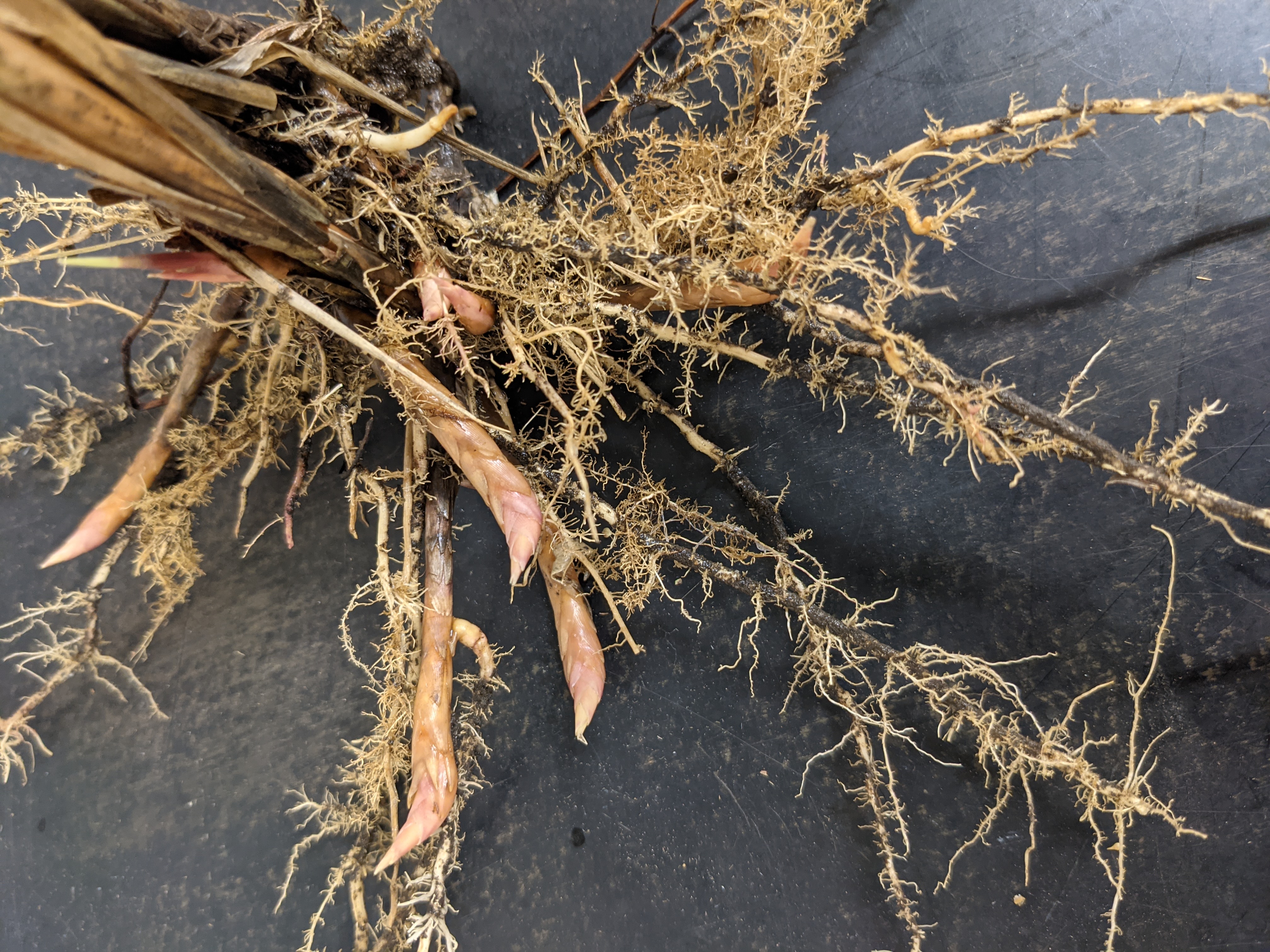
Perennial warm-season grass from stout, scaly, sharply pointed rhizomes, forming large, dense, clonal colonies.
Height: 3-8 ft
- Leaves and stem
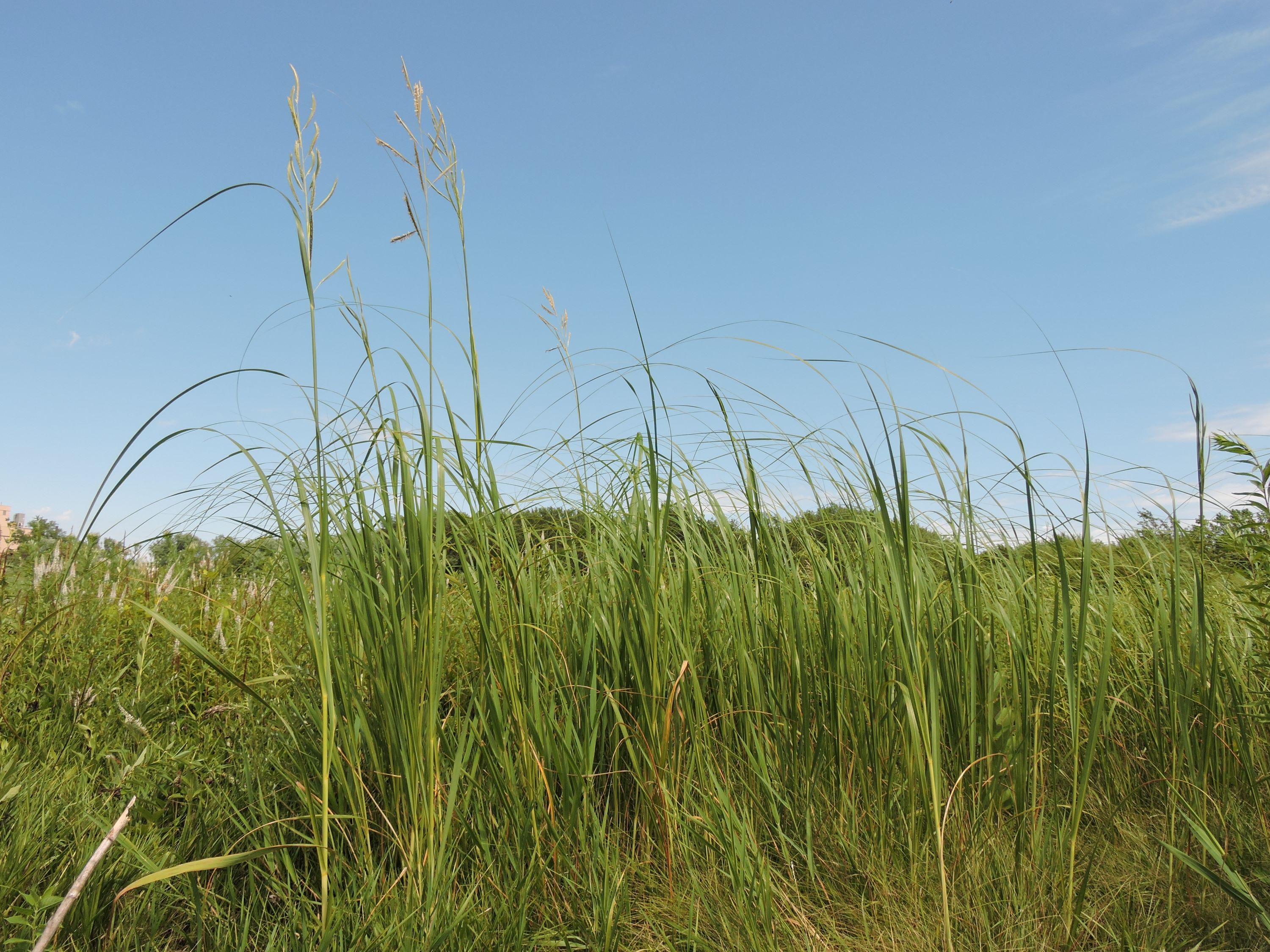
Leaf blades 6-15 mm wide (up to just over 1/2 in) and 20-120 cm long (8 - 48 in) with coarsely serrate margins that can cause minor lacerations on exposed skin, sheaths smooth with visible longitudinal veins; flowering stems (culms) are erect and hairless.
- Flower, fruit and seedhead
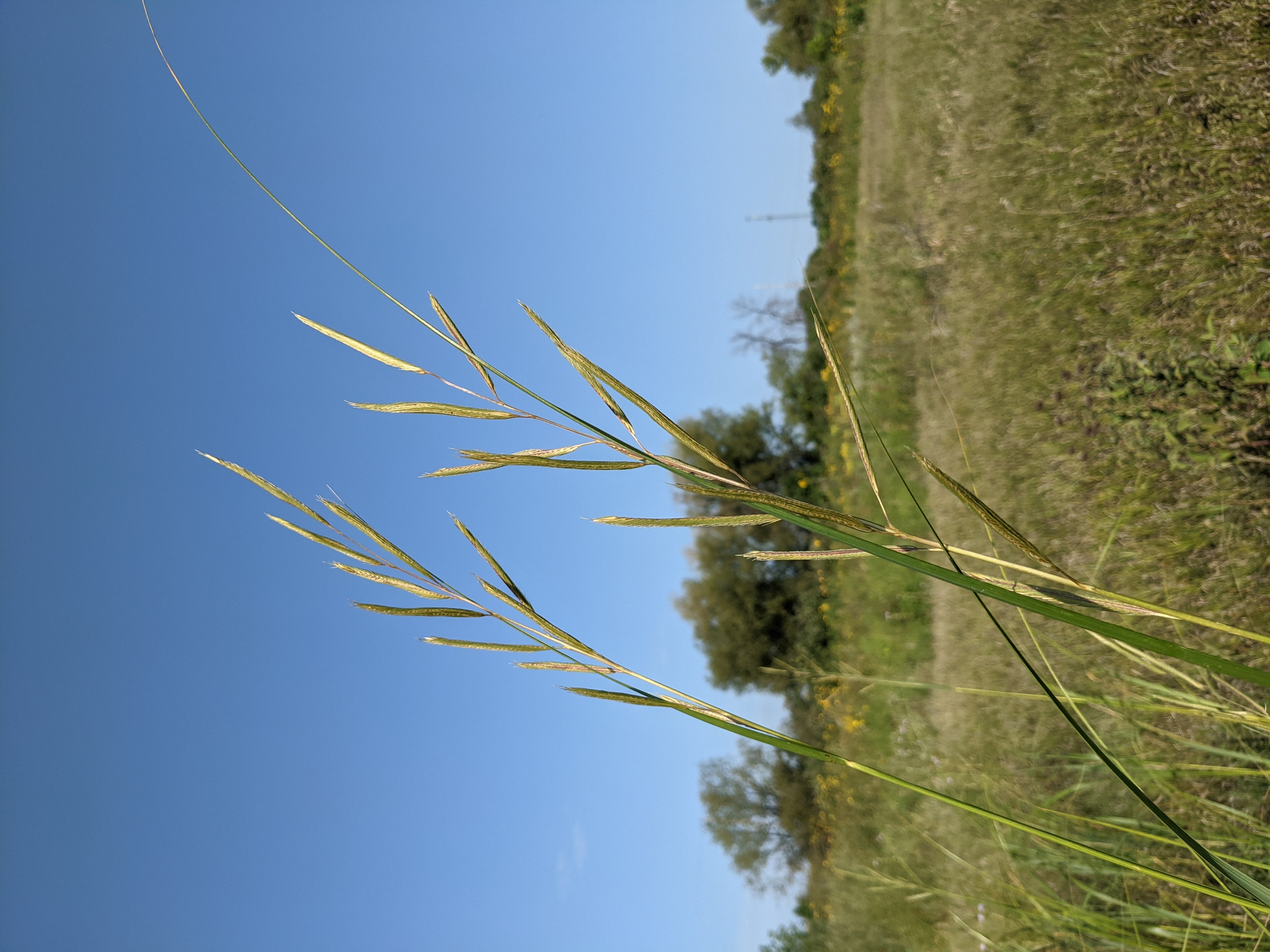
Fruit/seed head: Seedhead is a raceme 4-15 cm long (2-6 in) with 10-30 densely packed, one-sided spikes each containing 10-25 flattened spikelets. The entire spikelet sheds at maturity, leaving a naked stalk.
Pollination: wind
- Seed
Seed characteristics
Seed weight:
Seeds per ounce: 6,600 (IA NRCS)
1000 seed weight: 1.85 g (Seed Information Database)
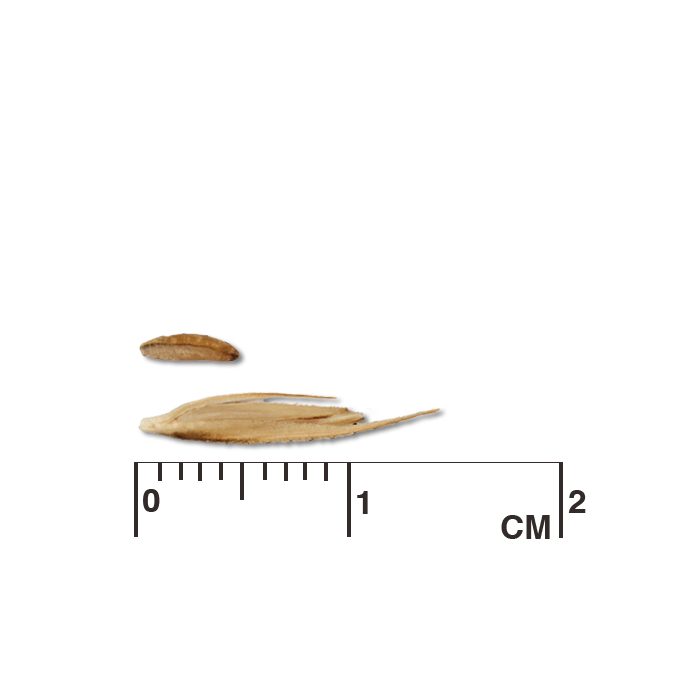
Description: One-flowered spikelet with short awn (less than 1/4 in). Seeds are very flat. Caryopsis is about 5 mm long.
Typical seed test
PLS: 71%
Purity: 75%
Germination: 20%
Dormant: 50%
(averages obtained from 4 tests of purchased seed lots)
- Habitat and range
Habitat: Wet-mesic to wet soil; full sun; swales, roadside ditches, marshy areas, drainage areas, and wetlands; it will grow on seasonally dry sites, but won’t tolerate prolonged flooding; Wetland Indicator Status is Facultative Wetland (FACW) for the Midwest; irrigation is necessary for seed production plots.
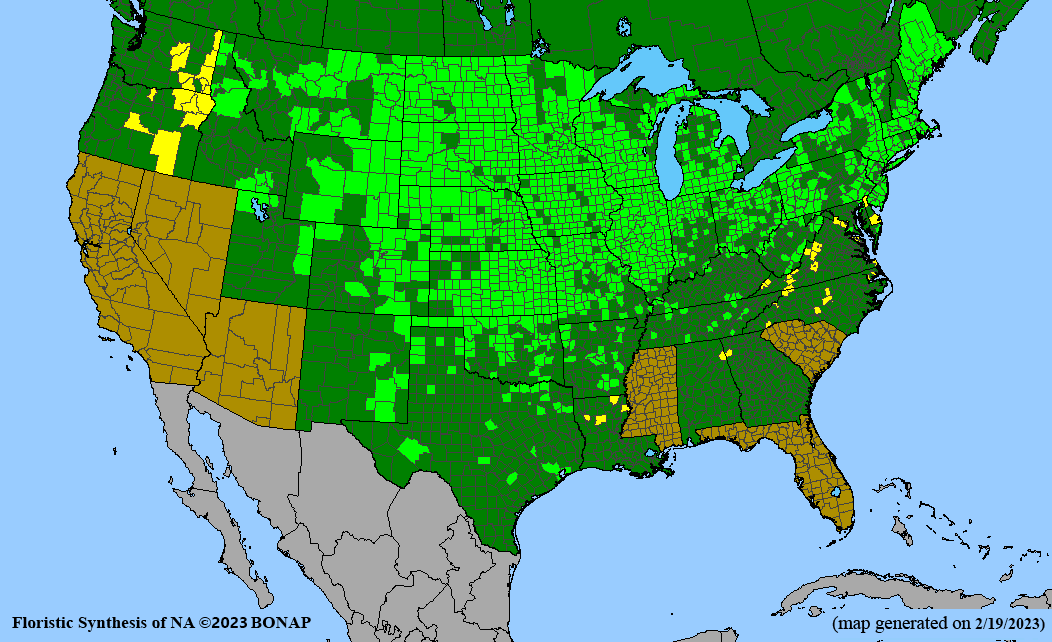
Conservation status: Global- G5, secure; Delaware, District of Columbia,Georgia, and North Carolina- S1, critically imperiled; Louisiana, Oregon, Virginia, and Washington- S2, imperiled; Kentucky- S2/S3, imperiled to vulnerable (NatureServe)
General Comments
Cordgrass has a reputation for poor seed production. Its primary mode of growth is vegetative spread by rhizomes. Cordgrass often forms large, dense colonies with few flowering stalks, and these mostly situated on the outer, leading edges of the colony. Insect predation of the seed heads further limits seed production from native stands. Yet cordgrass does grow readily from viable seed in plantings. Direct seeding for a seed increase stand, however, is not recommended.
Recommendations for Seed Production
- Establishment for seed production
Direct seeding
Not recommended for this species.
Greenhouse
Seed pre-treatment: Moist stratify seed for up to 4 weeks, or soak in water for 24 hours and freeze overnight to improve germination.
Sowing: Sow seed in greenhouse two months before last frost free date at 1/2 in depth.
Transplanting: Transplant after all danger of frost. Greenhouse grown plugs can be transplanted into wide row spacing, 6-8 ft between rows, with plants 2-3 ft apart within the rows. This gives the newly established plants adequate space for rhizome spread and promotes more flowering and seed set after establishment.
- Stand management
Weeds: Pre-emergent herbicides can be used after transplanting seedling plugs or pieces of rhizome. It’s critical to water-in transplants to seal soil around roots to prevent herbicide from coming into contact with and possibly damaging roots. Read and follow label instructions.
Pests: There are several species of host-specific insects that use Spartina including a moth larva that feeds within developing seed heads, and these can be destructive in seed production settings. These can reportedly be controlled with insecticide application during flowering. There is also reportedly less predation when grown in northern regions (e.g. North Dakota) (USDA-NRCS Plant Guide).
Diseases: None noted.
- Seed production
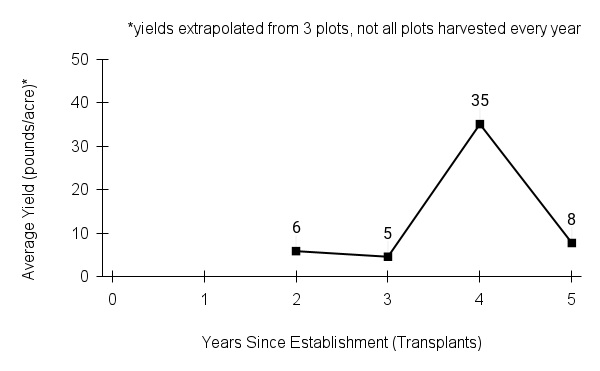 First harvest: Some flowering and seed set occurs in the second growing season from greenhouse grown transplants. Seed production may occur the first year from transplanted rhizomes.
Yield: 10-30 bulk pounds/acre at TPC. Other growers report yields of 30 to 75 pounds/acre (USDA-NRCS Plant Guide).
Stand life: Irrigation is critical to successful establishment and good seed production of this species over the first few years of stand life. Expect 2-3 years for the stand to be established. Stand may become root-bound by the fifth year, and seed production declines, at which time a new stand should be established from rhizomes.
Flowering date: Mid-July to early September.
Seed maturity/Harvest date: Late September to early October.
Seed retention: Shattering occurs from mid to late October.
Harvest date range at TPC (2003-2007): Sept 28 - Nov 3
Recommended harvest method: Combine at maturity and before shattering. (No combine settings available in Appendix).
- Seed cleaning and storage
Cleaning process: Pre-clean air-dried material by scalping thru 1/2 in and 1/4 in mesh to remove large particles. Remove awns with debearder. Seeds are long and flat, and easily damaged by a brush machine. Air-screen to clean. Refer to Appendix C for settings.
Seed storage: cool/dry (33-50° F, 30-50% RH)
Released Germplasm
Source Identified material: Natural Selections/Iowa Ecotype Project Zone “Iowa”
Selected germplasm: Atkins Germplasm (NE), Kingston Germplasm (MA, ME, NH), Red River Natural Germplasm (MN, ND, SD), Southampton Germplasm (NY)
- References
Chayka, K. (n.d.). Spartina pectinata (prairie cordgrass). Minnesota Wildflowers. https://www.minnesotawildflowers.info/grass-sedge-rush/prairie-cordgrass
Hilty, J. (2019). Prairie cordgrass - Spartina pectinata. Illinois Wildflowers. https://www.illinoiswildflowers.info/grasses/plants/pr_cordgrass.htm
Houseal, G. A. (2007). Grasses warm season. In G. A. Houseal (Eds.), Tallgrass Prairie Center’s native seed production manual (pp. 80–81). Tallgrass Prairie Center - University of Northern Iowa.
Jensen, N.K. (2017, September 13) Prairie Cordgrass Spartina pectinata Bosc ex Link. USDA NRCS Plant Guide. https://www.nrcs.usda.gov/plantmaterials/nypmcpg11942.pdf
Kartesz, J.T., The Biota of North America Program (BONAP). 2023. North American Plant Atlas. (http://bonap.net/napa). Chapel Hill, N.C. [maps generated from Kartesz, J.T. 2023. Floristic Synthesis of North America, Version 1.0. Biota of North America Program (BONAP). (in press)]
NatureServe. 2024. NatureServe Network Biodiversity Location Data accessed through NatureServe Explorer [web application]. NatureServe, Arlington, Virginia. Available https://explorer.natureserve.org/. (Accessed: February 29, 2024).
USDA NRCS National Plant Data Team. (n.d.). Spartina pectinata Bosc ex Link. USDA plants database. https://plants.usda.gov/home/plantProfile?symbol=SPPE
Species Guide Updated 12/15/2025