

composite dropseed
Table of Contents
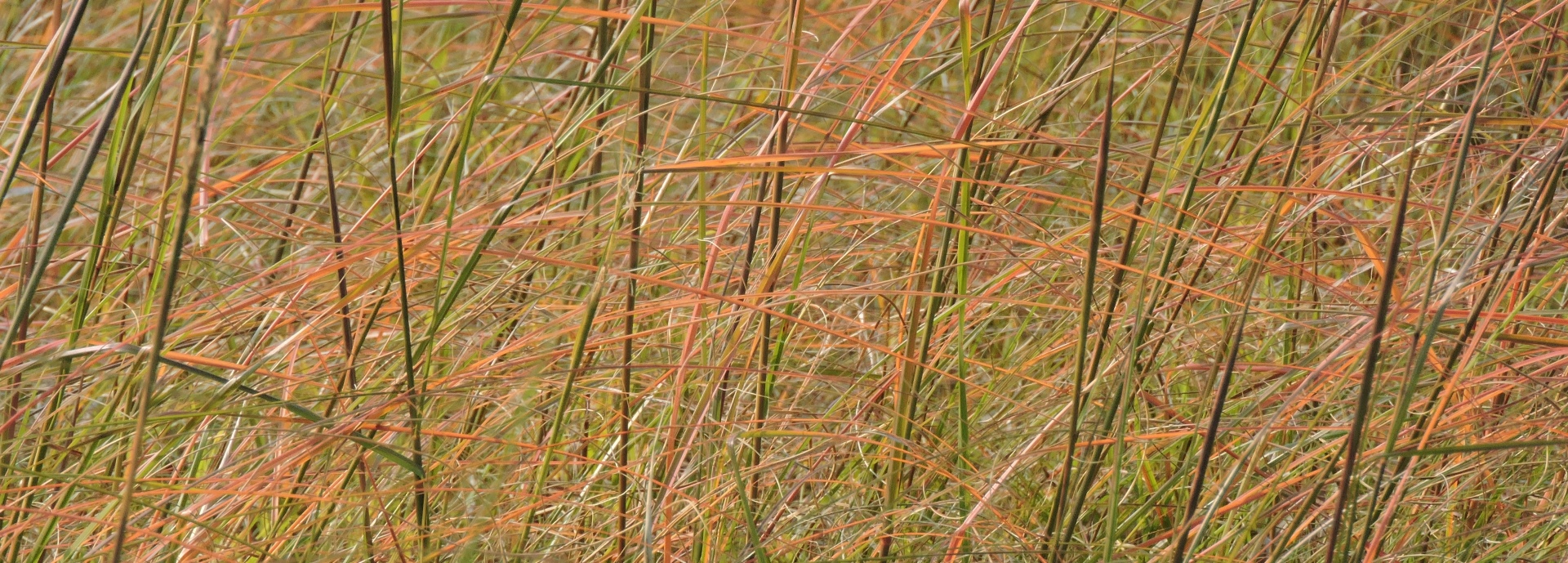
Sporobolus compositus (Poir.) Merr.
Alternate Common Names: rough dropseed, tall dropseed, dropseed, flag grass
Scientific Synonyms: Sporobolus asper (P. Beauv.) Kunth
Family: grass family (Poaceae)
Functional Group: warm season grasses
Description
- Life cycle and growth form
Perennial from a fibrous root system, appearing as single stems or in loose clumps.
Height: 1.5-5 ft
- Leaves and stem

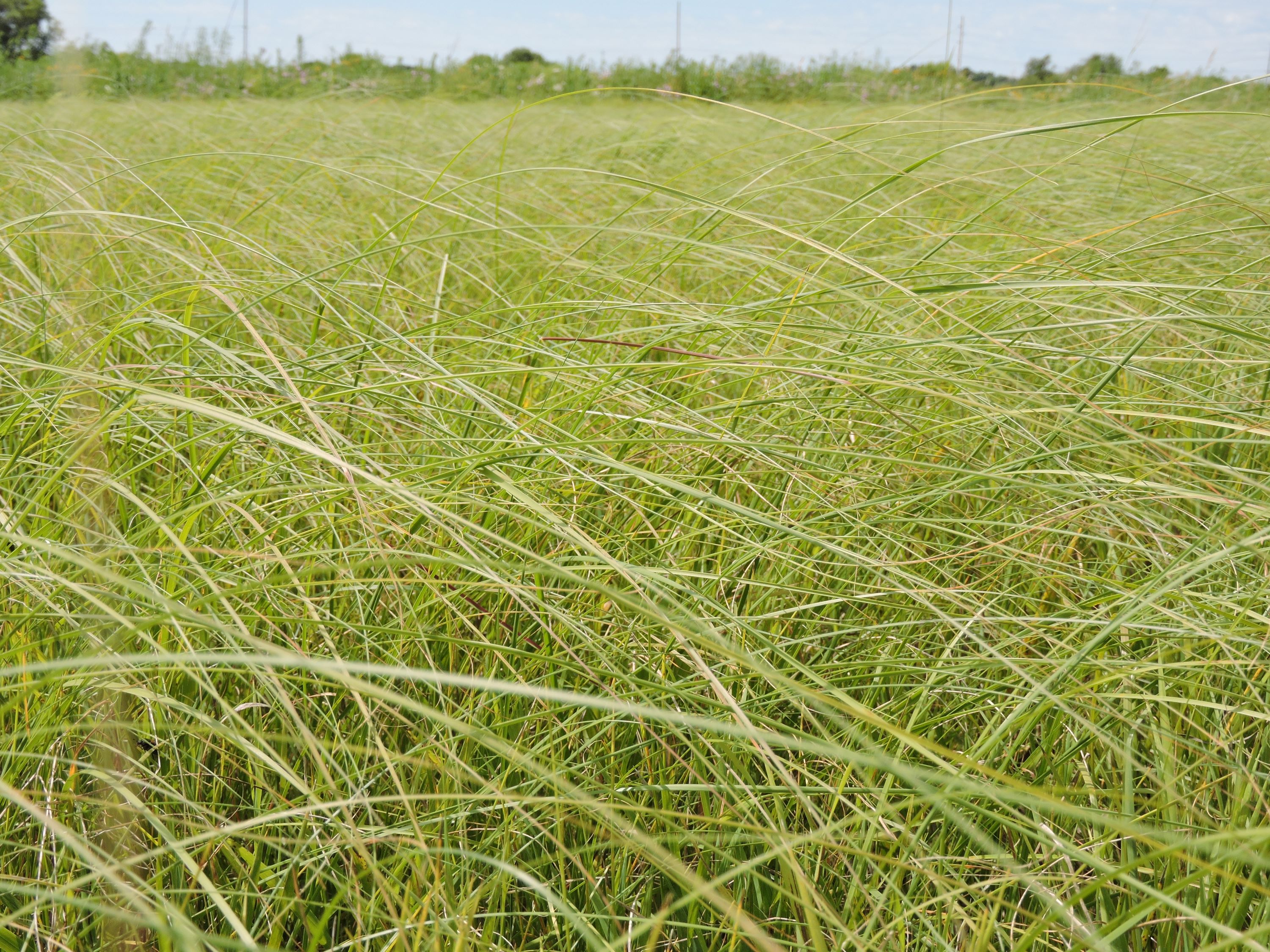
Leaf sheaths smooth except for hair tufts near junction with the blade (collar); leaf blades 3/16 in wide and up to 24 in long with tapering thread-like tip and rough upper surface; stems are stout and hairless, multiple stems from the base form a bunch.
- Flower, fruit and seedhead
Fruit/seed head: Narrow contracted spike-like panicle 4-8 in long, develops within sheath of uppermost leaf, only partially exposed at maturity.
Pollination: wind pollinated

- Seed
Seed characteristics
Seed weight:
Seeds per ounce: 30,000 (IA NRCS)
Seeds per pound 480,000 (IA NRCS)
1000 seed weight: 1.03 g (Seed Information Database)
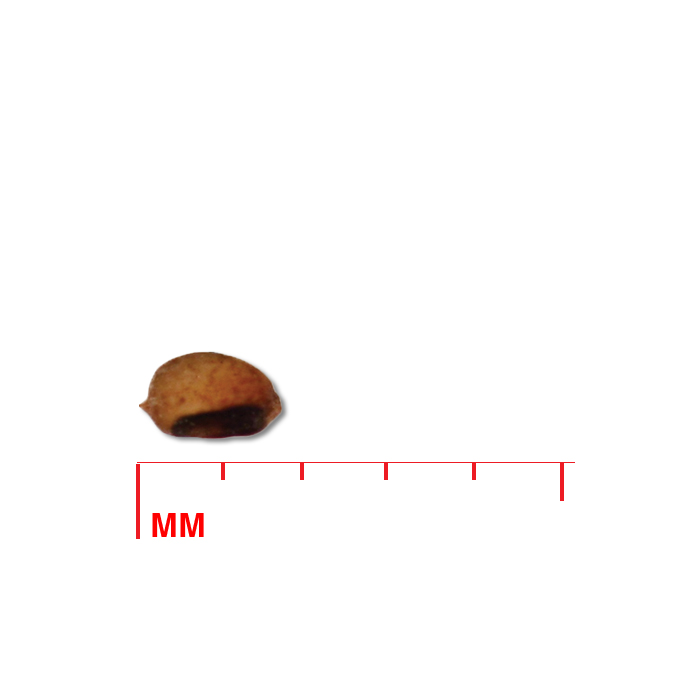
Description: Spikelets are one-flowered, no awns present, 3.3-7 mm long (about 1/4 in). Grain is about 2 mm (1/16 in) in diameter, smooth, rounded, often dark brown.
Typical seed test
PLS: 94% (n = 11)
Purity: 100% (n = 11)
Germination: 60% (n = 9)
Dormant: 35% (n = 9)
(averages obtained from n tests of purchased seed lots)
- Habitat and range
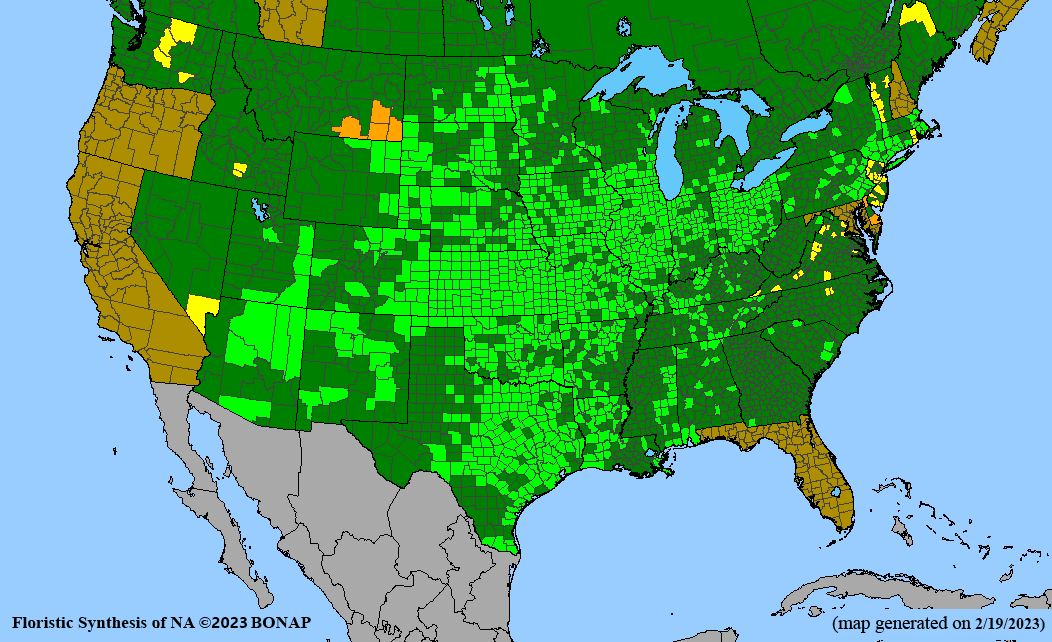
Habitat: Dry to dry-mesic, on well-drained clay or silt loams; also on intermittently wet and dry sandy or rocky soils; full sun; prairies, savannas, roadsides, along railroads, fields, limestone glades; well-drained loamy soils preferred for seed production.
Conservation status: Global- G5, secure; Delaware and Montana- SH, possibly extirpated; West Virginia- S1, critically imperiled; Vermont and Wyoming- S2, imperiled (NatureServe)
General Comments
Composite dropseed may be abundant on dry prairies as a bunchgrass or spreading by short rhizomes and is common on the shoulders of gravel roads in some areas. This species produces abundant seed, is very competitive when directly seeded into appropriate soils, and is relatively easy to harvest and clean. It has potential as an important nurse or cover crop for high diversity native plantings where quick establishment is needed and when seeding into warm soil.
Recommendations for Seed Production
- Establishment for seed production
Direct seeding
Row spacing: 36 in 24 in 12 in Solid Stand PLS lbs/acre: 1.2 1.8 3.6 3.6 Seeding depth: 1/4 in
Seeding method: native seed drill or broadcast for solid stand
Seeding time: late spring
Weed control: Prepare clean, firm, weed free seedbed prior to seeding.
Greenhouse
Seed pre-treatment: No stratification necessary. Germination of grass seed usually improves with proper storage (cool, dry conditions) throughout the first year after harvest.
Sowing: Sow seed in greenhouse two months before last frost free date at 1/4 in depth.
Transplanting: Transplant after all danger of frost.
- Stand management
Weeds: Mow stands high (6–12 in) first growing season to prevent weed canopy from shading seedlings. Herbicides include Outlook (dimethenamid-P) for grass control. Pendimax (pendimethalin) can be used to control broadleaf weeds in established stands. Always read label instructions.
Pests: None noted.
Diseases: None noted.
- Seed production
 First harvest: Flowering and seed set may occur at the end of the second growing season from direct seeding.
Yield: 120-250 bulk pounds/acre during peak production (per acre yields extrapolated based on production from 3 plots)
Stand life: Stand remains productive over several years, projected stand life 10-15 years.
Flowering date: Flowering begins in mid to late August in northern Iowa.
Seed maturity/Harvest date: Mid to late September in Northern Iowa.
Seed retention: Some shattering occurs soon after maturity.
Harvest date range at TPC (2003-2010): Sept 26 - Oct 27
Recommended harvest method: Composite dropseed has very tough stems and leafy material that may clog the sickle bar cutting head. Slow ground speed to compensate. Seed threshes fairly easily.
- Seed cleaning and storage
Cleaning process: Pre-clean air-dried material by scalping thru 1/2 in and 1/4 in mesh if necessary to remove large particles. Glumes can be removed with a brush machine prior to air-screening if desired, or simply air-screen to clean.
Seed storage: cool/dry (33-50° F, 30-50% RH)
Released Germplasm
Source Identified material: Natural Selections/Iowa Ecotype Project: Zone 1 (northern Iowa), Zone 2 (central Iowa), and Zone 3 (southern Iowa)
- References
Chayka, K. (n.d.). Sporobolus compositus (rough dropseed). Minnesota Wildflowers. https://www.minnesotawildflowers.info/grass-sedge-rush/rough-dropseed
Gleason, H. A., & Cronquist, A. (1991). Poaceae. In Manual of Vascular Plants of Northeastern United States and Adjacent Canada (2nd ed., p. 789). The New York Botanical Garden.
Hilty, J. (2019). Tall dropseed - Sporobolus compositus. Illinois Wildflowers. https://www.illinoiswildflowers.info/grasses/plants/tall_dropseed.htm
Houseal, G. A. (2007). Grasses warm season. In G. A. Houseal (Eds.), Tallgrass Prairie Center’s native seed production manual (pp. 76–77). Tallgrass Prairie Center - University of Northern Iowa.
Kartesz, J.T., The Biota of North America Program (BONAP). 2023. North American Plant Atlas. (http://bonap.net/napa). Chapel Hill, N.C. [maps generated from Kartesz, J.T. 2023. Floristic Synthesis of North America, Version 1.0. Biota of North America Program (BONAP). (in press)]
NatureServe. 2024. NatureServe Network Biodiversity Location Data accessed through NatureServe Explorer [web application]. NatureServe, Arlington, Virginia. Available https://explorer.natureserve.org/. (Accessed: February 29, 2024).
Peterson, P. M., Hatch, S. L., & Weakley, A. S. (2021, May 11). Sporobolus compositus (Poir.) Merr. Flora of North America. http://floranorthamerica.org/Sporobolus_compositus
USDA NRCS National Plant Data Team. (n.d.). Sporobolus compositus (poir.) Merr. USDA plants database. https://plants.usda.gov/home/plantProfile?symbol=SPCO16
Species Guide Updated 12/11/2025