

showy goldenrod
Table of Contents
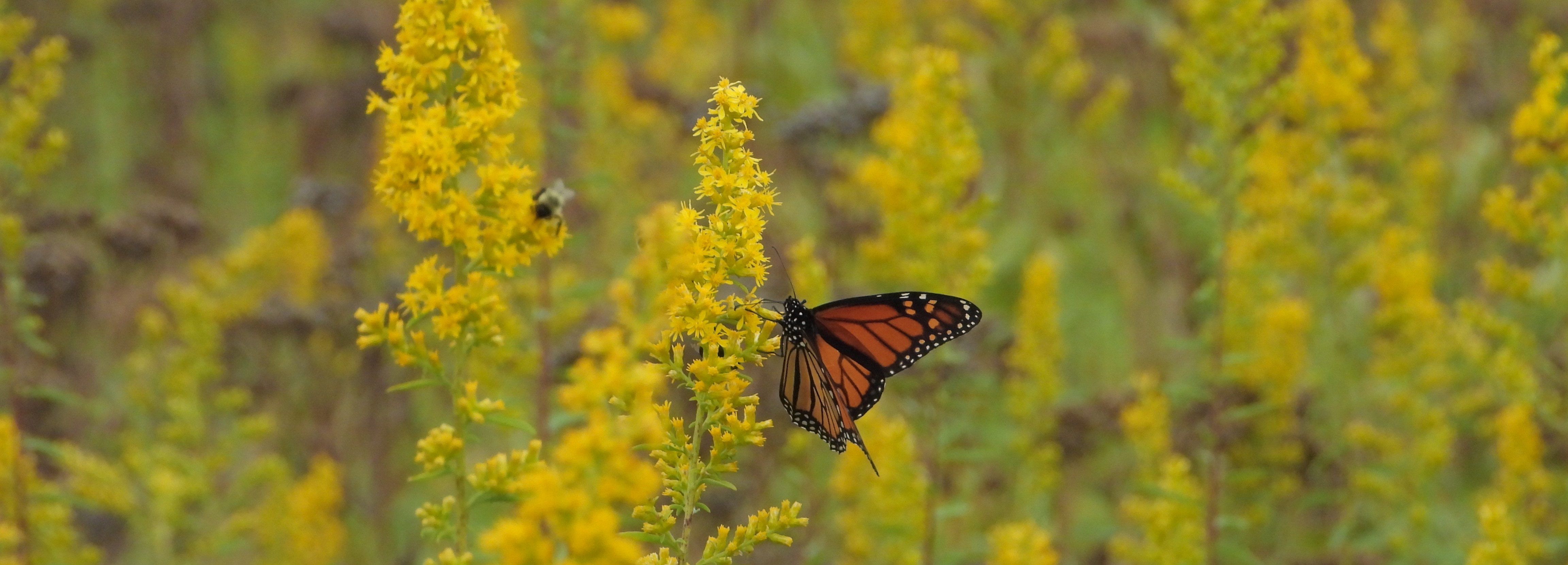
Solidago speciosa, Nutt.
Alternate Common Names: goldenrod
Scientific Synonyms: Aster speciosus (Nutt.) Kuntze
Family: Aster Family, Daisy Family (Asteraceae)
Functional Group: forbs (wildflowers)
Description
- Life cycle and growth form
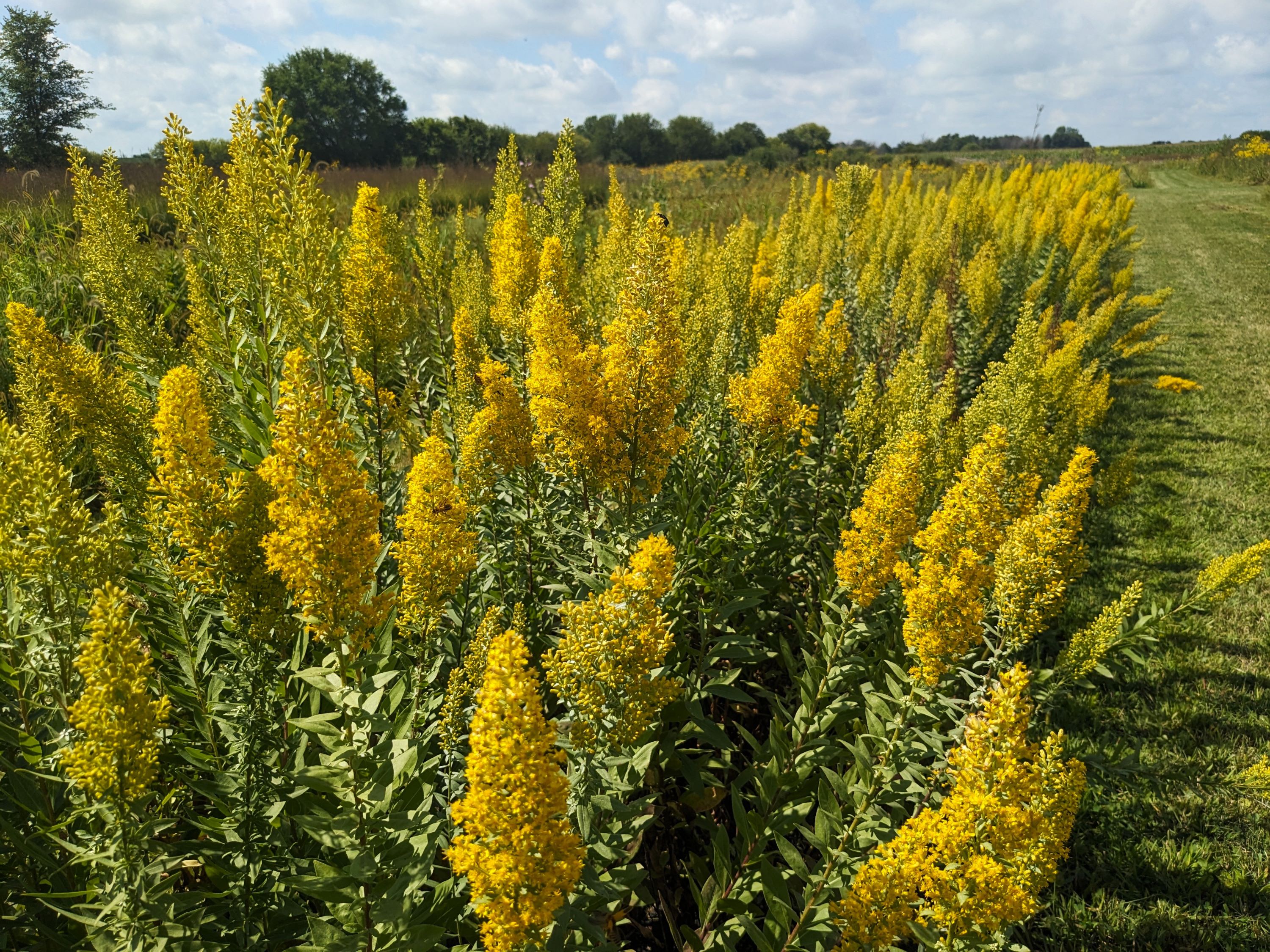
Perennial from a fibrous root system; clumps of stems expand slowly from rhizomes.
Height: 1 - 5ft
- Leaves and stem
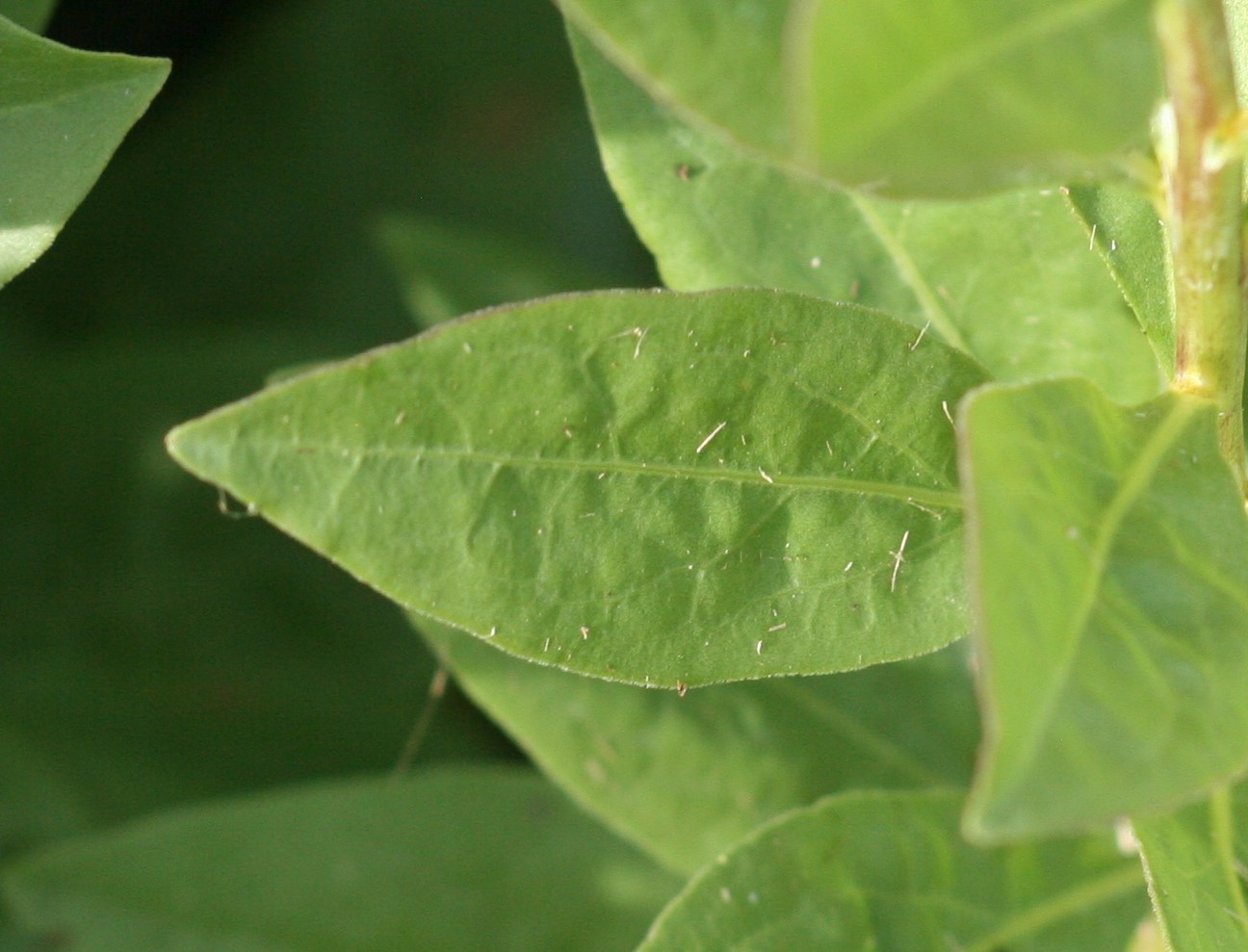
Leaves alternate; basal leaves up to 12 in long and 3 in wide, leaf size decreasing up the stem; leaves lance-shaped to oval with smooth margins, mostly hairless; stem green to reddish purple, unbranched.
- Flower, fruit and seedhead
Flower: Inflorescence of numerous small, bright yellow composite heads is more upright than those of most other goldenrods, shaped like an elongated, inverted cone at the end of the stem; individual heads (1/4 in wide) are smaller than those of stiff goldenrod (Oligoneuron rigidum) but larger than those of more common “weedy” goldenrods (e.g., Solidago canadensis).
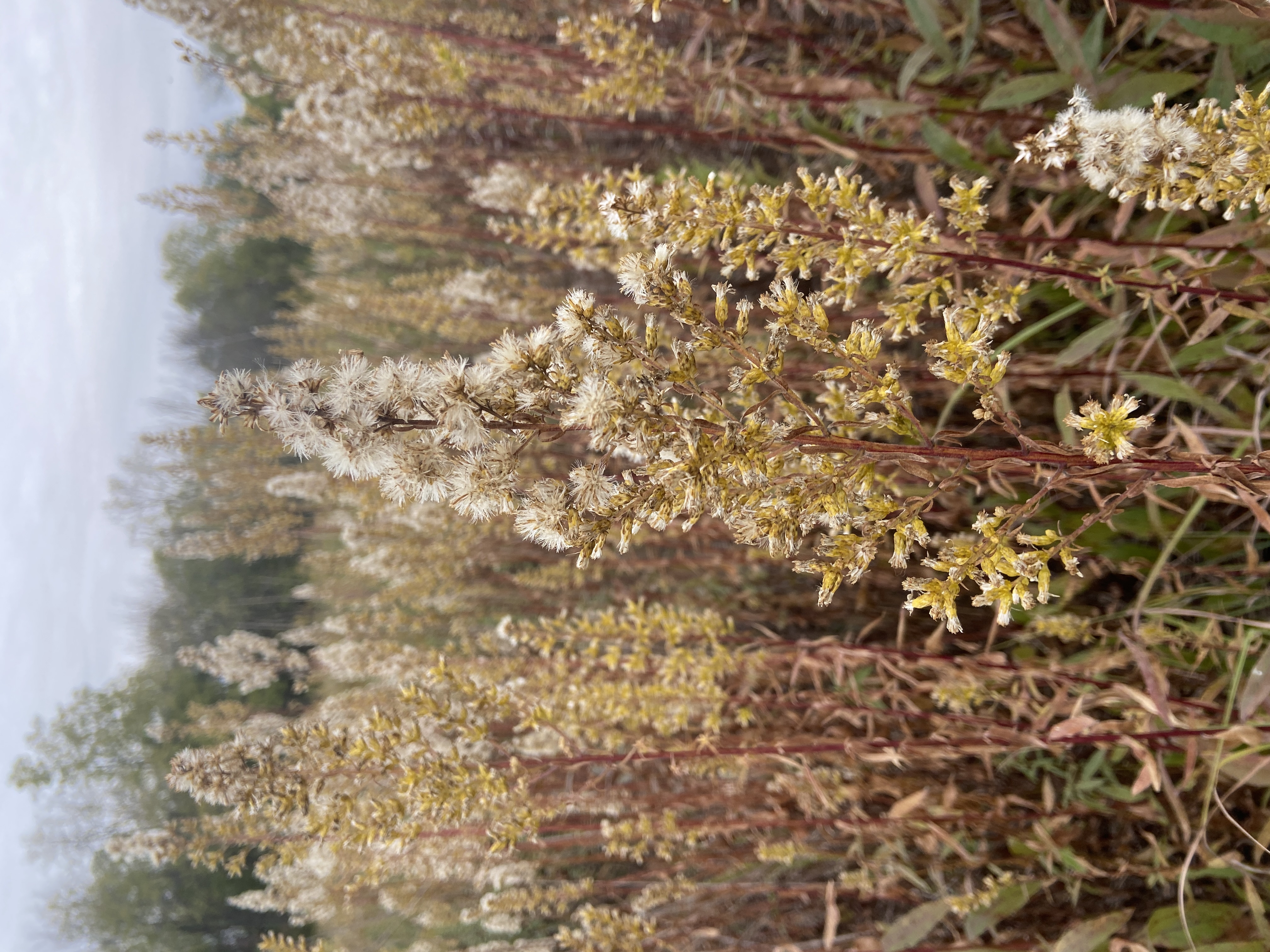
Fruit/seed head: Heads become fluffy as the pappus on the ripening achenes expands.
Pollination: Insects, especially bees, wasps, and beetles, but also butterflies, moths, and flies.
- Seed
Seed characteristics
Seed weight:
Seeds per ounce: 95,000 (IA NRCS)
1000 seed weight: 0.26g (Seed Information Database)
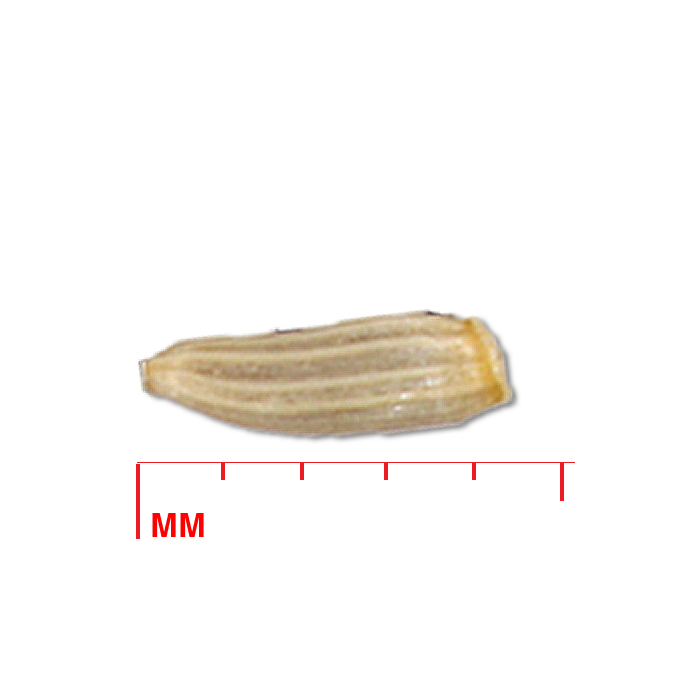
Description: “Seed” is a small achene, 2 mm long and less than 1 mm wide, pale tan with darker, shallow grooves, tufted with a pale pappus for wind dispersal.
Typical seed test
PLS: 89% (n = 12)
Purity: 93% (n = 12)
Germination: 19% (n = 9)
Dormancy: 70% (n = 10)
(averages obtained from n tests of purchased seed lots)
- Habitat and range
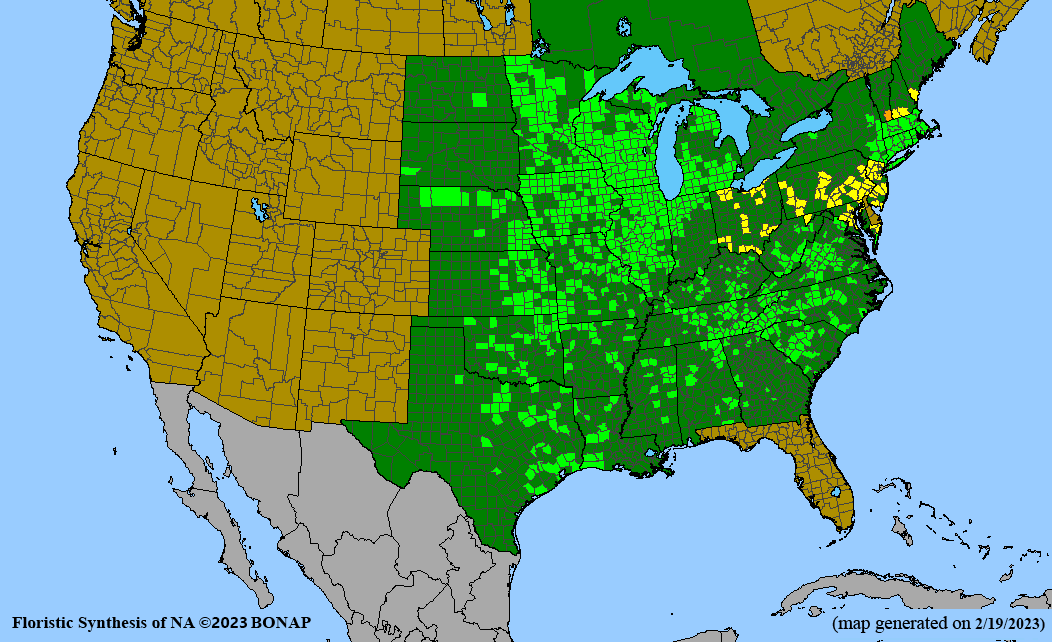
Habitat: Dry to mesic soil; partial to full sun; sand prairies, along railroads, thickets, woodland edges, rocky upland forest openings, savannas, abandoned fields. Make sure that production plots are sited in well-drained mesic to dry-mesic soils as these plants perform poorly if soils remain saturated for an extended period.
Conservation status: Global- G5, secure; Vermont- SH, possibly extirpated; Maine- S1, critically imperiled; Maryland, Ohio, and Wyoming- S2, imperiled; in all other states within its natural range, status is S4 (apparently secure) to S5 (secure) or unranked (NatureServe).
General Comments
The name “showy goldenrod” suits this species well. Its upright wands of bright yellow heads shine like torches in the prairie for a month in late summer and fall. While rhizomatous, this species spreads less aggressively than the more common, clonal goldenrod species like Canada goldenrod, and it tends to be found in drier habitats. Pollinators of many kinds, including migrating monarch butterflies and the endangered rusty patched bumble bee, are drawn to the pollen and nectar it provides late into the fall. There are subspecies of S. speciosa that have been elevated to species level fairly recently, and we are not yet certain how this may affect how showy goldenrod is grown and marketed for the native seed supply.
Recommendations for Seed Production
- Establishment for seed production
Direct seeding
We do not have experience with direct seeding this species for seed production.
Greenhouse
Seed pre-treatment: Cold/moist stratification for 60 days works well.
Sowing: Surface sow (or cover very lightly) in germination flats or plugs (2-3 seeds per cell) in the greenhouse about 2-3 months before the last frost. We find that 73-cell plug flats with deep cells, grooved sides, and wide bottom openings encourage the formation of well-rooted plugs.
Transplanting: When plugs are well-rooted, move the flats outside to harden off, then transplant at 8-12 in intervals in prepared plasticulture rows in well-drained soil after danger of frost.
- Stand management
Weeds: Prepare a clean, weed-free bed and use plastic mulch to reduce weed pressure in the first year. Remove plastic at the end of the first growing season to prevent moisture issues. Mow or cultivate between rows. Hand weed or rogue to remove competitive weeds or those that would contaminate the seed crop (e.g., small seeded asters or other goldenrods).
Pests: None noted.
Diseases: If soil moisture is excessive, plants succumb to root diseases. We have not identified the particular pathogens involved but have lost large numbers of plants in a plot due to saturated soil conditions during a protracted wet spring. Site production plots for this species in very well-drained locations.
- Seed production
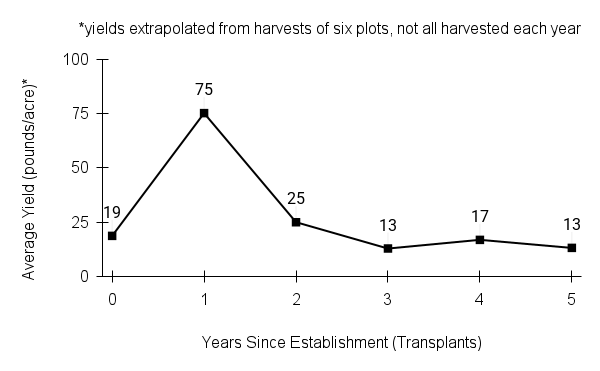 First harvest: A small harvest can be expected in the first year from transplants. Peak harvest is in the second year.
Yield/acre: 20-75 pounds per acre (extrapolated from harvests of six plots grown at TPC)
Stand life: Plants may persist for many years in suitable soils, but in our experience, seed yields peaked in the year after planting, then declined in year 3 and remained low.
Flowering date: late August to late September in northern Iowa
Seed maturity/Harvest date: early to late October in northern Iowa
Seed retention: High risk of shattering as soon as pappus is fluffy.
Harvest date range at TPC (2004-2024): October 4 - October 25 (later harvests possible in planting year)
Recommended harvest method: Hand clip early maturing heads just as pappus begins to be visible at the tips of ripening heads, then combine the plot at peak maturity. Swathing, then ripening the stems in a sheltered location such as a covered shed, might reduce loss of ripe seed to the wind.
- Seed cleaning and storage
Cleaning process: Pass harvested material through 1/4 in mesh to remove larger pieces of stems and leaves. (If hand harvested, this step serves to thresh the seeds from the stems.) Brush with medium bristles to remove pappus from achenes, then air-screen at least two times.
Seed storage: cool/dry (33-50° F, 30-50% RH)
Released Germplasm
Source Identified material: Natural Selections/Iowa Ecotype Zone 1 (northern Iowa), Zone 2 (central Iowa), and Zone 3 (southern Iowa).
- References
Chayka, K. (n.d.). Solidago speciosa (Showy Goldenrod). Minnesota Wildflowers. https://www.minnesotawildflowers.info/flower/showy-goldenrod
Hilty, J. (2019). Showy Goldenrod - Solidago speciosa. Illinois Wildflowers. https://www.illinoiswildflowers.info/prairie/plantx/shw_goldenrodx.htm
Kartesz, J.T., The Biota of North America Program (BONAP). 2023. North American Plant Atlas. (http://bonap.net/napa). Chapel Hill, N.C. [maps generated from Kartesz, J.T. 2023. Floristic Synthesis of North America, Version 1.0. Biota of North America Program (BONAP). (in press)]
Missouri Botanical Garden. (n.d.). Solidago speciosa. Missouri Botanical Garden - Plant Finder https://www.missouribotanicalgarden.org/PlantFinder/PlantFinderDetails.aspx?taxonid=277530&isprofile=0&This
NatureServe. 2024. NatureServe Network Biodiversity Location Data accessed through NatureServe Explorer [web application]. NatureServe, Arlington, Virginia. Available https://explorer.natureserve.org/. (Accessed: February 29, 2024).
Semple, J. C., & Cook, R. E. (2020, November 5). Solidago speciosa Nuttall. Flora of North America. http://floranorthamerica.org/Symphyotrichum_oolentangiense
USDA NRCS National Plant Data Team. (n.d.). Solidago speciosa Nutt. USDA plants database. https://plants.usda.gov/home/plantProfile?symbol=SOSP2
Species Guide Updated 1/5/2026