

sweet coneflower
Table of Contents
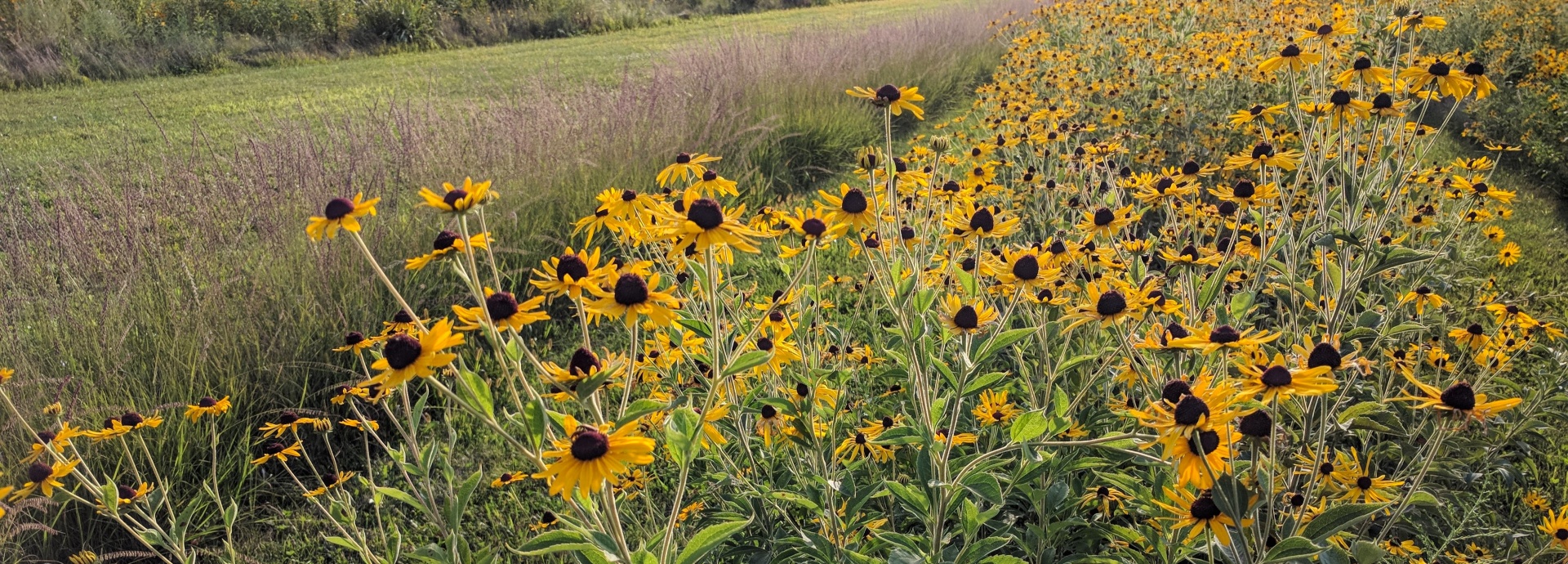
Rudbeckia subtomentosa, Pursh
Alternate Common Names: sweet black-eyed susan, fragrant coneflower
Family: aster and daisy family (Asteraceae)
Functional Group: forbs (wildflowers)
Description
- Life cycle and growth form
Perennial with a fibrous root system, forming clumps of stems from short rhizomes.
Height: 3 - 6 ft
- Leaves and stem

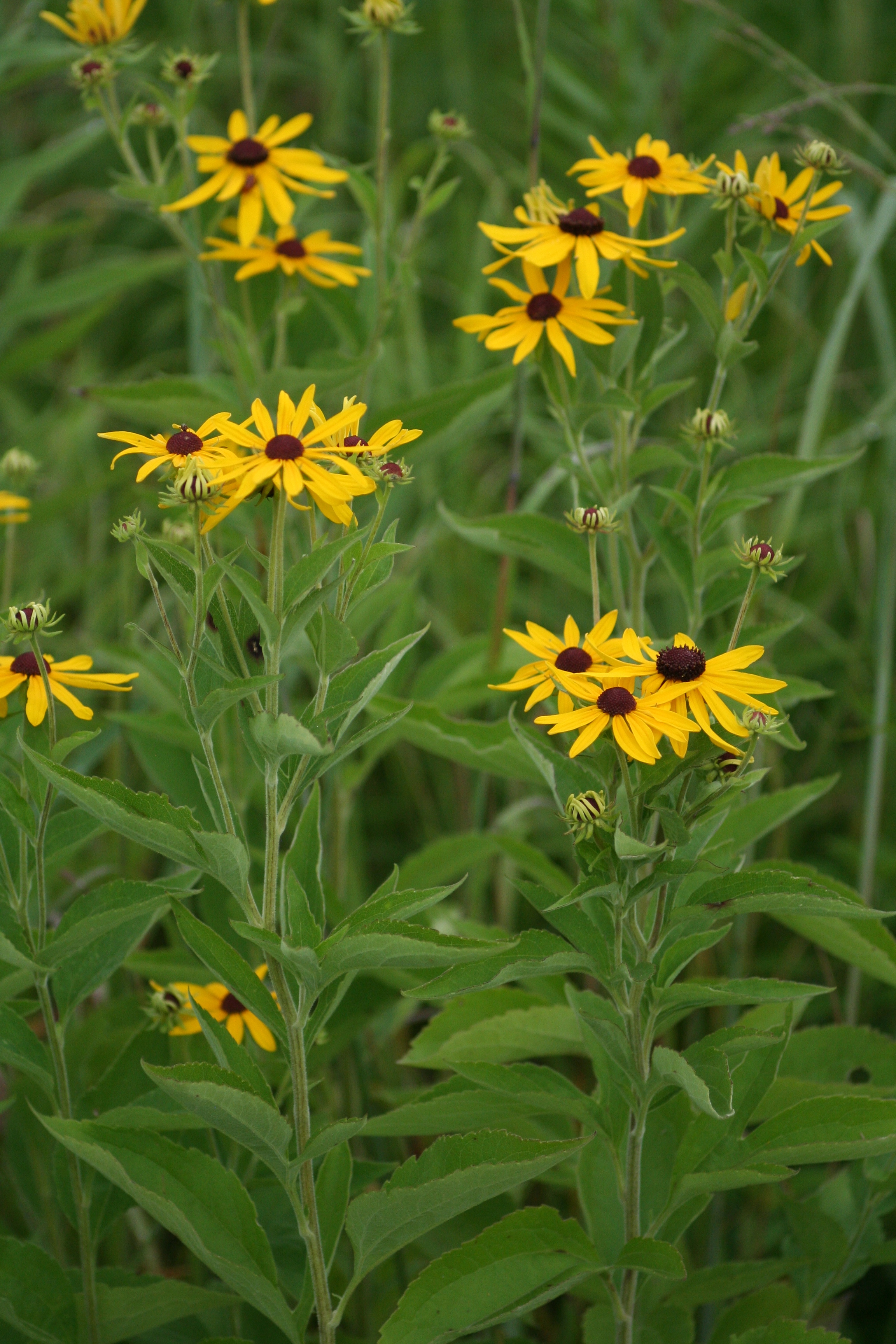
Leaves alternate with short, dense hairs; lower leaves stalked and with 3-5 deep lobes, lobes and petioles decreased to absent from upper leaves; stem is hairy and grooved, branched above.
- Flower, fruit and seedhead
Flower: Composite heads 2-3 in across have 10 to 20 widely spreading, yellow rays surrounding a dark brown to black cone of numerous tiny, fertile disk florets.
Fruit/seedhead: Ray florets drop, leaving a cone of disk florets that ripen to form the “seeds” (achenes).
Pollination: Insects, especially native bees, but also wasps, flower flies, beetles and small to medium-sized butterflies such as skippers.

- Seed
Seed characteristics
Seed weight:
Seeds per ounce: 43,000 (IA NRCS)
1000 seed weight: 0.94g (Seed Information Database)
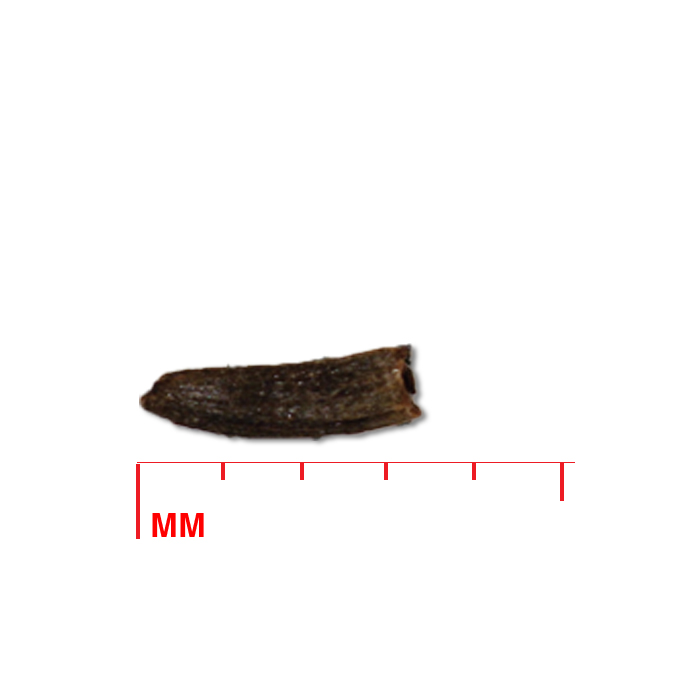
Description: “Seed” is a blackish achene, about 3 mm long, wedge-shaped, with no pappus.
Typical seed test
PLS: 92% (n = 10)
Purity: 95% (n = 9)
Germination: 50% (n = 6)
Dormancy: 36% (n = 7)
(averages obtained from n tests of purchased seed lots)
- Habitat and range
Habitat: Mesic to wet soil; partial to full sun; prairies, woodland openings and edges, savannas, streambanks; Wetland Indicator Status is Facultative Upland (FACU) for the Midwest; mesic loamy soils are recommended for seed production.
Conservation status: Global- G5, secure; Michigan- SX, presumed extirpated; Kentucky, Mississippi, and Texas- S1, critically imperiled; Tennessee- S2, imperiled; Iowa and Kansas- S3, vulnerable; in all other states within its natural range, status is S4 (apparently secure) to S5 (secure) or unranked (NatureServe).

General Comments
Sweet coneflower (Rudbeckia subtomentosa) is less commonly seen in planted prairies than a related species, blackeyed Susan (R. hirta). Both species have been adopted into the horticultural trade due to their long-lasting and showy flower heads. R. subtomentosa is typically a taller plant, has foliage with lobed leaves and shorter hairs, and is longer-lived than its cousin. The flowers of sweet blackeyed Susan provide pollen and nectar to a wide variety of native bees and other insects, and the seedheads release a sweet smell when crushed. The plants are relatively long-lived in production. They are sensitive to broad-leaf herbicide drift, but how much this affects seed production is unknown.
Recommendations for Seed Production
- Establishment for seed production
Direct seeding
We do not have experience with direct seeding this species for seed production.
Greenhouse
Seed pre-treatment: Cold/moist stratification for 30-60 days.
Sowing: Sow in a greenhouse 2-3 months before last frost. Surface sow or very lightly cover the small seeds with a fine seed starting mix.
Transplanting: When seedlings form well-rooted plugs, transplant at 8-12 in spacing in rows prepared with plastic mulch.
- Stand management
Weeds: Prepare a clean, weed-free bed. Plastic mulch suppresses weeds in the first year or two. Plants are tall, and once well-established, compete effectively with smaller annual weeds and cool-season grasses. Hand weed or rogue out weeds that could contaminate the seed lot.
Pests: No serious issues noted. Caterpillars of the gorgone checkerspot butterfly form gregarious feeding clusters and strip a few leaves, but this is more of a curiosity than a problem.
Diseases: None noted.
Herbicide susceptibility: Leaves show signs of herbicide injury (cupping and twisting) from exposure to drift from synthetic auxin herbicides.
- Seed production
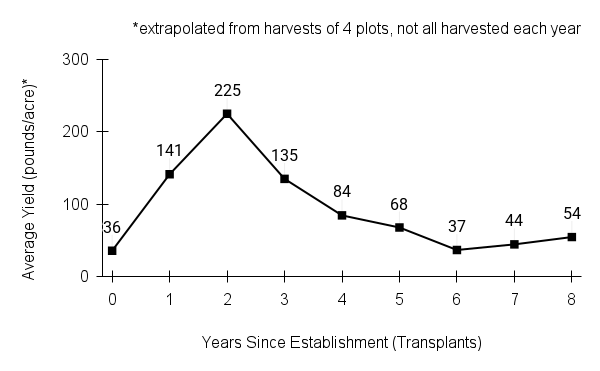 First harvest: A small harvest may be expected in the establishment year (from transplants).
Yield/acre: 40-225 pounds per acre (per acre yields extrapolated from harvest records of 4 plots)
Stand life: Plants persist for ten years or longer, although seed production declines after reaching a peak in the third year after transplanting.
Flowering date: early July through early September in northeast Iowa
Seed maturity/Harvest date: late September through mid October
Seed retention: Low risk of shattering; shattering begins in mid October.
Harvest date range at TPC (2004-2020): September 22 - November 3
Recommended harvest method: Combine
- Seed cleaning and storage
Cleaning process: Pass combined material through 1/2 in and 1/4 in mesh to remove larger particles, then airscreen. Several passes may be needed to separate the achenes from chaffy bracts of a similar size and weight. If harvested material contains unbroken heads (“cones”), brush with medium bristles to thresh achenes from heads.
Seed storage: cool/dry (33-50° F, 30-50% RH)
Released Germplasm
Source Identified material: Natural Selections/Iowa Ecotype Zone EA (eastern Iowa)
Cultivated varieties: Selections have been made for the horticultural trade.
- References
Chayka, K. (n.d.). Rudbeckia subtomentosa (Sweet Coneflower). Minnesota Wildflowers. https://www.minnesotawildflowers.info/flower/sweet-coneflower
Christiansen, P., & Muller, M. (1999). Asteraceae. An Illustrated Guide to Iowa Prairie Plants. (p. 66). University of Iowa Press.
Cochrane, T. S., Elliot, K., & Lipke, C. S. (2014). Sweet coneflower. In Prairie plants of the University of Wisconsin-Madison Arboretum (3rd ed., p. 107). University of Wisconsin-Madison Arboretum.
Kartesz, J.T., The Biota of North America Program (BONAP). 2023. North American Plant Atlas. (http://bonap.net/napa). Chapel Hill, N.C. [maps generated from Kartesz, J.T. 2023. Floristic Synthesis of North America, Version 1.0. Biota of North America Program (BONAP). (in press)]
NatureServe. 2024. NatureServe Network Biodiversity Location Data accessed through NatureServe Explorer [web application]. NatureServe, Arlington, Virginia. Available https://explorer.natureserve.org/. (Accessed: February 29, 2024).
USDA NRCS National Plant Data Team. (n.d.). Rudbeckia subtomentosa Pursh. USDA plants database. https://plants.usda.gov/home/plantProfile?symbol=RUSU
Species Guide Updated 12/29/2025