

arctic brome
Table of Contents
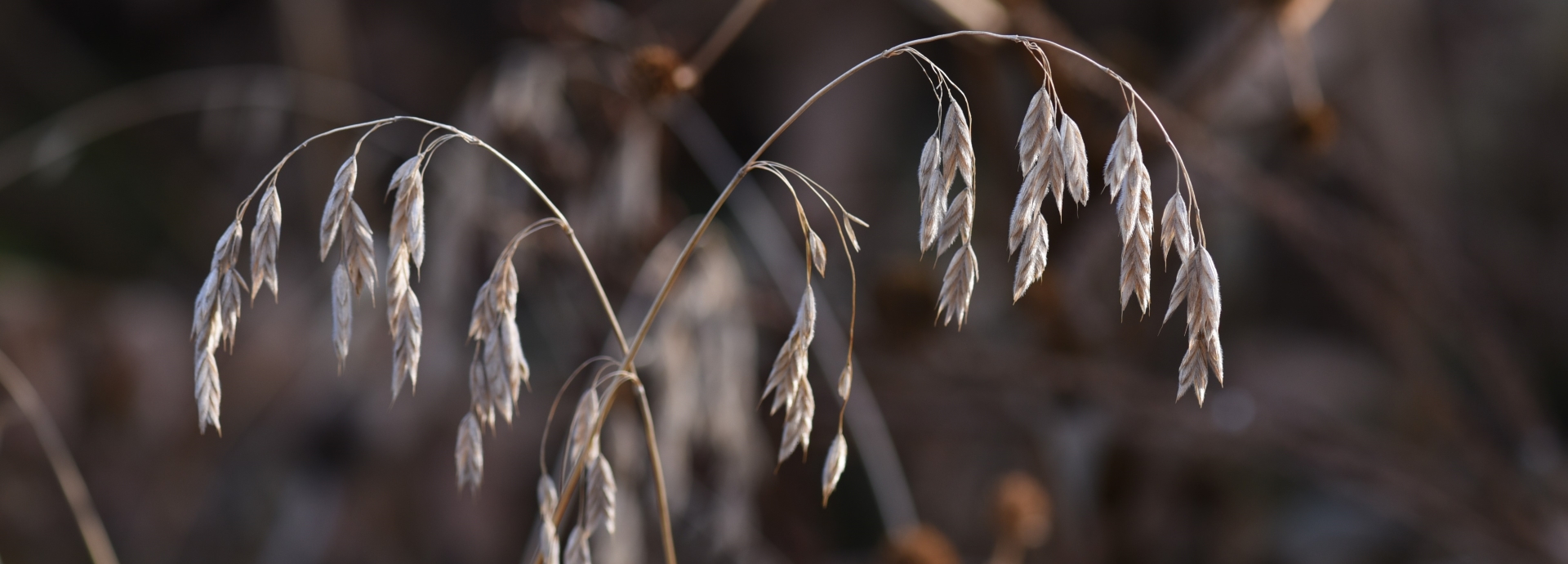
Bromus kalmii, A. Gray
Alternate Common Names: Kalm’s brome, prairie brome
Scientific Synonyms: Bromopsis kalmii (A. Gray) Holub, Bromus purgans auct. non L, Bromus purgans L., nom. utique rej.
Family: grass family (Poaceae)
Functional Group: cool season grass
Description
- Life cycle and growth form
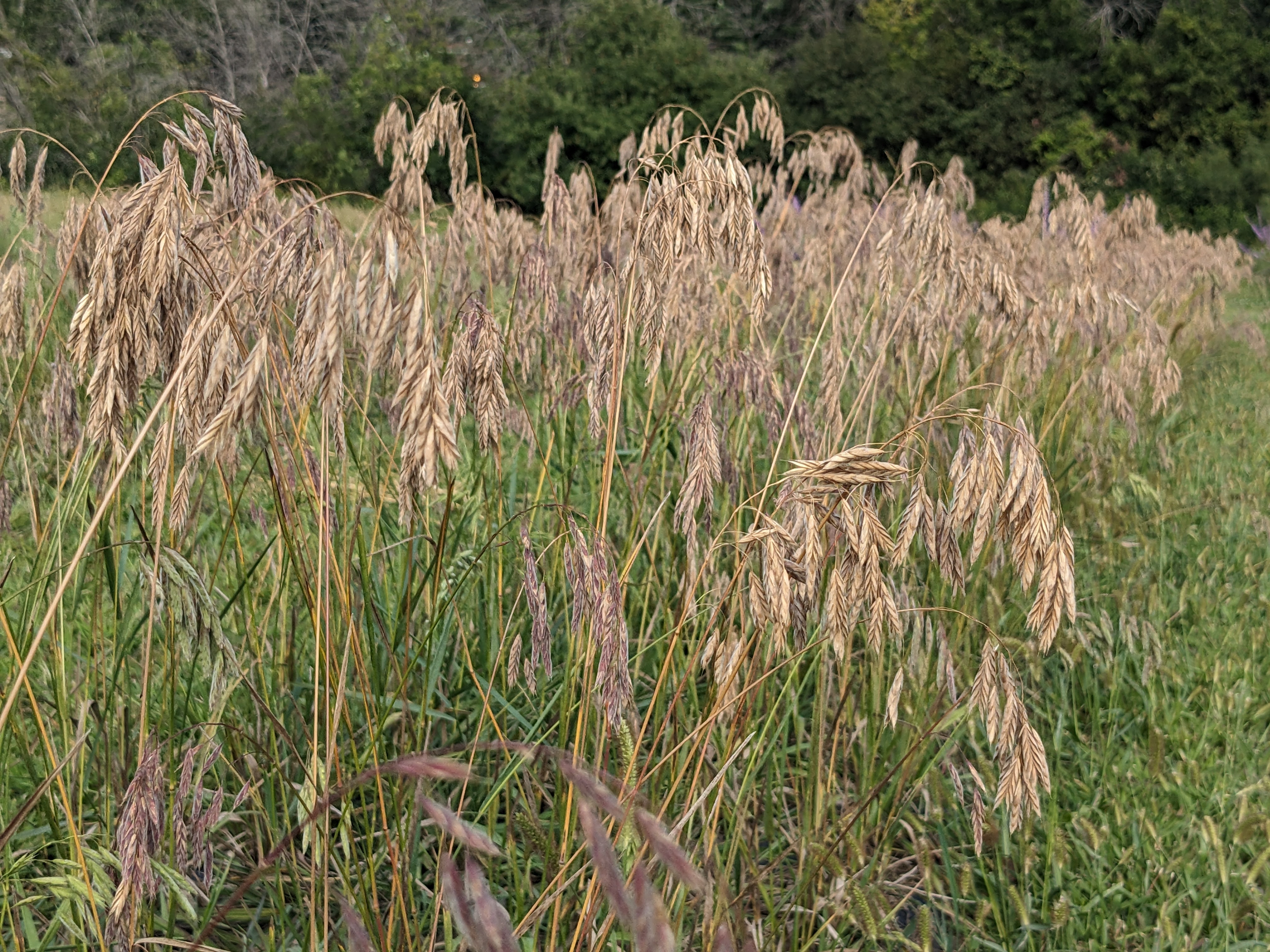
Short-lived, perennial cool-season grass that grows in distinct tufts or bunches. (In contrast, smooth brome (Bromus inermis) spreads vigorously by rhizomes, and other weedy or invasive brome species are annuals.)
Height: 2 ft
- Leaves and stem
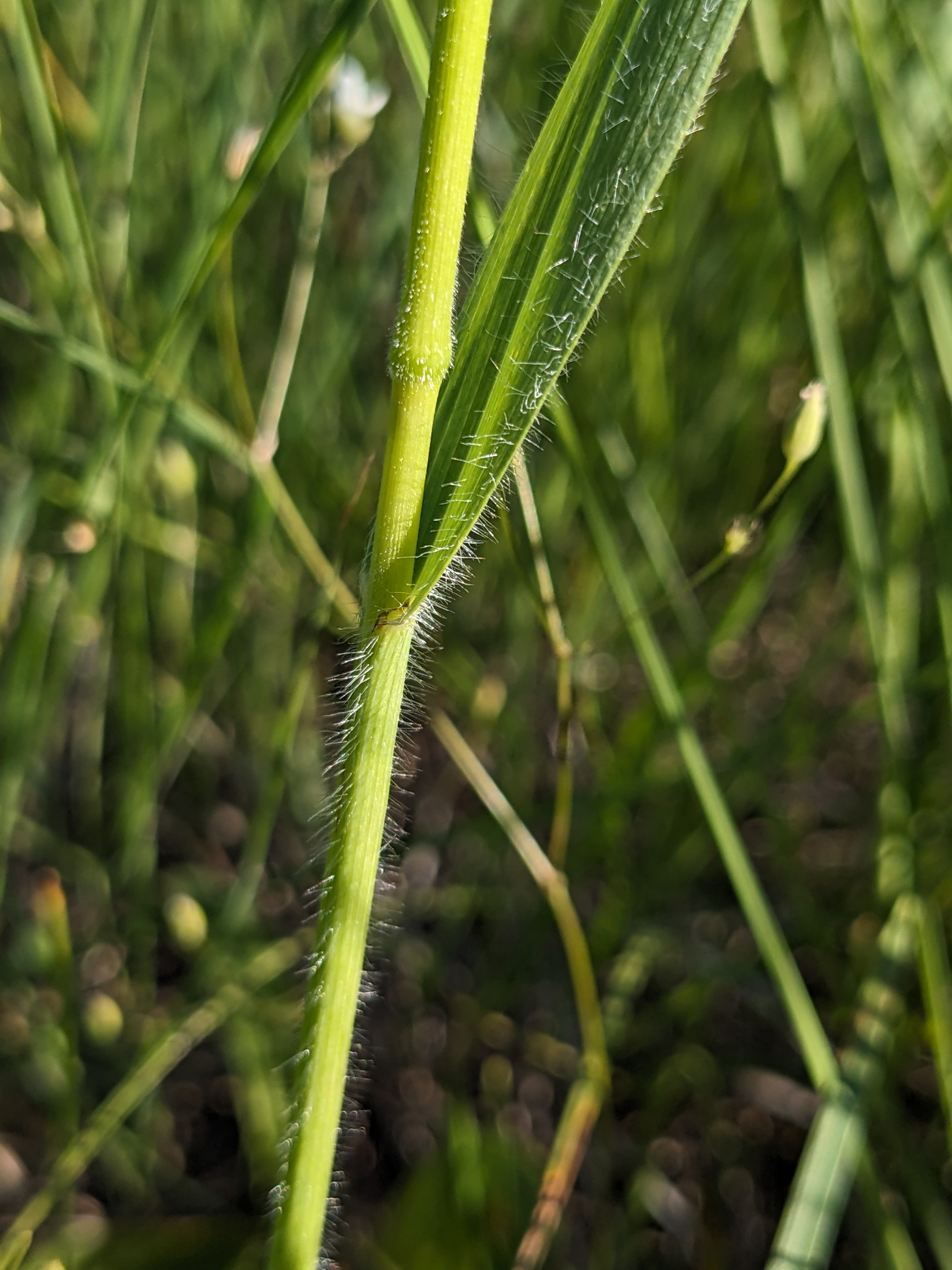
Leaves have flat blades, 3-10 in long and about 3/8 in wide, often hairy, especially near the margins and along the mid-rib; lower sheaths covered in long hairs; flowering stems (culms) are smooth, with short, dense, downward-pointing hairs at the nodes. Note that the leaves of the introduced annual bromes such as cheatgrass are generally narrower than those of arctic brome.
- Flower, fruit and seedhead
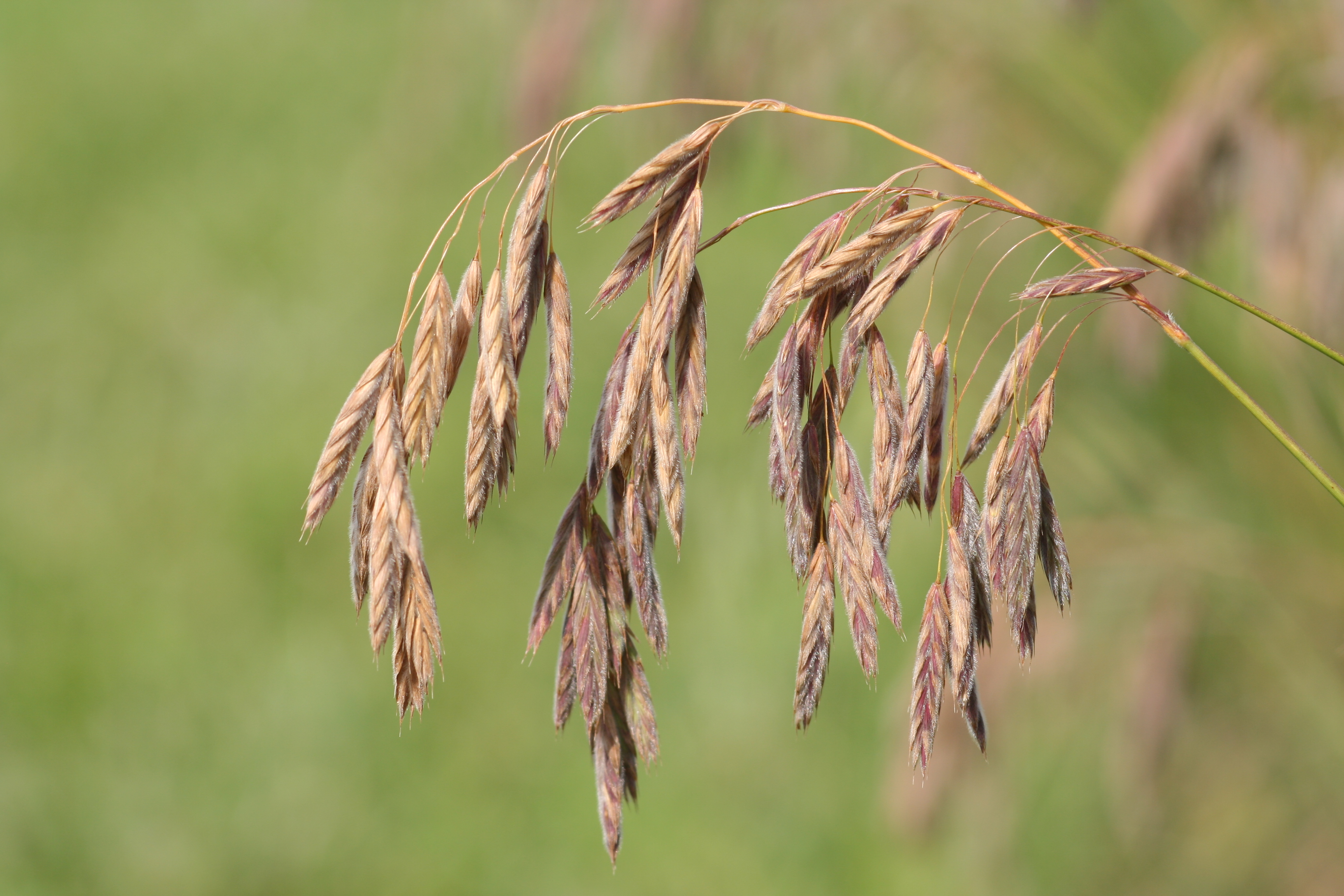
Fruit/seed head: Seedhead is a loose panicle that nods gracefully to one side, 4 to 6 in long, bearing spikelets composed of up to 10 florets that are densely hairy and have short awns (2-3 mm). The easily visible hairiness of the spikelets help to distinguish this species from smooth brome and the shorter awns differentiate it from other weedy or invasive members of the genus.
Pollination: wind
- Seed
Seed characteristics
Seed weight:
Seeds per ounce: 8,000 seeds (IA NRCS)
1000 seed weight: 2.55g (Seed Information Database)
Description: Grains are strongly flattened and ovoid, 6-8 mm long, with a bundle of white hairs at the tip, enclosed in hairy bracts (lemma and palea)
Typical seed test
PLS: 85%
Purity: 90%
Germination: 25%
Dormancy: 61%
(averages obtained from 11 tests of purchased seed lots)
- Habitat and range
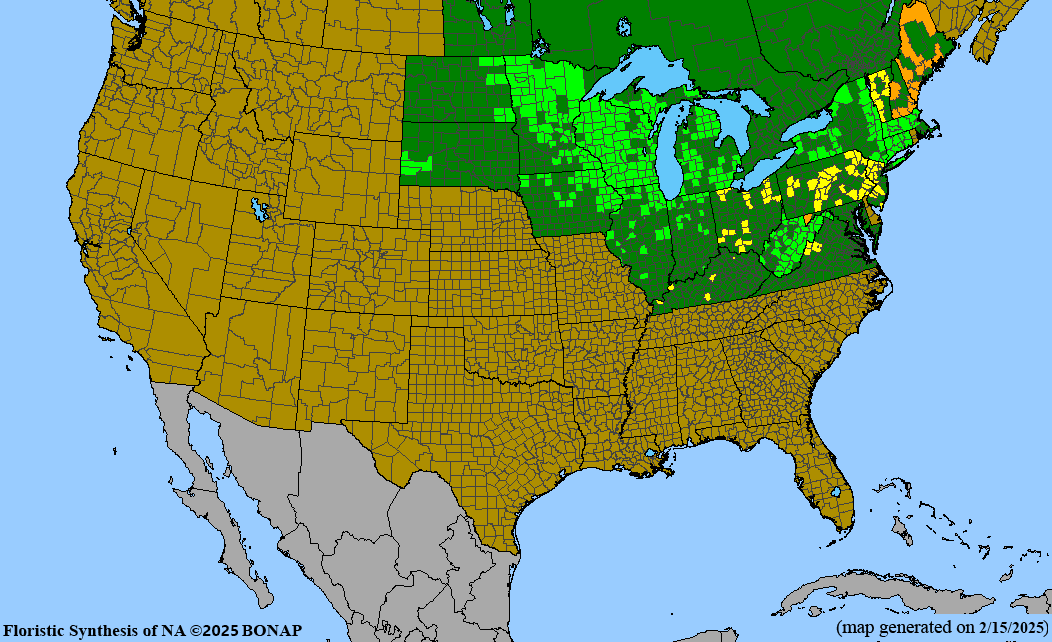
Habitat: Dry to moist soil; partial to full sun; prairies, prairie remnants, meadows, fens, savannas, open woodlands; Wetland Indicator Status is Facultative (FAC) for the Midwest; mesic to dry well-drained loamy soils are recommended for seed production.
Conservation status: Global- G5, secure; District of Columbia, Maryland, and New Hampshire- SH, possibly extirpated; Maine and Virginia- S1, critically imperiled; New Jersey, Ohio, Pennsylvania, and Vermont- S2, imperiled; Illinois- S2/S3, imperiled to vulnerable; Iowa and North Dakota- S3, vulnerable (NatureServe)

General Comments
The name “brome” is not one that most prairie restoration practitioners hope to see in plant lists due to their familiarity with the highly competitive, invasive, sod-forming species, smooth brome. However, native species in the genus Bromus such as Bromus kalmii (called “arctic brome” using USDA Plants nomenclature or more commonly “prairie brome” or “Kalm’s brome”) are valuable additions to restoration seed mixes in the Upper Midwest. Arctic brome is distinguishable from smooth brome by its clumping, nonrhizomatous growth habit and the preponderance of soft hairs on its leaf sheaths, leaves (often), stem nodes, and seedheads. Plantings by the Tallgrass Prairie Center have included this grass since at least 2016, and monitoring shows that it establishes and persists in planted prairies in our area and coexists alongside other grasses and forbs. Iowa Source Identified arctic brome provides regionally appropriate material for another option to fill the cool season graminoid component of seed mixes. This is also an elegant and shorter statured native grass for landscape design applications.
Recommendations for Seed Production
- Establishment for seed production
Direct seeding
Direct seeding methods shared by a commercial native seed grower
Seeding rate: 15 pounds/acre
Row spacing: solid stand
Seeding depth: surface
Seeding method: broadcast
Seeding time: dormant season
Weed control: Prepare clean, firm, weed free seedbed prior to seeding (e.g., following a glyphosate-resistant crop, for example).
Greenhouse
Seed pre-treatment: Cold/moist stratification for 30 days produced even germination.
Sowing: Lightly cover seed in germination flats or plugs in the greenhouse about 8-12 weeks before average frost free date. Germination begins about one week after sowing.
Transplanting: When plugs are well-rooted, move them outside to harden off for a week or two, then transplant into plastic mulch with 8-12 in spacing between plants after danger of frost is past.
- Stand management
Weeds: If direct seeded, mow stands high (6-12 in) during the first growing season to prevent weed canopy from shading seedlings. We do not currently have information on herbicides that could be used for weed control in this crop. Cultivate or mow between rows. Hand rogue before harvest to remove potential weed seed contaminants.
Pests: None noted.
Diseases: None noted.
- Seed production
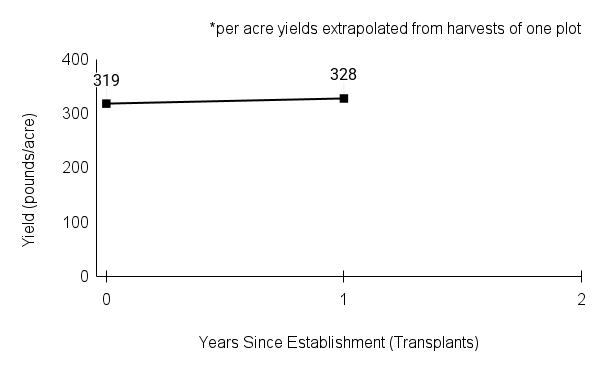 First harvest: Flowering and seed set in first growing season from transplants; probably in the second year from direct seeding.
Yield/acre: About 320 pounds/acre (extrapolated from two years of harvests of one production plot).
Stand life: Unknown at this time but likely 3-5 years. Invasion of plot by non-native cool season grasses (quack grass and smooth brome) seems to be the greatest challenge.
Flowering date: June to July in northeast Iowa
Seed maturity/harvest date: mid to late July in northeast Iowa (first year harvests from transplants are delayed into September)
Seed retention: Seed is relatively resistant to shattering, though high winds and rain can cause some loss of seed. Frequent monitoring recommended as seed matures. In remnant prairies, we observed that some seed remained on plants well into September.
Harvest date range at TPC (2024 - 2025): July 14 to Sept 3 (September date was in the first growing season)
Recommended harvest method: combine
- Seed cleaning and storage
Cleaning process: Scalp material through 1/2 in mesh if needed to remove larger debris. Brush material to make it more flowable, then airscreen. Indent, if needed, to remove shorter seeded weeds.
Seed storage: cool/dry (33-50° F, 30-50% RH)
Released Germplasm
Source Identified material: Natural Selections/Iowa Ecotype Zone EA (eastern Iowa)
- References
Chayka, K. (n.d.). Bromus kalmii (Kalm’s brome). Minnesota Wildflowers. https://www.minnesotawildflowers.info/grass-sedge-rush/kalms-brome
Hilty, J. (2019). Prairie brome - Bromus kalmii. Illinois Wildflowers. https://www.illinoiswildflowers.info/grasses/plants/pr_brome.htm
NatureServe. 2024. NatureServe Network Biodiversity Location Data accessed through NatureServe Explorer [web application]. NatureServe, Arlington, Virginia. Available https://explorer.natureserve.org/. (Accessed: February 28, 2024).
Pavlickf, L. E. (2021, May 11). Bromus kalmii A. Gray. Flora of North America. http://floranorthamerica.org/Bromus_kalmii
USDA NRCS National Plant Data Team. (n.d.). Bromus kalmii A. Gray. USDA plants database. https://plants.usda.gov/home/plantProfile?symbol=BRKA2
Species Guide Updated 12/17/2025