

switchgrass
Table of Contents
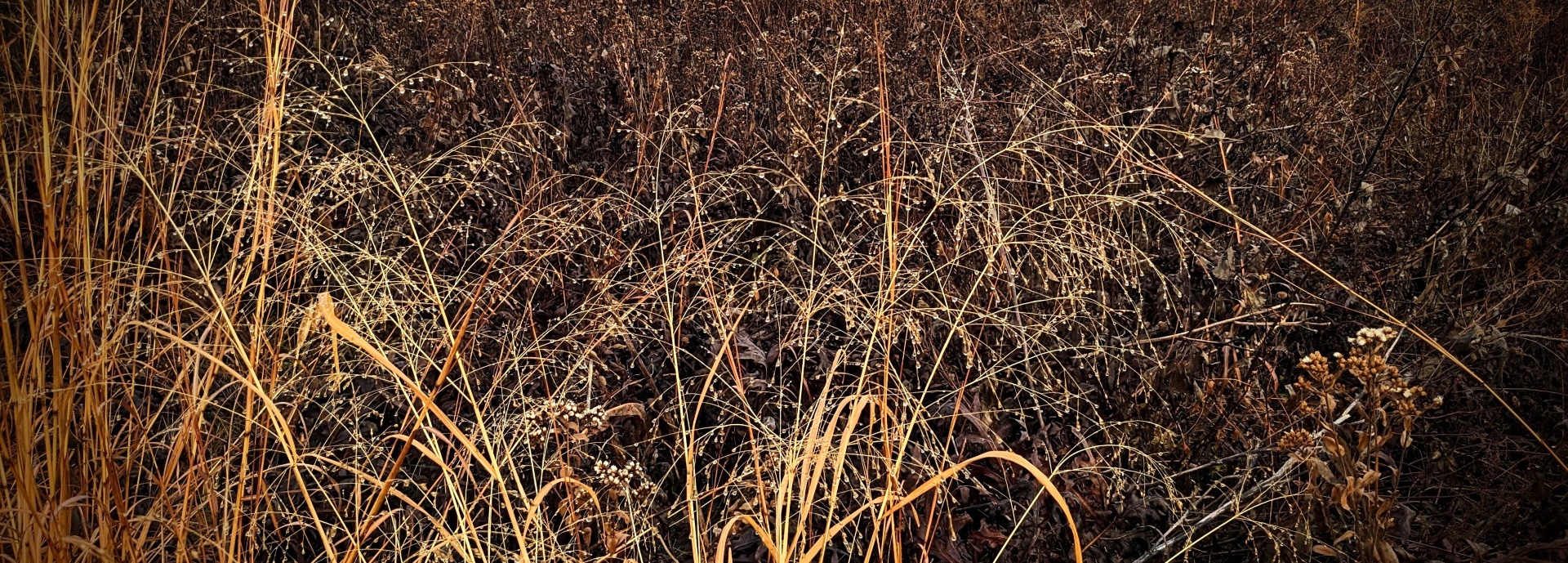
Panicum virgatum, (L.)
Alternate Common Names: thatchgrass, Wobsqua grass, blackbent, tall panic grass, old switch panicgrass
Scientific Synonyms: Panicum virgatum var. spissum, Panicum virgatum var. cubense, Panicum bavardii
Family: grass family (Poaceae)
Functional Group: warm season grass
Description
- Life cycle and growth form
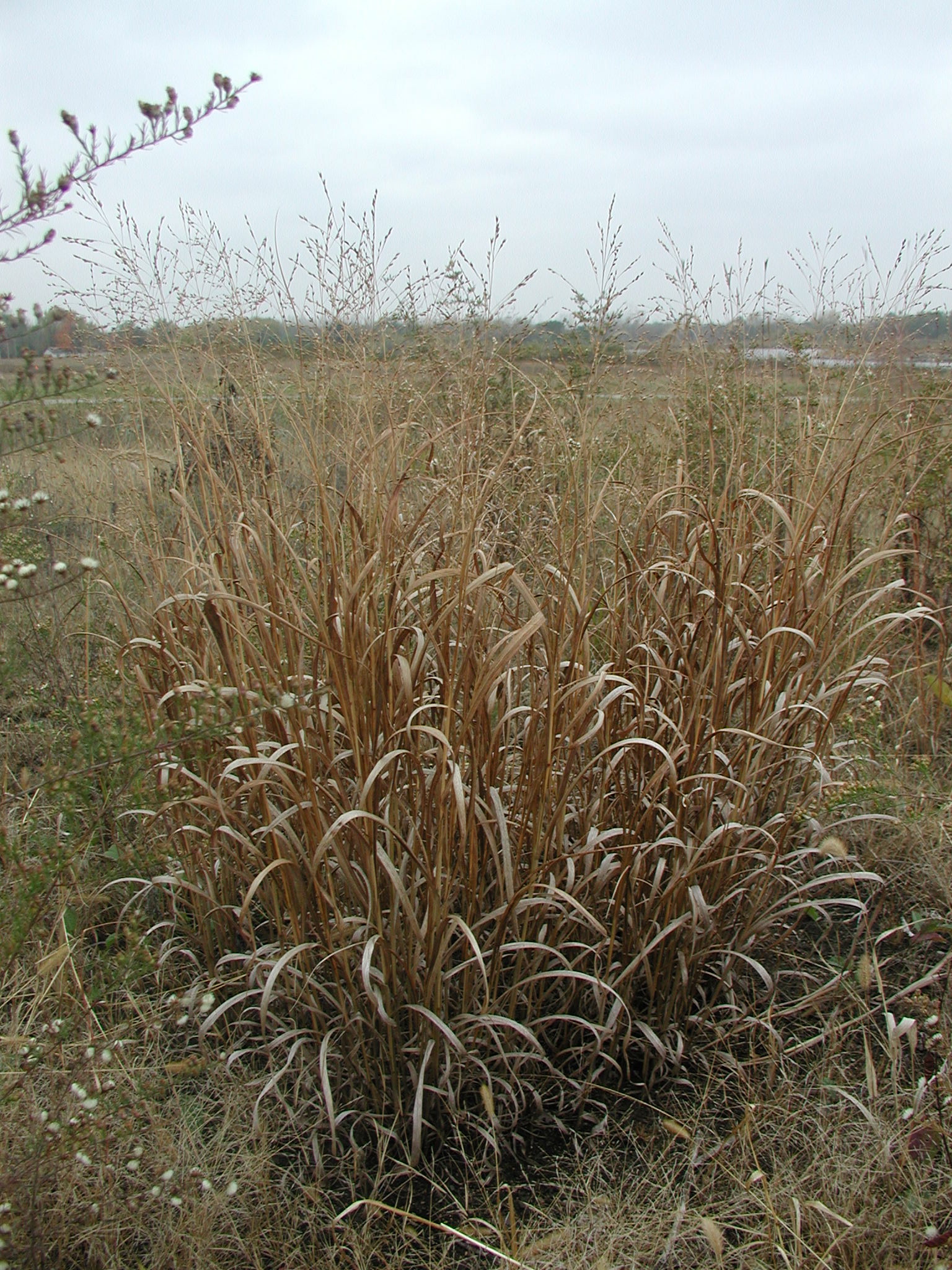
Warm season perennial, rhizomatous, forms clonal patches with many stems that expand over time.
Height: 3-6 ft
- Leaves and stem
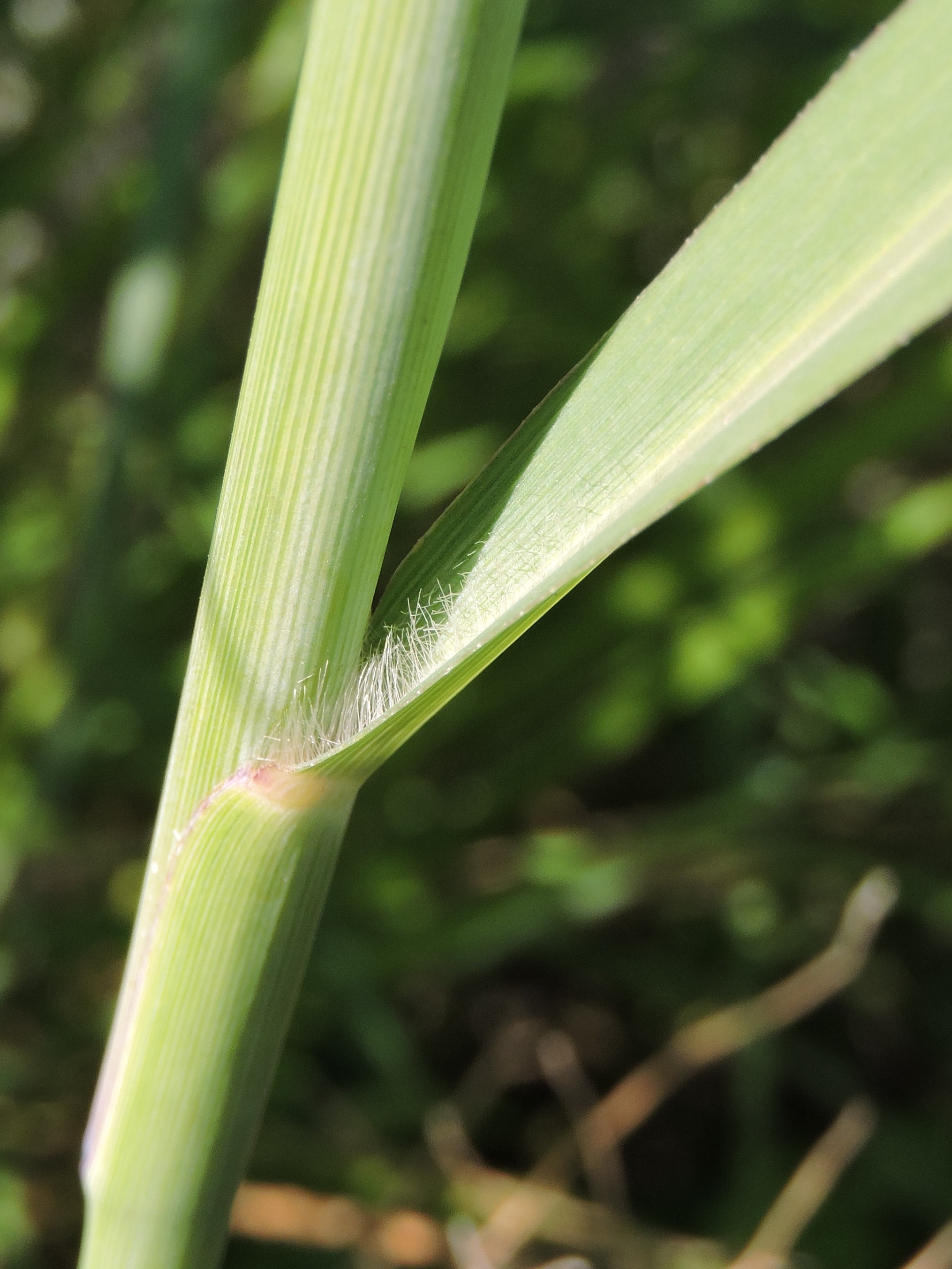
Leaf blades 5/16 in wide and 6-22 in long, often hairy on the upper surface, especially near the ligule, ligule is fringe of dense hairs about 1/8 in tall; stem erect and hairless.
- Flower, fruit and seedhead
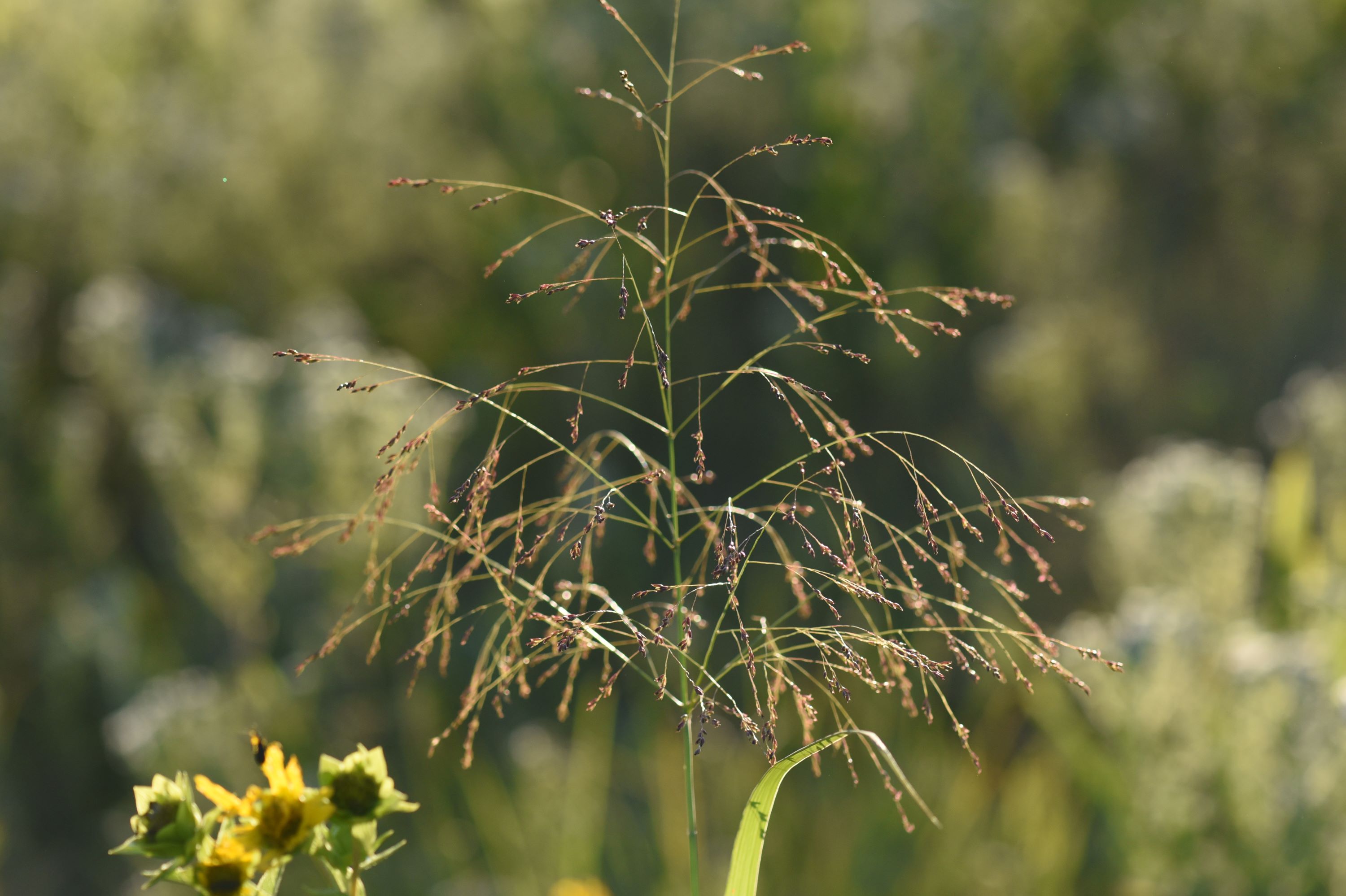
Fruit/seed head: Seedhead is an openly branched, airy panicle 8-16 in long with green to purple spikelets near the ends of the branches.
Pollination: wind
- Seed
Seed characteristics
Seed weight:
Seeds per ounce: 14,000 (IA NRCS)
Seeds per pound: 259,000 (IA NRCS)
1000 seed weight: 1.30 g (Seed Information Database)
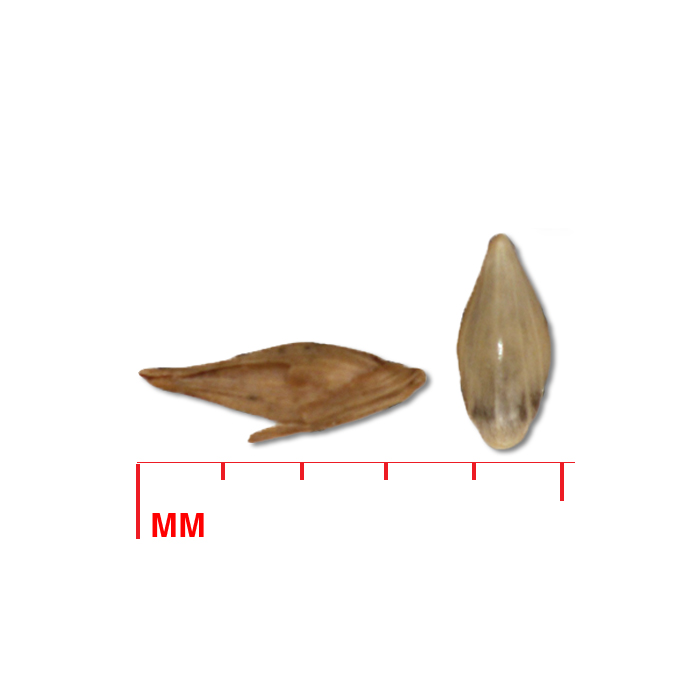
Description: Spikelet is two-flowered with the fertile floret uppermost, smooth, awnless. Grain is shiny, smooth, 3-4 mm (about 1/8 in) long.
Typical seed test
PLS: 91% (n = 9)
Purity: 97% (n = 9)
Germination: 49% (n = 7)
Dormancy: 44% (n = 7)
(averages obtained from n tests of purchased seed lots)
- Habitat and range
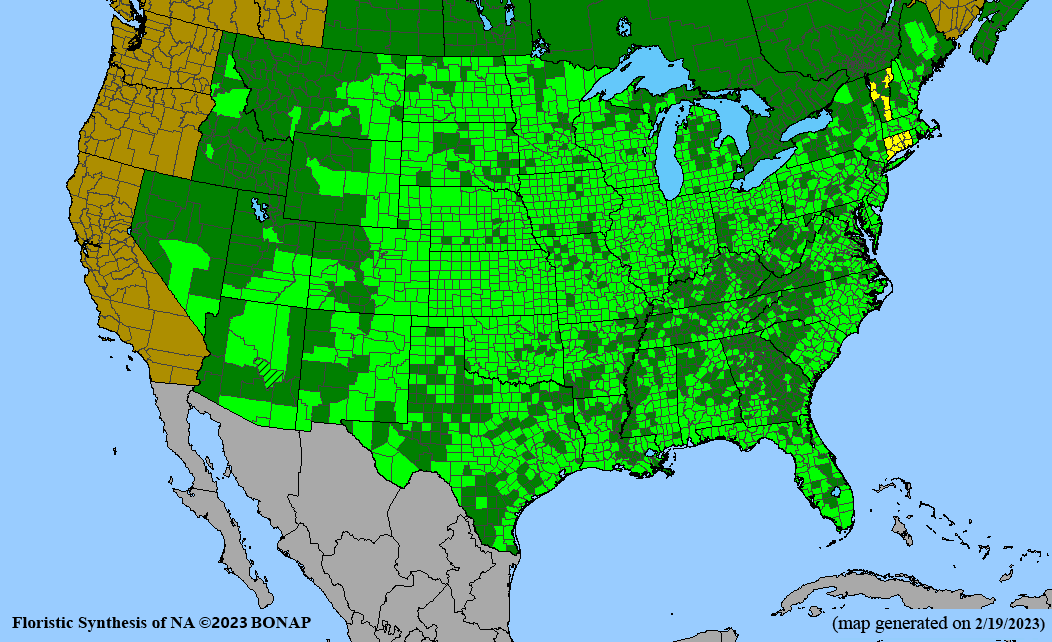
Habitat: Mesic to wet-mesic soil; full sun; prairies, savannas, streambanks, shorelines, dunes, woodland openings, roadsides, along railroads, ditches; may become abundant in disturbed prairies, much less common in high quality prairies. Wetland Indicator Status is Facultative (FAC) for the Midwest. Fertile, well-drained soils are preferred for seed production.
Conservation status: Global- G5, secure; Nevada- S2, imperiled; Vermont and Wyoming- S3, vulnerable (NatureServe)
General Comments
A number of cultivars of switchgrass have been developed for forage and seed production, winter hardiness, and grazing tolerance by the USDA-NRCS Plant Materials program. These cultivars have been planted widely as monocultures and in early prairie reconstructions. Because seed has been commercially available at affordable prices for decades, it was usually seeded heavily and tended to dominate stands. For these reasons it has been considered aggressive. Switchgrass can form dense colonies on lowland prairies, but is usually uncommon on high-quality remnant upland prairies and tends to occur in isolated patches near disturbance activities such as gopher mounds (Weaver 1954). Switchgrass establishes readily from seed, and is relatively easy to harvest and clean.
Recommendations for Seed Production
- Establishment for seed production
Direct seeding
Row spacing: 36 in 24 in 12 in Solid Stand PLS lbs/acre: 2.6 3.5 6.0 6.0 Seeding depth: 1/4 in
Seeding method: Native seed drill or broadcast seed and cultipack for solid stand.
Seeding time: Spring
Weed control: Prepare clean, firm, weed free seedbed prior to seeding.
Greenhouse
Seed pre-treatment: Moist stratify seed for 4 weeks to improve germination.
Sowing: Sow seed in greenhouse two months before the last frost free date at 1/4 in depth.
Transplanting: Transplant after all danger of frost into rows convenient for tillage equipment.
- Stand management
Weeds: Mow stands high (6-12 in) first growing season to prevent weed canopy from shading seedlings. Broadleaf herbicides can be used to control broadleaf weeds in established stands. Switchgrass is atrazine resistant, and can be applied at the label rate at planting time. Read and follow label instructions.
Pests: None noted.
Diseases: Seed smut, if left unchecked, can seriously decrease seed yields on switchgrass. The smut is caused by a fungus, Tilletia maclaganii. Glumes may exhibit an uncharacteristic purple coloration, and seeds are replaced by fungal spores that are red-orange when immature turning dark brown at maturity. Fields may need to be destroyed or relocated if diseased (NRCS 2003).
- Seed production
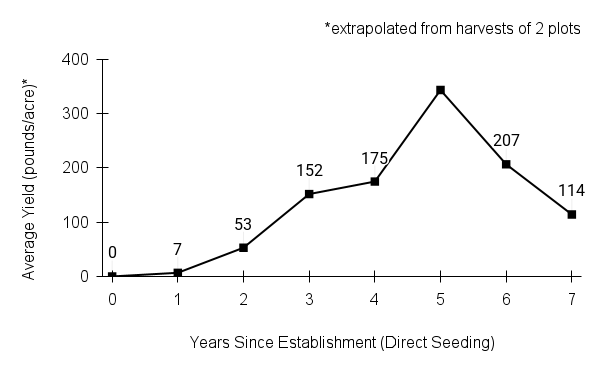 First harvest: Flowering and seed set end of first growing season from greenhouse grown transplants, second growing season from direct seeding.
Yield: 150-350 bulk pounds/acre (per acre yields extrapolated based on harvests of 2 plots)
Stand life: Stands should persist 10-15 years or more. Good seed production second year and after.
Flowering date: late July - early September in northern Iowa
Seed maturity/Harvest date: September in northern Iowa
Seed retention: Shattering begins in late September to early October
Harvest date range at TPC (2003-2010): Sept 16 - Nov 2
Recommended harvest method: Combine at hard dough stage before significant shattering has occurred.
- Seed cleaning and storage
Cleaning process: Pre-clean air-dried material by scalping thru 1/2 in and 1/4 in mesh to remove large particles. Brush to remove all floral parts from the grain, air-screen to clean.
Seed storage: cool/dry (33-50° F, 30-50% RH)
Released Germplasm
Source Identified material: Natural Selections/Iowa Ecotype Projects Zones 1 (northern Iowa), 2 (central Iowa), and 3 (southern Iowa)
Cultivated varieties (cultivars): Mid-west adapted include Blackwell (KS), Cave-In-Rock (IL), Dacotah, Forestburg (ND), Nebraska 28 (NE), Shawnee (MO)
- References
Chayka, K. (n.d.). Panicum virgatum (switchgrass). Minnesota Wildflowers. https://www.minnesotawildflowers.info/grass-sedge-rush/switchgrass
Freckmann, R. W. & Lelong, M. G. (2021, May 11). Panicum virgatum L. Flora of North America. http://floranorthamerica.org/Panicum_virgatum
Hilty, J. (2019). Switch grass - Panicum virgatum. Illinois Wildflowers. https://www.illinoiswildflowers.info/grasses/plants/switchgrass.htm
Houseal, G. A. (2007). Grasses warm season. In G. A. Houseal (Eds.), Tallgrass Prairie Center’s native seed production manual (pp. 70–71). Tallgrass Prairie Center - University of Northern Iowa.
Kartesz, J.T., The Biota of North America Program (BONAP). 2023. North American Plant Atlas. (http://bonap.net/napa). Chapel Hill, N.C. [maps generated from Kartesz, J.T. 2023. Floristic Synthesis of North America, Version 1.0. Biota of North America Program (BONAP). (in press)]
NatureServe. 2024. NatureServe Network Biodiversity Location Data accessed through NatureServe Explorer [web application]. NatureServe, Arlington, Virginia. Available https://explorer.natureserve.org/. (Accessed: February 29, 2024).
USDA NRCS National Plant Data Team. (n.d.). Panicum virgatum L. USDA plants database. https://plants.usda.gov/home/plantProfile?symbol=PAVI2
Species Guide Updated 12/5/2025