

showy ticktrefoil
Table of Contents
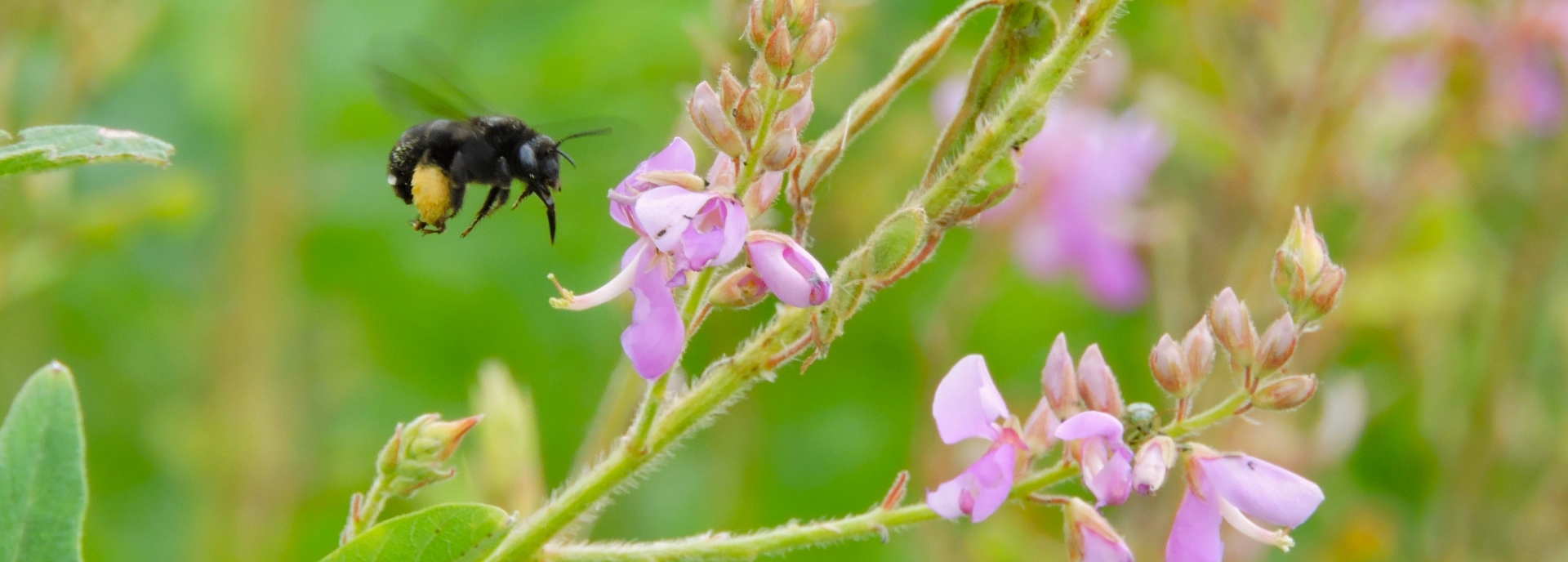
Desmodium canadense (L.) DC.
Alternate Common Names: tick clover, Canadian tick trefoil, showy tick-trefoil, Canadian tick-trefoil, Canada ticklover
Scientific Synonym: Meibomia canadensis (L.) Kuntze
Family: legume and pea family (Fabaceae (Leguminosae))
Functional Group: legumes
Description
- Life cycle and growth form
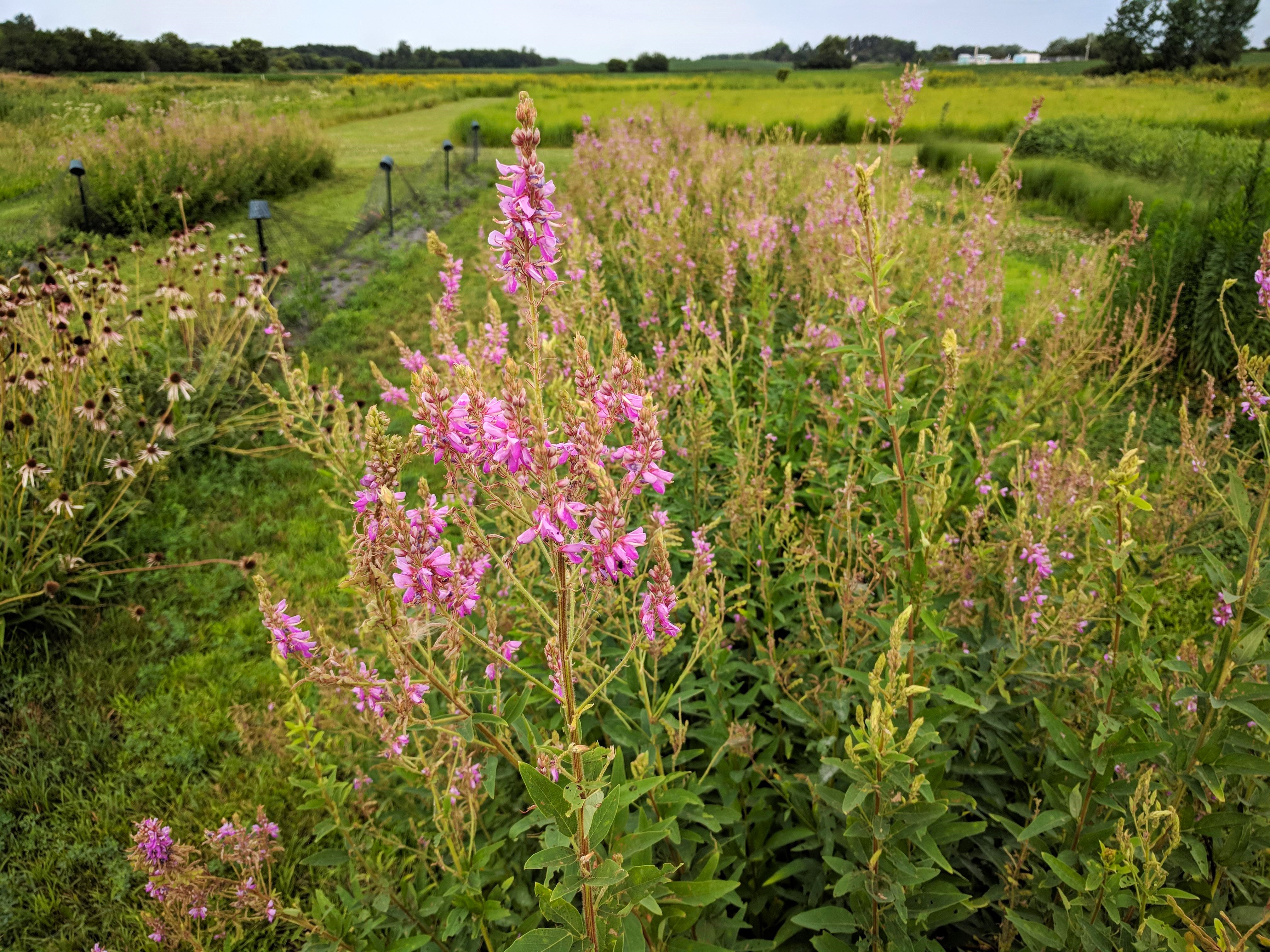
Perennial from a woody taproot.
Height: 2-6 ft
- Leaves and stem
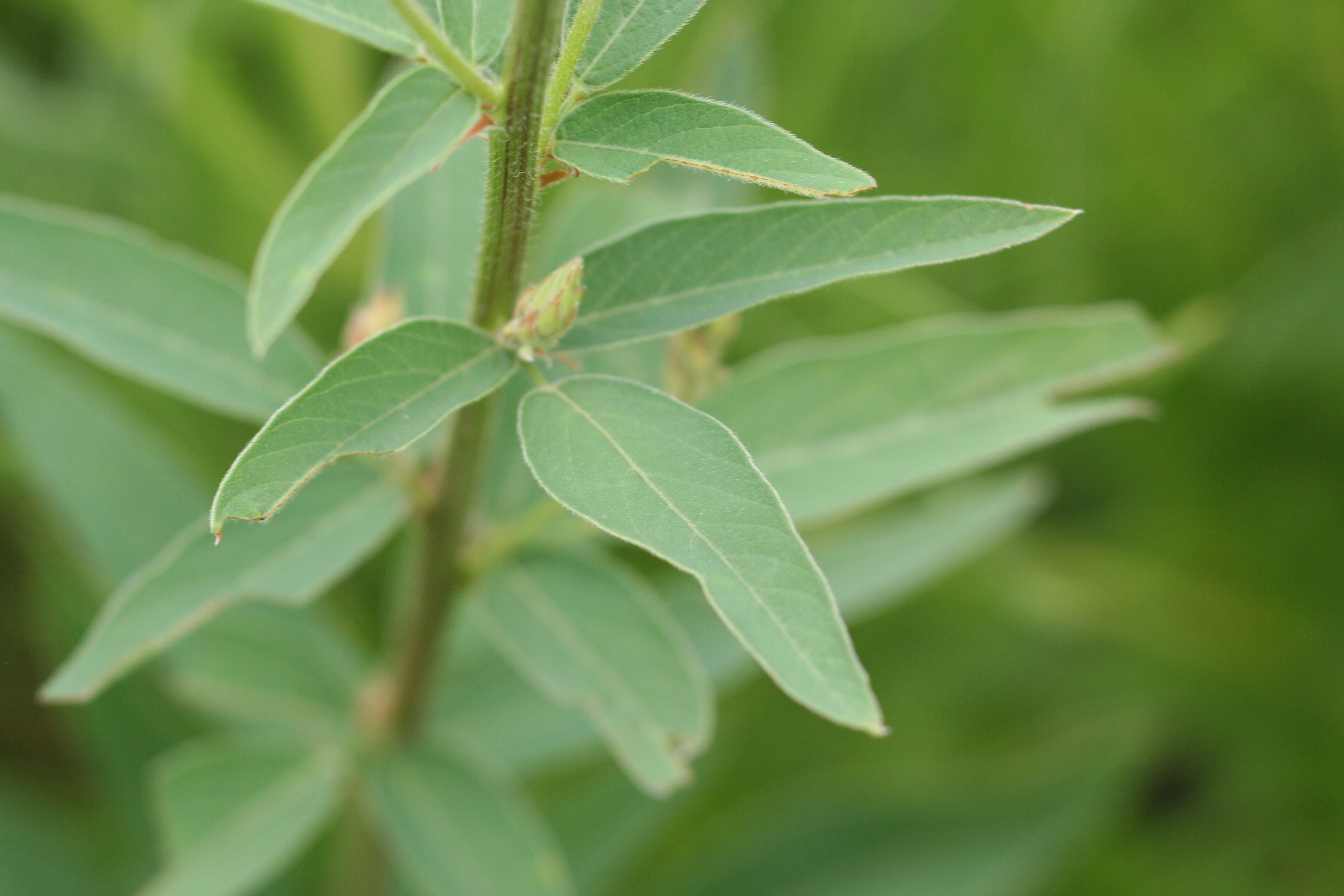
Leaves alternate, divided into three leaflets with rounded base and pointed tips, with sticky (hooked) hairs on undersides and narrow pointed bracts (stipules) on either side of the leaf petiole. Petiole is shorter than the stalk of the terminal leaflet (in contrast to Illinois ticktrefoil). Stem is usually unbranched, hairy.
- Flower, fruit and seedhead
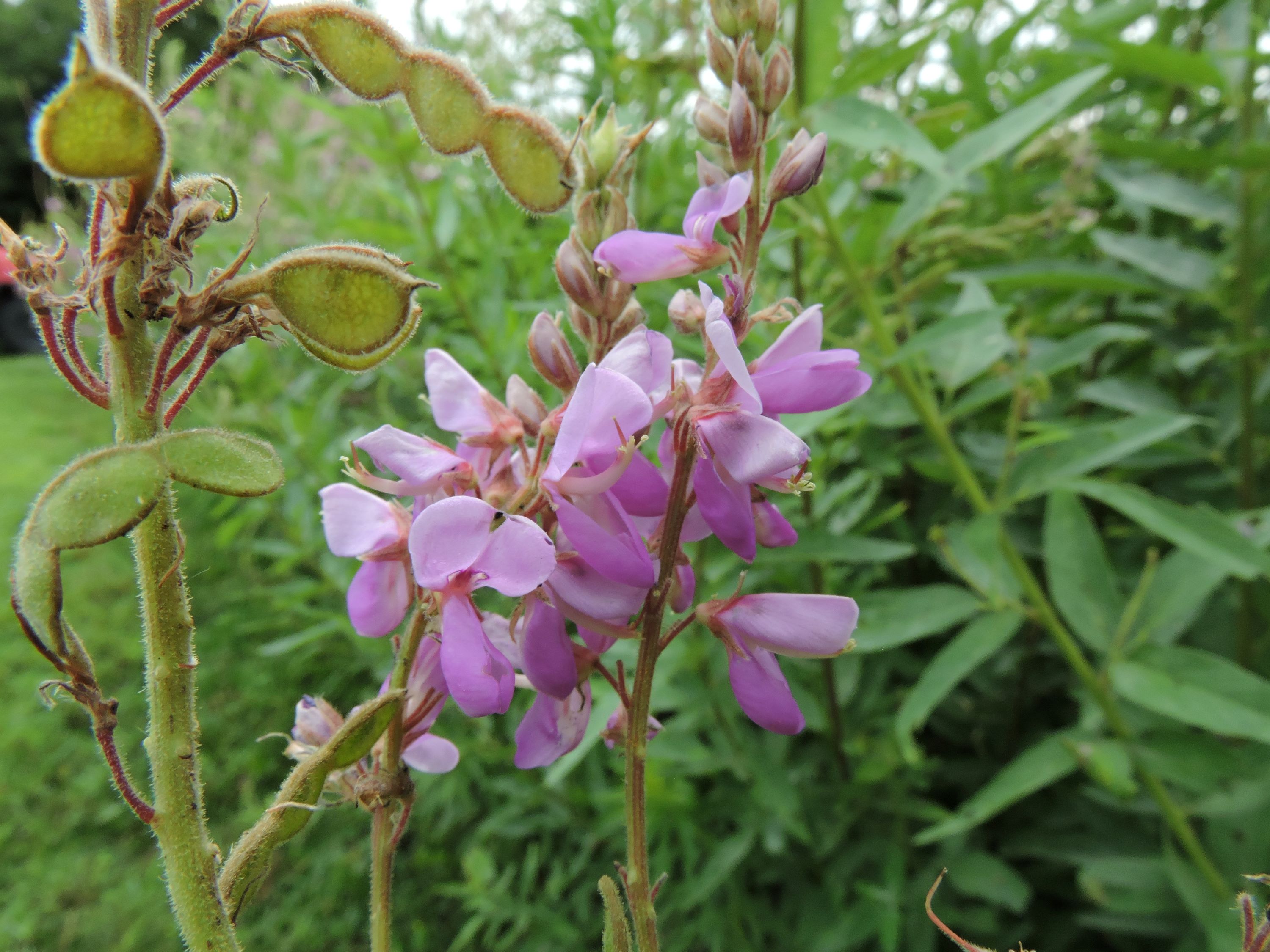
Flower: Irregular, pea-shaped, 1/2 in long flowers, pink-purple with 2 yellow spots near the base of the upper lobe, arranged in spike-like racemes from stem tip and upper leaf axils.
Fruit/seedhead: Fruits are jointed pods called loments, 1-2.5 in long, covered in tiny hooked hairs to latch onto passing mammals, with 3-5 sections each containing one bean-like seed.
Pollination: bees
- Seed
Seed characteristics
Seed weight:
Seeds per ounce: 5,500 (IA NRCS)
Seeds per pound: 88,000 (IA NRCS)
1000 seed weight: 5.11 g (Seed Information Database)
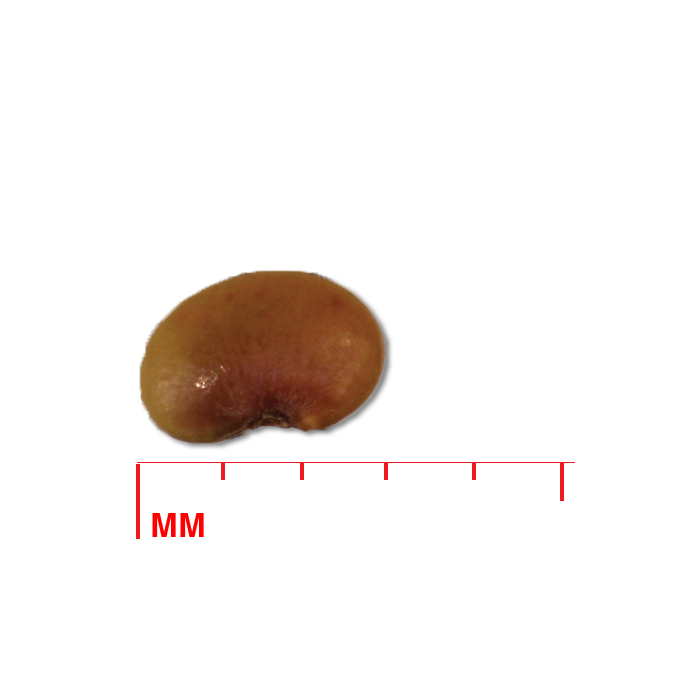
Description: Seeds are small beans, about 2.5-3 mm (about 1/8 in), olive green to tan.
Typical seed test
PLS: 95% (n = 11)
Purity: 100% (n = 11)
Germination: 76% (n = 10)
Hard: 10% (n = 10)
(averages obtained from n tests of purchased seed lots)
- Habitat and range
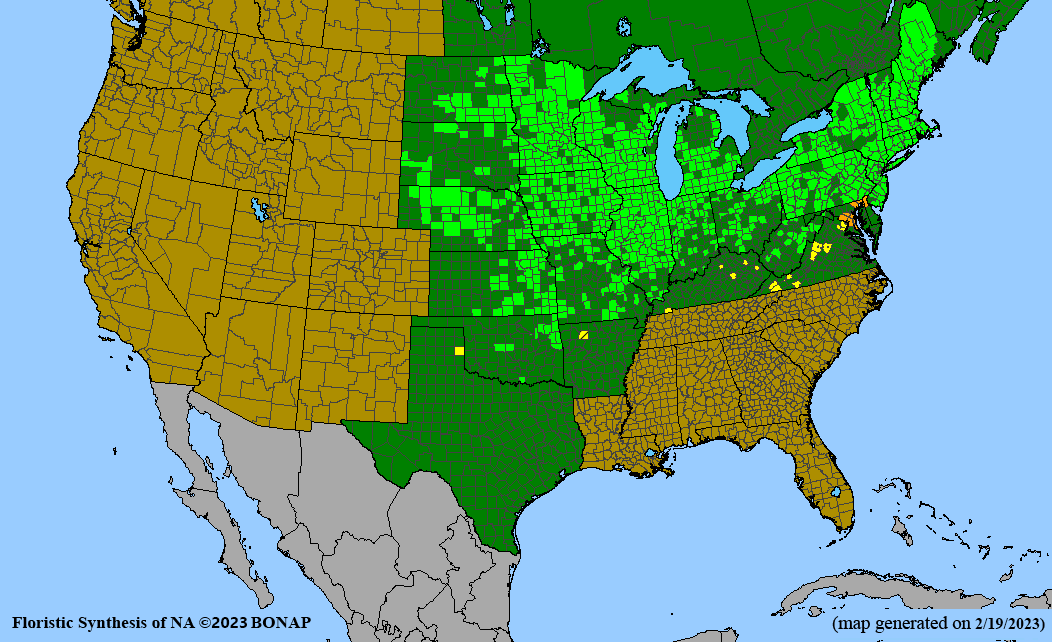
Habitat: Dry-mesic to wet-mesic soil; full sun; prairies, shorelines, woodland openings, roadsides, prairie remnants. Wetland Indicator Status is Facultative Upland (FACU) for the Midwest. Moist, fertile, well-drained loamy soils are preferred for seed production.
Conservation status: Global- G5, secure; Delaware and Maryland- SH, possibly extirpated; Virginia- S1, critically imperiled; Kansas- S3, vulnerable (NatureServe)
General Comments
Showy ticktrefoil is an important component of black soil prairies, increasing with spring burning. Its seeds are an important food source for upland game birds.
Recommendations for Seed Production
- Establishment for seed production
Direct seeding
Row spacing: 30-36 in 7 in and solid stand PLS lbs/acre: 2.0 6.0 Seeding depth: 1/4 in
Seeding method: native seed drill
Seeding time: Dormant fall seeding of unscarified seed. Scarify and inoculate seed for spring planting (Desmodium EL inoculum).
Weed Control: Prepare clean, firm, weed free seedbed prior to seeding.
Greenhouse
Seed pre-treatment: Scarify seed (see Propagation of Native Species: Seed Treatments). Moist stratification generally isn’t required, but seed should be stored in dry, cold conditions until sowing.
Sowing: Sow seed in greenhouse two months before last frost free date. Inoculate seed with appropriate rhizobium at time of sowing, if desired. Seedlings form a fleshy taproot with few lateral roots unless allowed to grow until taproot is air-pruned as it reaches the bottom drainage holes of the container. Plug flats with vertical grooves and wide drainage holes facilitate air-pruning.
Transplanting: When plants have sufficient root development to form sturdy plugs and danger of frost is past, transplant into bare soil in rows convenient for tillage equipment or into a weed barrier at 8-12 in intervals. Use care when transplanting to keep soil intact around the root system.
- Stand management
Weeds: For direct seedings, mow stand above showy ticktrefoil seedling height during establishment year to reduce weed competition and increase light to seedlings. Poast (sethoxydim) herbicide can be used for annual grass control, post emergence. Pursuit (imazethapry) can be used post-seeding for broadleaf weed control. Note: These herbicides may not be labeled for this species in your state, always check the label and follow recommendations.
Pests: Invasive Japanese beetles form feeding clusters on the inflorescences and in bad years can decimate flowering and seed production. For small scale production systems, a perimeter of beetle traps spaced about 5 m apart surrounding the plot can reduce damage. Traps are constructed of pheromone lures in funnels mounted atop 5-gallon buckets of soapy water. Seed weevils may infest and seriously curtail seed production. Aphids cause distortion of shoot tip growth and may inhibit flowering. Herbivory by deer, rabbits, and groundhogs may be an issue on young plants.
Diseases: Powdery mildew may affect foliage.
- Seed production
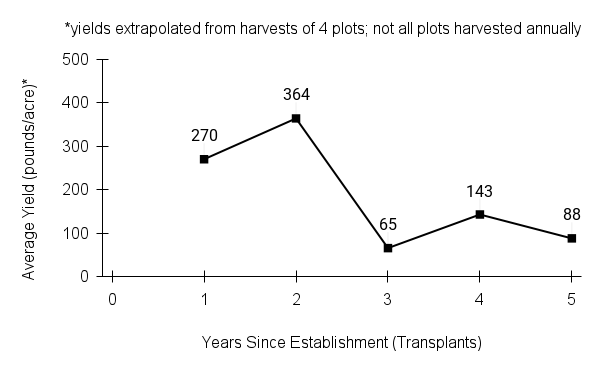 First harvest: Seedling growth is vigorous, and flowering and seed set may occur at end of first growing season from greenhouse grown transplants and well managed direct seeded stands.
Yield: 60-360 bulk pounds/acre (extrapolated from harvests of 4 plots; not all plots harvested annually)
Stand life: Stand may persist for 5 -10 years.
Flowering date: mid-July - mid-August in northern Iowa
Seed maturity/Harvest date: September in northern Iowa
Seed retention: Low risk of shattering; most seed loss begins late September into October
Harvest date range at TPC (2003-2021): Sept 1 - Oct 10
Recommended harvest method: Combine. Devise a system for collecting clumps of the sticky pods that don’t pass through the sieves and are ejected out the back of the combine.
- Seed cleaning and storage
Cleaning process: Use a brush machine to remove hulls (loments). Re-brush any seed still in the hull, if necessary. Airscreen to clean (see Appendix C for settings).
Seed storage: Cool/dry (33-50° F, 30-50% RH)
Released Germplasm
Source Identified material: Natural Selections/Iowa Ecotype Project Zone 1 (northern Iowa), Zone 2 (central Iowa), and Zone 3 (southern Iowa)
Selected germplasm: Alexander Germplasm (IL).
- References
Chayka, K. (n.d.). Desmodium canadense (showy tick-trefoil). Minnesota Wildflowers. https://minnesotawildflowers.info/flower/showy-tick-trefoil
Cochrane, T. S., Elliot, K., & Lipke, C. S. (2014). Canadian tick-trefoil. In Prairie plants of the University of Wisconsin-Madison Arboretum (3rd ed., p. 184). University of Wisconsin-Madison Arboretum.
Great Plains Flora Association. (1991). Bean family. In T. M. Barkley, R. E. Brooks, & E. K. Schofield (Eds.), Flora of the Great Plains (2nd ed., p. 446). University Press of Kansas.
Hilty, J. (2019). Showy tick trefoil - Desmodium canadense. Illinois Wildflowers. https://www.illinoiswildflowers.info/prairie/plantx/shw_trefoilx.htm
Houseal, G. A. (2007). Forbs legumes. In G. A. Houseal (Eds.), Tallgrass Prairie Center’s native seed production manual (pp. 62–63). Tallgrass Prairie Center - University of Northern Iowa.
Kartesz, J.T., The Biota of North America Program (BONAP). 2023. North American Plant Atlas. (http://bonap.net/napa). Chapel Hill, N.C. [maps generated from Kartesz, J.T. 2023. Floristic Synthesis of North America, Version 1.0. Biota of North America Program (BONAP). (in press)]
NatureServe. 2024. NatureServe Network Biodiversity Location Data accessed through NatureServe Explorer [web application]. NatureServe, Arlington, Virginia. Available https://explorer.natureserve.org/. (Accessed: February 29, 2024).
USDA NRCS National Plant Data Team. (n.d.). Desmodium canadense (L.) DC. USDA plants database. https://plants.usda.gov/home/plantProfile?symbol=DECA7
Species Guide Updated 12/4/2025