

prairie Junegrass
Table of Contents
Koeleria macrantha (Ladeb.) Schult.
Alternate Common Names: June grass, Junegrass, crested hair grass, Koeler’s grass
Scientific Synonyms: Koeleria albescens auct., Koeleria cristata auct. non Pers. p.p., Koeleria cristata Pers. var. longifolia Vasey ex Burtt Davy, Koeleria cristata Pers. var. pinetorum Abrams, Koeleria gracilis Pers., Koeleria nitida Nutt., nom. utique rej., Koeleria pyramidata auct. non (Lam.) P. Beauv. p.p., Koeleria yukonensis Hultén, Koeleria nitita, Koeleria cristata Pers. var. pubescens, Koeleria cristata Pers. var. major
Family: grass family (Poaceae)
Functional Group: cool season grasses
Description
- Life cycle and growth form
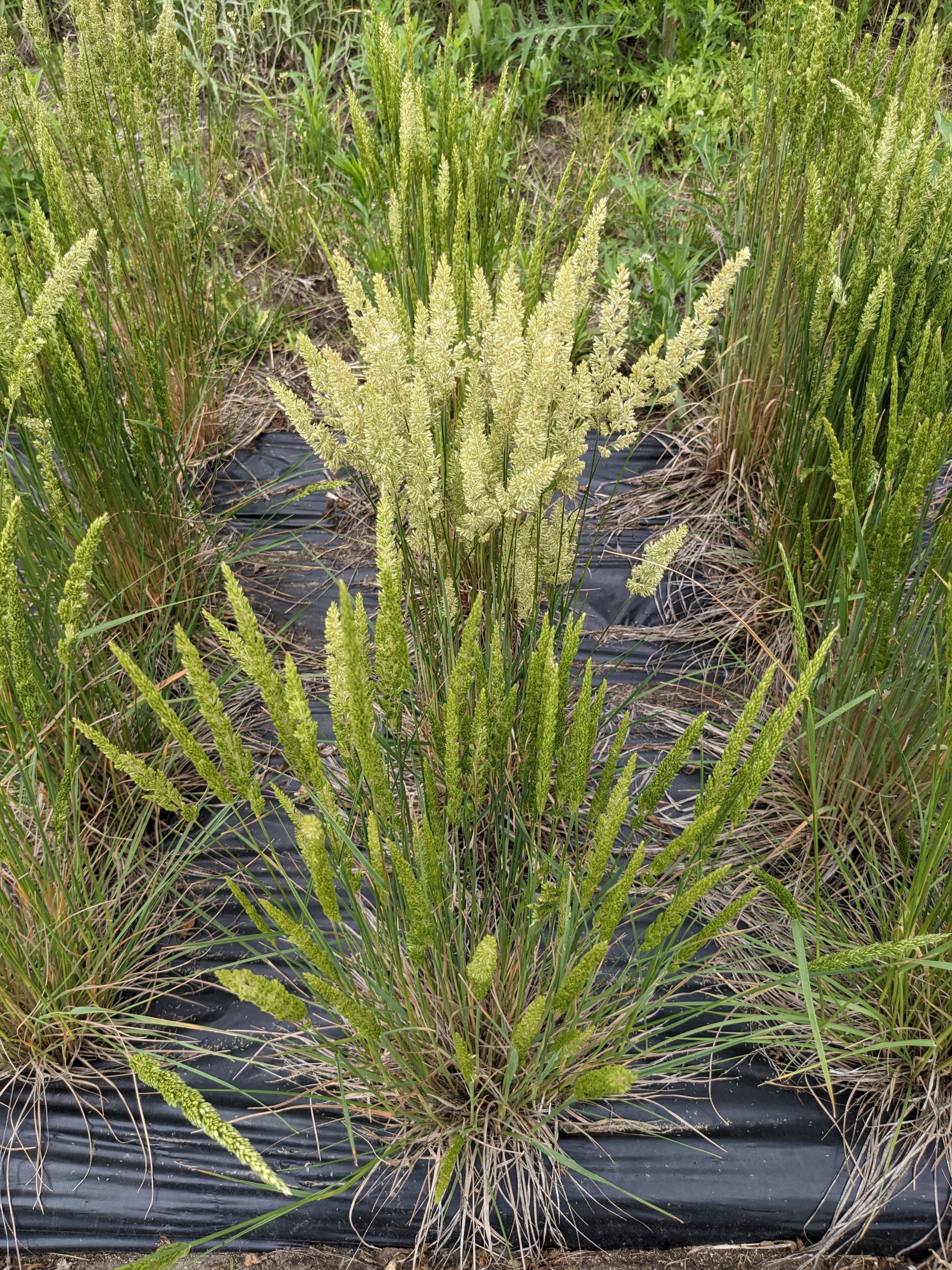
Perennial, cool-season bunchgrass with fibrous roots.
Height: 0.5-2 ft
- Leaves and stem
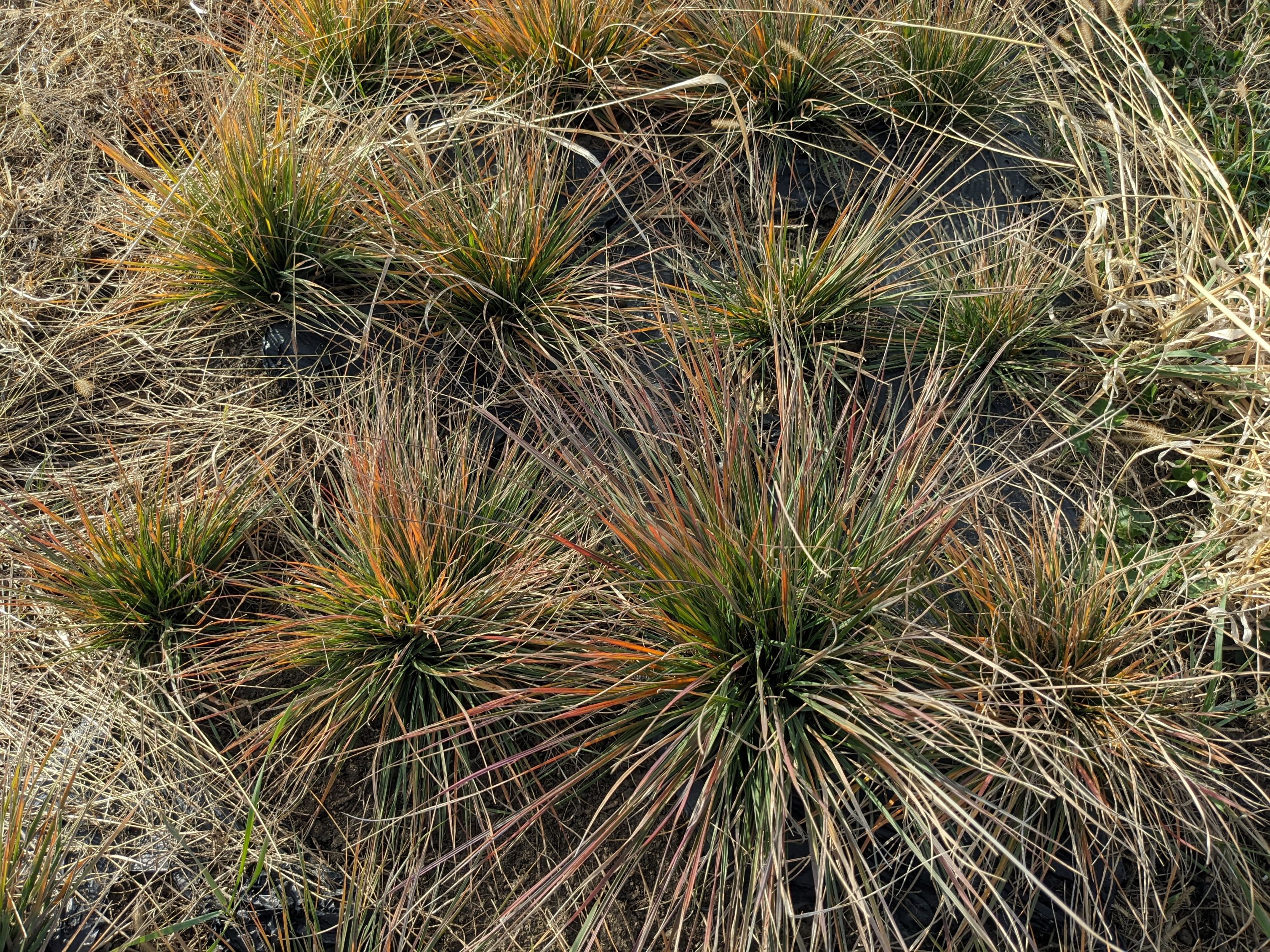
Leaves mostly basal in a distinct tuft, leaf blades 3-25 cm long (1.25-10 in) and 1-4 mm wide (up to 3/16 in), leaf sheaths short-hairy to smooth, with hairs on the margins of the collar, ligule a short (<1 mm), ragged membrane; stem with fine hairs at base of seedhead and at nodes.
- Flower, fruit and seedhead
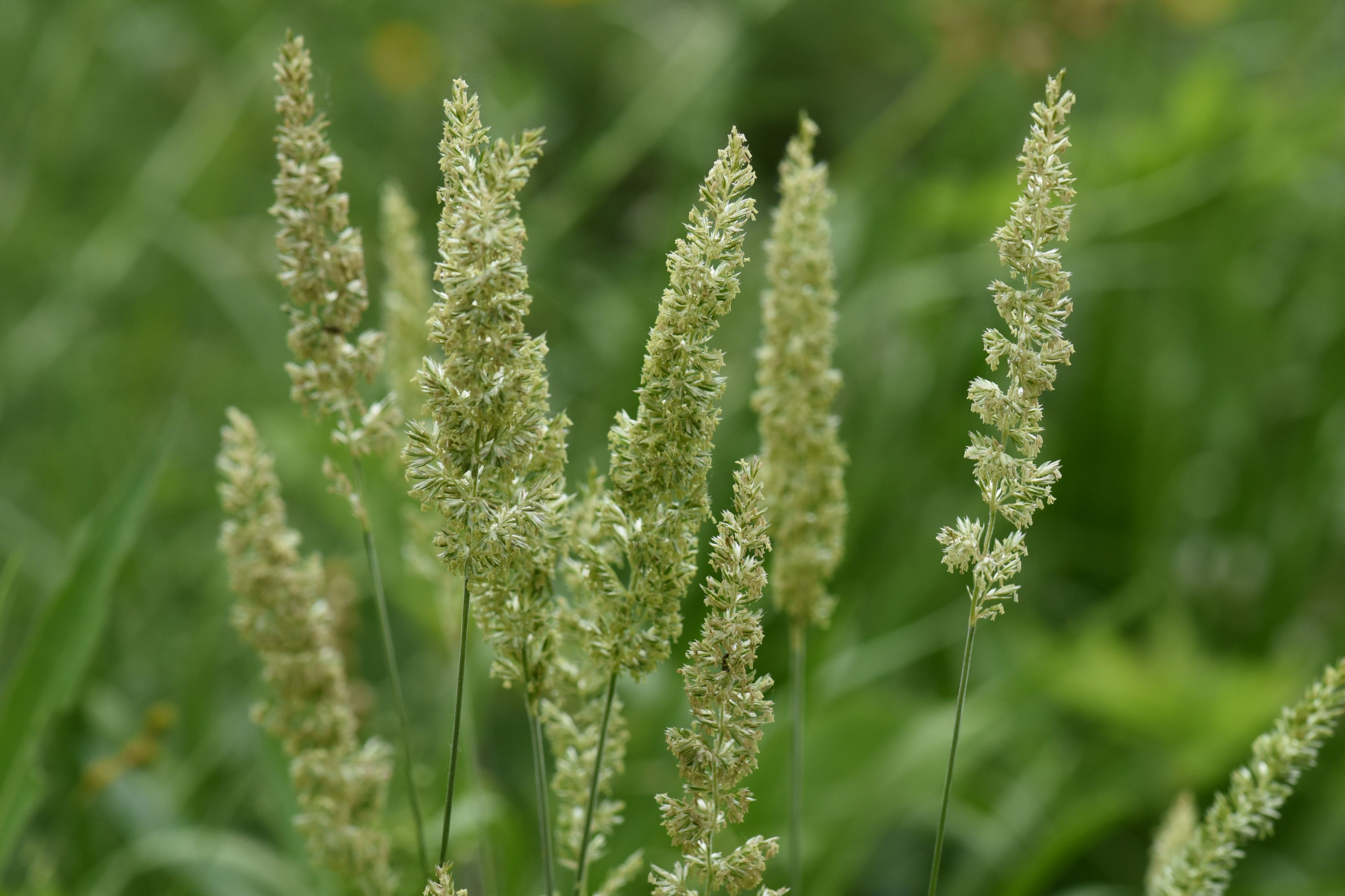
Fruit/seedhead: Light tan spike-like panicle 3-18 cm long (1.25-7.25 in) and 1-3 cm wide (0.5-1.25 in), stem covered in fine hairs below the seed head. At maturity, seed drops off with surrounding chaffy parts (lemma and palea), but glumes (chaffy parts below the flowers) stay on the stalk.
Pollination: wind
- Seed
Seed characteristics
Seed weight:
Seeds per ounce: 200,000 (IA NRCS)
Seeds per pound: 3,200,000 (IA NRCS)
1000 seed weight: 0.30 g (Seed Information Database)
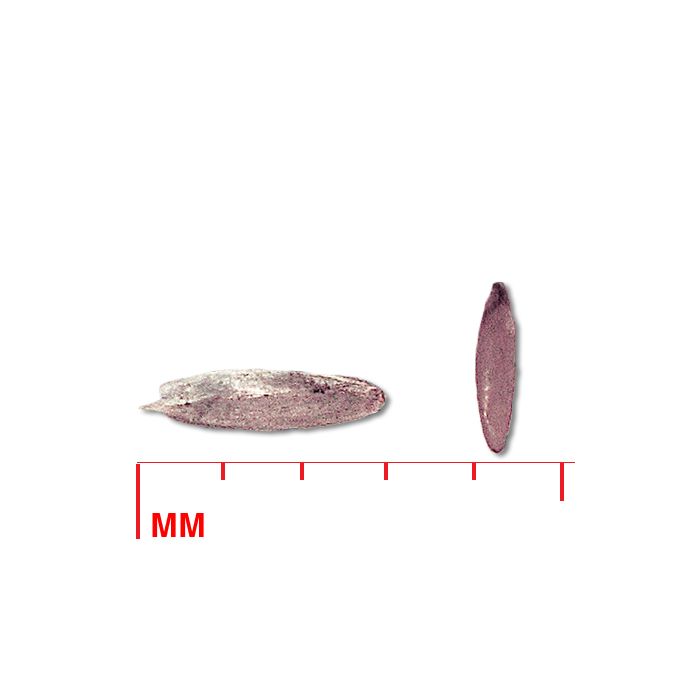
Description: Seed unit is a grain about 2-3 mm long (1/8 in), with or without surrounding chaffy parts (lemma and palea).
Typical seed test
PLS: 69% (n = 10)
Purity: 76% (n = 10)
Germination: 68% (n = 9)
Dormant: 1% (n = 9)
(averages obtained from n tests of purchased seed lots)
- Habitat and range
Habitat: Full sun. Found in dry, upland, rocky or sandy prairies, becoming more abundant on northern prairies. Very well-drained soils are preferred for seed production.
Conservation status: Global- G5, secure; Pennsylvania- SX, presumed extirpated; Alaska, Kentucky, and Louisiana- S1, critically imperiled; Arkansas and Ohio- S2, imperiled; Nevada- S3, vulnerable (NatureServe)

General Comments
Prairie Junegrass is an important cool-season grass component, particularly in prairies on dry, very well-drained sites. Plants are of medium longevity, poorly tolerant of competition, and may rely on reseeding to persist.
Recommendations for Seed Production
- Establishment for seed production
Direct seeding
Row spacing: 36 in 24 in 12 in Solid Stand PLS lbs/acre: 0.25 0.4 0.75 0.75-1.0 Seeding depth: 1/8 in (light needed for germination)
Seeding method: native seed drill
Seeding time: Late spring
Weed control: Good weed control before seeding is essential. Seedlings are small and slow growing and vulnerable to competition from weeds as well as to mechanical damage from equipment or foot traffic.
Greenhouse
Seed pre-treatment: No stratification necessary, although we have observed improved speed and uniformity of germination following 30-day cold/moist stratification. Germination of grass seed usually improves with proper storage (cool, dry conditions) throughout the first year after harvest.
Sowing: Sow seed on top of soil (or cover only very lightly, seeds require light to germinate) in a greenhouse 8-12 weeks before the last frost free date. Water (or mist) very gently to avoid splattering or floating seeds out of the potting medium.
Transplanting: Transplant into a weed barrier 8-12 in apart after all danger of frost.
- Stand management
Weeds: For plantings in weed barrier, hand rogue weeds while small, being careful not to uproot young seedlings. For direct seeded stands, mow stand high (6–12 inches) in first growing season to prevent weed canopy from shading seedlings. Cultivate or mow vegetation between rows. Broadleaf herbicides can be used to control broadleaf weeds in established stands. Non-native perennial cool-season grasses such as Kentucky bluegrass (Poa pratensis) and smooth brome (Bromus inermis) invade plantings and can outcompete Junegrass, causing declines in production.
Pests: Grubs are reportedly a problem in Texas.
Diseases: Ergot is known to occur on seedheads.
- Seed production
 First Harvest: Flowering and seed set at end of second growing season from greenhouse grown transplants. Plants will remain vegetative the first growing season.
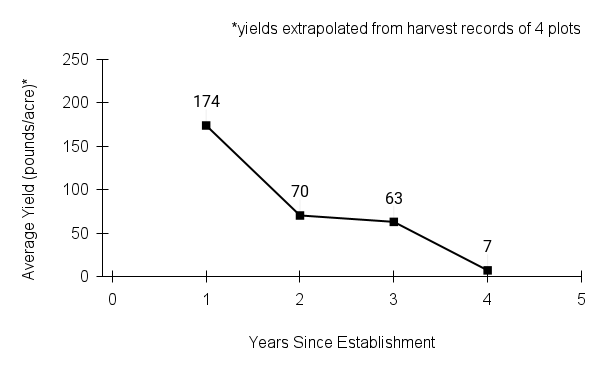
 Yield: 10-175 pounds/acre (averages extrapolated from 3 plots)
Stand life: Potentially 4-5 years. Peak harvests occur in second and third year, after which seed production declines significantly. Invasion by non-native cool-season grasses is one cause of yield decline.
Flowering Date: early to late June in northern Iowa
Seed maturity/Harvest date: late June - early July in northern Iowa. Regularly monitor plots for maturity as seed heads change from green to straw colored. Tap seed heads lightly on hand and observe for shattering.
Seed retention: Shattering occurs mid to late July
Harvest date range at TPC (2003-2023): June 22 - July 8
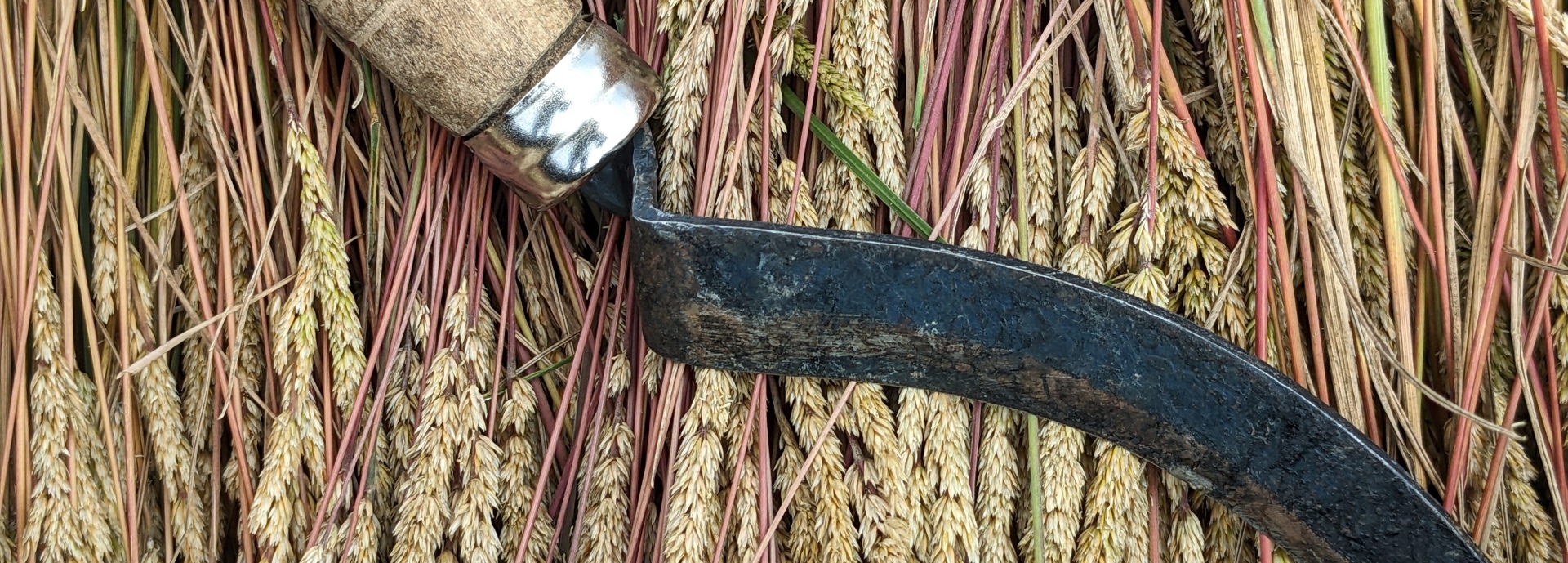
Recommended harvest method: Combine harvesting is practical for larger plots. Swathing/windrowing before combining may improve threshing, uniformity of seed maturation, and reduce shattering due to wind. A modified hedge-trimmer with an attached collection tray works for harvesting small plots.
- Seed cleaning and storage
Cleaning process: Pre-clean air-dried material by scalping thru 1/2 in and 1/4 in mesh to remove large pieces of stems and leaves. Run through a brush machine to break up seed heads, then air-screen to clean (see appendix for settings).
Seed storage: cool/dry (33-50° F, 30-50% RH)
Released Germplasm
Source Identified material: Natural Selections/Iowa Ecotype Project Zone 1 (northern Iowa) and Zone 2 (central Iowa)
- References
Chayka, K. (n.d.). Koeleria macrantha (Junegrass). Minnesota Wildflowers. https://www.minnesotawildflowers.info/grass-sedge-rush/junegrass
Hilty, J. (2019). June grass - Koeleria macrantha. Illinois Wildflowers. https://www.illinoiswildflowers.info/grasses/plants/june_grass.htm
Houseal, G. A. (2007). Grasses cool season. In G. A. Houseal (Eds.), Tallgrass Prairie Center’s native seed production manual (pp. 88–89). Tallgrass Prairie Center - University of Northern Iowa.
Kartesz, J.T., The Biota of North America Program (BONAP). 2023. North American Plant Atlas. (http://bonap.net/napa). Chapel Hill, N.C. [maps generated from Kartesz, J.T. 2023. Floristic Synthesis of North America, Version 1.0. Biota of North America Program (BONAP). (in press)]
NatureServe. 2024. NatureServe Network Biodiversity Location Data accessed through NatureServe Explorer [web application]. NatureServe, Arlington, Virginia. Available https://explorer.natureserve.org/. (Accessed: February 29, 2024).
Runkel, S. T., & Roosa, D. M. (2009). June grass. In Wildflowers of the tallgrass prairie: The upper Midwest (2nd ed., pp. 106–107). University of Iowa Press.
Standley, L. A. (2021, May 11). Koeleria macrantha (Ledeb.) Schult. Flora of North America. http://floranorthamerica.org/Koeleria_macrantha
USDA NRCS National Plant Data Team. (n.d.). Koeleria macrantha (Ledab.) Schult. USDA plants database. https://plants.usda.gov/home/plantProfile?symbol=KOMA
Species Guide Updated 12/04/2025