

white wild indigo
Table of Contents
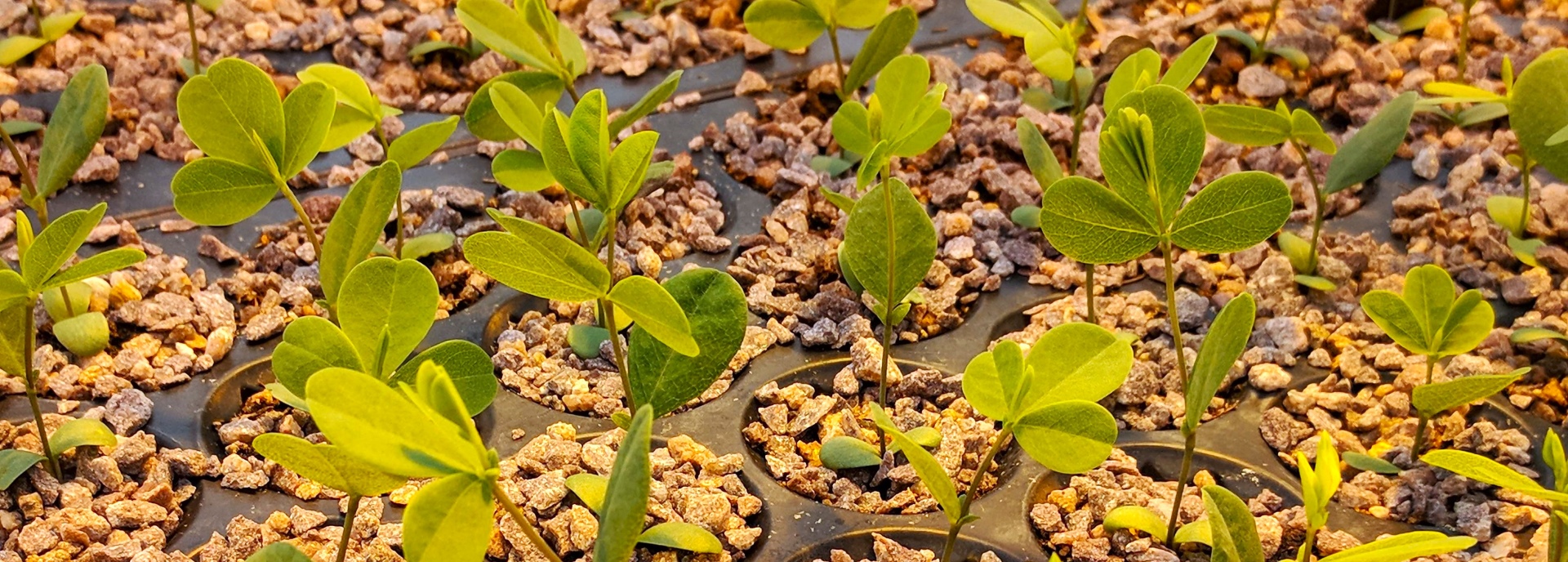
Baptisia alba (L.) Vent.
Alternate Common Names: white false indigo, large leaf wild indigo, large-leaved wild indigo, milky wild indigo, prairie false indigo
Scientific Synonyms: Baptisia lactea (Raf.) Thieret, Baptisia leucantha Torr. & A. Gray, Baptisia pendula Larisey var. macrophylla
Family: legume and pea family (Fabaceae (Leguminosae))
Functional Group: legumes
Description
- Life cycle and growth form
Perennial with a thick, deep taproot.
Height: 2-4 ft
- Leaves and stem
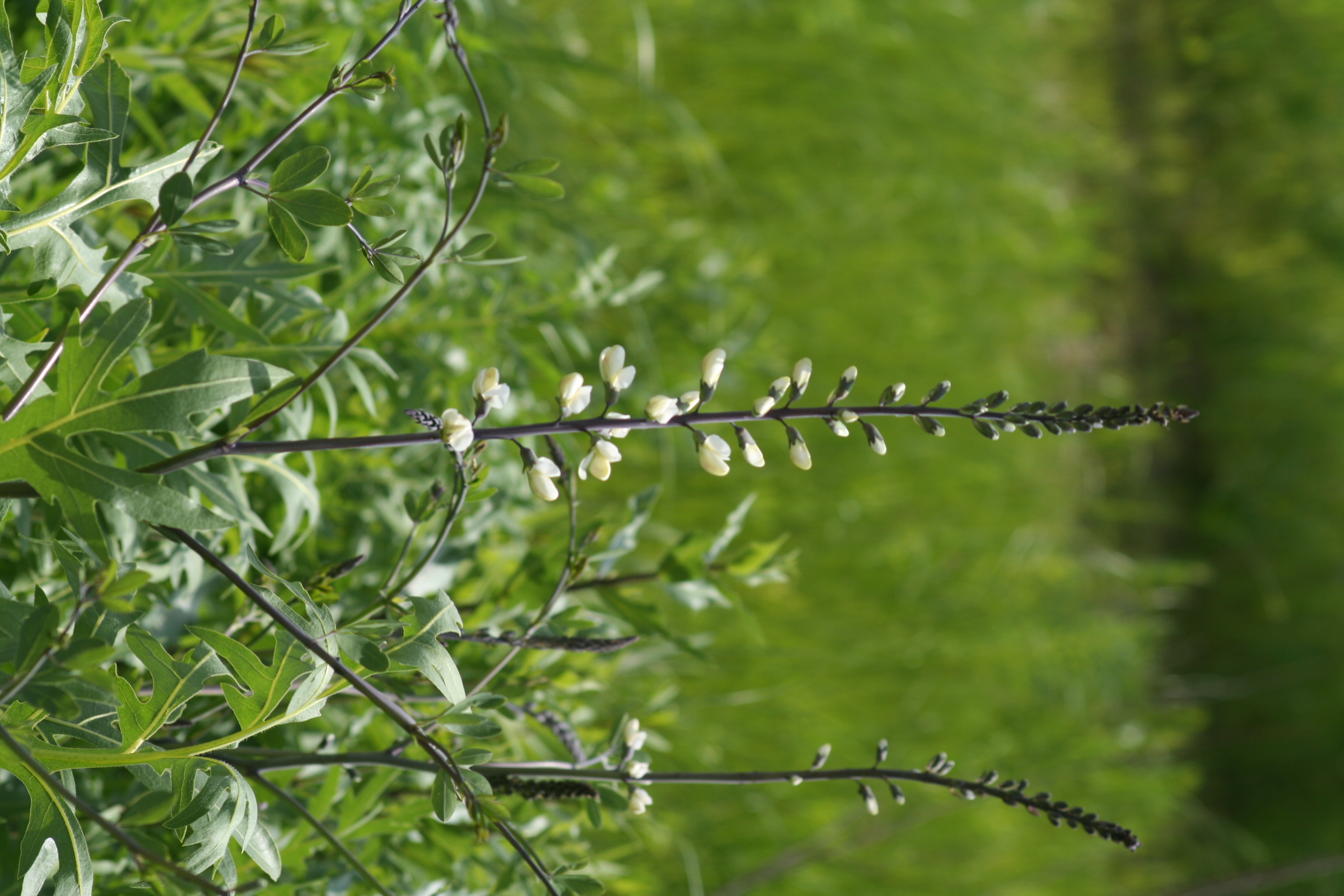
Leaves are alternate and compound with three smooth leaflets; stems are waxy and erect, multi-branched, and purplish; leaves and stems turn black after first frost.
- Flower, fruit and seedhead
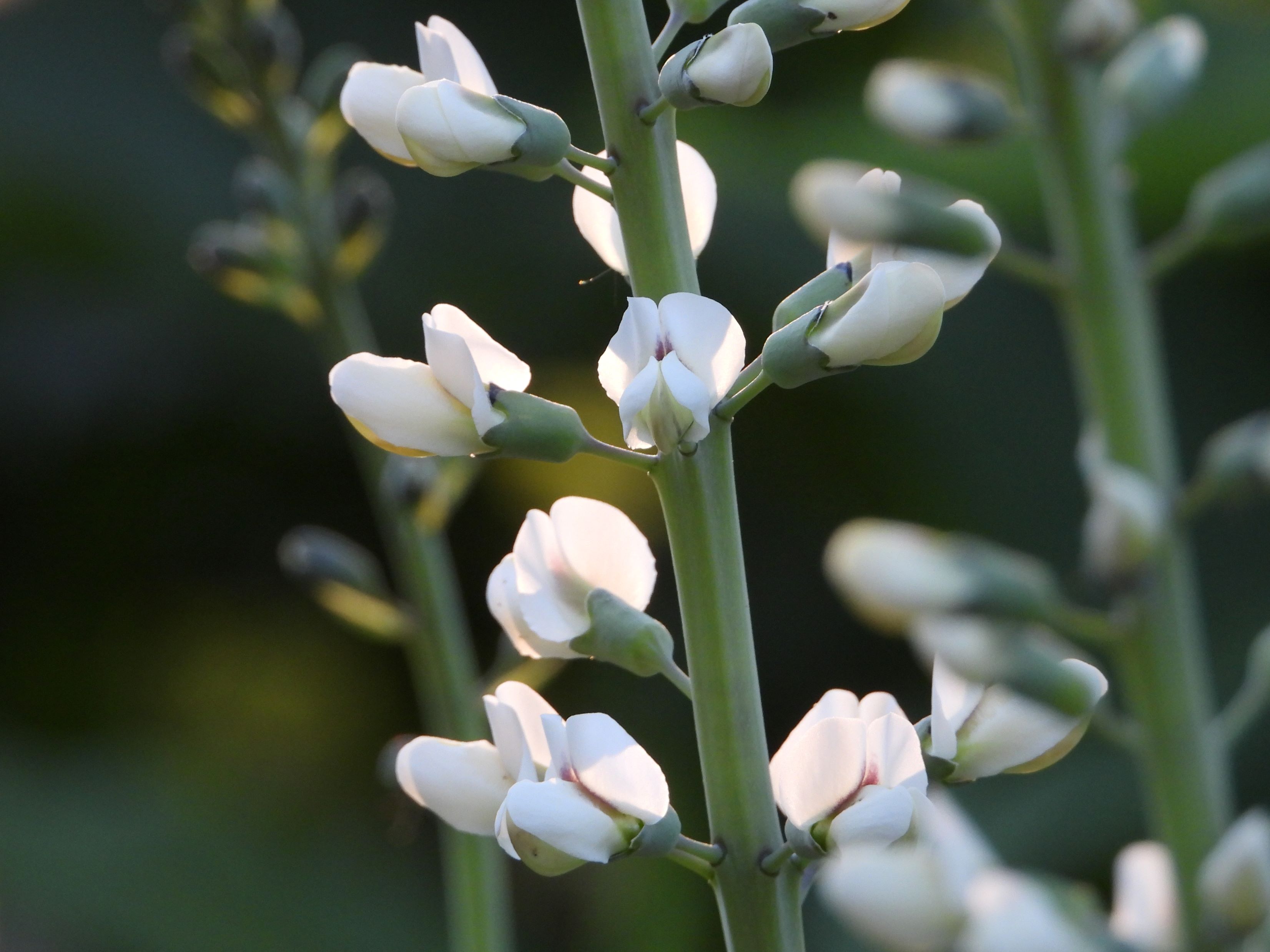
Flower: Large, white, pea-like blossoms on erect racemes up to 2 ft long. Secondary racemes may also be present. Petals drop after pollination.
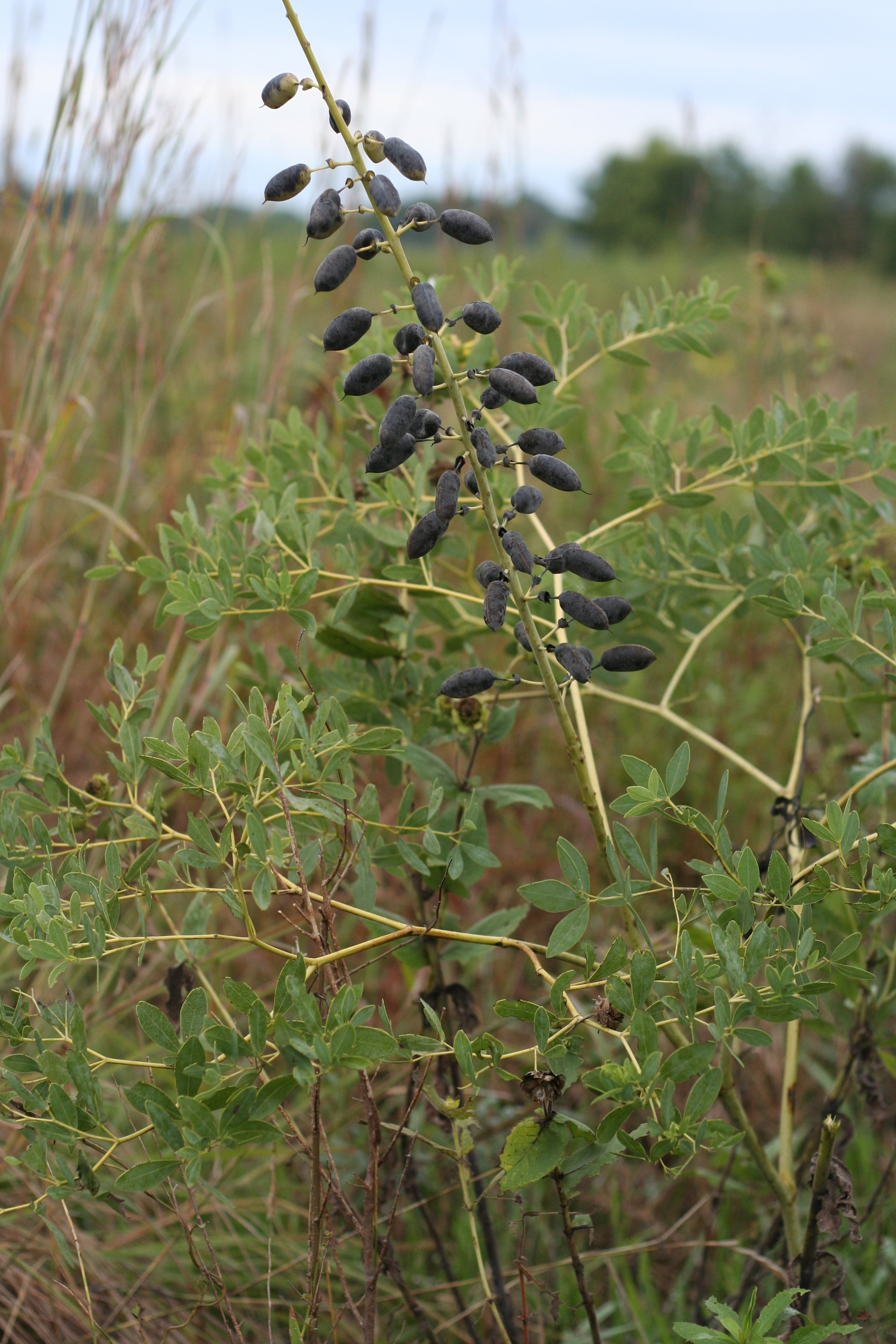
Fruit/seedhead: Inflated, cylindrical seed pods start out green but turn black when ripe, seeds are golden.
Pollination: Bumblebees
- Seed
Seed characteristics
Seed weight:
Seeds per ounce: 1,700 (IA NRCS)
Seeds per pound: 27,200 (IA NRCS)
1000 seed weight: 16.42 g (Seed Information Database)
Description: Seeds are a bean about 4-5 mm long (1/4 in), covered with a sticky resin when freshly mature.
Typical seed test
PLS: 95% (n = 11)
Purity: 100% (n = 11)
Germination: 9% (n = 9)
Hard: 88% (n = 10)
(averages obtained from n tests of purchased seed lots)
- Habitat and range
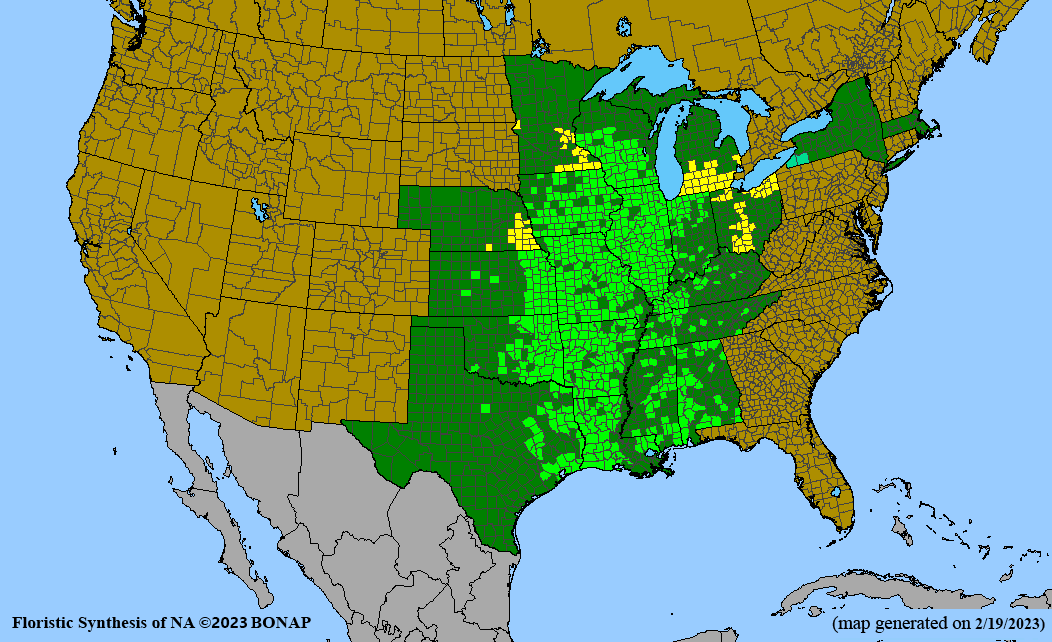
Habitat: Dry to wet-mesic soil; full sun; black soil or sand prairies, marsh and lake edges, thickets, limestone glades. Wetland Indicator Status is Facultative Upland (FACU) for the Midwest. Moist, well-drained soils are preferred for seed production.
Conservation status: Global- G5, secure; North Carolina- S2, imperiled (NatureServe)

General Comments
The spring shoots of mature white wild indigo plants come up quickly, resembling asparagus, in late spring when soil temperatures warm. The tissues expand quickly, becoming shrub-like in form and blooming by early to mid June. Tissues turn black if bruised, as do seed pods at maturity. The entire plant blackens with fall dormancy. Pods eventually split open, revealing orderly rows of attached seeds, if they have not been devoured by the larvae of a host specific insect: the baptisia seed pod weevil. Seeds are somewhat sticky, initially. Stem breaks off at ground level in late fall and plants will tumble with the wind, shaking out any seed remaining in the pods, aiding seed dispersal.
Recommendations for Seed Production
- Establishment for seed production
Direct seeding
Not recommended for this species
Greenhouse
Seed pre-treatment: Scarify seed (see General Information: Propagation of Native Plants) and wet stratify 10 days to 2 weeks at 40° F. Inoculate seed with a Baptisia inoculum, if desired.
Sowing: Sow seed in greenhouse two months before last frost free date. Damping off (fungal pathogen) can be a problem on seedlings if soil is kept too moist, or seedlings are planted too thickly. Add additional perlite to sterile potting mix. Avoid excess moisture on the soil surface by applying a thin layer of chick grit over the top of the soil, improving air circulation with fans, thinning seedlings, and/or watering from the bottom of the containers only. Seedlings form a fleshy taproot with few lateral roots, unless allowed to grow until taproot is air-pruned as it reaches the bottom drainage holes of the container. Plugs with vertical grooves and large bottom openings encourage air-pruning and branching of roots.
Transplanting: Use care when transplanting to keep soil intact around the root system. Transplant healthy, well-rooted seedlings into bare soil in rows convenient for tillage equipment or into a weed barrier at 12 in intervals after all danger of frost is past.
- Stand management
Weeds: Mow stands above seedling height during establishment year. Control weeds with tillage and hand roguing. It may be desirable to overseed with a shorter growing warm season grass as a companion crop to reduce competition from weeds and to provide a fuel matrix for annual burning, which enhances seed production and seems to reduce seed predation by weevils.
Pests: Seed production can be curtailed or even eliminated in some years by a seed-eating weevil (Apion rostrum). The weevil oviposits eggs in the developing fruit, and the larvae emerge a few days later inside the sealed pods and feed on the developing seeds. Plants may also selectively abort pods containing fewer seeds due to seed predation. It may take a few years for weevils to find and colonize a new production field. Deer are known to eat the entire inflorescence while in bud.
Diseases: None noted.
Hybridization risk: Maintain separation between plots of Baptisia alba and other species in the genus: B. australis, B. bracteata.
- Seed production
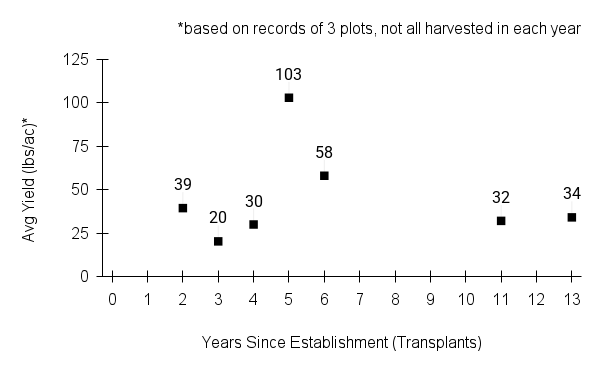 First Harvest: Plants are slow to reach reproductive maturity. Some flowering and seed set may occur in the third growing season under optimal conditions, but it may require 4 to 5 years for a full harvest.
Yield: 20-100 bulk pounds/acre (yields extrapolated based on harvest records from 3 plots)
Stand life: Plants appear to be long-lived, estimated stand life of at least 10 years.
Flowering date: mid-June - mid-July in northern Iowa
Seed maturity/Harvest date: September in northern Iowa.
Seed retention: Shattering occurs gradually through September into October.
Harvest date range at TPC (2004-2015): Aug 13 - Oct 21
Recommended harvest method: Combine or hand strip pods at maturity.
- Seed cleaning and storage
Cleaning process: Hand collected material may be stomped to break up pods. This step is not needed for combined material. Pre-clean air-dried material by scalping through 1/2 in mesh to remove large particles. Air-screen to clean (see Appendix C). Most black-colored seeds are non-viable and usually less dense than yellowish-colored seeds, and most should be removed by increasing aspiration.
Seed storage: Cool/dry (33-50° F, 30-50% RH)
Released Germplasm
Source identified material: Natural Selections/Iowa Ecotype Project Zones 1 (northern Iowa), 2 (central Iowa), and 3 (southern Iowa)
Cultivated variety (cultivars): Horticultural varieties may also exist.
- References
Chayka, K. (n.d.). Baptisia lactea (white wild indigo). Minnesota Wildflowers. https://www.minnesotawildflowers.info/flower/white-wild-indigo
Cochrane, T. S., Elliot, K., & Lipke, C. S. (2014). White wild indigo. In Prairie plants of the University of Wisconsin-Madison Arboretum (3rd ed., p. 180). University of Wisconsin-Madison Arboretum.
Hilty, J. (2019). White wild indigo - Baptisia alba macrophylla. Illinois Wildflowers. https://www.illinoiswildflowers.info/prairie/plantx/ww_indigox.htm
Houseal, G. A. (2007). Forbs legumes. In G. A. Houseal (Eds.), Tallgrass Prairie Center’s native seed production manual (pp. 58–59). Tallgrass Prairie Center - University of Northern Iowa.
Kartesz, J.T., The Biota of North America Program (BONAP). 2023. North American Plant Atlas. (http://bonap.net/napa). Chapel Hill, N.C. [maps generated from Kartesz, J.T. 2023. Floristic Synthesis of North America, Version 1.0. Biota of North America Program (BONAP). (in press)]
NatureServe. 2024. NatureServe Network Biodiversity Location Data accessed through NatureServe Explorer [web application]. NatureServe, Arlington, Virginia. Available https://explorer.natureserve.org/. (Accessed: February 29, 2024).
USDA NRCS National Plant Data Team. (n.d.). Baptisia alba (L.) Vent.. USDA plants database. https://plants.usda.gov/home/plantProfile?symbol=BAAL
Species Guide Updated 12/2/2024