

Dudley's rush
Table of Contents
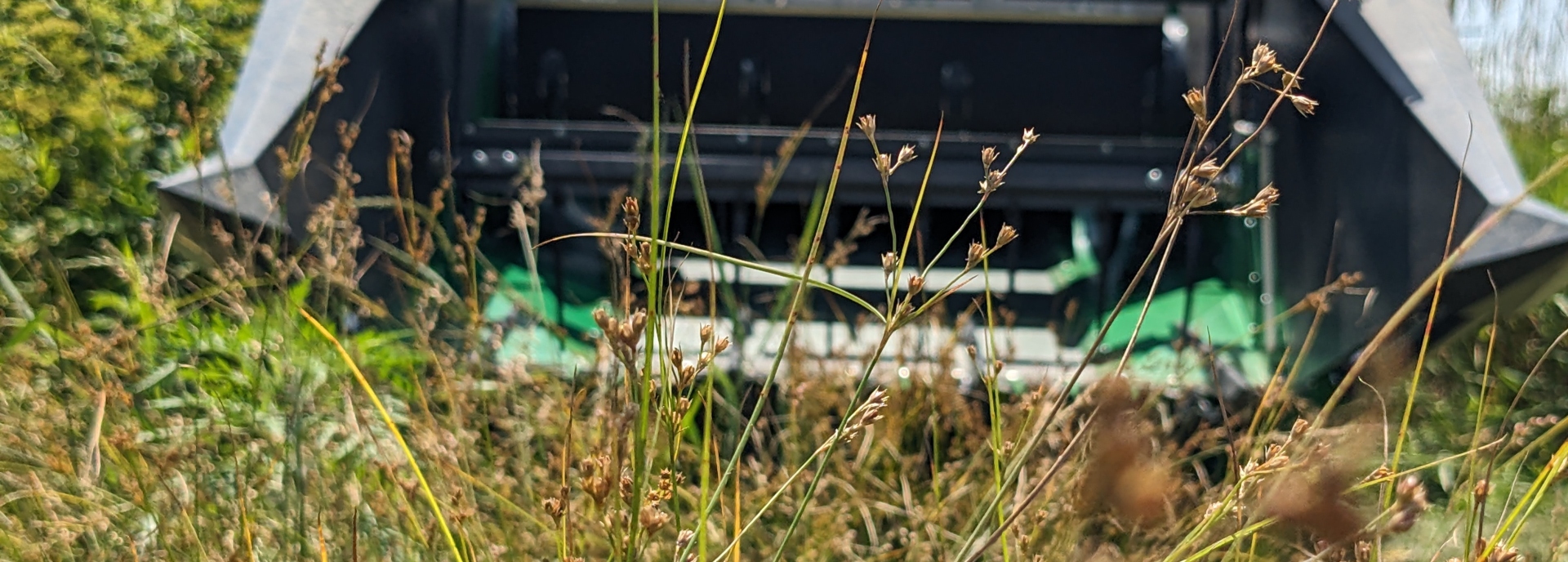
Juncus dudleyi, Wiegand
Scientific Synonyms: Juncus tenuis Willd. var. dudleyi (Wiegand) F.J. Herm., Juncus tenuis Willd. var. uniflorus auct. non Farw. p.p.
Family: rush family (Juncaceae)
Functional Group: sedges and rushes
Description
- Life cycle and growth form
Perennial, bunch forming rush with fine fibrous roots and short rhizomes.
Height: 1-2 ft

- Leaves and stem
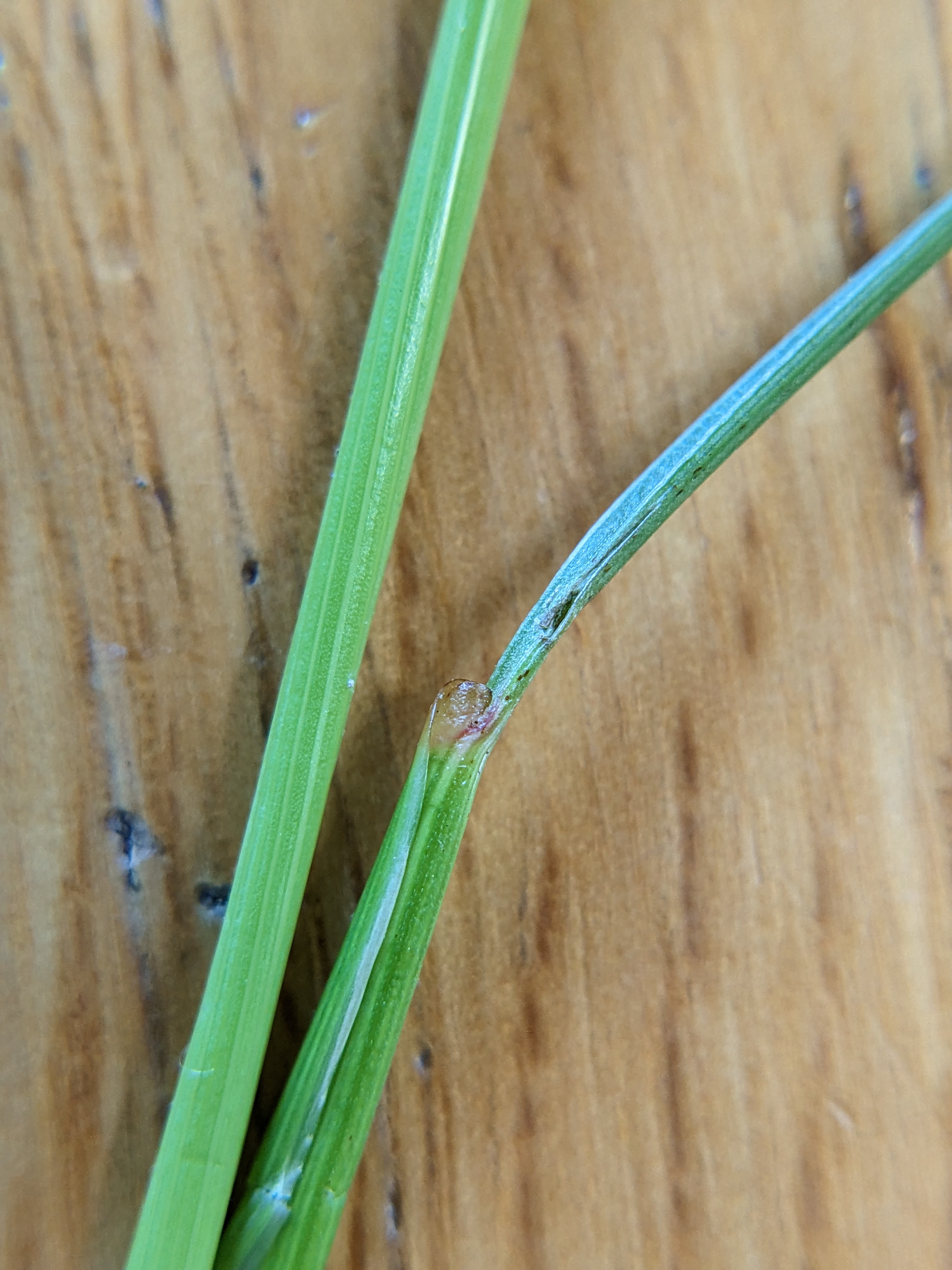
Leaf blades flat, dark green, up to 1 mm wide and 12 in long, 2-3 leaves per flowering stem; flowering stems longer than the blades, round in cross-section; small appendages where the leaf blade meets the sheath (auricles) are thickened, rounded, often yellowish, helping to distinguish Dudley’s rush from similar species that have auricles that are elongated and membranous (J. tenuis) or rounded and papery (J. interior).
- Flower, fruit and seedhead
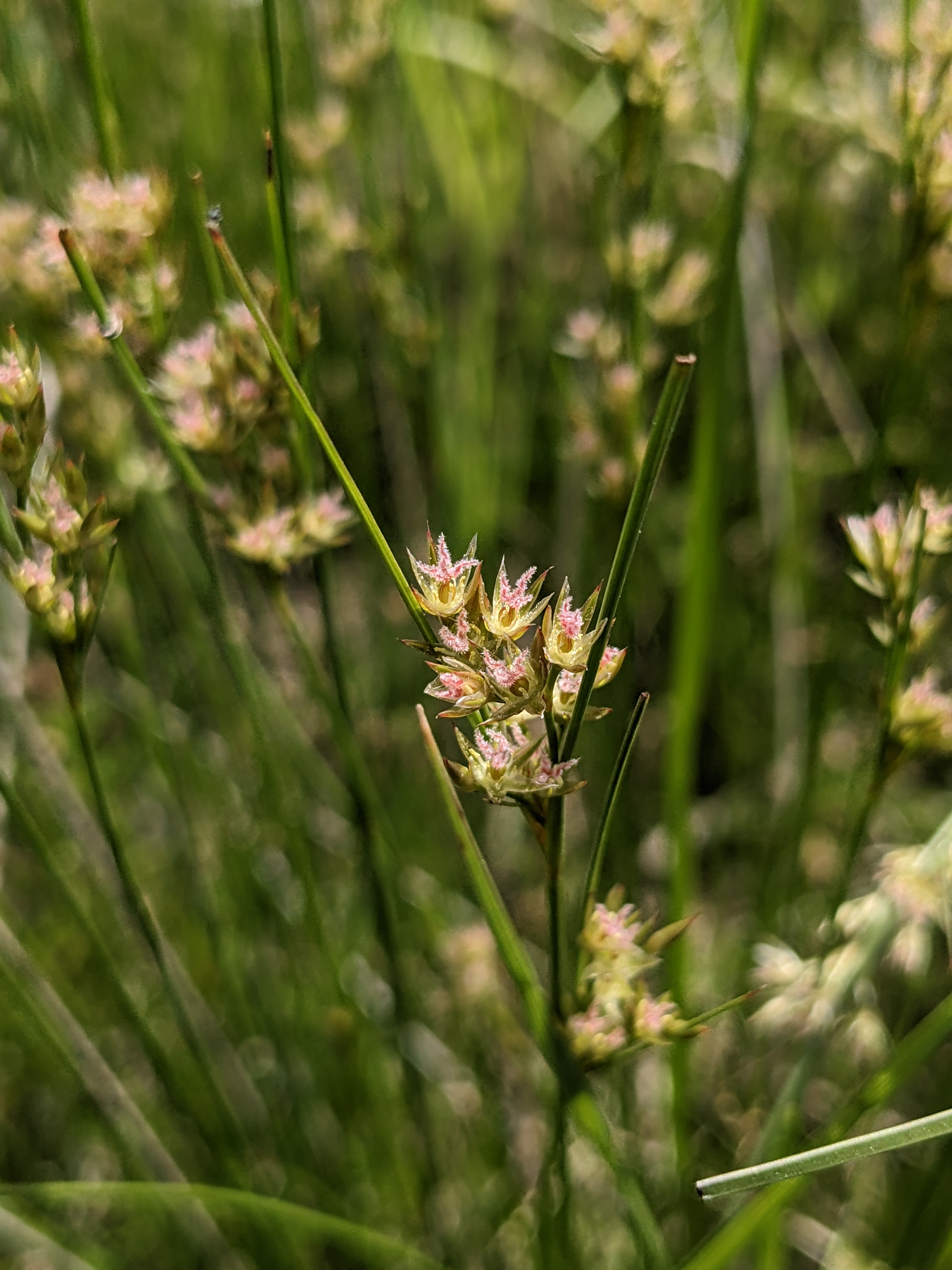
Fruit/seed head: Inflorescence is a dense to loose cluster of up to 80 small green, 6-parted flowers that mature into oval brown capsules surrounded by 6 persistent, sharply pointed tepals; usually at least one slender, thread-like bract from the base of the inflorescence extends beyond the flowers; capsules open at maturity to release numerous, very tiny seeds.
Pollination: wind
- Seed
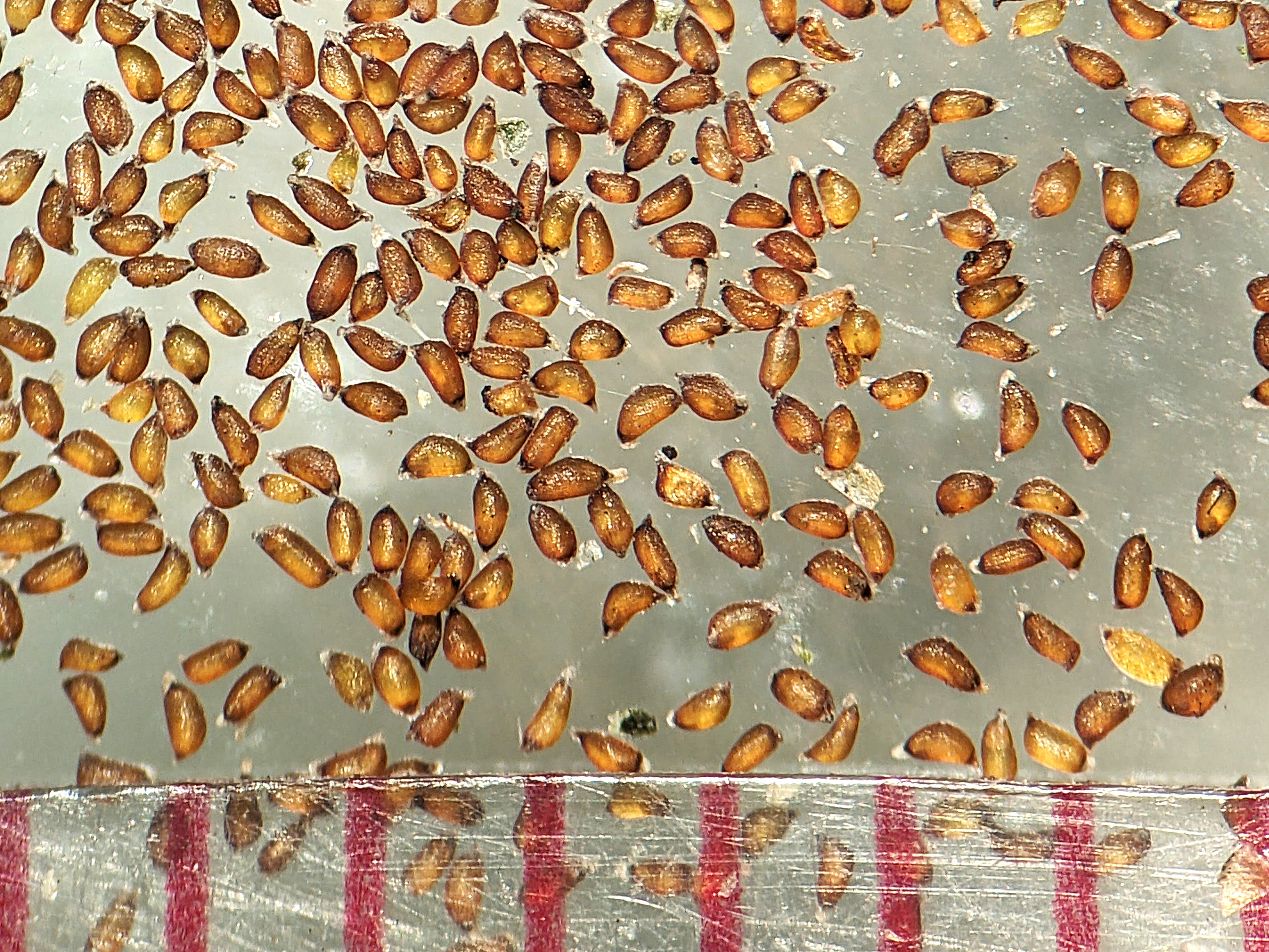 Seed image includes a ruler with millimeter markings.
Seed characteristics
Seed weight:
Seeds per ounce: 3,200,000 (IA NRCS)
1000 seed weight: 0.01 g (Seed Information Database)
Description: Seeds are a slightly curved oval or crescent shape, translucent red-gold in color with a whitish bump on one end (but not a long “tail”).
Typical seed test
PLS: 84% (n=5)
Purity: 99.8% (n=5)
Germination: 1.2% (n=5)
Dormancy: 77.4% (n=5)
(averages obtained from n tests of purchased seed lots)
- Habitat and range
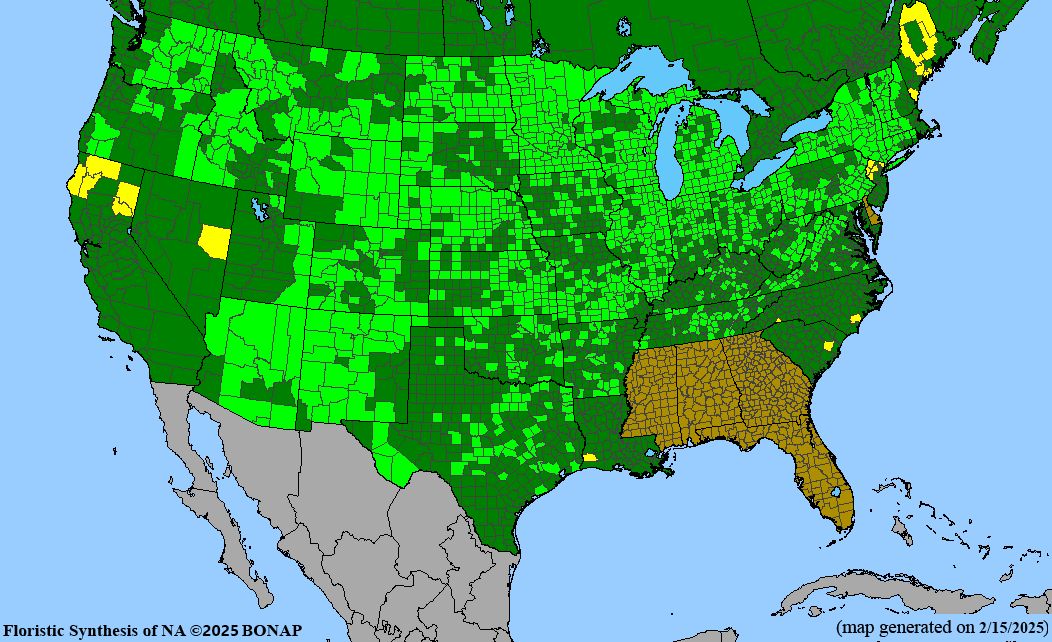
Habitat: Moist soils, full sun; wet prairies, fens, marshes, seeps, wet ditches, shores; Wetland Status is FACW (usually occurring in wetlands) for the Midwest; irrigation is recommended for seed production.
Conservation status: Global- G5, secure; Illinois, New Jersey- S3, vulnerable; Alabama, North Carolina, Nevada- S1, critically imperiled; remaining states either S5, secure, S4, apparently secure, or unranked (NatureServe).
General Comments
Rushes are cool season, somewhat grass-like plants that are usually found in habitats with wet soils. When making collections in remnant habitats for development of Iowa Source Identified seed of Dudley’s rush, we found the plants in both disturbed and high quality prairies, fens, marshes, and ditches. The tiny seeds are sticky when wet and may be dispersed by sticking to the feet of waterfowl and mammals. In our region, there are three species that are very similar, and Dudley’s rush is distinguished primarily by its auricles - little flaps of tissue where the leaf sheath meets the blade - which are thickened and often yellowish in Dudley’s rush in comparison with path rush (J. tenuis) and inland rush (J. interior).
Recommendations for Seed Production
- Establishment for seed production
Direct seeding
We do not have experience with direct seeding this species for seed production and do not recommend it.
Greenhouse
Seed pre-treatment: 60-day cold/moist stratification.
Sowing: Surface sow in greenhouse about 2-3 months before last frost. Seed is exceptionally tiny, so take care in watering (mist gently) to avoid dislodging. Germination is greatly improved by keeping flats saturated. Seedlings are tiny and threadlike but grow vigorously.
Transplanting: When plugs are well-rooted, move them outside to harden off, then transplant at 8-12 in intervals in plastic mulch with irrigation tape.
- Stand management
Weeds: Prepare a clean, weed-free bed. Plastic mulch suppresses weeds in the first year or two. Mow or cultivate between rows. Hand-hoe and rogue within rows. Contamination of seed by weedy species is unlikely due to the extremely small size of Dudley’s rush seed enabling removal of weeds in seed cleaning.
Pests: None noted.
Diseases: None noted.
- Seed production
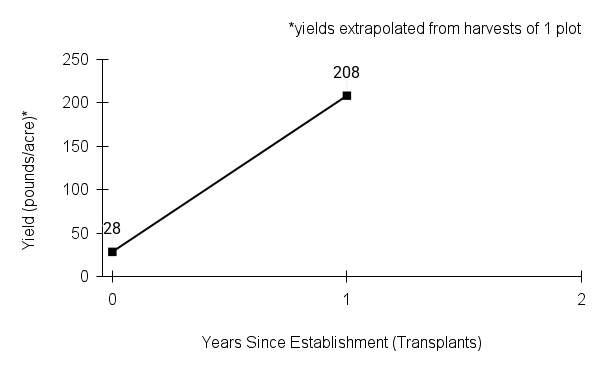 First Harvest: Some flowering and seed set may be expected at the end of the first season from transplants.
Yield/Acre: 20-200 pounds per acre (*extrapolated from harvests of one plot)
Stand Life: Unknown at this time but likely 3-5 years. Plants are relatively small, and invasion of plots by larger, competitive weeds is likely to cause loss of yield over time.
Flowering Date: late May to early June in northeast Iowa
Seed Maturity/Harvest Date: early to mid July in northeast Iowa
Seed retention: Moderate risk of shattering; some seed is lost as soon as capsules open, but some is retained.
Harvest date range at TPC (2024-2025): July 3 - Sept 25 (flowering and seed set greatly delayed in establishment year)
Recommended Harvest Method: combine
- Seed cleaning and storage
Cleaning process: Brush to free any seed remaining in capsules, then airscreen. Use the smallest sifting screen available (or a solid screen), check for seed in the sifting fraction and rescreen. It can be difficult to separate dust from the seed; adjust air and screen multiple times if needed. Eliminating the brushing step would likely produce less dust and improve purity of the final product with slight loss of yield.
Seed storage: Cool/dry (33-50° F, 30-50% RH); seed longevity in storage unknown at this time.
Released Germplasm
Source Identified material: Natural Selections/Iowa Ecotype Zone NI (northern Iowa, in alignment with the Generalized Provisional Seed Zones of the US Forest Service)
- References
Bower, Andrew D.; St.Clair, J. Bradley; Erickson, Vicky. 2014. Generalized provisional seed zones for native plants. Ecological Applications. 24(5): 913-919.
Chayka, K. (n.d.). Juncus dudleyi (Dudley's Rush). Minnesota Wildflowers. https://www.minnesotawildflowers.info/grass-sedge-rush/dudleys-rush
Hilty, J. (2019). Dudley's Rush - Juncus dudleyi. Illinois Wildflowers. https://www.illinoiswildflowers.info/grasses/plants/dd_rush.htm
Kartesz, J.T., The Biota of North America Program (BONAP). 2023. North American Plant Atlas. (http://bonap.net/napa). Chapel Hill, N.C. [maps generated from Kartesz, J.T. 2023. Floristic Synthesis of North America, Version 1.0. Biota of North America Program (BONAP). (in press)]
NatureServe. 2025. NatureServe Network Biodiversity Location Data accessed through NatureServe Explorer [web application]. NatureServe, Arlington, Virginia. Available https://explorer.natureserve.org/. (Accessed: December 18, 2025).
Society for Ecological Restoration, International Network for Seed Based Restoration and Royal Botanic Gardens Kew. (2023) Seed Information Database (SID). Available from: https://ser-sid.org/ (February 2023)
USDA-NRCS. (2024). Native seeding calculator 2024 [Excel File]. Retrieved from https://efotg.sc.egov.usda.gov/#/state/IA/documents/section=4&folder=-6
USDA NRCS National Plant Data Team. (n.d.). Juncus dudleyi Wiegand, Dudley's rush. USDA plants database. https://plants.usda.gov/plant-profile/JUDU2
Species Guide Updated 12/18/2025