

Virginia mountain mint
Table of Contents
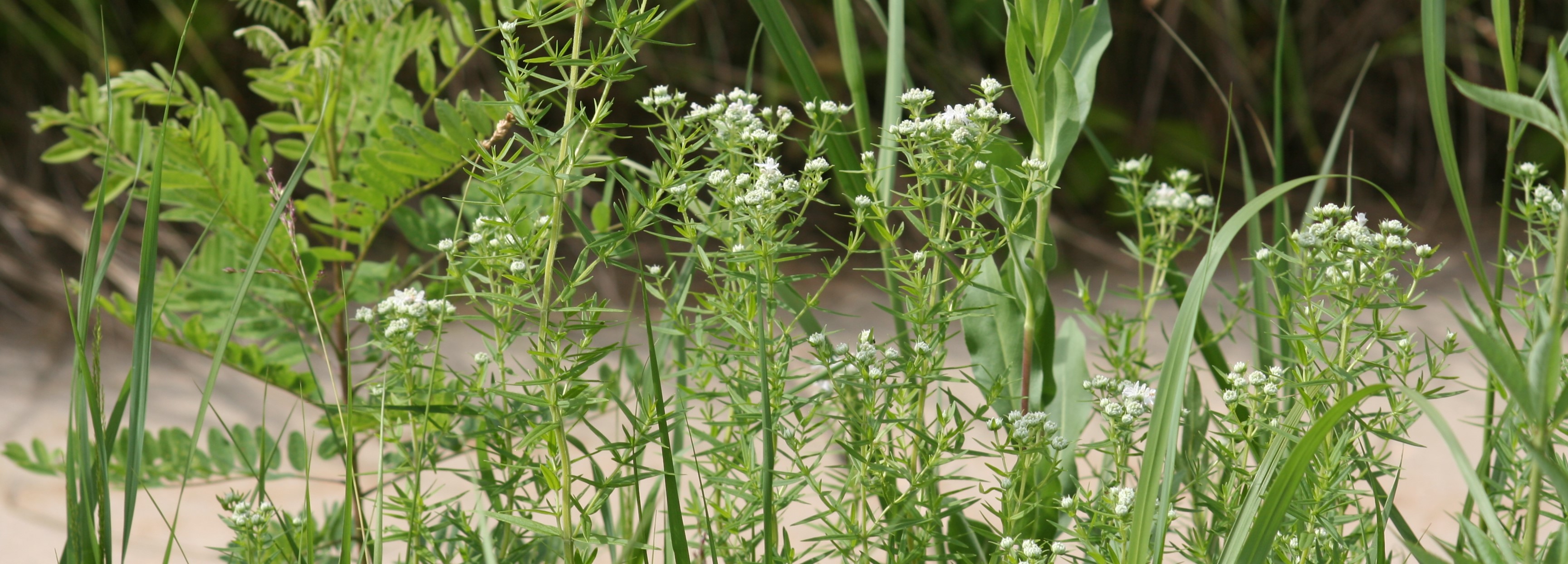
Pycnanthemum virginianum (L.) T. Dur. & B.D. Jacks. Ex B.L. Rob. & Fernald
Alternate Common Names: common mountain mint, mountain mint, basil, mountain thyme, pennyroyal, prairie hysop
Scientific Synonyms: Koellia virginiana (L.) MacMill
Family: mint family (Lamiaceae)
Functional Group: forbs (wildflowers)
Description
- Life cycle and growth form
Perennial with short, slender rhizomes that forms vegetative colonies.
Height: 1-3 ft
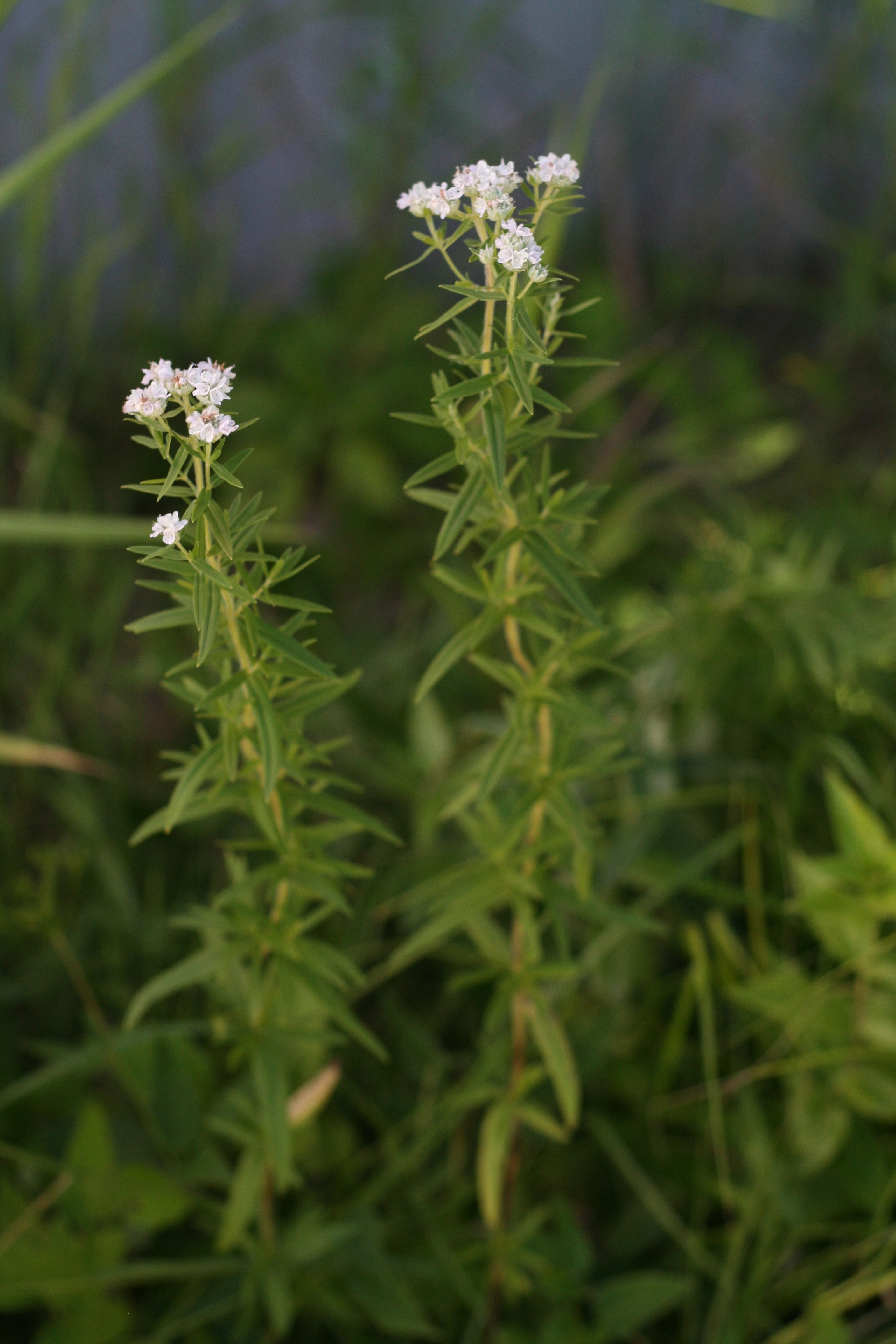
- Leaves and stem
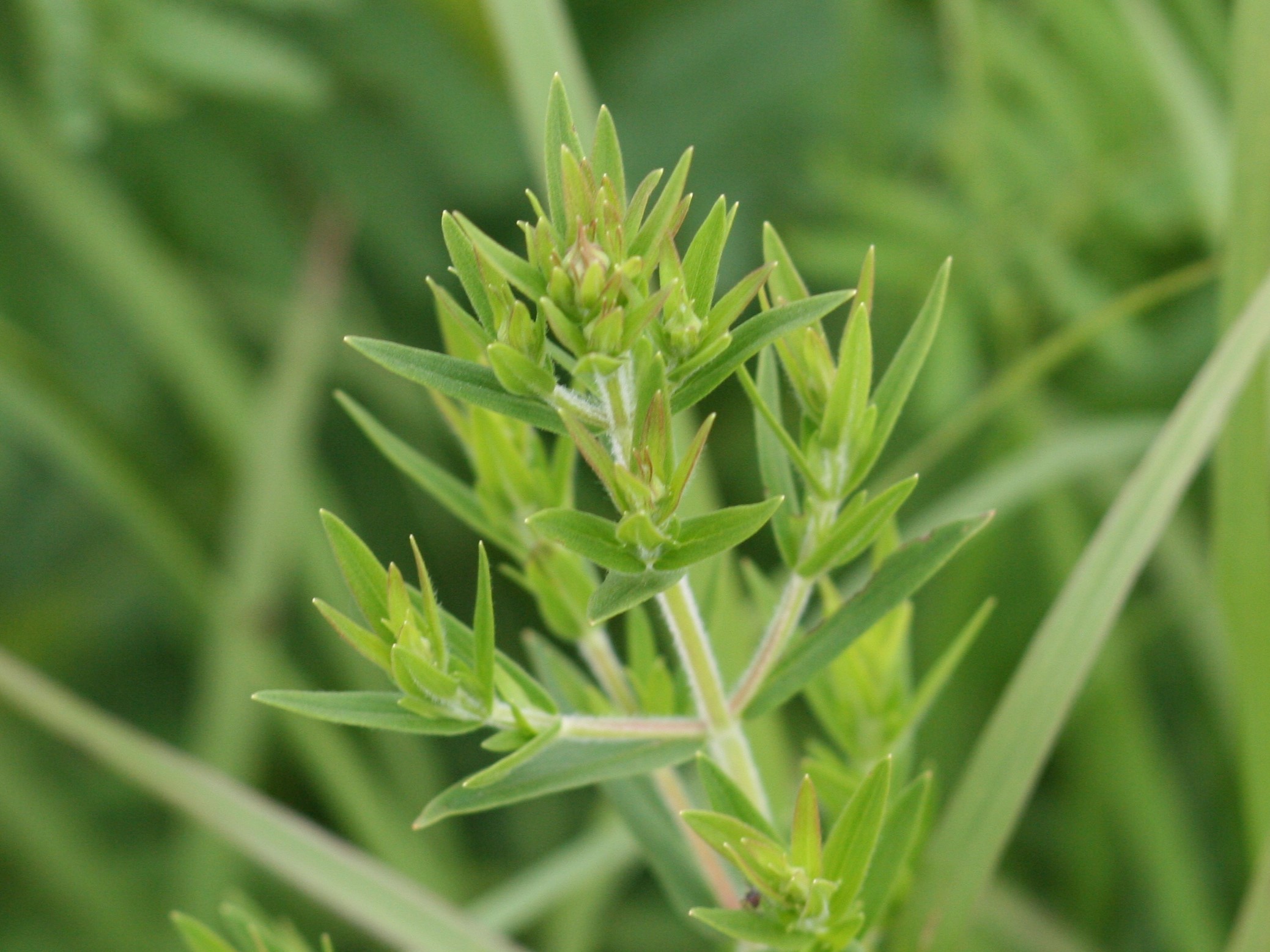
Leaves at least 3/16 in wide or more with a strong mint odor when crushed; stem is four-sided and smooth except for short hairs on the stem angles, often branched.
- Flower, fruit and seedhead
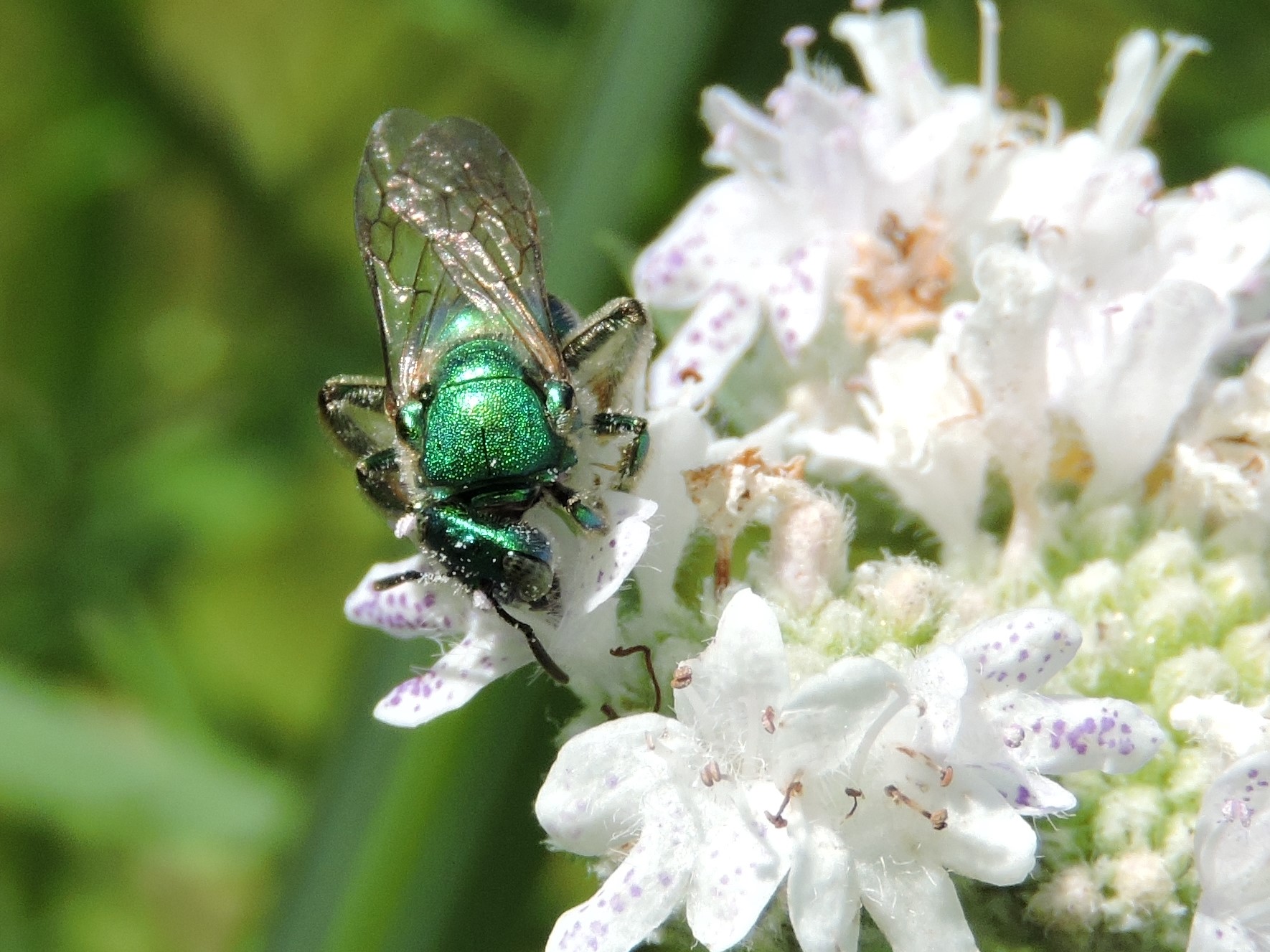
Flower: Small (1/8 in long) white, two-lipped flowers with light purple spots in tight clusters at branch tips, with many heads forming a flat-topped arrangement.
Fruit/seedhead: Mature seed heads are gray; four one-seeded nutlets develop inside each calyx tube.
Pollination: Insects such as bees, flies, wasps, and butterflies
- Seed
Seed characteristics
Seed weight:
Seeds per ounce: 220,000 (IA NRCS)
1000 seed weight: 0.14 g (Seed Information Database)
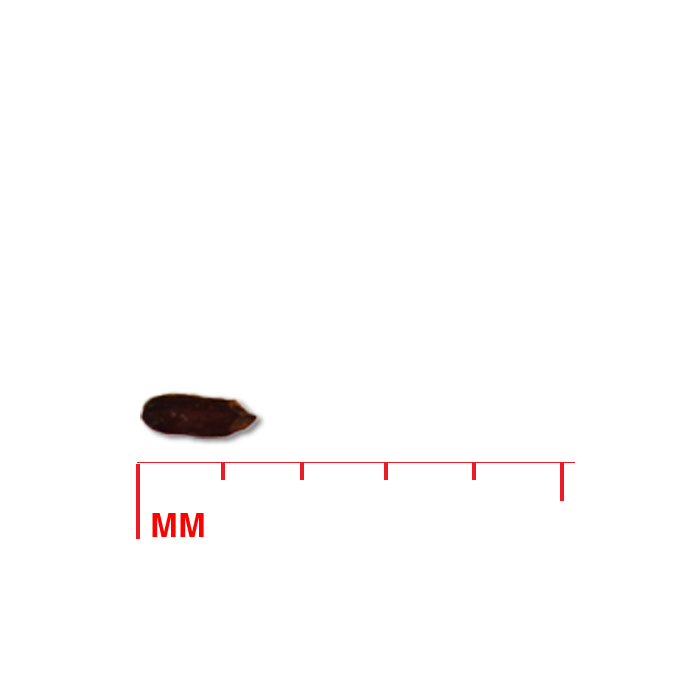
Description: ‘Seeds’ are nutlets, developing in a tube-like calyx of inflorescence.
Typical seed test
PLS: 87% (n = 11)
Purity: 93% (n = 11)
Germination: 48% (n = 8)
Dormant: 21% (n = 8)
(averages obtained from n tests of purchased seed lots)
- Habitat and range
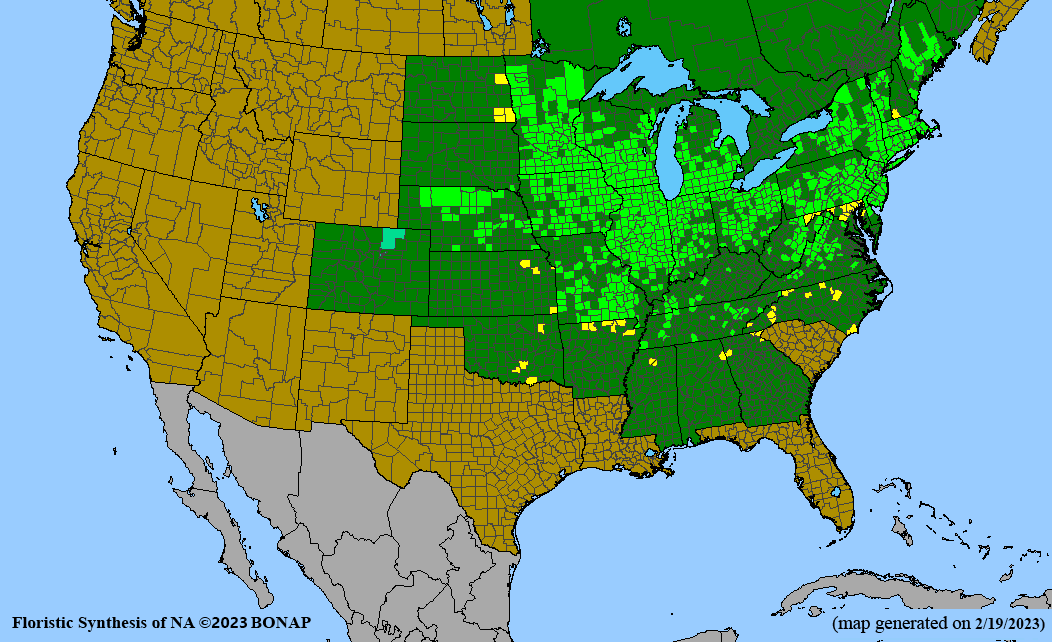
Habitat: Wet-mesic to mesic soils; low prairies; full sun; moist well-drained loamy soils preferred for seed production; moist sand prairies or meadows, swamps, thickets, rocky bluffs, fens; Wetland Indicator Status is Facultative Wetland (FACW) for the Midwest.
Conservation status: Global- G5, secure; District of Columbia- SH, possibly extirpated; Alabama, Kansas, New Hampshire, and North Carolina- S1, critically imperiled; Arkansas- S1/S2, critically imperiled to imperiled; Georgia and Maryland- S2, imperiled; North Dakota- S3, vulnerable (NatureServe)
General Comments
This species is typically encountered (and noticed due to its minty smell when crushed) in patches or colonies in native prairie, spreading by rhizomes. Its gray seedheads and hairs on the stem angles help distinguish this species from narrowleaf mountainmint (P. tenuifolia). The small but abundant and long-lasting flowers of Virginia mountainmint attract numerous and diverse pollinators, particularly small bees, wasps, and beetles. Weed control is essential for good establishment and seed production. Can be harvested with a combine if plots are weed free. Seed is long-lasting under refrigeration.
Recommendations for Seed Production
- Establishment for seed production
Direct seeding
Not recommended for this species.
Greenhouse
Seed pre-treatment: Dry cold stratify 12 weeks at 40° F.
Sowing: Surface sow seed in greenhouse two months before last frost free date. Water carefully (fine mist) to prevent seed from splattering out of containers.
Transplanting: Transplant into a weed barrier at 8 - 12 in intervals. Plants spread clonally, so the weed barrier can be removed by the third season, but seed production typically declines by the fourth season.
- Stand management
Weeds: Plastic mulch or weed barrier suppresses many weeds during the first year or two. Hand rogue weeds, being careful not to uproot seedlings or disturb roots and rhizomes of the mountainmint. An anecdotal report from a commercial native seed grower suggests that cultivation within mountainmint rows weakens plants and can cause loss of the crop.
Pests: None noted.
Diseases: None noted.
- Seed production
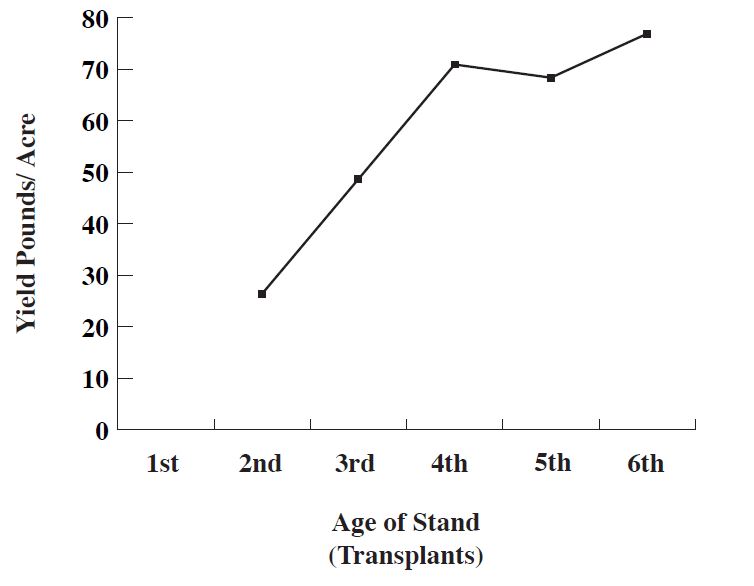 First harvest: Some flowering and seed production first year from greenhouse grown transplants.
Yield: 25-70 bulk pounds/acre in weed barrier, 15-45 bulk pounds/acre bare soil.
Stand life: Peak harvests second-third year. In proper soils with good management, stand and seed production persists at least into fourth year.
Flowering date: Flowering occurs mid-July into August.
Seed maturity/Harvest date: Mid September to early October.
Seed retention: Holds seed well, shattering occurs mid to late October.
Harvest date range at TPC (2003-2007): Sept 18 - Oct 21
Recommended harvest method: Combine
- Seed cleaning and storage
Cleaning process: Pre-clean by scalping through 1/2 in and 1/4 in mesh to remove large particles and make flowable, then air-screen. (No awns or appendages to remove).
Seed storage: cool/dry (33-50° F, 30-50% RH)
Released Germplasm
Source Identified material: Natural Selections/Iowa Ecotype Zones 1 (northern Iowa), 2 (central Iowa), and 3 (southern Iowa)
- References
Chayka, K. (n.d.). Pycnanthemum virginianum (Virginia mountain mint). Minnesota Wildflowers. https://www.minnesotawildflowers.info/flower/virginia-mountain-mint
Cochrane, T. S., Elliot, K., & Lipke, C. S. (2014). Mountain mint. In Prairie plants of the University of Wisconsin-Madison Arboretum (3rd ed., p. 221). University of Wisconsin-Madison Arboretum.
Hilty, J. (2019). Common mountain mint - Pycnanthemum virginianum. Illinois Wildflowers. https://www.illinoiswildflowers.info/prairie/plantx/cmt_mintx.htm
Houseal, G. A. (2007). Forbs wildflowers. In G. A. Houseal (Eds.), Tallgrass Prairie Center’s native seed production manual (pp. 46–47). Tallgrass Prairie Center - University of Northern Iowa.
Kartesz, J.T., The Biota of North America Program (BONAP). 2023. North American Plant Atlas. (http://bonap.net/napa). Chapel Hill, N.C. [maps generated from Kartesz, J.T. 2023. Floristic Synthesis of North America, Version 1.0. Biota of North America Program (BONAP). (in press)]
NatureServe. 2024. NatureServe Network Biodiversity Location Data accessed through NatureServe Explorer [web application]. NatureServe, Arlington, Virginia. Available https://explorer.natureserve.org/. (Accessed: February 29, 2024).
Runkel, S. T., & Roosa, D. M. (2009). Virginia mountain mint. In Wildflowers of the tallgrass prairie: The upper Midwest (2nd ed., pp. 218–219). University of Iowa Press.
USDA NRCS National Plant Data Team. (n.d.). Pycnanthemum virginianum (L.) T. Dur. & B.D. Jacks. ex B.L. Rob. & Fernald. USDA plants database. https://plants.usda.gov/home/plantProfile?symbol=PYVI
Species Guide Updated 12/8/2025