

meadow zizia
Table of Contents
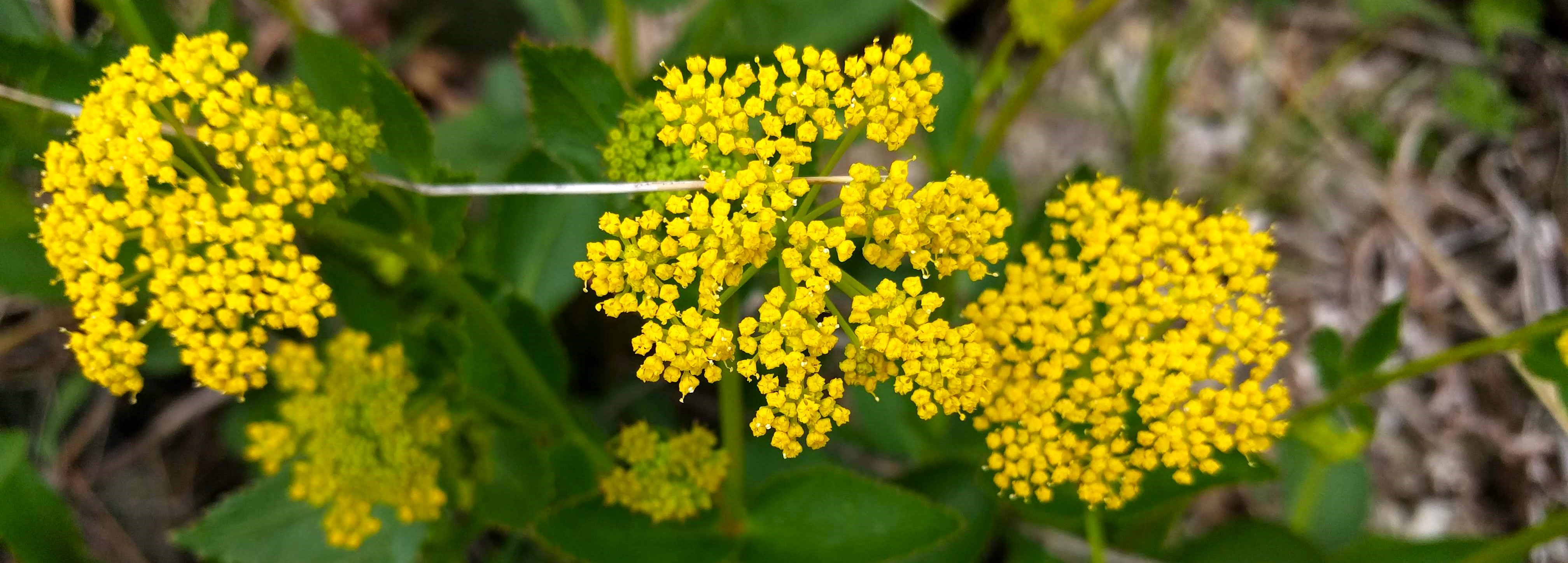
Zizia aptera, (A. Gray) Fernald
Alternate Common Names: heart-leaved golden alexanders, heartleaf golden alexanders, heart-leaved alexanders, heart-leaved meadow parsnip, meadow parsnip, zizia
Scientific Synonyms: Zizia aptera (A. Gray) Fernald var. occidentalis Fernald, Zizia cordata W.D.J. Koch ex DC
Family: carrot and parsley family (Apiaceae)
Functional Group: forbs (wildflowers)
Description
- Life cycle and growth form
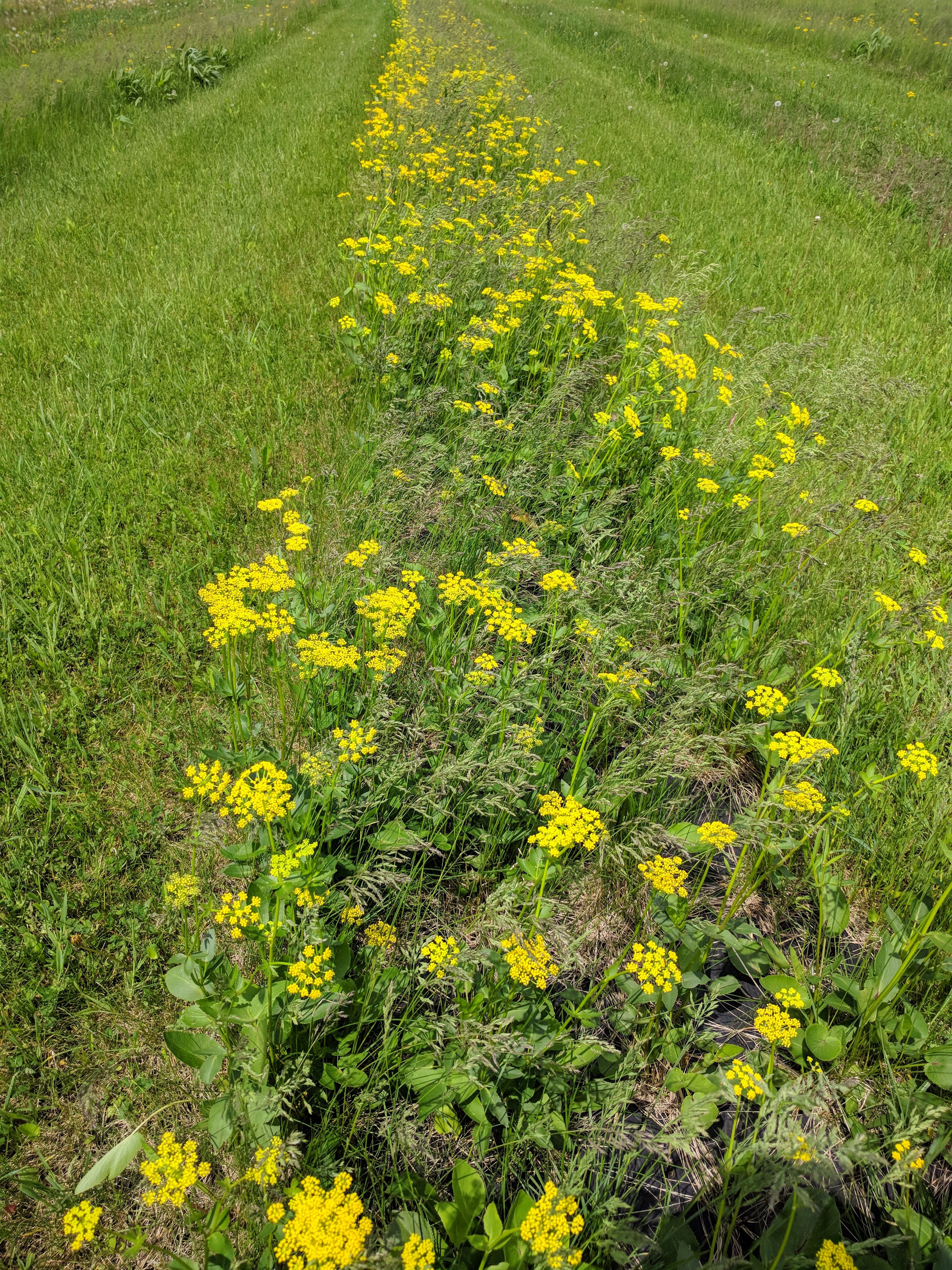
Perennial with a central taproot.
Height: 1-3 ft
- Leaves and stem
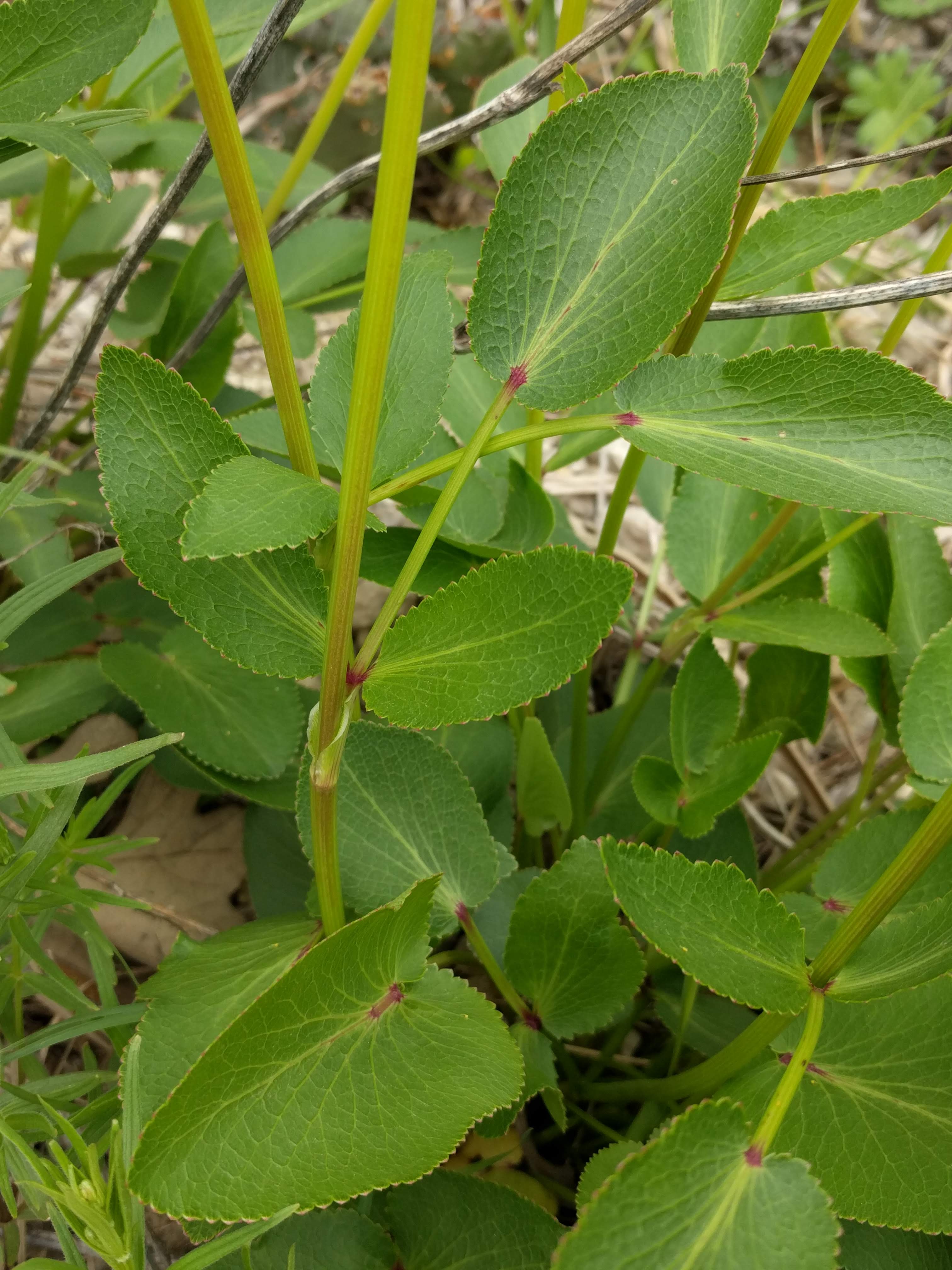
Basal and lower leaves are heart shaped (upper leaves 3-lobed) with long petioles, finely toothed margins, and a purple spot where the blade meets the petiole; leaves dark green, smooth and glossy; stems smooth, round, branched.
- Flower, fruit and seedhead
Flower: Flowers yellow, 1/8 in wide, with 5 petals that fold inwards; in compound umbels 1 1/2 to 3 in wide, each containing 7 to 15 small umbels with around 10-20 flowers each.
Fruit/seed head: Fruit is dark reddish brown with lighter brown ribs (not winged) and splits into two parts, each one-seeded.
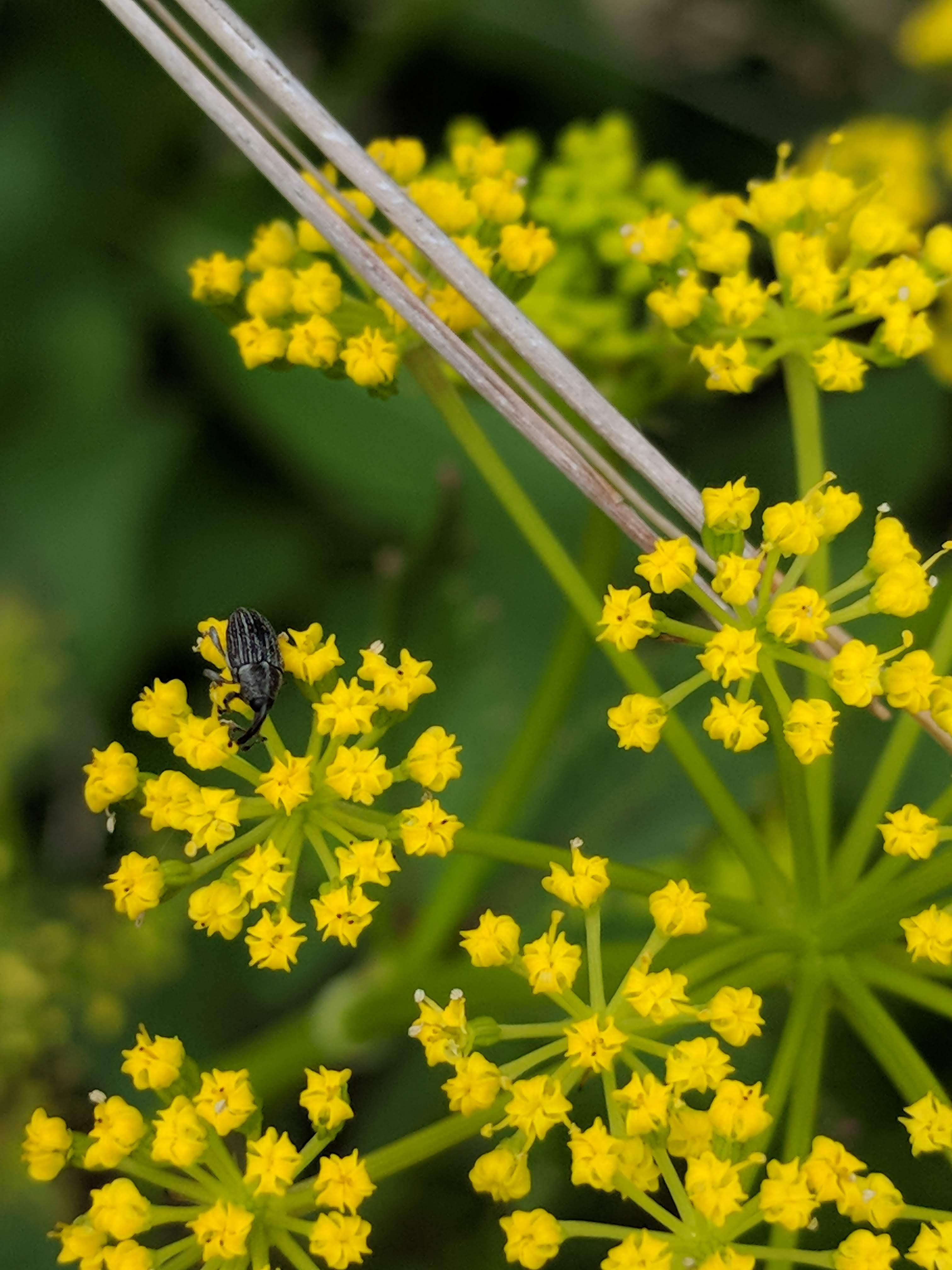
Pollination: Insects, particularly small bees, flies, and beetles (including weevils).
- Seed
Seed characteristics
Seed weight:
Seeds per ounce: 12,000 (IA NRCS)
1000 seed weight: 1.53g (Seed Information Database)
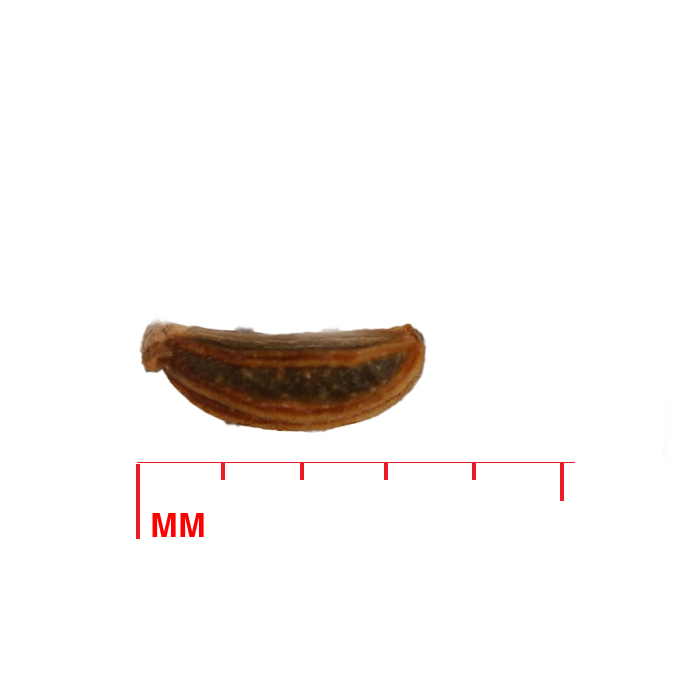
Description: “Seed” (botanically a fruit) is oblong, 3mm long, dark brown, 5-ribbed.
Typical seed test
PLS: 94% (n = 10)
Purity: 100% (n = 10)
Germination: 4% (n = 9)
Dormancy: 73% (n = 9)
(averages obtained from n tests of purchased seed lots)
- Habitat and range
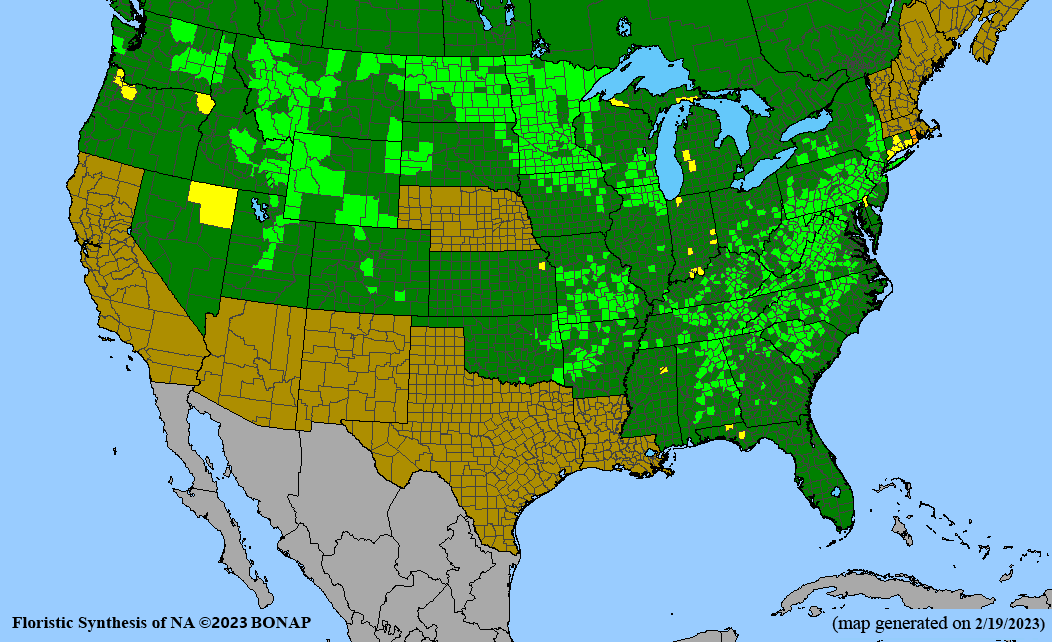
Habitat: Dry to moist soil; partial to full sun; prairies, bluffs, roadsides, woodland openings, shorelines, abandoned fields; Wetland Indicator Status is Facultative Upland (FACU) for the Midwest; well-drained loamy soils are recommended for seed production.
Conservation status: Global- G5, secure; Rhode Island- SH, possibly extirpated; Connecticut, Delaware, Nevada, and Oregon- S1, critically imperiled; Michigan and Arkansas- S1/S2, critically imperiled to imperiled; Colorado- S2, imperiled; Indiana, Iowa, and Wyoming- S3, vulnerable; in all other states within its natural range, status is S4 (apparently secure) to S5 (secure) or unranked (NatureServe).
General Comments
The yellow umbellate flower heads of meadow zizia (Zizia aptera) closely resemble those of their cousin golden Alexanders (Z. aurea), but meadow zizia plants (also called heart-leaf Alexanders) have distinctive, heart-shaped lower leaves, generally occupy drier, more open habitats, and bloom a couple of weeks earlier in the spring. The early flowering time makes this species an important option for pollinator plantings, and their short stature may make these plants of interest for plantings in solar installations. The plants are long-lived in production plots and fairly trouble-free, but seed production declines after the first few years.
Recommendations for Seed Production
- Establishment for seed production
Direct seeding
We do not have experience with direct seeding this species for seed production.
Greenhouse
Seed pre-treatment: Seeds have underdeveloped embryos, and a lengthy cold/moist stratification (150 days) improves germination by providing time for embryos to develop while chemical changes also occur in the seed to reduce inhibition of germination.
Sowing: Sow in greenhouse, lightly covered with germination mix, about 2-3 months before the last frost. Seed germinates best at cooler temperatures (65-70°F, 18-21°C).
Transplanting: When seedlings form well-rooted plugs, move them outside to harden off, then transplant into prepared plasticulture beds at 8-12 in spacing.
- Stand management
Weeds: Plants are short-statured and vulnerable to competition from weeds. Prepare a clean, weed-free bed and use plastic mulch to suppress weeds in the first year or two. Mow or cultivate between rows. Hand weed or rogue to remove large or competitive weeds.
Pests: Aphids may infest the seed heads in large aggregations. While inspecting a plot Z. aptera, we have often observed several ebony bugs (genus Corimelaena) within a single developing seedhead. We suspect that these insects may reduce the yield of viable seed.
Diseases: None noted.
- Seed production
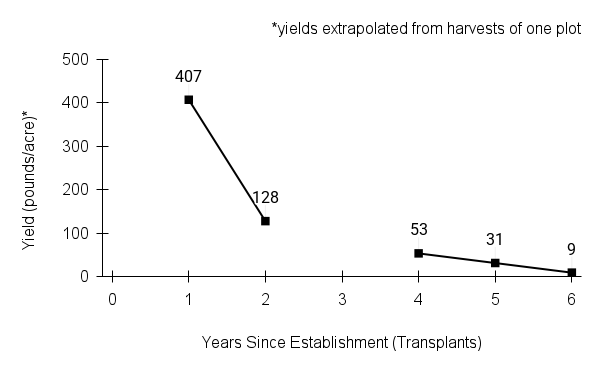 First harvest: Plants flower and set seed the year after planting. Peak harvest in our plot was also the first harvest.
Yield/acre: 50-400 pounds per acre (yields extrapolated from harvests of one plot at TPC)
Stand life: Plants are long-lived, but yields declined after peak harvest in year 2.
Flowering date: late April to early June in northern Iowa
Seed maturity/Harvest date: early to late August in northern Iowa
Seed retention: Fairly low risk of shattering.
Harvest date range at TPC (2015-2021): August 1 - August 28
Recommended harvest method: Hand pick or combine, depending on the size of planting and presence/absence of weed seeds that could contaminate the seedlot.
- Seed cleaning and storage
Cleaning process: Pass harvested material through 1/4 in mesh to remove larger particles, then airscreen.
Seed storage: cool/dry (33-50° F, 30-50% RH)
Released Germplasm
Source Identified material: Natural Selections/Iowa Ecotype Zone 1 (northern Iowa)
- References
Baskin, Jerry M.; Baskin, Carol C.. 2002. Propagation protocol for production of Container (plug) Zizia aptera (A. Gray) Fern. plants University of Kentucky Lexington, Kentucky. In: Native Plant Network. https://NativePlantNetwork.org (accessed 2025/12/30). US Department of Agriculture, Forest Service, National Center for Reforestation, Nurseries, and Genetic Resources.
Chayka, K. (n.d.). Zizia aptera (Heart-leaved Alexanders). Minnesota Wildflowers. https://www.minnesotawildflowers.info/flower/heart-leaved-alexanders
Hilty, J. (2019). Heartleaf Golden Alexanders - Zizia aptera. Illinois Wildflowers. https://www.illinoiswildflowers.info/prairie/plantx/heartleaf_alexx.htm
Kartesz, J.T., The Biota of North America Program (BONAP). 2023. North American Plant Atlas. (http://bonap.net/napa). Chapel Hill, N.C. [maps generated from Kartesz, J.T. 2023. Floristic Synthesis of North America, Version 1.0. Biota of North America Program (BONAP). (in press)]
Moorman, S. (2021, July 18) Family Thyreocoridae - Ebony Bugs. Bug Guide, https://bugguide.net/node/view/6985
NatureServe. 2024. NatureServe Network Biodiversity Location Data accessed through NatureServe Explorer [web application]. NatureServe, Arlington, Virginia. Available https://explorer.natureserve.org/. (Accessed: February 29, 2024).
Society for Ecological Restoration, International Network for Seed Based Restoration and Royal Botanic Gardens Kew. (2023) Seed Information Database (SID). Available from: https://ser-sid.org/ (February 2023)
USDA NRCS National Plant Data Team. (n.d.). Zizia aptera (A. Gray) Fernald. USDA plants database. https://plants.usda.gov/home/plantProfile?symbol=ZIAP
Species Guide Updated 12/30/2025