

compass plant
Table of Contents
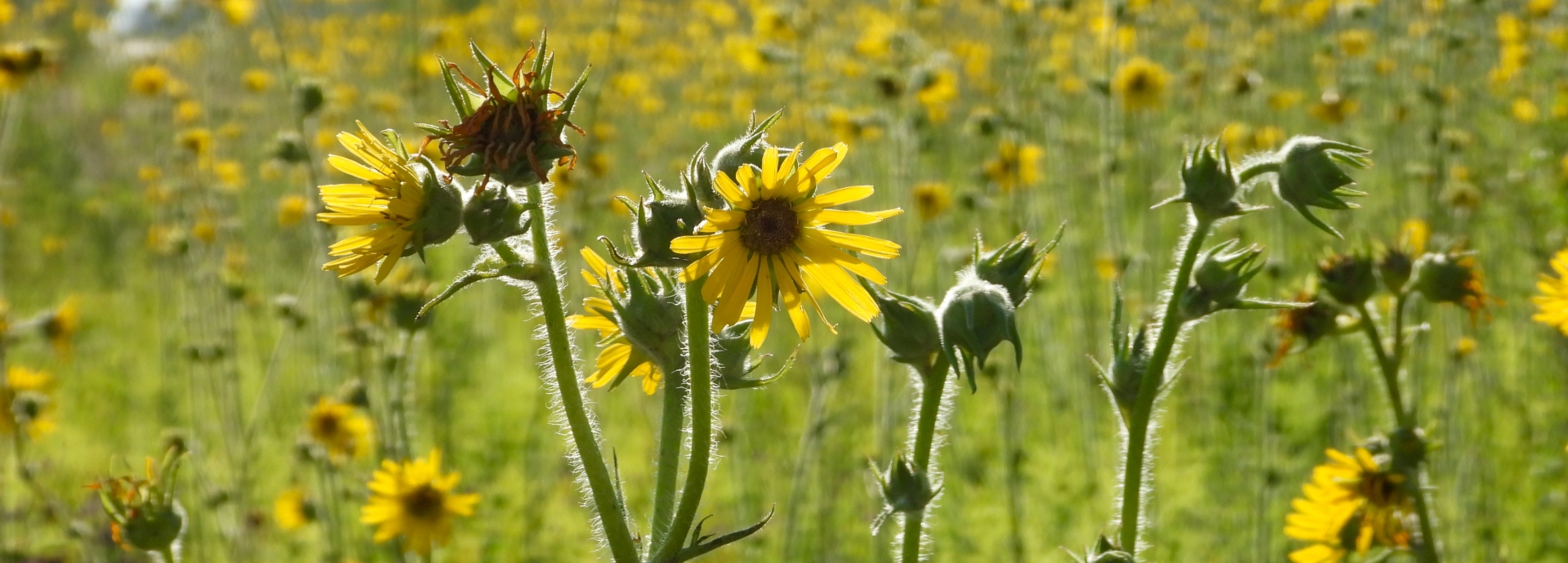
Silphium laciniatum L.
Alternate Common Names: compass plant, rosinweed, turpentine plant, polar plant, pilot-weed
Scientific Synonym: Silphium laciniatum var. robinsonii L. M. Perry
Family: aster family (Asteraceae)
Functional Group: forbs (wildflowers)
Description
- Life cycle and growth form
Perennial, large 15 ft central taproot.
Height: 3-10 ft
- Leaves and stem

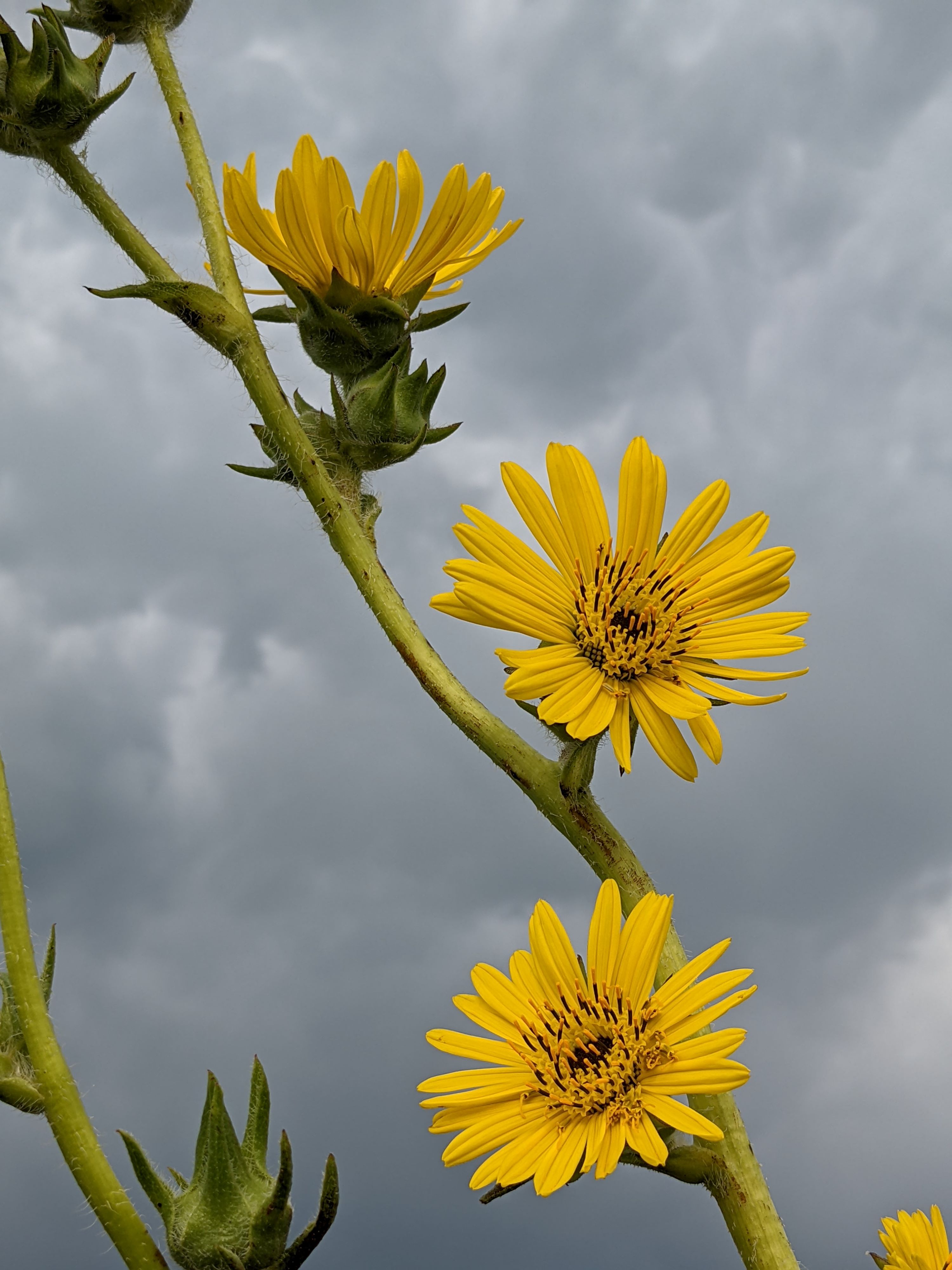
Leaves alternate, 12 - 24 in long, deeply lobed, densely covered in coarse hairs; stems are rounded in cross section and covered in long, coarse, spreading hairs, somewhat woody late in the season.
- Flower, fruit and seedhead
Flower: Yellow composite flower heads, 3-4 in diameter, several per flowering stem.
Fruit/seedhead: Seeds (technically achenes) form only from outer fertile flowers of the central disk.
Pollination: Primarily bees

- Seed
Seed characteristics
Seed weight:
Seeds per ounce: 660 (IA NRCS)
1000 seed weight: 78.05 g (Seed Information Database)
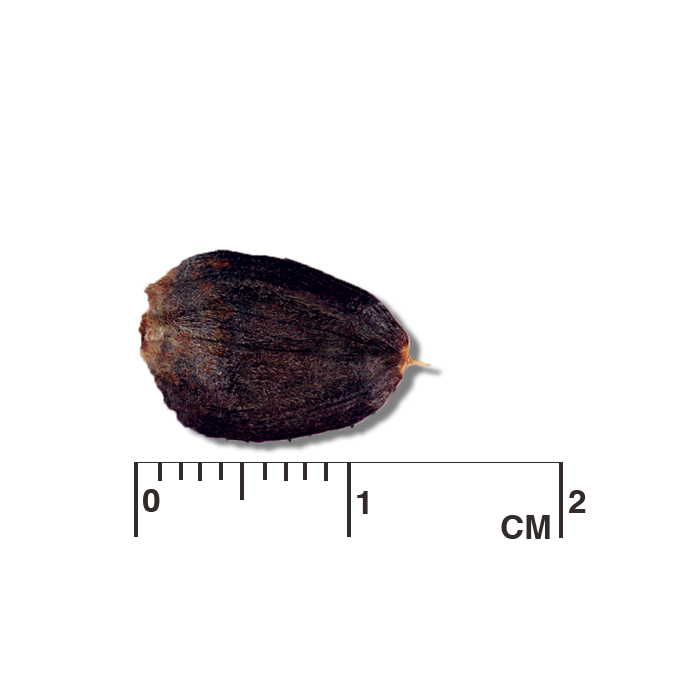
Description: ‘Seeds’ are flat fruits (achenes), 3/8 – 1/2 in long, with a broad wing around margins, making it difficult to get a good separation between filled and unfilled seed. No plume.
Typical seed test
PLS: 85% (n = 11)
Purity: 88% (n = 11)
Germination: 14% (n = 9)
Dormant: 73% (n = 10)
(averages obtained from n tests of purchased seed lots)
- Habitat and range
Habitat: Wet-mesic to dry-mesic soil conditions; full sun; typically on high quality prairie remnants, railroads, roadsides, glades, savannas; preference is for moist, well-drained soils for seed production.
Conservation status: Global- G5, secure; Colorado- SH, possibly extirpated; Ohio, Oklahoma, and Virginia- S1, critically imperiled; Michigan- S1/S2, critically imperiled to imperiled; Kentucky and Tennessee- S2, imperiled; South Dakota- S3, vulnerable (NatureServe)

General Comments
Compass plant is a long-lived, tap-rooted species. An individual seedling may take 2-4 years to flower in production, and flower every year thereafter for a few years. In a prairie, an individual may take 5-10 years to flower, and subsequently flower every other year or so. Silphium species (congeners) will hybridize with one another in nature, so they should be properly isolated from related species for seed production purposes (i.e. cupplant, Silphium perfoliatum; rosinweed, Silphium integrifolium; prairie dock, Silphium terebinthinaceum; etc.) (Fisher 1966, Clevinger and Panero 2000)
Recommendations for Seed Production
- Establishment for seed production
Direct seeding
Not recommended for this species
Greenhouse
Seed pre-treatment: Wet stratify 8-12 weeks at 40° F.
Sowing: Sow seed in greenhouse two months before last frost free date.
Transplanting: Transplant into bare soil in rows or weed barrier at 12 in intervals after all danger of frost is past.
- Stand management
Weeds: Post emergence grass herbicide, tillage, hand roguing. Plastic mulch is not recommended for this species. In an informal trial at TPC, seedlings grown in plastic mulch grew more slowly and took longer to reach maturity than seedlings grown in a biodegradable paper mulch.
Pests: None noted.
Diseases: None noted.
Hybridization risk: This species is known to hybridize with related species Silphium integrifolium, S. perfoliatum, and S. terebinthinaceum. Plan plot layouts to maximize separation among these species.
- Seed production
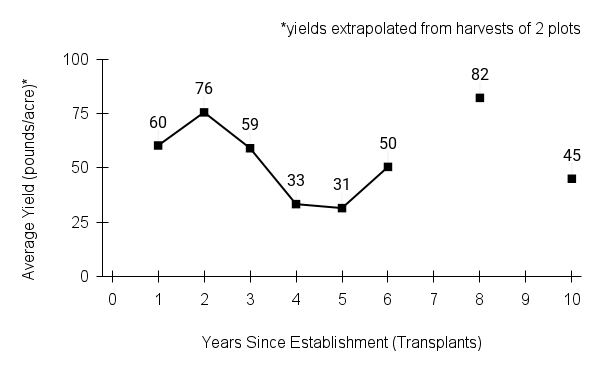 First harvest: Some flowering and seed set end of second year, most will flower during the third growing season from greenhouse grown transplants.
Yield: 40-130 bulk pounds/acre
Stand life: Peak harvests third year. Plants are very long-lived, but seed production may decline significantly in the fourth to fifth year after planting. Harvests from TPC plots also provide some evidence for fluctuating yields over time.
Flowering date: Early July to mid-August.
Seed maturity/Harvest date: Mid-August to mid-September.
Seed retention: Shattering occurs as seeds mature and dry, end of August into September.
Harvest date range at TPC (2003-2012): Aug 22 - Oct 14
Recommended harvest method: Hand collect as seed ripens for most efficient harvest of small plots, combine for larger stands when seed is mostly mature and before significant shattering.
- Seed cleaning and storage
Cleaning process: Pre-clean air-dried material by scalping through 1/2 in mesh and sifting through 1/4 in mesh (most seed will be retained on top of 1/4 in mesh). Brushing with soft bristles helps to break up inert matter to achieve better separation. Air-screen repeatedly to clean.
Seed storage: cool/dry (33-50° F, 30-50% RH)
Released Germplasm
Source Identified material: Natural Selections/Iowa Ecotype Project Zone 1 (northern Iowa), Zone 2 (central Iowa), and Zone 3 (southern Iowa)
- References
Chayka, K. (n.d.). Silphium laciniatum (compass plant). Minnesota Wildflowers. https://www.minnesotawildflowers.info/flower/compass-plant
Clevinger, J. A. (2020, November 5). Silphium laciniatum Linnaeus. Flora of North America. http://floranorthamerica.org/Silphium_laciniatum
Hilty, J. (2019). Compass plant - Silphium laciniatum. Illinois Wildflowers. https://www.illinoiswildflowers.info/prairie/plantx/compassx.htm
Houseal, G. A. (2007). Forbs wildflowers. In G. A. Houseal (Eds.), Tallgrass Prairie Center’s native seed production manual (pp. 50–51). Tallgrass Prairie Center - University of Northern Iowa.
Kartesz, J.T., The Biota of North America Program (BONAP). 2023. North American Plant Atlas. (http://bonap.net/napa). Chapel Hill, N.C. [maps generated from Kartesz, J.T. 2023. Floristic Synthesis of North America, Version 1.0. Biota of North America Program (BONAP). (in press)]
NatureServe. 2024. NatureServe Network Biodiversity Location Data accessed through NatureServe Explorer [web application]. NatureServe, Arlington, Virginia. Available https://explorer.natureserve.org/. (Accessed: February 29, 2024).
Runkel, S. T., & Roosa, D. M. (2009). Compass plant. In Wildflowers of the tallgrass prairie: The upper Midwest (2nd ed., pp. 180–181). University of Iowa Press.
USDA NRCS National Plant Data Team. (n.d.). Silphium laciniatum L. USDA plants database. https://plants.usda.gov/home/plantProfile?symbol=SILA3
Species Guide Updated 12/10/2025