

cardinalflower
Table of Contents
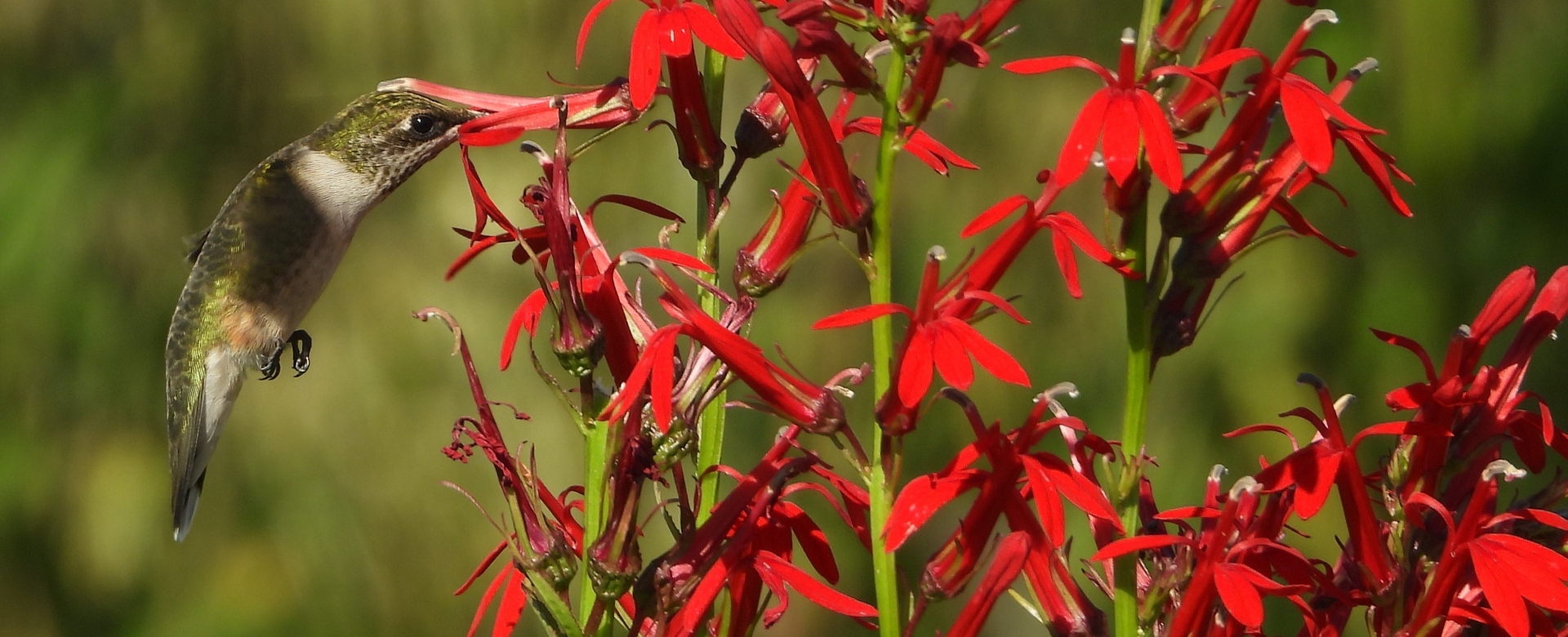
Lobelia cardinalis, L.
Alternate Common Names: bog sage, cardinal-flower, hog’s physic, Indian pink, red bay, scarlet lobelia, slinkweed, water gladiole
Scientific Synonyms: Lobelia cardinalis L. ssp. graminea (Lam.) McVaugh, Lobelia cardinalis L. var. graminea (Lam.) McVaugh, Lobelia cardinalis L. var. multiflora (Paxton) McVaugh, Lobelia cardinalis L. var. meridionalis Bowden, Lobelia cardinalis L. var. pseudosplendens McVaugh, Lobelia cardinalis L. var. phyllostachya (Engelm.) McVaugh, Lobelia cardinalis L. var. propinqua (Paxton) Bowden, Lobelia fulgens Humb. & Bonpl. ex Willd., Lobelia splendens Humb. & Bonpl. ex Willd.
Family: bellflower family (Campanulaceae)
Functional Group: forbs (wildflowers)
Description
- Life cycle and growth form
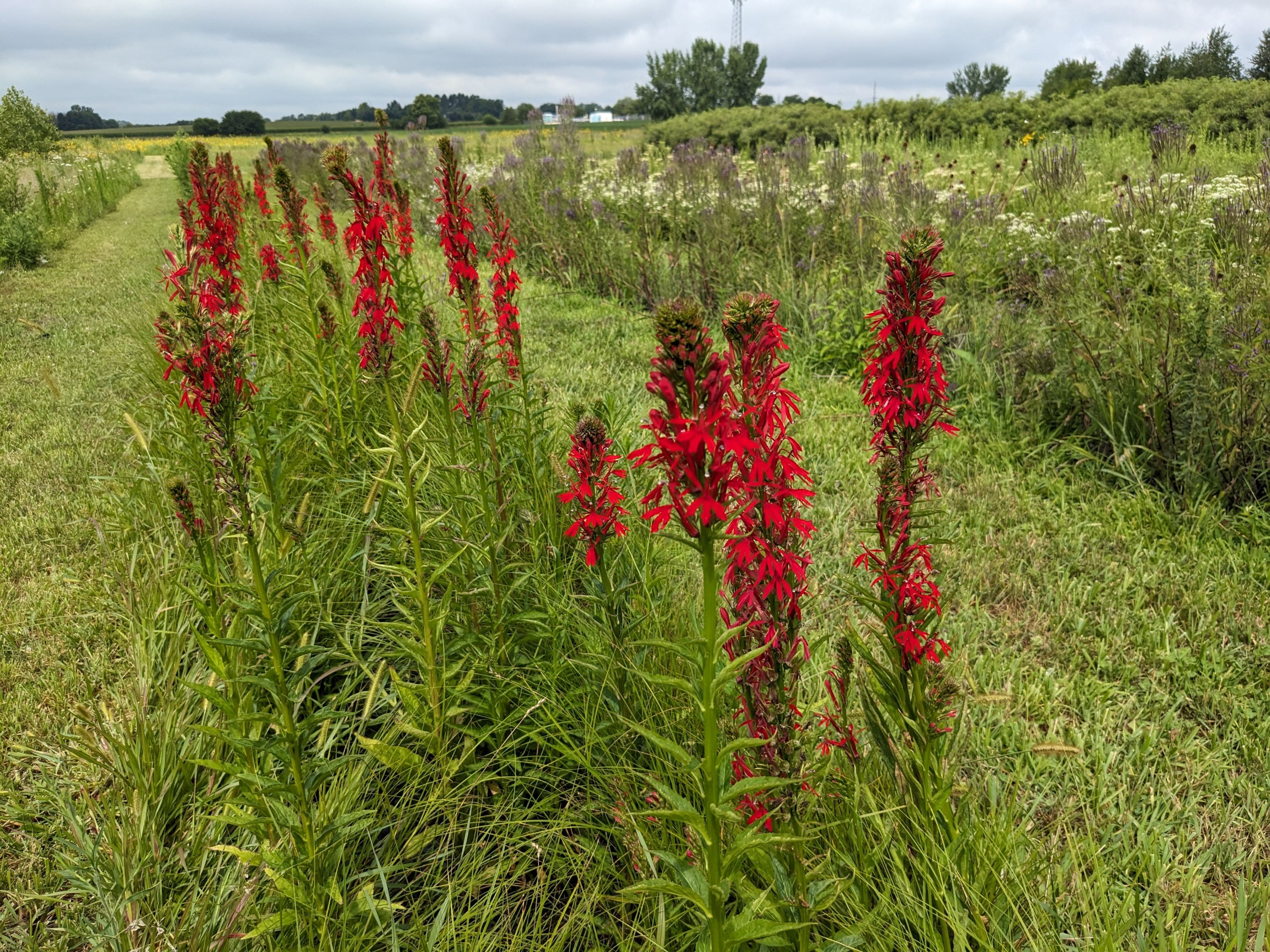
Short-lived perennial with fibrous root system that forms clumps of stems in the second year of growth.
Height: 1-5 ft
- Leaves and stem
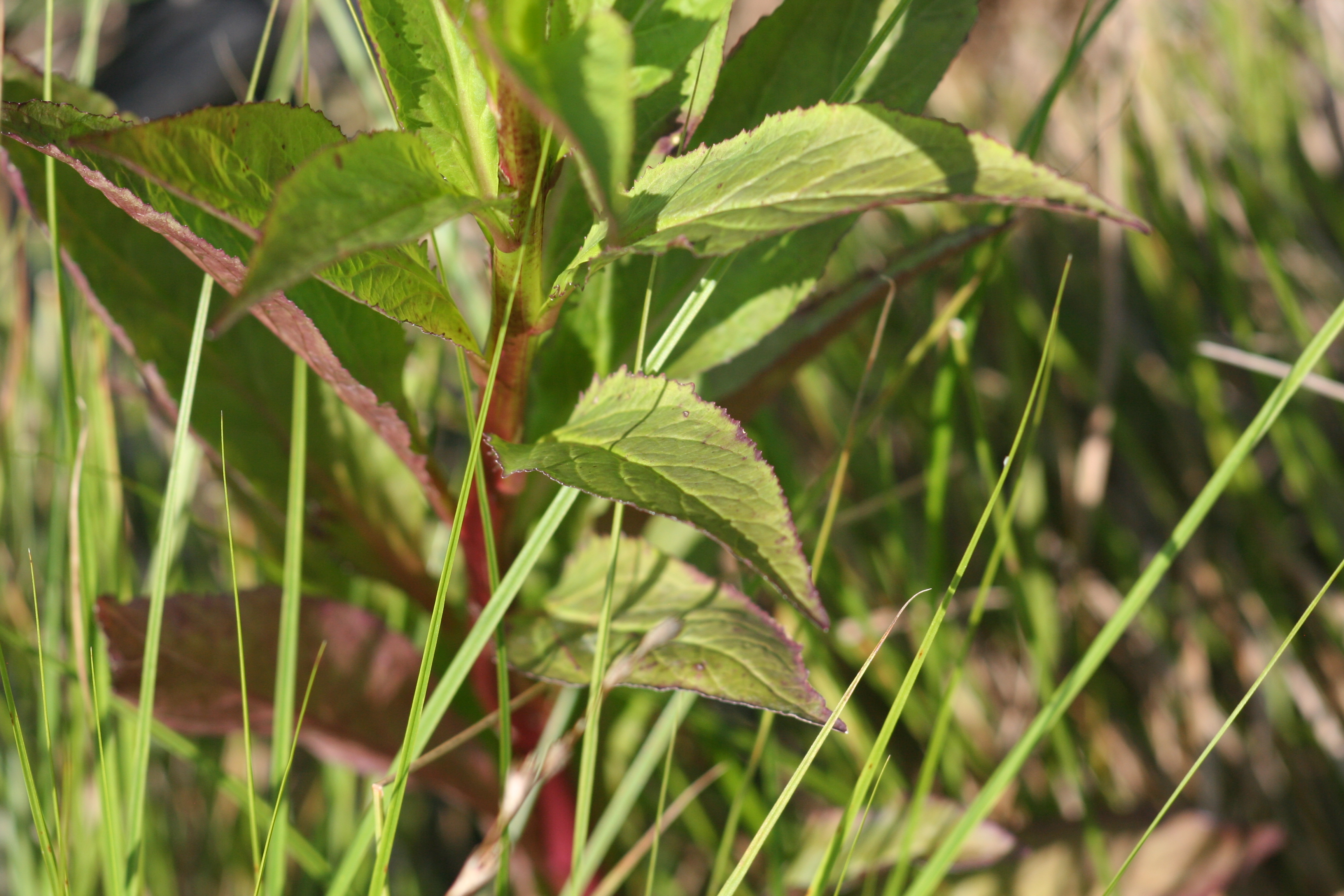
Leaves alternate, lance-shaped, up to 6 in long, with a crinkled surface texture and coarsely toothed and somewhat wavy margins, the stem is ridged and mostly hairless, usually unbranched.
- Flower, fruit and seedhead
Flower: Flowers scarlet-red, 1-1.5 in long; tubular and two-lipped with the lower lip three-lobed and an erect, tubular extension of the corolla from which the stamens and stigma protrude; inflorescence of numerous flowers is a spike-like raceme up to 2 ft long.
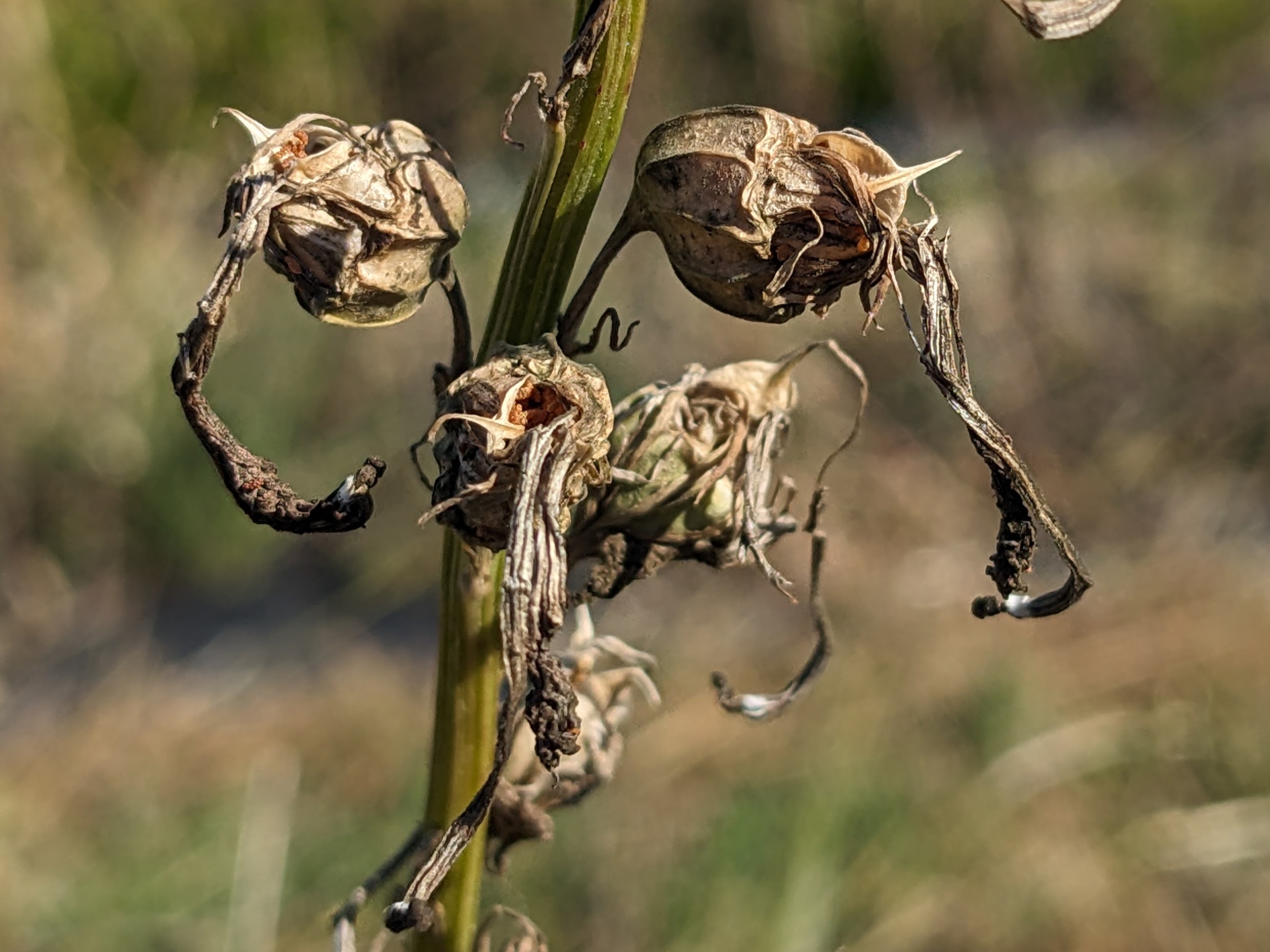
Fruit/seed head: Two-parted capsules develop within the persistent calyx and withered corolla, opening at maturity to release numerous, tiny, golden seeds.
Pollination: Primarily hummingbirds and large butterflies.
- Seed
Seed characteristics
Seed weight:
Seeds per ounce: 400,000 (IA NRCS)
1000 seed weight: 0.04g (Seed Information Database)
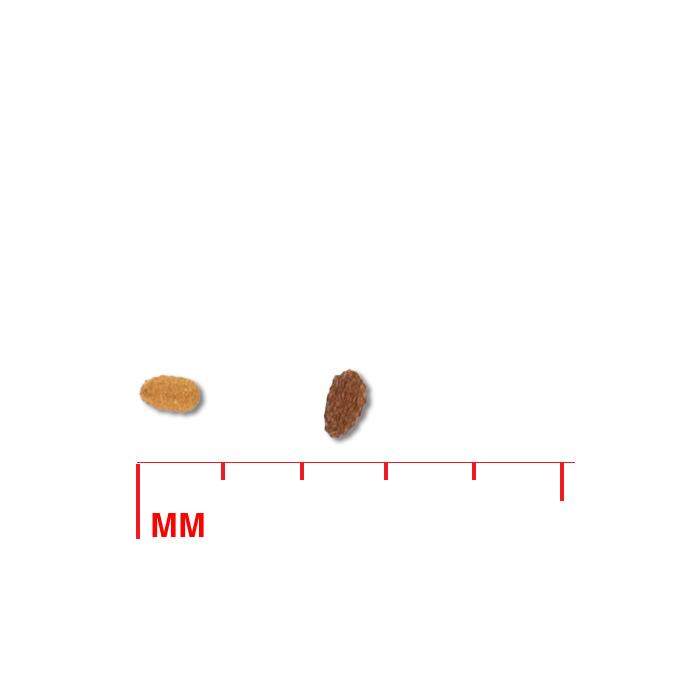
Description: Seeds are less than 1 mm long, translucent, honey-colored, and elliptical in outline with an intricate, bumpy surface texture.
Typical seed test
PLS: 95%
Purity: 97%
Germination: 4%
Dormancy: 70%
(averages obtained from 4 tests of purchased seed lots)
- Habitat and range
Habitat: Moist, sandy soil; part shade to full sun; wet meadows, woodland openings, shores; Wetland Indicator Status is Obligate Wetland (OBL) for the Midwest. Irrigation is recommended for seed production.
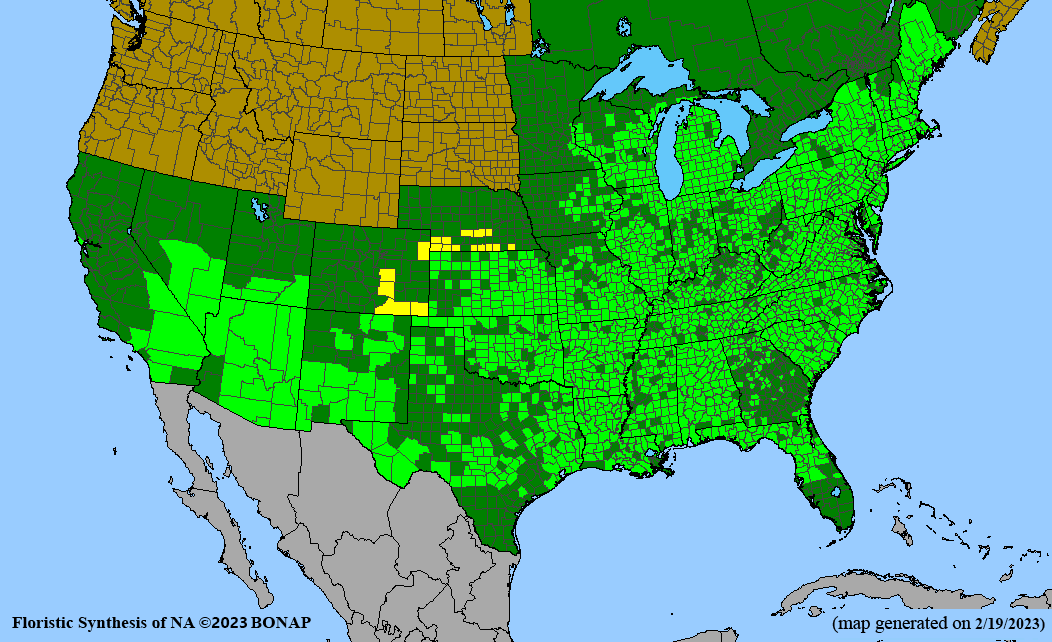
Conservation status: Global- G5, secure; Nebraska- S1, critically imperiled; Nevada- S1/S2, Critically imperiled to imperiled; Colorado- S2, imperiled; in all other states within its natural range, status is S4 (apparently secure) to S5 (secure) or unranked (NatureServe).
General Comments
The striking scarlet flowers of cardinalflower attract human admirers as well as hummingbirds, their main pollinators. The stamens and stigma of the flowers are held out from the floral tube at the right height and distance to paint the head of a hummingbird with pollen - or to receive pollen from another flower. Individual plants usually don’t live longer than two to three years in seed production or garden settings, but they produce numerous miniscule seeds so that the population can persist. This species is not difficult to propagate from seed, but it is a little tricky to time the harvest effectively, and the seed yield is on the low end, at least by weight.
Recommendations for Seed Production
- Establishment for seed production
Direct seeding
Not recommended for this species.
Greenhouse
Seed pre-treatment: Cold/moist stratification for 60 days improves germination. Seeds also respond to gibberellic acid, but we have not found the optimal concentration to produce high rates of germination along with healthy, normal seedlings. Stratification is reliable and works well.
Sowing: Surface sow in the greenhouse 2-3 months before the last frost. Use caution when watering to avoid splashing seed. Seedlings are very tiny but fast growing, producing many fibrous roots and a leafy basal rosette, and starting the seeds in wide plugs that allow them room works well (e.g., 6X6 plug inserts in a standard 10X20 greenhouse flat).
Transplanting: When plugs are well rooted, move them outside to harden off and transplant them at 8-12 in spacing into irrigated rows with plastic mulch after danger of frost is past.
- Stand management
Weeds: Prepare a clean, weed-free bed and use plastic mulch to suppress weeds in the planting year. Widening the holes or removing the mulch in the second growing season allows new offsets to grow, producing small clumps of stems. Hand weed or rogue out small-seeded weeds to avoid contaminating the seed crop. We have interplanted cardinalflower with a cespitose, wetland sedge (Carex scoparia), and this seems to suppress weed growth and provides some support to the lobelia plants without reducing their seed yield compared with a previous, monospecific plot. A side benefit is that we obtained another seed crop, though the sedge had to be hand-harvested.
Pests: The larva of a specialist weevil (Cleopomiarus hispidulus) feeds on seeds in developing capsules and may affect seed yield in some years. We have reared weevils from affected capsules and noted many capsules with apparent exit holes from the emergence of adult weevils. These are native insects and part of the natural ecology of this plant species but may be problematic for seed production.
Diseases: None noted.
Hybridization risk: This species is known to hybridize with related species in the genus Lobelia such as L. siphilitica and L. spicata. Maintain separation distances between production fields of these species.
- Seed production
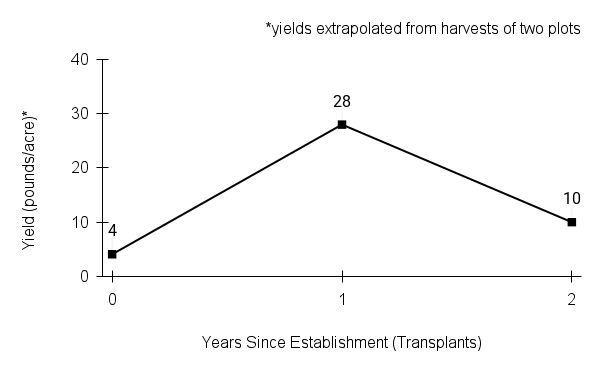 First harvest: There may be a small harvest in the planting year.
Yield/acre: 4 to 30 pounds per acre (yields extrapolated from harvests of two plots at TPC)
Stand life: Plants are short-lived in seed production settings. Peak harvest occurs in the year after planting and declines in subsequent years apparently due to mortality of plants in the plot.
Flowering date: late July to early September (a few flowers may hang on longer)
Seed maturity/Harvest date: mid September through mid October
Seed retention: High risk of shattering. Once capsules open, seed is shaken out easily by any slight movement.
Harvest date range at TPC (2011-2023): September 11 - October 19
Recommended harvest method: Hand clip stems as capsules mature. This can be tricky to judge since the capsules are partially hidden within the persistent, greenish calyx and beneath remnants of the withered flower. They mature from the bottom up along a stem. By the time the last flowers bloom at the tip, generally at least half of the capsules are mature, and the lowest ones will have already opened. This is a good time to clip the stems and bring them into a sheltered place to ripen and dry. For a larger stand, combining when most plants have stopped flowering and about half of the capsules are mature on most stems should be effective, as it is for great blue lobelia, Lobelia siphilitica.
- Seed cleaning and storage
Cleaning process: Shake and/or crush dried stems to release seed from capsules. Pass hand-collected material through 1/4 in mesh to remove larger pieces of stems and leaves, then air-screen.
Seed storage: Cool/dry (33-50° F, 30-50% RH); a seedlot stored under these conditions for 8 years had 84% viability.
Released Germplasm
Source Identified material: Natural Selections/Iowa Ecotype Zone Iowa
Cultivated varieties (cultivars): Selections have been made for the horticultural trade.
- References
Belov, B., Bueche, B., Moisset, B. (2021, May 29) Species Cleopomiarius hispidulus. Bug Guide. https://bugguide.net/node/view/362089
Chayka, K. (n.d.). Lobelia cardinalis (cardinal flower). Minnesota Wildflowers. https://www.minnesotawildflowers.info/flower/cardinal-flower
Hilty, J. (2019). Cardinal flower - Lobelia cardinalis. Illinois Wildflowers. https://www.illinoiswildflowers.info/wetland/plants/cardinal.htm
Kartesz, J.T., The Biota of North America Program (BONAP). 2023. North American Plant Atlas. (http://bonap.net/napa). Chapel Hill, N.C. [maps generated from Kartesz, J.T. 2023. Floristic Synthesis of North America, Version 1.0. Biota of North America Program (BONAP). (in press)]
Mahr, S. (n.d.). Cardinal flower, Lobelia cardinalis. Wisconsin Horticulture Division of Extension. https://hort.extension.wisc.edu/articles/cardinal-flower-lobelia-cardinalis/
Missouri Botanical Garden. (n.d.). Lobelia cardinalis. Missouri Botanical Garden - Plant Finder https://www.missouribotanicalgarden.org/PlantFinder/PlantFinderDetails.aspx?taxonid=278870
NatureServe. 2024. NatureServe Network Biodiversity Location Data accessed through NatureServe Explorer [web application]. NatureServe, Arlington, Virginia. Available https://explorer.natureserve.org/. (Accessed: February 29, 2024).
Prairie Moon Nursery. (n.d.). Lobelia cardinalis. https://www.prairiemoon.com/lobelia-cardinalis-cardinal-flower-prairie-moon-nursery.html
USDA NRCS National Plant Data Team. (n.d.). Lobelia cardinalis L. USDA plants database. https://plants.usda.gov/home/plantProfile?symbol=LOCA2
Species Guide Updated 1/5/2026