Warm Season Grasses
Warm Season Grasses sagemThe Species Production Guides for warm season grasses provide specific information about growing each of these species for seed production.
Scroll the list (alphabetized by scientific name) or press ctrl-f (or command-f) to search for any name in this page.
A printable file (pdf) is also provided on each species page for those needing a print version.
This section is a work in progress. We will continue to add new species guides as they are completed.
Muhlenbergia racemosa / marsh muhly
Indiangrass
Indiangrass dickeye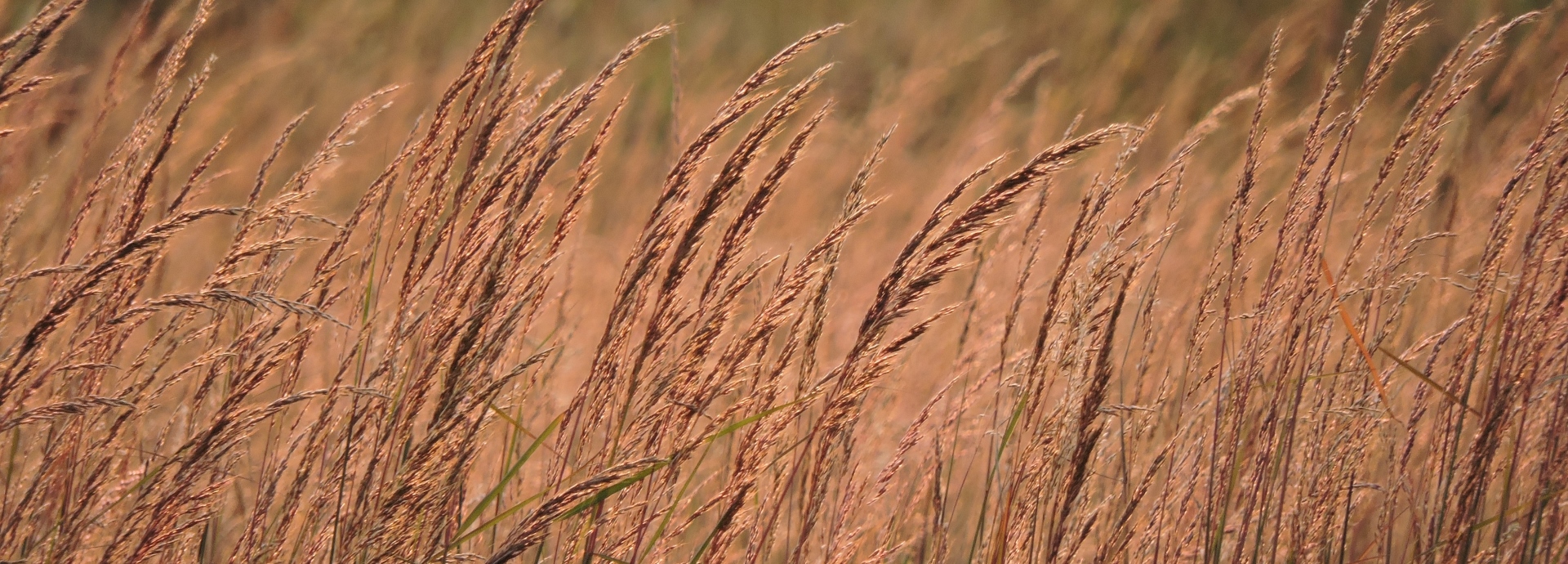
Sorghastrum nutans (L.) Nash
Alternate Common Name: yellow Indiangrass
Scientific Synonyms: Andropogon nutans L., Sorghastrum avenaceum (Michx.) Nash
Family: grass family (Poaceae)
Functional Group: warm season grass
Description
- Life cycle and growth form
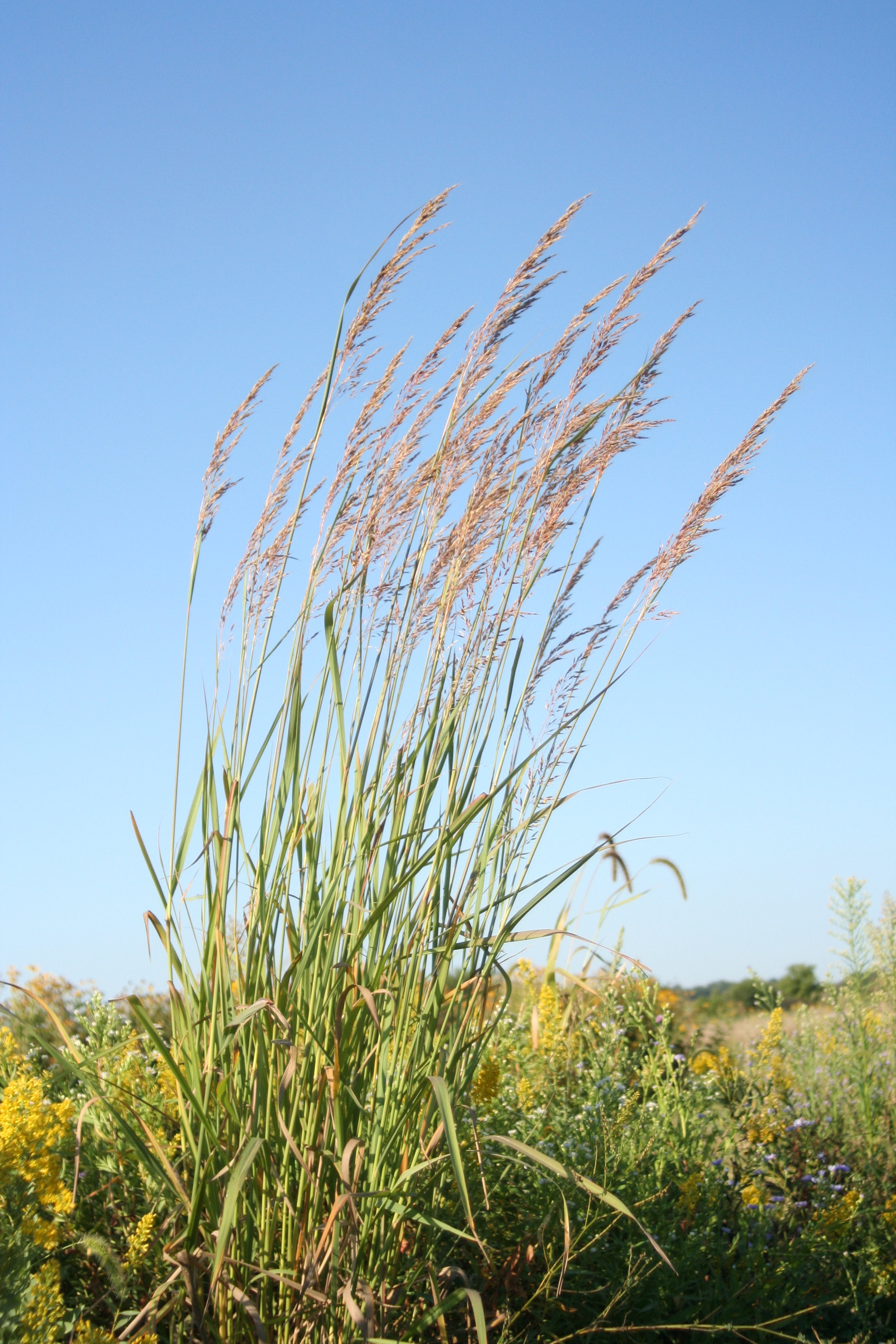
Perennial warm-season bunchgrass with short, scaly rhizomes.
Height: 3-7 ft
- Leaves and stem
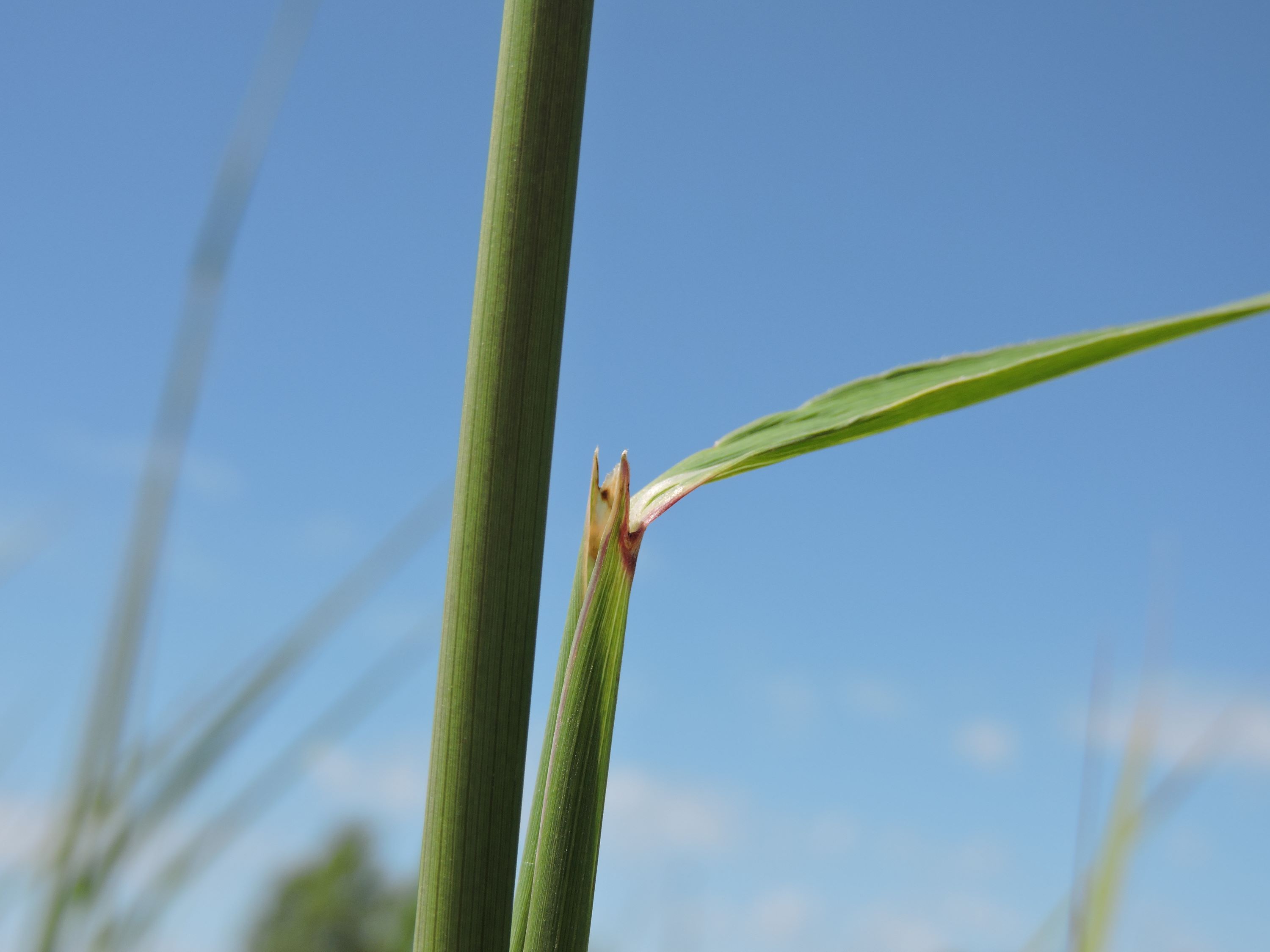
Leaf blades up to 12 in long, constricted at the base, then widening to about 3/8 in, and tapered to a point, whitish midrib prominent near the leaf base; ligule with prominent pointed leaflike projections on either side which are sometimes referred to as the ‘mule-ears’, ‘boot straps’, or ‘gun-sight’ character of Indiangrass; stem is erect, hairless, and hollow.
- Flower, fruit and seedhead
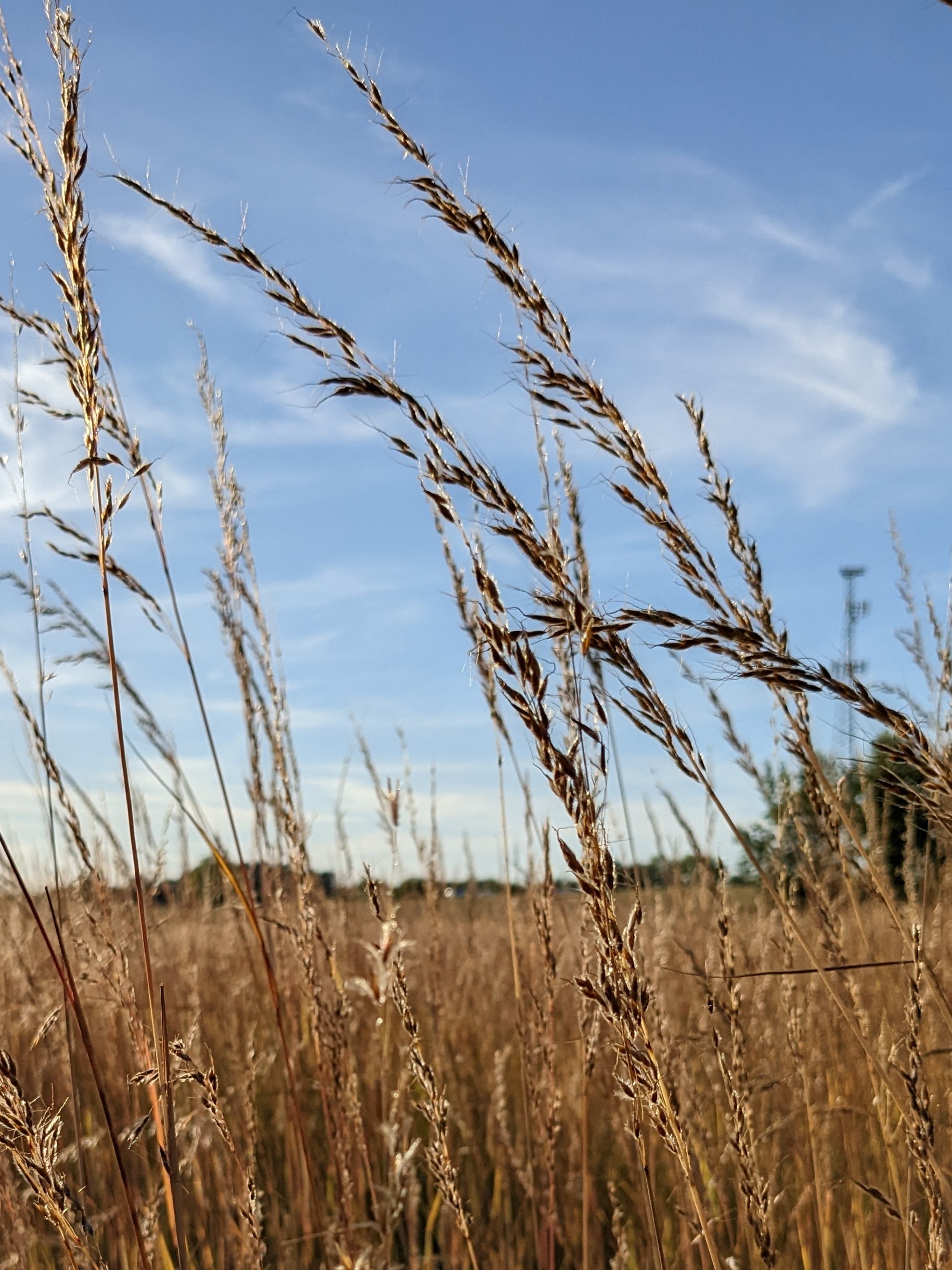
Fruit/seedhead: Seedhead is a dense, golden-brown, plume-like panicle up to 1 ft long. Entire spikelets fall off when mature, leaving a bare stalk.
Pollination: wind
- Seed
Seed characteristics
Seed weight:
Seeds per ounce: 12,000 (IA NRCS)
1000 seed weight: 2.03 g (Seed Information Database)
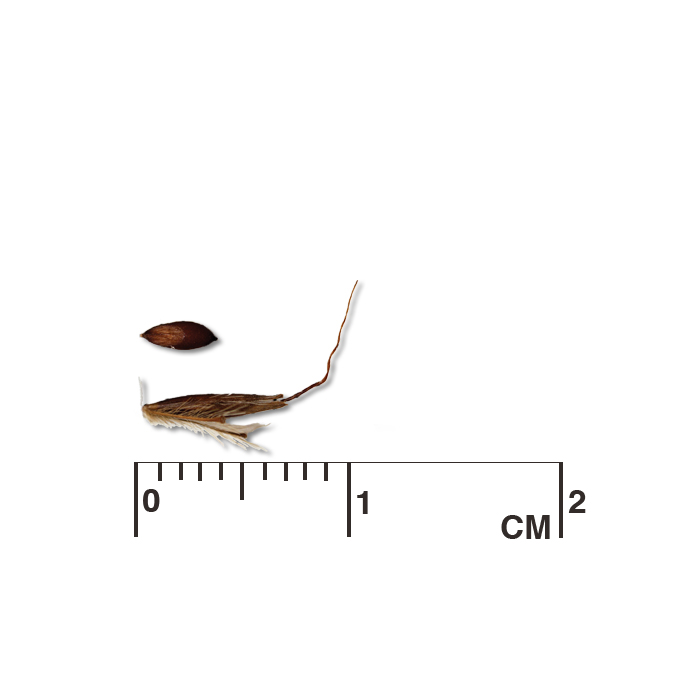
Description: Seed unit is a fertile spikelet with a bent, twisted awn, about 1/2 in long, attached stalks (rachis and pedicel), hairy prior to debearding or brushing. Caryopsis smooth, brown, thickened, about 3-5 mm long.
Typical seed test
PLS: 87%
Purity: 92%
Germination: 22%
Dormant: 74%
(averages obtained from 12 tests of purchased seed lots)
- Habitat and range
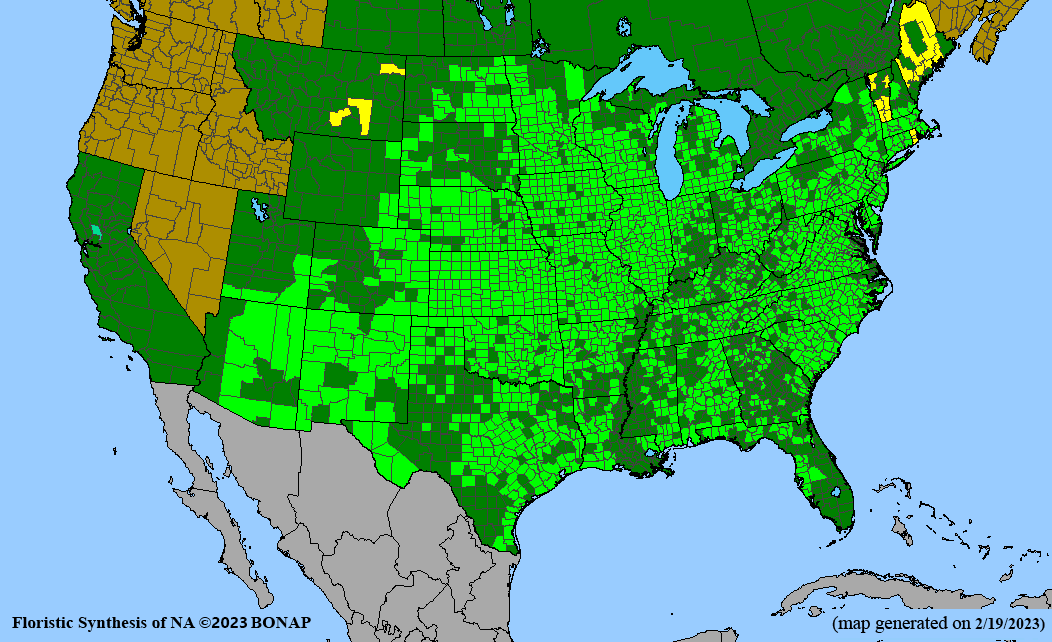
Habitat: Dry-mesic to wet-mesic soil; full sun; prairies, grassy fens, scrubby barrens, savannas, roadsides, along railroads; Wetland Indicator Status is Facultative Upland (FACU) for the Midwest; deep, moist, well-drained soils preferred for seed production.
Conservation status: Global- G5, secure; Maine, Rhode Island, and Utah- S1, critically imperiled; Wyoming- S2, imperiled; Vermont- S3, vulnerable (NatureServe)
General Comments
Indiangrass is a dominant component of the tallgrass prairie ecosystem. This species generally establishes readily from seed, if good seed bed preparation and good weed control are achieved (i.e. following a glyphosate-resistant crop, for example). Two to three years are needed to develop a productive stand by direct seeding.
Recommendations for Seed Production
- Establishment for seed production
Direct seeding
Row spacing: 36 in 24 in 12 in Solid Stand PLS lbs/acre: 3.3 5.0 10 10-12 Seeding depth: 1/4-1/2 in
Seeding method: native seed drill
Seeding time: late spring to early summer.
Weed control: Prepare clean, very firm, weed free seedbed prior to seeding.
Greenhouse
Seed pre-treatment: No stratification necessary. Germination of grass seed usually improves with proper storage (cool, dry conditions) throughout the first year after harvest.
Sowing: Sow seed in greenhouse two months before last frost free date at 1/4 in depth.
Transplanting: Transplant after all danger of frost.
- Stand management
Weeds: Mow stands high (6–12 in) first growing season to prevent weed canopy from shading seedlings. Established stands – Plateau (imazepic) for grass and broadleaf control, Atrazine for grass control. Always read and follow label instructions.
Pests: None noted.
Diseases: None noted.
- Seed production
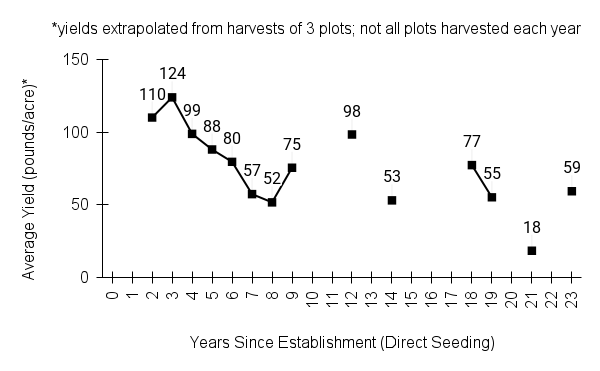 First harvest: Flowering and seed set at end of second growing season from direct seeding, three years for stand to fill out.
Yield: 50-130 bulk pounds/acre (yields extrapolated from harvest records of three plots, not all of which were harvested every year)
Stand life: Peak harvests occur in the third year and after. If seed yields decline, stands can be chiselled to reinvigorate. Annual late spring fire helps control weeds and increase flowering and seed production. Fertilizer application may also improve seed yield. (Note: These recommendations are strictly for production fields, NOT REMNANT PRAIRIES). Productive stand life is 10-20 years.
Flowering date: Mid-August to mid-September.
Seed maturity/Harvest date: Late September to early October.
Seed retention: Shattering occurs soon after maturity. Very susceptible to seed shattering from wind. A single, windy afternoon when seed is mature and dry can take most of the crop. Monitor fields frequently. As seedheads near maturity, the awns and hairs fluff out. When this begins to happen, check for shattering and observe the stage of development of the grains.
Harvest date range at TPC (2003-2022): Sept 23 - Oct 21
Recommended harvest method: Seed stripper or combine at medium to hard dough stage.
- Seed cleaning and storage
Cleaning process: Air-dry material, remove awns with a debearder or brush machine, then air-screen. Protect eyes, airways, and skin from the irritating hairs released during harvest and cleaning processes.
Seed storage: cool/dry (33-50° F, 30-50% RH)
Released Germplasm
Source Identified material: Natural Selections/Iowa Ecotype Project: Zone 1 (northern Iowa), Zone 2 (central Iowa), and Zone 3 (southern Iowa)
NRCS releases: Coastal Germplasm, Newberry Germplasm, Northern Missouri Germplasm, Southlow Michigan Germplasm, Suther Germplasm, Western Missouri Germplasm
Selected germplasm: Prairie View Indiana Germplasm (IN), Wynia Germplasm (AR, OK)
Informal: Cheyenne (OK)
Cultivated varieties (cultivars): Americus (AL, GA), Llano (NM), Lometa (TX), Osage (KS, OK), Rumsey (IL), Tomahawk (ND, SD); Horticultural varieties may also exist
- References
Chayka, K. (n.d.). Sorghastrum nutans (Indian grass). Minnesota Wildflowers. https://www.minnesotawildflowers.info/grass-sedge-rush/indian-grass
Hilty, J. (2019). Indian grass - Sorghastrum nutans. Illinois Wildflowers. https://www.illinoiswildflowers.info/grasses/plants/ind_grass.htm
Houseal, G. A. (2007). Grasses warm season. In G. A. Houseal (Eds.), Tallgrass Prairie Center’s native seed production manual (pp. 74–75). Tallgrass Prairie Center - University of Northern Iowa.
Kartesz, J.T., The Biota of North America Program (BONAP). 2023. North American Plant Atlas. (http://bonap.net/napa). Chapel Hill, N.C. [maps generated from Kartesz, J.T. 2023. Floristic Synthesis of North America, Version 1.0. Biota of North America Program (BONAP). (in press)]
NatureServe. 2024. NatureServe Network Biodiversity Location Data accessed through NatureServe Explorer [web application]. NatureServe, Arlington, Virginia. Available https://explorer.natureserve.org/. (Accessed: February 29, 2024).
USDA NRCS National Plant Data Team. (n.d.). Sorghastrum nutans (L.) Nash. USDA plants database. https://plants.usda.gov/home/plantProfile?symbol=SONU2
Species Guide Updated 12/11/2025
big bluestem
big bluestem sagem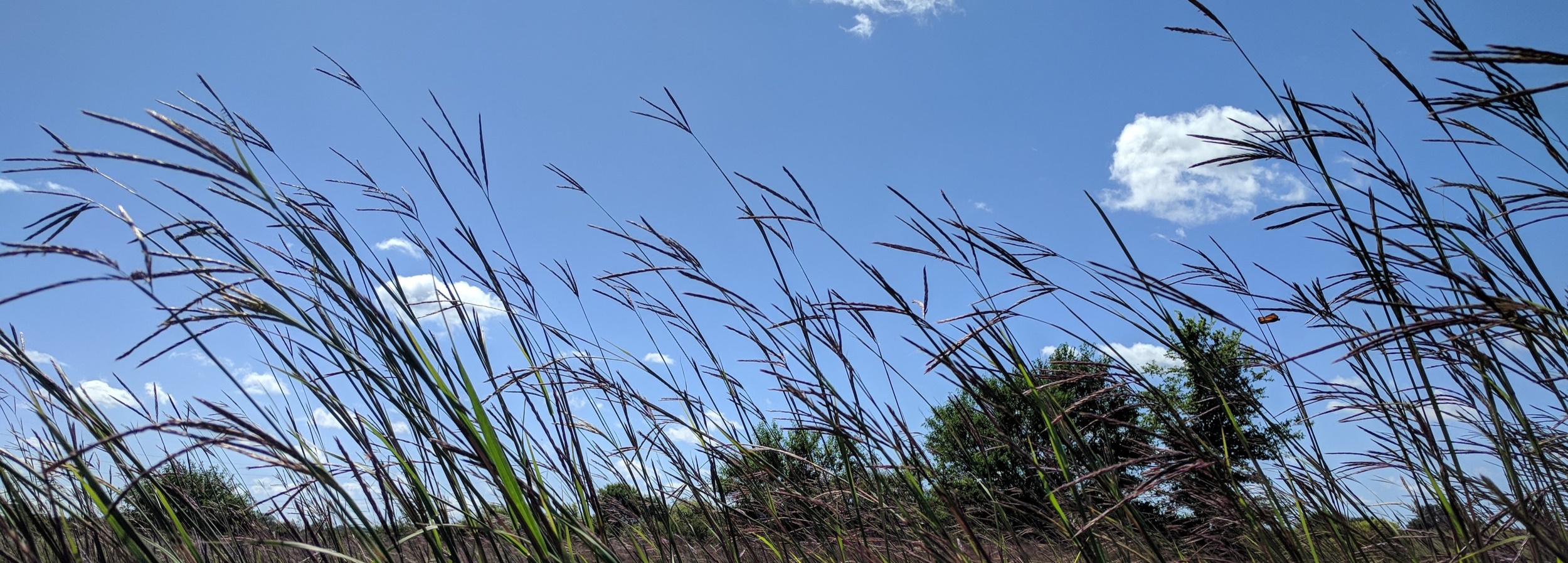
Andropogon gerardii Vitman
Alternate Common Names: turkey foot, turkeyfoot
Scientific Synonyms: Andropogon chrysocomus Nash, Andropogon furcatus Muhl. ex Willd., Andropogon provincialis Lam., Andropogon gerardii Vitman var. chrysocomus (Nash) Fernald
Family: grass family (Poaceae)
Functional Group: warm season grasses
Description
- Life cycle and growth form
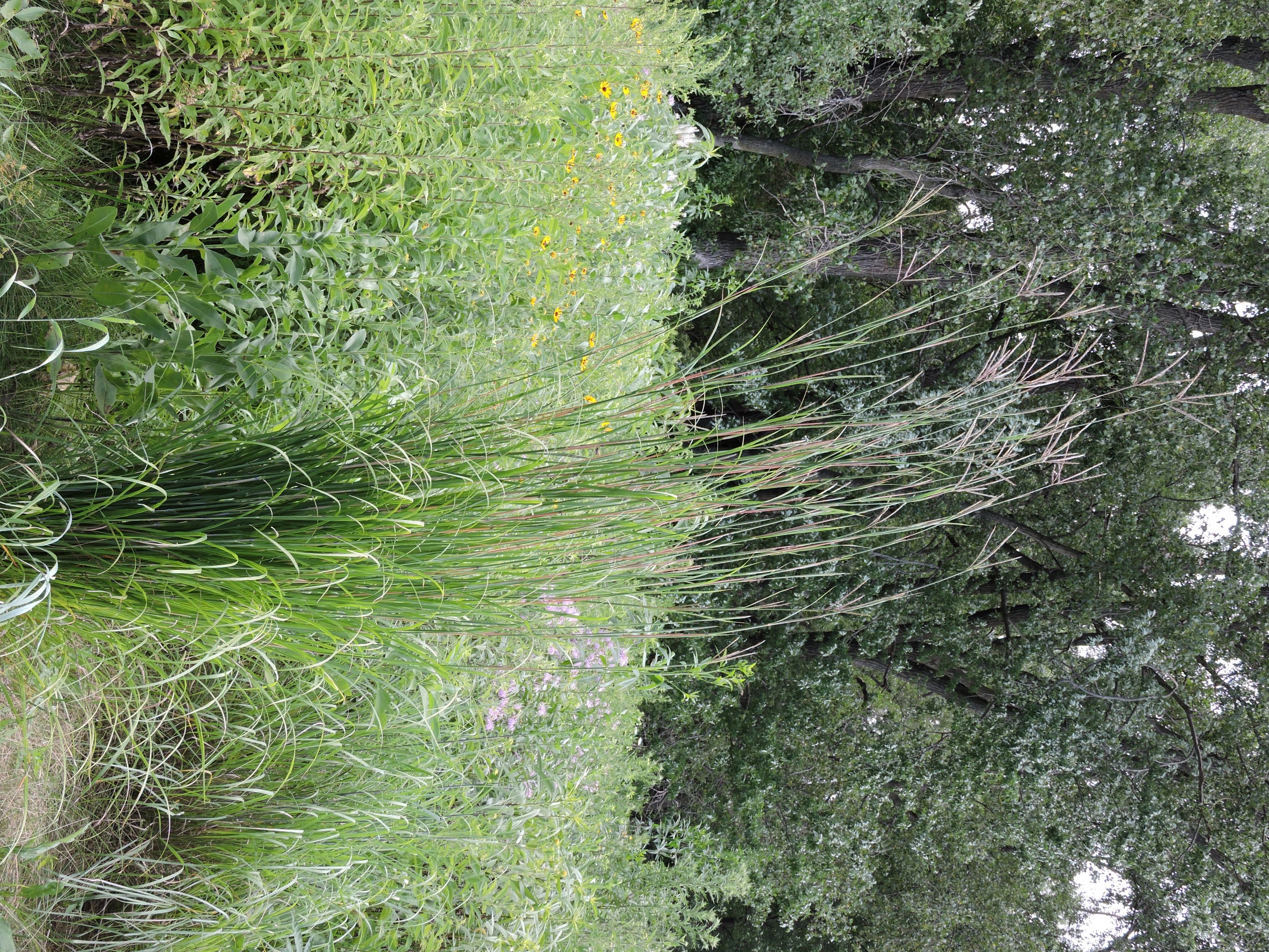
Perennial with short rhizomes and fibrous roots that forms large clumps, a bunchgrass.
Height: 2-8 ft
- Leaves and stem
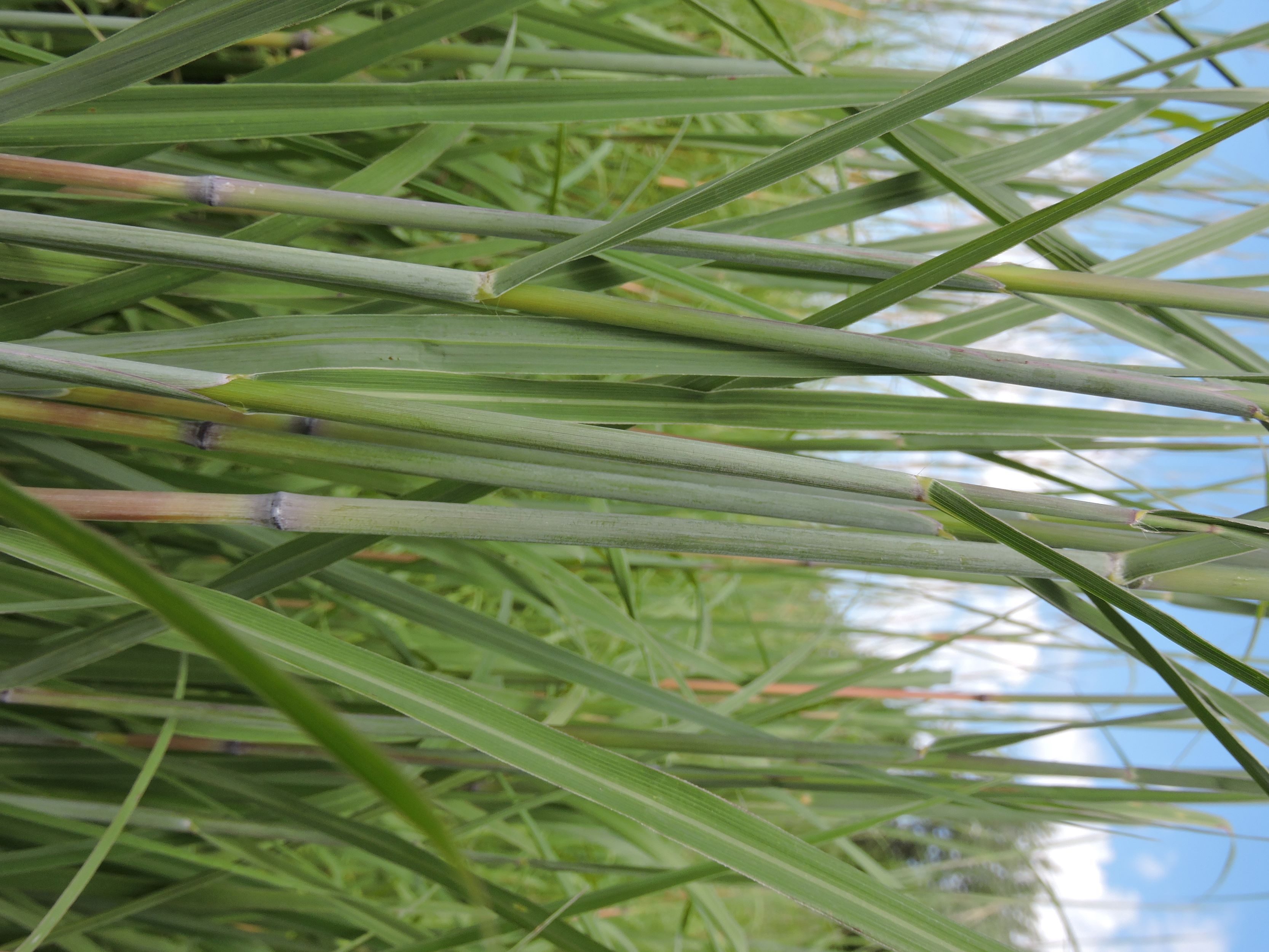
Leaves flat with a prominent midrib, 1-2 ft long and 1/4 in wide, often with long, unkempt, white hairs near leaf base and on lower sheath, ligule is a short, fringed membrane; flowering culms (stems) are erect and hairless, solid, often reddish to bluish purple in color with a waxy bloom, usually with a few branches near the top.
- Flower, fruit and seedhead
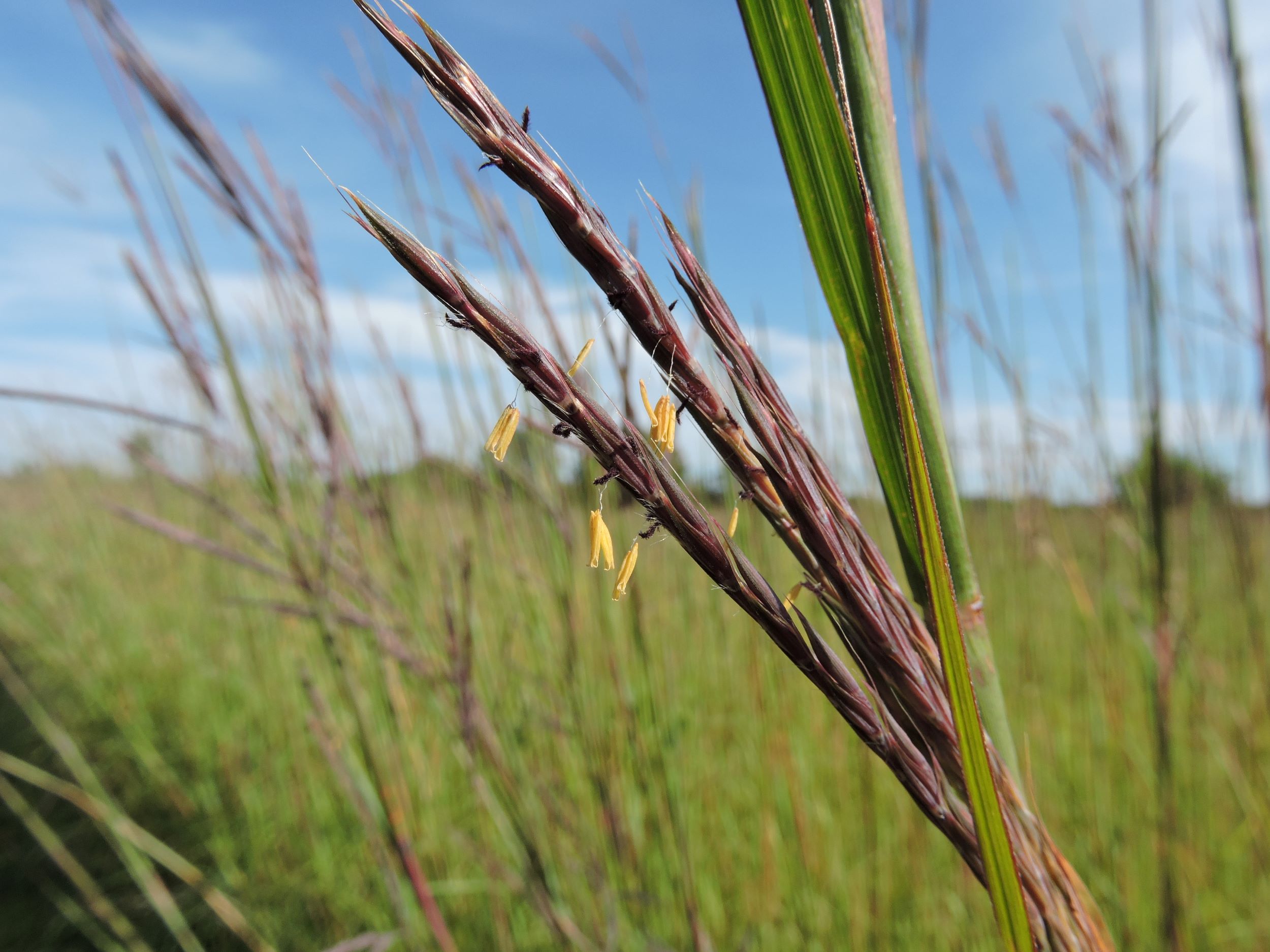
Fruit/seedhead: Seed heads (panicles) consist of 2-6 spikelike racemes 1.5-4 in long at the tips of branches, containing both seed-bearing and sterile flowers; seed heads appear bristly when mature and shatter from the tops especially on dry, windy days.
Pollination: wind
- Seed
Seed characteristics
Seeds per ounce: 10,000 (IA NRCS)
Seeds per pound: 160,000 (IA NRCS)
1000 seed weight: 2.14 g (Seed Information Database)
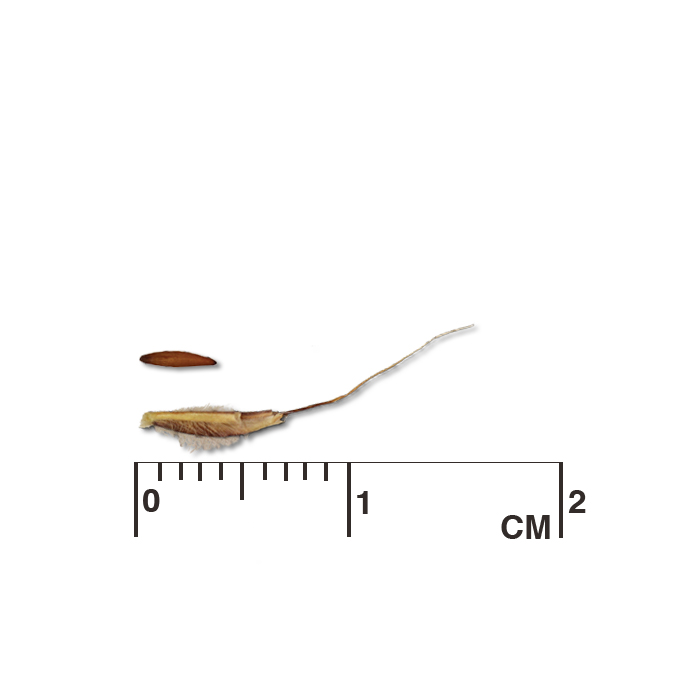
Description: Fertile spikelet with awn, 1-2 cm long (1/2-3/4 in), attached stalk(s) are covered with hairs prior to debearding. Caryopsis smooth, brown, 3-5 mm long.
Typical seed test
PLS: 85%
Purity: 89%
Germination: 39%
Dormant: 56%
(averages obtained from 11 tests of purchased seed lots)
- Habitat and range
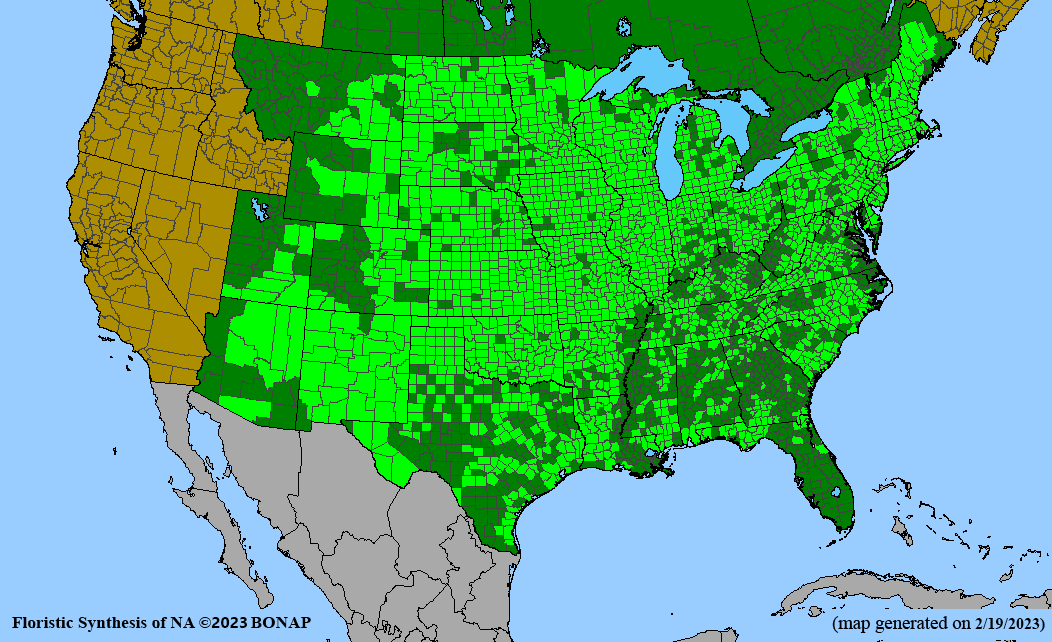
Habitat: Mesic to wet-mesic soil; full sun; prairies, savannas, roadsides, fens, glades. Wetland Indicator Status is Facultative (FAC) for the Midwest. Moist, loamy, deep, well-drained soils are preferred for seed production.
Conservation status: Global- G5, secure; Wyoming- S3, vulnerable (NatureServe)
General Comments
Big bluestem is a dominant component of the tallgrass prairie ecosystem. This species establishes readily from direct seeding, particularly if seeded into crop ground where good weed control has been achieved (i.e. following a glyphosate-resistant crop, for example). It takes two to three years for the stand to develop, with good management and weed control.
Recommendations for Seed Production
- Establishment for seed production
Direct seeding
Row spacing: 36 in 24 in 12 in solid stand PLS lbs/acre: 3.6 4.8 9.7 10-12 Seeding depth:1/4-1/2 in
Seeding method: native seed drill
Seeding time: mid to late spring
Weed control: Prepare clean, firm, weed free seedbed prior to seeding.
Greenhouse
Seed pre-treatment: No stratification necessary. Germination of grass seed usually improves with proper storage (cool, dry conditions) throughout the first year after harvest.
Sowing: Sow seed in greenhouse 2 months before last frost free date at 1/4 in depth.
Transplanting: Transplant after all danger of frost.
- Stand management
Weeds: During establishment - mow the stand 6-12 in high during first growing season to prevent weed canopy from shading seedlings. Established stand – Atrazine, 2,4-D, Plateau (imazapic), Outlook (Dimethenamid-P).
Pests: Yellow midges may infest florets, reducing seed yields.
Diseases: Smut fungus affects florets.
- Seed production
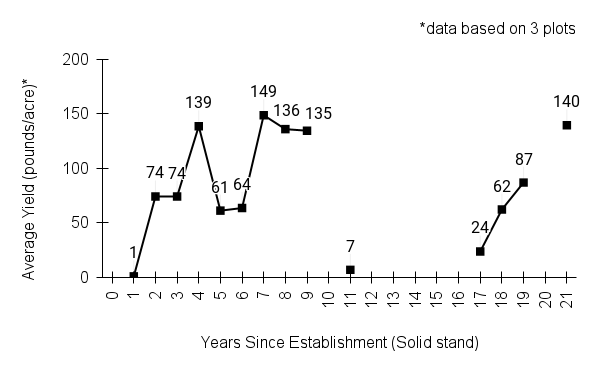
First harvest: Flowering and seed set end of second growing season from direct seeding, 3 years for stand to fill out.
Yield: 60-150 bulk pounds/acre (based on 3 solid stands with no supplemental nitrogen or irrigation; plots were not harvested every year)
Stand life: Peak harvests third year and after. If seed yields decline because stands are sod-bound, they can be chisel plowed to reinvigorate. Annual spring fire when green shoots are 2 in tall helps control weeds and increase flowering and seed production. (Note: This recommendation is strictly for production fields, not remnant prairies). Some producers use nitrogen application in spring to increase seed yield (60-100 pounds lb N/ac). Productive stand life 20 years or more.
Flowering date: early August - mid-September in northern Iowa
Seed maturity/Harvest date: October in northern Iowa
Seed retention: Shattering begins mid to late October.
Harvest date range at TPC (2003-2022): Sept 12 - Nov 2
Recommended harvest method: Combine at medium to hard dough stage, when some shattering is beginning to occur on the top of the main panicles.
- Seed cleaning and storage
Cleaning process: Air-dry material, scalp through 1/2 in mesh, remove awns with debearder or brush machine, then air-screen. Indent cylinder can help remove foxtail or similar weed seeds, if present.
Seed storage: cool/dry (33-50° F, 30-50% RH)
Released Germplasm
Source Identified material: Central (Zone 2), Northern (Zone 1), and Southern (Zone 3) Natural Selections/Iowa Ecotype Germplasm (IA), Northern Missouri Germplasm (MO), OH 370 Germplasm (OH), Southlow Michigan Germplasm (MI), Suther Germplasm (NC)
Selected germplasm: Bounty Germplasm (MN,SD), Hampton Germplasm (MO), OZ-70 Germplasm (AR, IL, MO, OK), Prairie View Indiana Germplasm (IN), Refuge Germplasm (AR, IL, MO, OK)
Cultivated variety (cultivar): Bison (ND), Bonilla (SD), Earl (TX), Kaw (KS), Niagara (NY), Rountree (IA), Sunnyview (SD)
- References
Chayka, K. (n.d.). Andropogon gerardii (big bluestem). Minnesota Wildflowers. https://www.minnesotawildflowers.info/grass-sedge-rush/big-bluestem
Hilty, J. (2019). Big bluestem - Andropogan gerardii. Illinois Wildflowers.https://www.illinoiswildflowers.info/grasses/plants/bigblue.htm
Houseal, G. A. (2007). Grasses warm season. In G. A. Houseal (Eds.), Tallgrass Prairie Center’s native seed production manual (pp. 66–67). Tallgrass Prairie Center - University of Northern Iowa.
Kartesz, J.T., The Biota of North America Program (BONAP). 2023. North American Plant Atlas. (http://bonap.net/napa). Chapel Hill, N.C. [maps generated from Kartesz, J.T. 2023. Floristic Synthesis of North America, Version 1.0. Biota of North America Program (BONAP). (in press)]
NatureServe. 2024. NatureServe Network Biodiversity Location Data accessed through NatureServe Explorer [web application]. NatureServe, Arlington, Virginia. Available https://explorer.natureserve.org/. (Accessed: February 29, 2024).
USDA-NRCS. (n.d.). Conservation plant releases. Natural Resources Conservation Service. https://www.nrcs.usda.gov/plant-materials/cp/releases
USDA NRCS National Plant Data Team. (n.d.). Andropogon gerardii Vitman. USDA plants database. https://plants.usda.gov/home/plantProfile?symbol=ANGE
Species Guide Updated 12/17/2024
composite dropseed
composite dropseed dickeye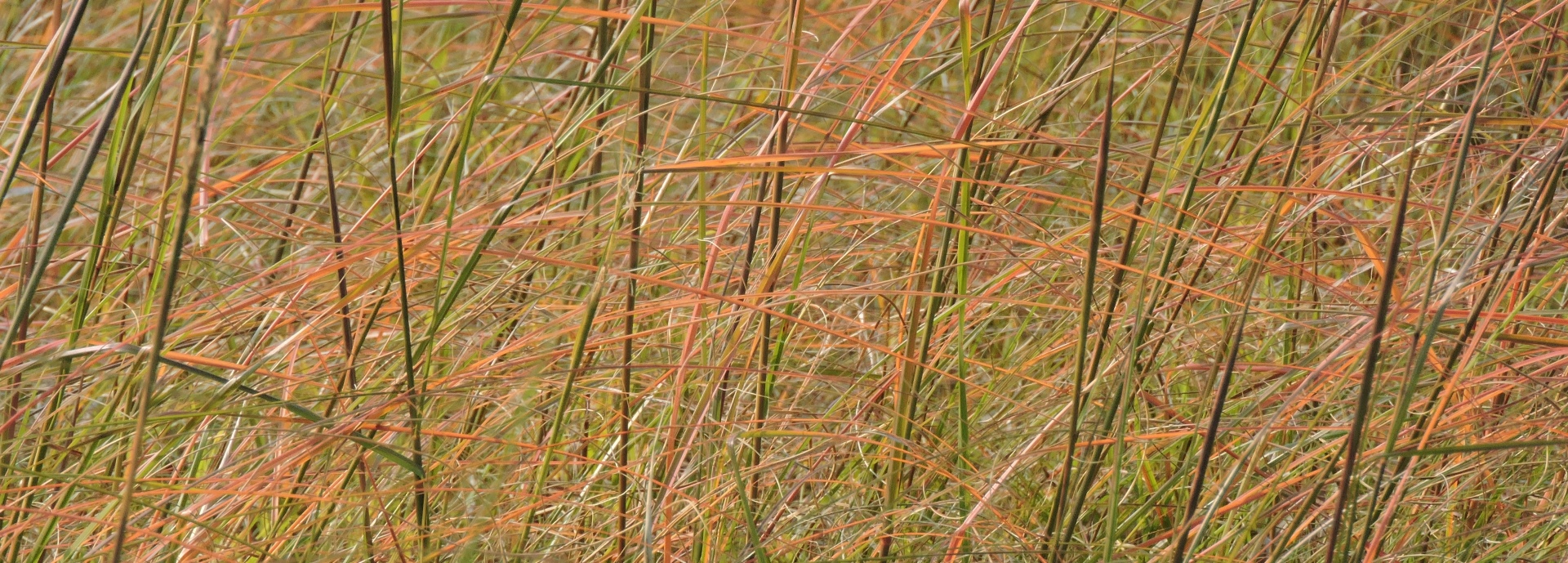
Sporobolus compositus (Poir.) Merr.
Alternate Common Names: rough dropseed, tall dropseed, dropseed, flag grass
Scientific Synonyms: Sporobolus asper (P. Beauv.) Kunth
Family: grass family (Poaceae)
Functional Group: warm season grasses
Description
- Life cycle and growth form
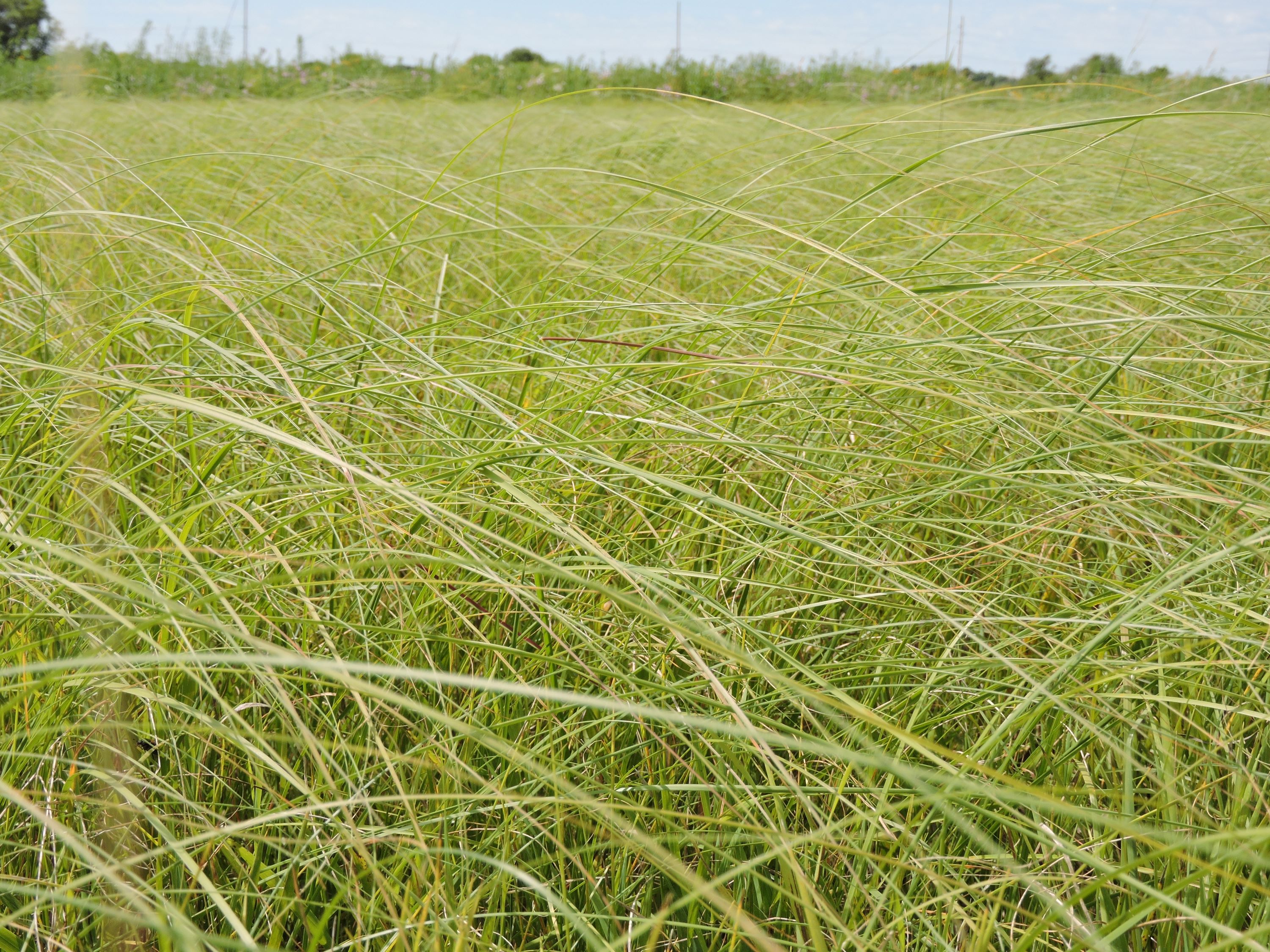
Perennial from a fibrous root system, appearing as single stems or in loose clumps.
Height: 1.5-5 ft
- Leaves and stem

Leaf sheaths smooth except for hair tufts near junction with the blade (collar); leaf blades 3/16 in wide and up to 24 in long with tapering thread-like tip and rough upper surface; stems are stout and hairless, multiple stems from the base form a bunch.
- Flower, fruit and seedhead
Fruit/seed head: Narrow contracted spike-like panicle 4-8 in long, develops within sheath of uppermost leaf, only partially exposed at maturity.
Pollination: wind pollinated

- Seed
Seed characteristics
Seed weight:
Seeds per ounce: 30,000 (IA NRCS)
Seeds per pound 480,000 (IA NRCS)
1000 seed weight: 1.03 g (Seed Information Database)
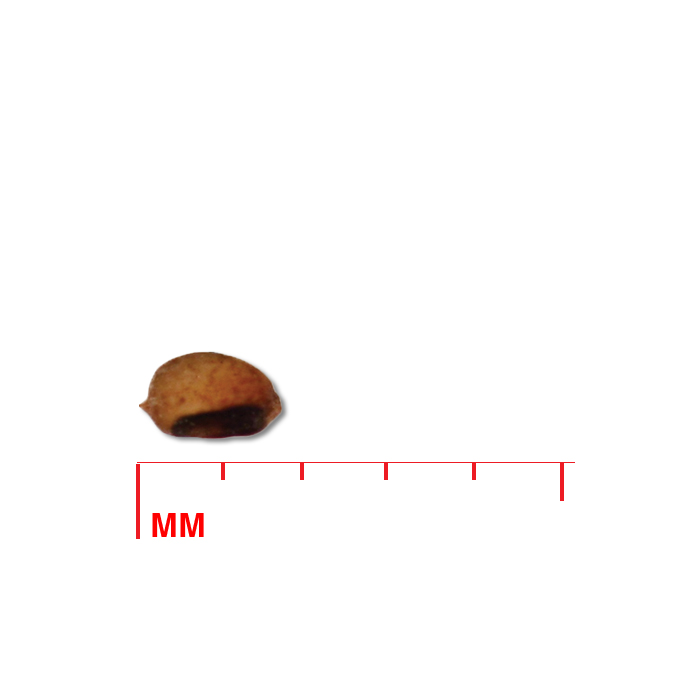
Description: Spikelets are one-flowered, no awns present, 3.3-7 mm long (about 1/4 in). Grain is about 2 mm (1/16 in) in diameter, smooth, rounded, often dark brown.
Typical seed test
PLS: 94% (n = 11)
Purity: 100% (n = 11)
Germination: 60% (n = 9)
Dormant: 35% (n = 9)
(averages obtained from n tests of purchased seed lots)
- Habitat and range
Habitat: Dry to dry-mesic, on well-drained clay or silt loams; also on intermittently wet and dry sandy or rocky soils; full sun; prairies, savannas, roadsides, along railroads, fields, limestone glades; well-drained loamy soils preferred for seed production.
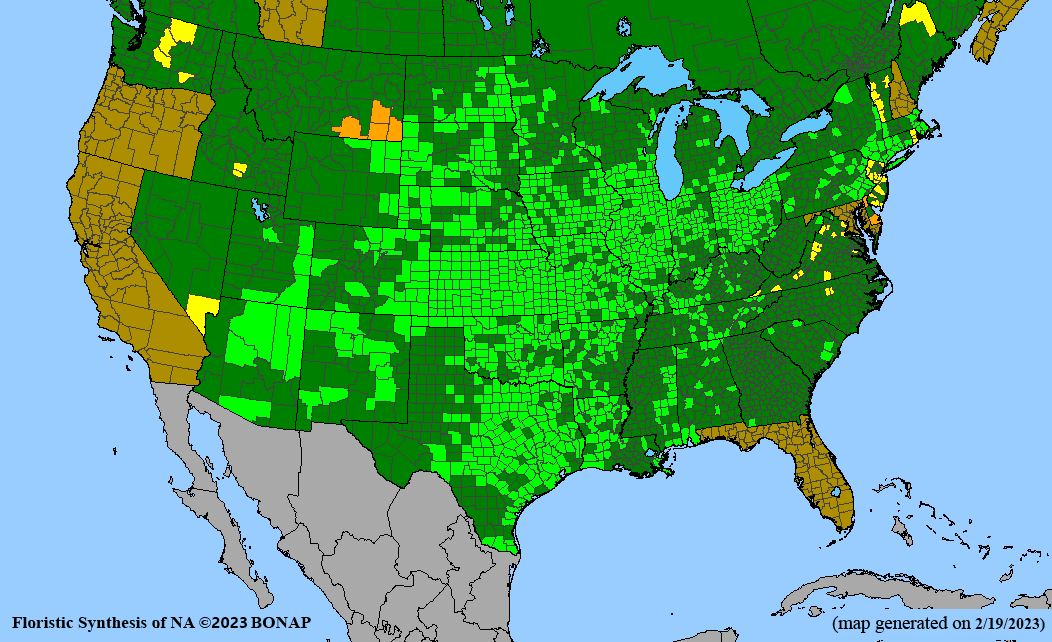
Conservation status: Global- G5, secure; Delaware and Montana- SH, possibly extirpated; West Virginia- S1, critically imperiled; Vermont and Wyoming- S2, imperiled (NatureServe)
General Comments
Composite dropseed may be abundant on dry prairies as a bunchgrass or spreading by short rhizomes and is common on the shoulders of gravel roads in some areas. This species produces abundant seed, is very competitive when directly seeded into appropriate soils, and is relatively easy to harvest and clean. It has potential as an important nurse or cover crop for high diversity native plantings where quick establishment is needed and when seeding into warm soil.
Recommendations for Seed Production
- Establishment for seed production
Direct seeding
Row spacing: 36 in 24 in 12 in Solid Stand PLS lbs/acre: 1.2 1.8 3.6 3.6 Seeding depth: 1/4 in
Seeding method: native seed drill or broadcast for solid stand
Seeding time: late spring
Weed control: Prepare clean, firm, weed free seedbed prior to seeding.
Greenhouse
Seed pre-treatment: No stratification necessary. Germination of grass seed usually improves with proper storage (cool, dry conditions) throughout the first year after harvest.
Sowing: Sow seed in greenhouse two months before last frost free date at 1/4 in depth.
Transplanting: Transplant after all danger of frost.
- Stand management
Weeds: Mow stands high (6–12 in) first growing season to prevent weed canopy from shading seedlings. Herbicides include Outlook (dimethenamid-P) for grass control. Pendimax (pendimethalin) can be used to control broadleaf weeds in established stands. Always read label instructions.
Pests: None noted.
Diseases: None noted.
- Seed production
 First harvest: Flowering and seed set may occur at the end of the second growing season from direct seeding.
Yield: 120-250 bulk pounds/acre during peak production (per acre yields extrapolated based on production from 3 plots)
Stand life: Stand remains productive over several years, projected stand life 10-15 years.
Flowering date: Flowering begins in mid to late August in northern Iowa.
Seed maturity/Harvest date: Mid to late September in Northern Iowa.
Seed retention: Some shattering occurs soon after maturity.
Harvest date range at TPC (2003-2010): Sept 26 - Oct 27
Recommended harvest method: Composite dropseed has very tough stems and leafy material that may clog the sickle bar cutting head. Slow ground speed to compensate. Seed threshes fairly easily.
- Seed cleaning and storage
Cleaning process: Pre-clean air-dried material by scalping thru 1/2 in and 1/4 in mesh if necessary to remove large particles. Glumes can be removed with a brush machine prior to air-screening if desired, or simply air-screen to clean.
Seed storage: cool/dry (33-50° F, 30-50% RH)
Released Germplasm
Source Identified material: Natural Selections/Iowa Ecotype Project: Zone 1 (northern Iowa), Zone 2 (central Iowa), and Zone 3 (southern Iowa)
- References
Chayka, K. (n.d.). Sporobolus compositus (rough dropseed). Minnesota Wildflowers. https://www.minnesotawildflowers.info/grass-sedge-rush/rough-dropseed
Gleason, H. A., & Cronquist, A. (1991). Poaceae. In Manual of Vascular Plants of Northeastern United States and Adjacent Canada (2nd ed., p. 789). The New York Botanical Garden.
Hilty, J. (2019). Tall dropseed - Sporobolus compositus. Illinois Wildflowers. https://www.illinoiswildflowers.info/grasses/plants/tall_dropseed.htm
Houseal, G. A. (2007). Grasses warm season. In G. A. Houseal (Eds.), Tallgrass Prairie Center’s native seed production manual (pp. 76–77). Tallgrass Prairie Center - University of Northern Iowa.
Kartesz, J.T., The Biota of North America Program (BONAP). 2023. North American Plant Atlas. (http://bonap.net/napa). Chapel Hill, N.C. [maps generated from Kartesz, J.T. 2023. Floristic Synthesis of North America, Version 1.0. Biota of North America Program (BONAP). (in press)]
NatureServe. 2024. NatureServe Network Biodiversity Location Data accessed through NatureServe Explorer [web application]. NatureServe, Arlington, Virginia. Available https://explorer.natureserve.org/. (Accessed: February 29, 2024).
Peterson, P. M., Hatch, S. L., & Weakley, A. S. (2021, May 11). Sporobolus compositus (Poir.) Merr. Flora of North America. http://floranorthamerica.org/Sporobolus_compositus
USDA NRCS National Plant Data Team. (n.d.). Sporobolus compositus (poir.) Merr. USDA plants database. https://plants.usda.gov/home/plantProfile?symbol=SPCO16
Species Guide Updated 12/11/2025
little bluestem
little bluestem dickeye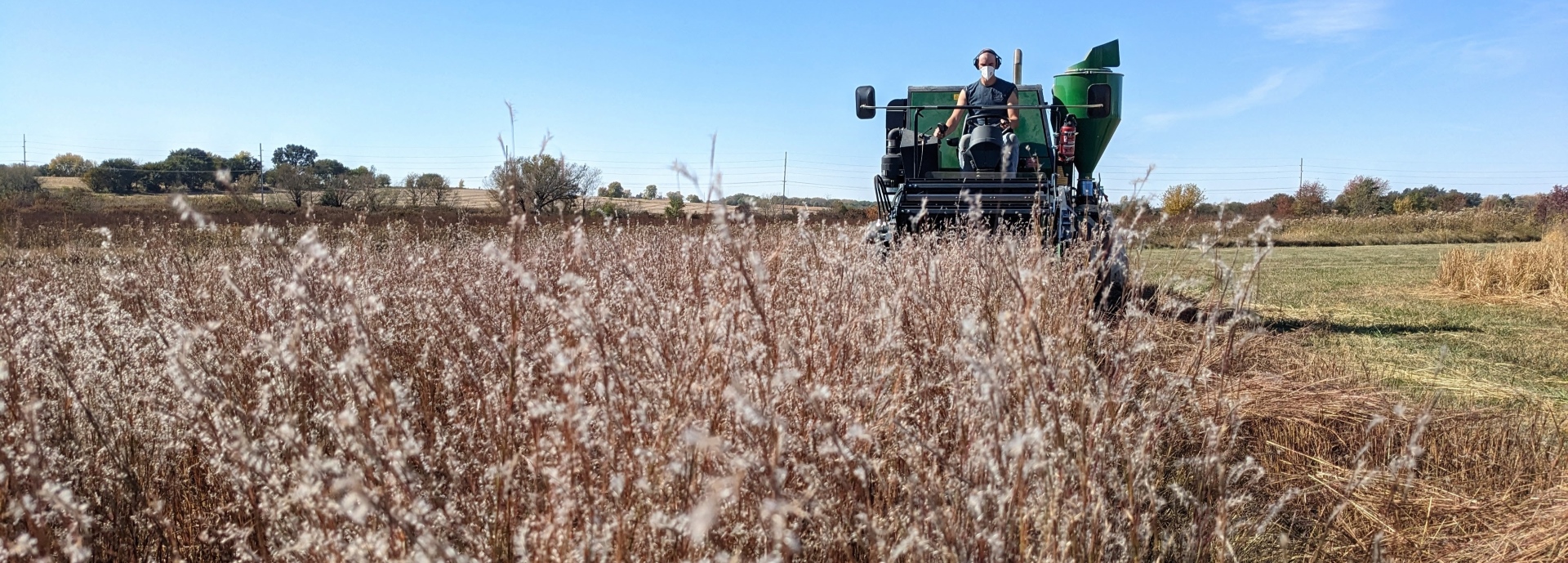
Schizachyrium scoparium (Michx.) Nash
Alternate Common Names: prairie beardgrass, broom beardgrass
Scientific Synonym: Andropogon scoparius, Michx.
Family: grass family (Poaceae)
Functional Group: warm season grass
Description
- Life cycle and growth form
Perennial, short rhizomes, fibrous roots, grows in dense clumps.
Height: 1-3 ft
- Leaves and stem
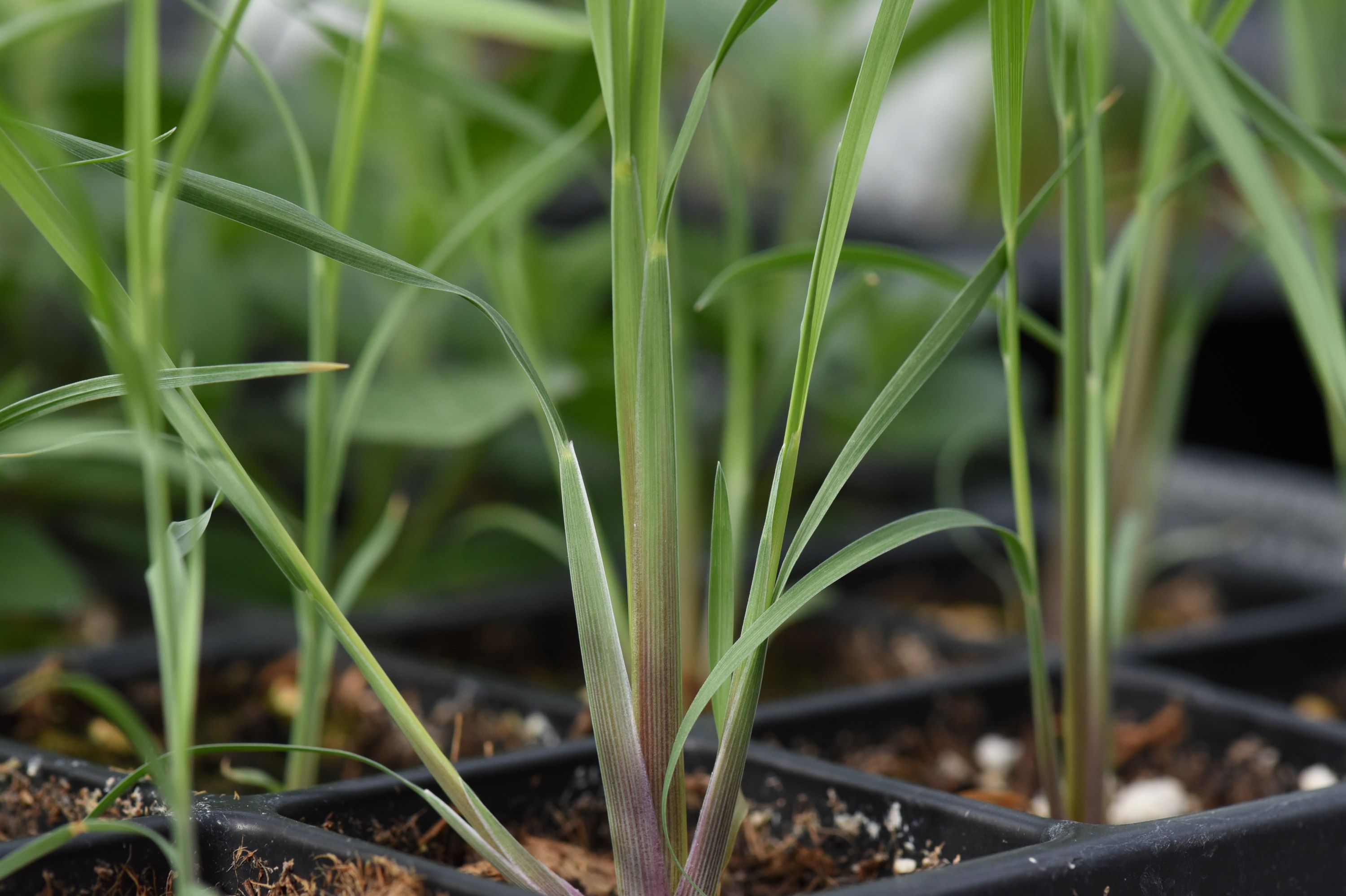
Leaf blades narrow, up to 8 in long, flat or folded lengthwise, green to blue-green in color, usually hairless; sheaths strongly flattened and often hairless; ligule is a fringed (ciliate) membrane; nodes are hairless and purple; flowering stem is hairless and erect with many short branches, bluish to reddish-purple in color.
- Flower, fruit and seedhead
Fruit/seedhead: Single spikes, about 1 in long, arise from upper leaf axils, spikelets spread out as they mature, appearing as white, feathery appendages that arch; entire spikelets fall off at maturity and are weakly dispersed by the wind up to several feet from the parent plant.
Pollination: wind

- Seed
Seed characteristics
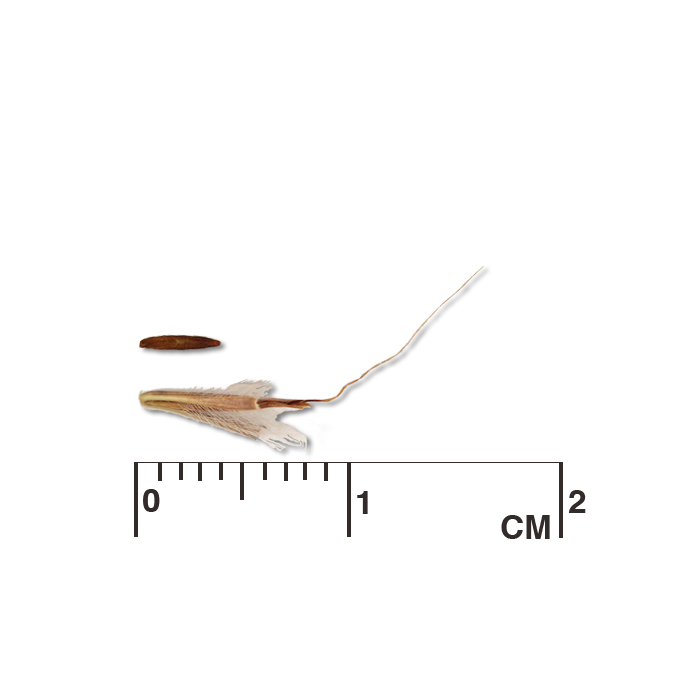
Seeds per ounce: 15,000 (IA NRCS)
1000 seed weight: 1.50 g (Seed Information Database)
Description: [shape, length, color, attached structures]
Typical seed test
PLS: 68% (n = 12)
Purity: 71% (n = 12)
Germination: 35% (n = 11)
Dormant: 59% (n = 11)
(averages obtained from n tests of purchased seed lots)
- Habitat and range
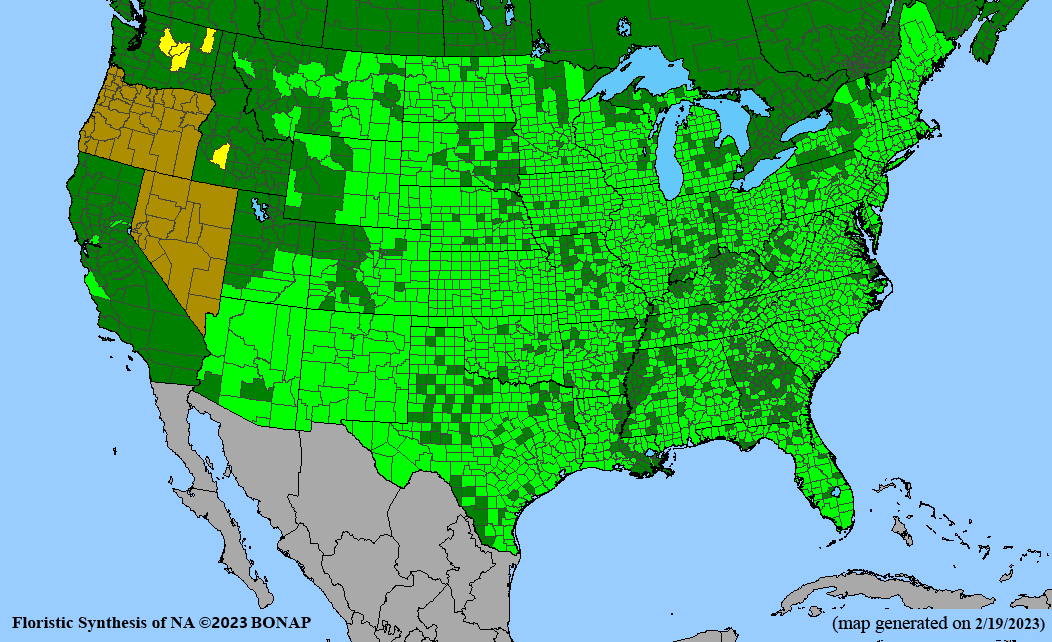
Habitat: Dry to dry-mesic soil; full sun; prairies, glades, dunes, roadsides, along railroads, woodland openings, scrubby barrens, abandoned fields; Wetland Indicator Status is Facultative Upland (FACU) for the Midwest; well-drained, moderately moist soils are preferred for seed production.
Conservation status: Global- G5, secure (NatureServe)
General Comments
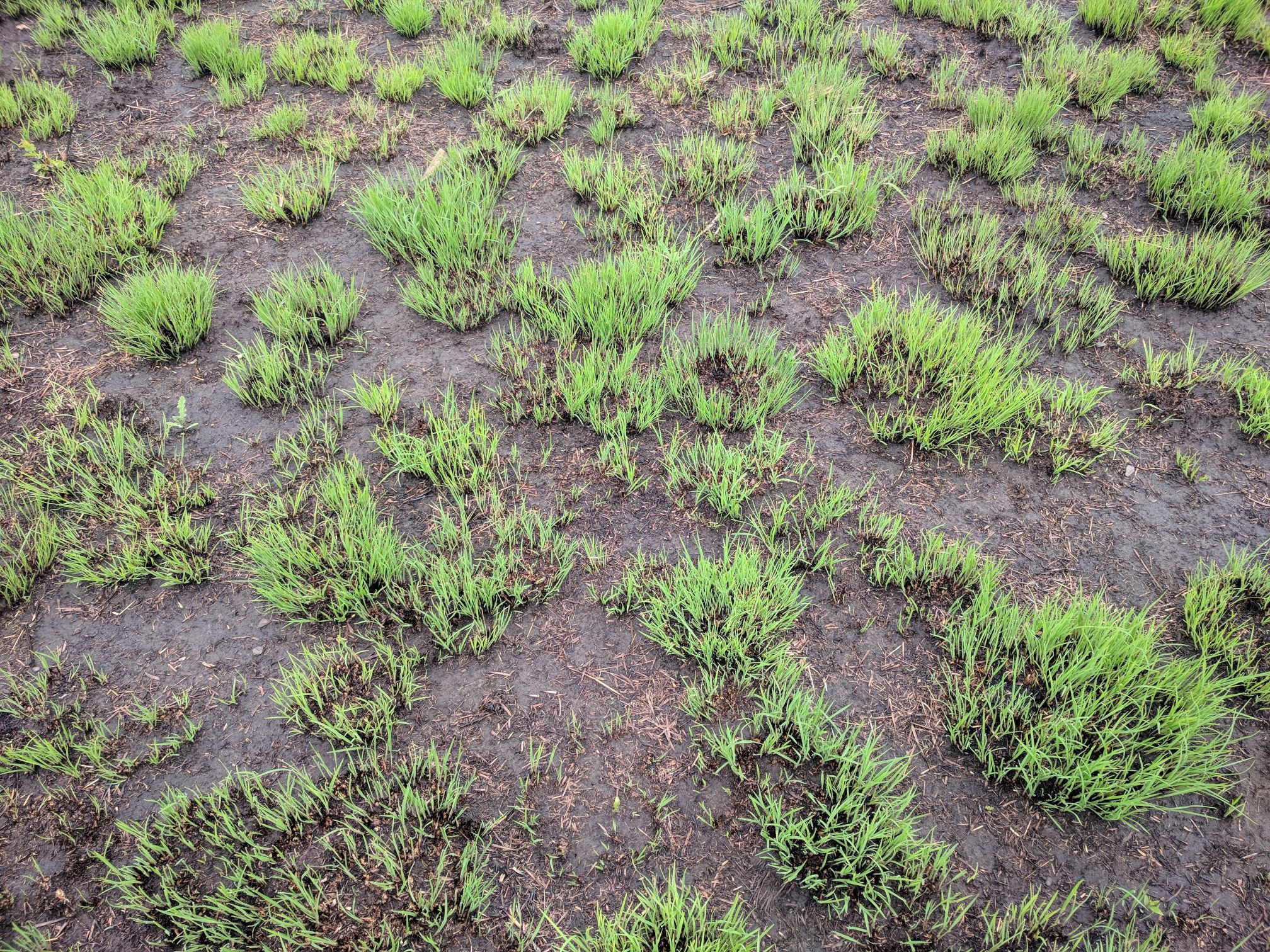
Little bluestem is a dominant component on dry or well-drained soils within the tallgrass prairie region. Careful site selection, seedbed preparation, and weed control are critical to successful establishment from seed. No-till drilling with a native seed drill into cropland following a glyphosate-resistant crop, soybeans for example, is an excellent method. It takes two to three years for a stand to develop and reach peak yields.
Recommendations for Seed Production
- Establishment for seed production
Direct seeding
Row spacing: 36 in 24 in 12 in solid stand PLS lbs/acre: 2.4 3.2 6.4 8.0 Seeding depth: 1/4 in
Seeding method: native seed drill
Seeding time: late spring to early summer.
Weed control: Prepare clean, very firm, weed free seedbed prior to seeding.
Greenhouse
Seed pre-treatment: No stratification necessary. Germination of grass seed usually improves with proper storage (cool, dry conditions) throughout the first year after harvest.
Sowing: Sow seed in greenhouse two months before last frost free date at 1/4 in depth.
Transplanting: Transplant after all danger of frost.
- Stand management
Weeds: Mow stands high (6–12 in) in the first growing season to prevent weed canopy from shading seedlings. Imazepic can be used to control grass and broadleaf weeds in established stands. Pre-emergent grass and broadleaf herbicides can be used for weed control. Always check chemical labels.
Pests: None noted.
Diseases: No significant issues noted in TPC production plots, however, a leaf spot fungus is known to infect little bluestem and related grass species.
- Seed production
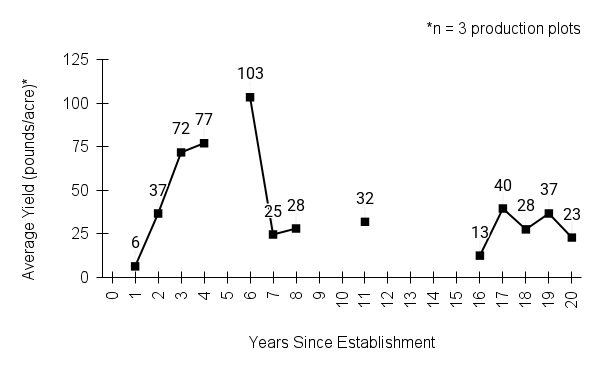 First harvest: Flowering and seed set end of second growing season from direct seeding, three years for stand to fill out.
Yield: 30-100 bulk pounds/acre
Stand life: Peak harvests third year and after. If seed yields decline, stands can be chiseled to reinvigorate. We do not apply fertilizer to TPC plots, but this may improve seed yield. Annual late spring fire helps control weeds and increase flowering and seed production. (Note: These recommendations are strictly for production fields, NOT REMNANT PRAIRIES). Productive stand life 10-20 years or more.
Flowering date: Late July to late August.
Seed maturity/Harvest date: Late September to October.
Seed retention: Shattering is moderate, beginning in late September. Much of the variation in seed yield at TPC appears to be due to harvest timing, particularly waiting too long.
Harvest date range at TPC (2003-2022): Sept 5 - Oct 29
Recommended harvest method: Stripper or combine at hard dough to maturity, when most spikes are fluffed out and shattering is just beginning to occur.
- Seed cleaning and storage
Cleaning process: Air-dry material, remove awns with a debearder or brush machine, then air-screen. Like other fluffy-seeded warm season grasses, this species may not flow particularly well through the air-screen cleaner.
Seed storage: cool/dry (33-50° F, 30-50% RH)
Released Germplasm
Source Identified material: Northern Iowa Germplasm (IA Zone 1), Central Iowa Germplasm (IA Zone 2), Southern Iowa Germplasm (IA Zone 3), Northern Missouri Germplasm, Southern Missouri Germplasm, Southlow Michigan Germplasm, Suther Germplasm
Selected germplasm: Badlands Ecotype (ND, SD), Coastal Plains Germplasm (TX, LA), Itasca Germplasm (ND), OK Select Germplasm (OK), Ozark Germplasm (MO, IL), Prairie View Indiana Germplasm (IN), STN-176 Germplasm (TX), STN-461 Germplasm (TX)
Cultivated varieties (cultivars): Ahring (Great Plains), Aldous (KS), Cimarron (OK, KS), Pastura (NM), Sims (Great Plains)
- References
Chayka, K. (n.d.). Schizachyrium scoparium (little bluestem). Minnesota Wildflowers. https://www.minnesotawildflowers.info/grass-sedge-rush/little-bluestem
Hilty, J. (2019). Little bluestem - Schizachyrium scoparium. Illinois Wildflowers. https://www.illinoiswildflowers.info/grasses/plants/little_bluestem.htm
Houseal, G. A. (2007). Grasses warm season. In G. A. Houseal (Eds.), Tallgrass Prairie Center’s native seed production manual (pp. 72–73). Tallgrass Prairie Center - University of Northern Iowa.
Kartesz, J.T., The Biota of North America Program (BONAP). 2023. North American Plant Atlas. (http://bonap.net/napa). Chapel Hill, N.C. [maps generated from Kartesz, J.T. 2023. Floristic Synthesis of North America, Version 1.0. Biota of North America Program (BONAP). (in press)]
NatureServe. 2024. NatureServe Network Biodiversity Location Data accessed through NatureServe Explorer [web application]. NatureServe, Arlington, Virginia. Available https://explorer.natureserve.org/. (Accessed: February 29, 2024).
USDA NRCS National Plant Data Team. (n.d.). Schizachyrium scoparium (Michx.) Nash. USDA plants database. https://plants.usda.gov/home/plantProfile?symbol=SCSC
USDA NRCS. Prairie View Indiana Germplasm Little Bluestem [Infographic] Retrieved February 20, 2025 from https://efotg.sc.egov.usda.gov/references/public/IN/Revised_Prairie_View_Little_bluestem.pdf
Wipff, J. K. (2021, May 11). Schizachyrium scoparium (Michx.) Nash. Flora of North America. http://floranorthamerica.org/Schizachyrium_scoparium
Species Guide Updated 11/17/2025
prairie cordgrass
prairie cordgrass dickeye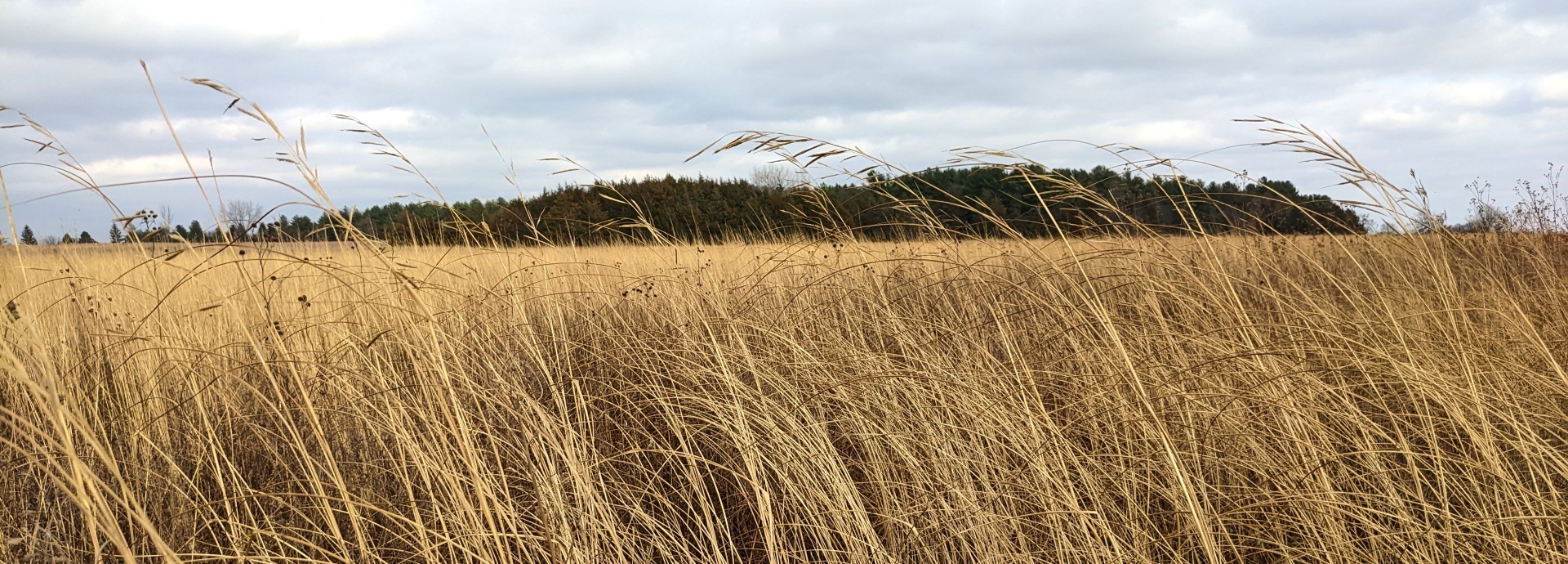
Spartina pectinata Bosc ex Link
Alternate Common Names: slough grass, marshgrass, ripgut, fresh water cordgrass
Scientific Synonyms: Sporobolus michauxianus (Hitchc.) P.M. Peterson & Saarela, Spartina michauxiana Hitchc., Spartina pectinata Bosc ex Link var. suttiei (Farw.) Fernald
Family: grass family (Poaceae)
Functional Group: warm season grass
Description
- Life cycle and growth form
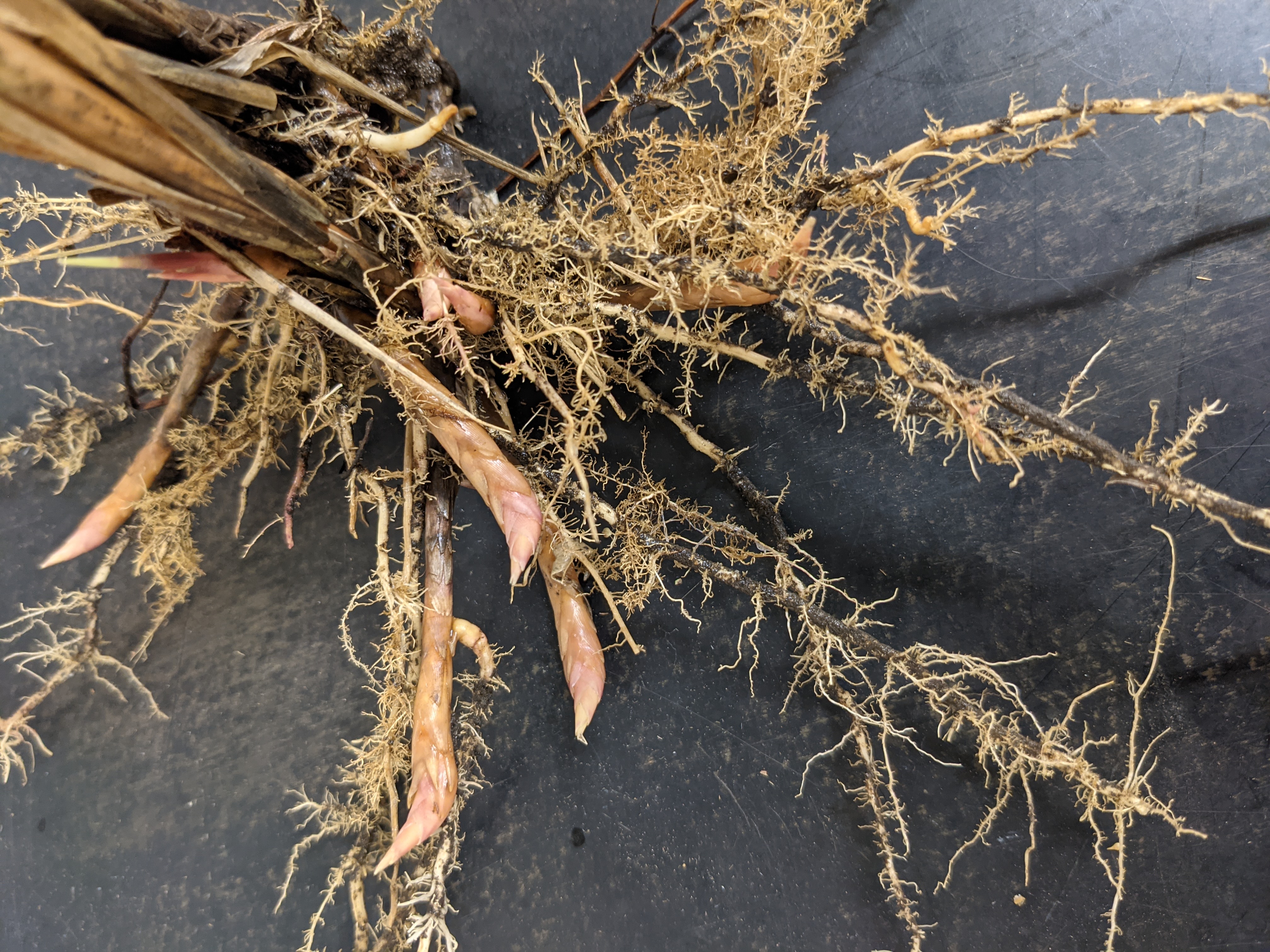
Perennial warm-season grass from stout, scaly, sharply pointed rhizomes, forming large, dense, clonal colonies.
Height: 3-8 ft
- Leaves and stem
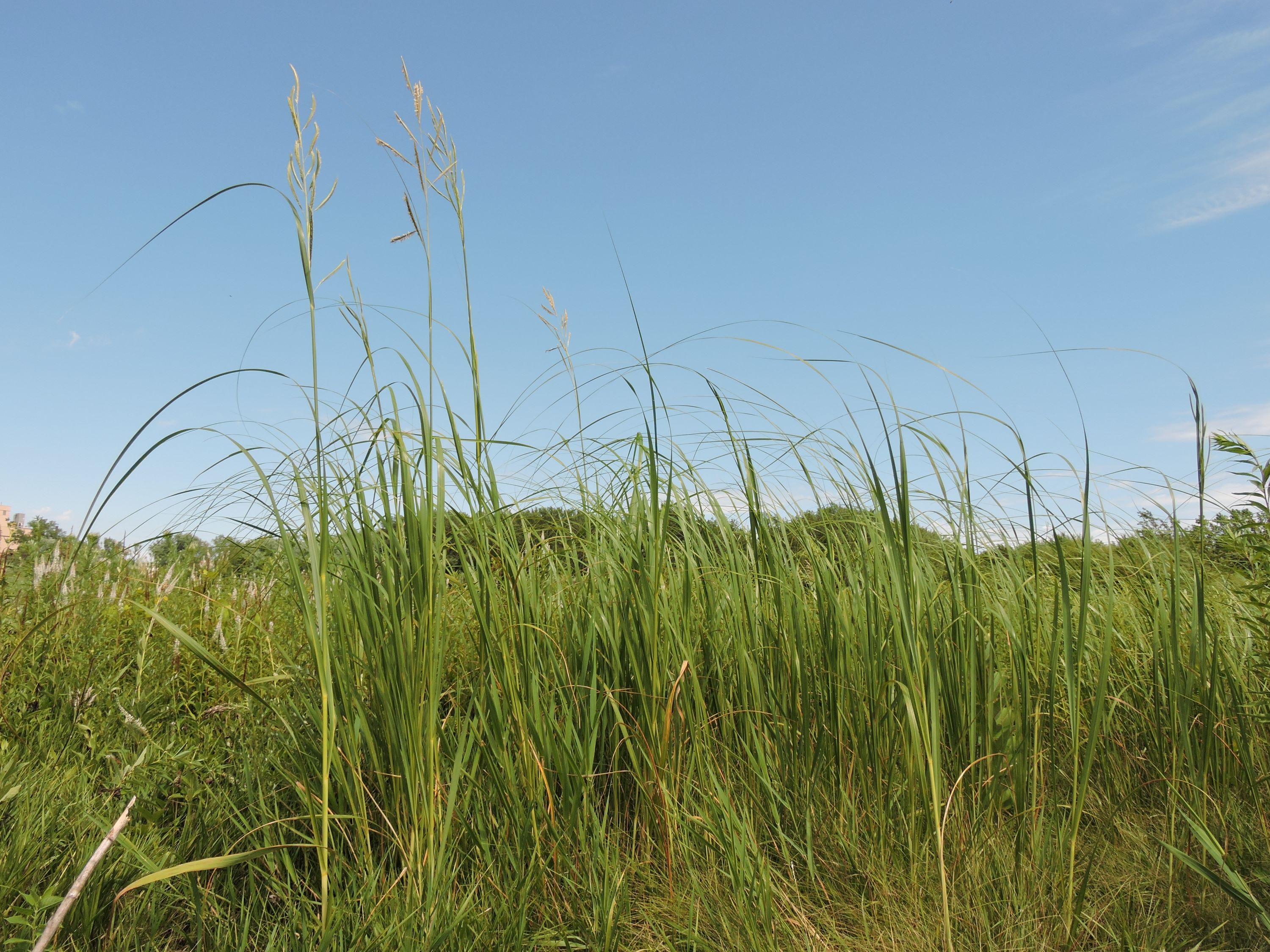
Leaf blades 6-15 mm wide (up to just over 1/2 in) and 20-120 cm long (8 - 48 in) with coarsely serrate margins that can cause minor lacerations on exposed skin, sheaths smooth with visible longitudinal veins; flowering stems (culms) are erect and hairless.
- Flower, fruit and seedhead
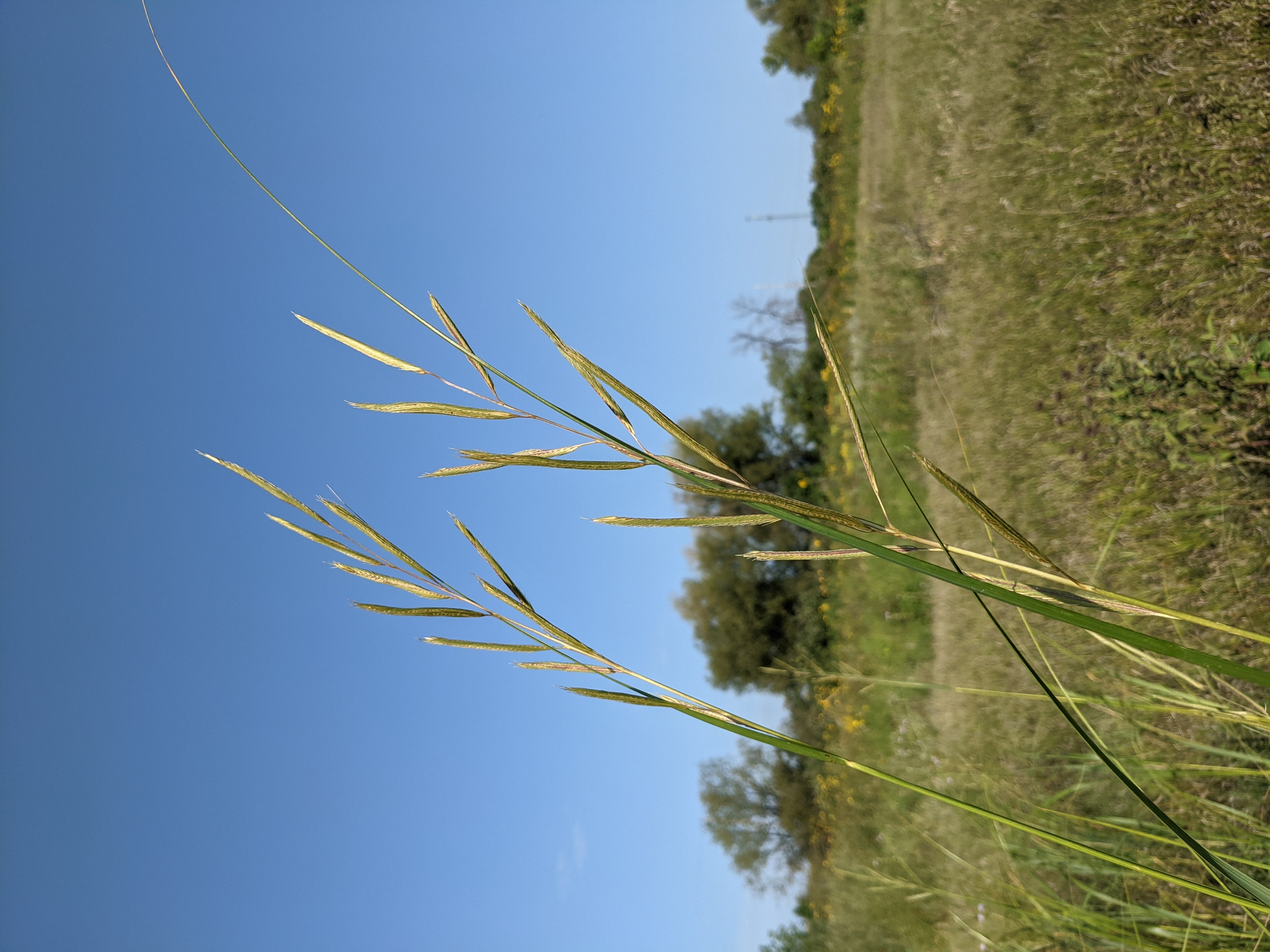
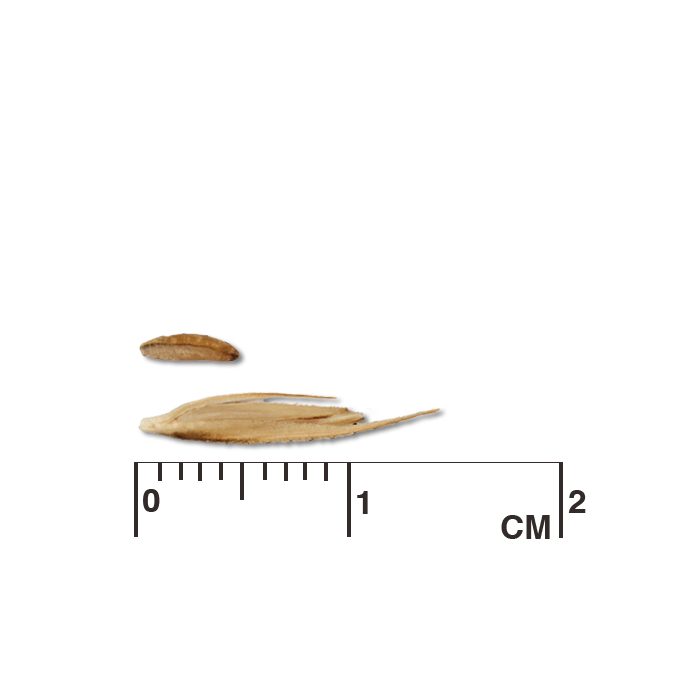
Fruit/seed head: Seedhead is a raceme 4-15 cm long (2-6 in) with 10-30 densely packed, one-sided spikes each containing 10-25 flattened spikelets. The entire spikelet sheds at maturity, leaving a naked stalk.
Pollination: wind
- Seed
Seed characteristics
Seed weight:
Seeds per ounce: 6,600 (IA NRCS)
1000 seed weight: 1.85 g (Seed Information Database)
Description: One-flowered spikelet with short awn (less than 1/4 in). Seeds are very flat. Caryopsis is about 5 mm long.
Typical seed test
PLS: 71%
Purity: 75%
Germination: 20%
Dormant: 50%
(averages obtained from 4 tests of purchased seed lots)
- Habitat and range
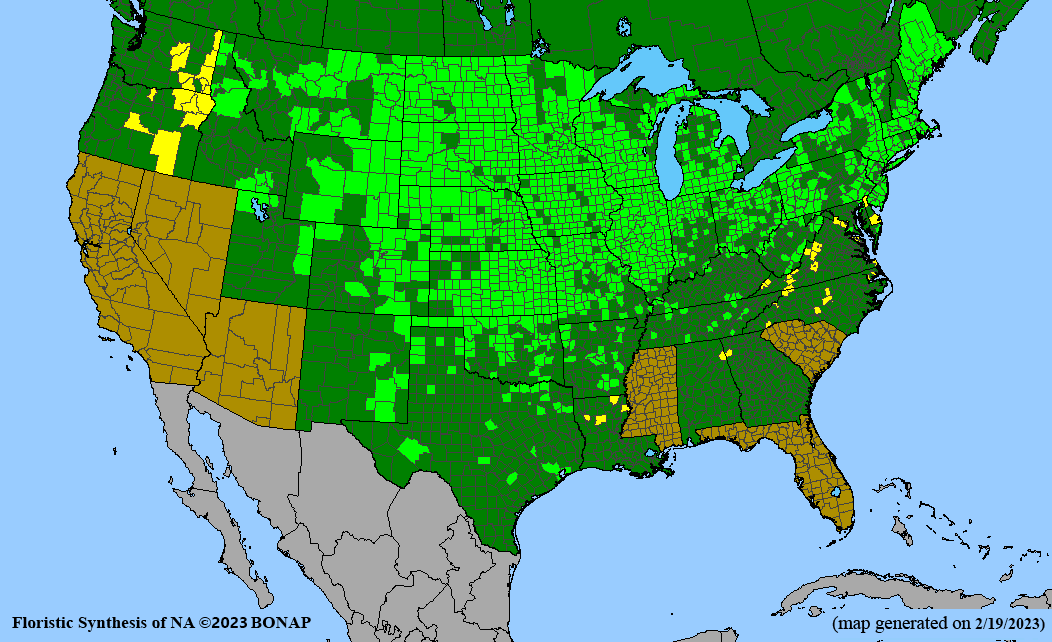
Habitat: Wet-mesic to wet soil; full sun; swales, roadside ditches, marshy areas, drainage areas, and wetlands; it will grow on seasonally dry sites, but won’t tolerate prolonged flooding; Wetland Indicator Status is Facultative Wetland (FACW) for the Midwest; irrigation is necessary for seed production plots.
Conservation status: Global- G5, secure; Delaware, District of Columbia,Georgia, and North Carolina- S1, critically imperiled; Louisiana, Oregon, Virginia, and Washington- S2, imperiled; Kentucky- S2/S3, imperiled to vulnerable (NatureServe)
General Comments
Cordgrass has a reputation for poor seed production. Its primary mode of growth is vegetative spread by rhizomes. Cordgrass often forms large, dense colonies with few flowering stalks, and these mostly situated on the outer, leading edges of the colony. Insect predation of the seed heads further limits seed production from native stands. Yet cordgrass does grow readily from viable seed in plantings. Direct seeding for a seed increase stand, however, is not recommended.
Recommendations for Seed Production
- Establishment for seed production
Direct seeding
Not recommended for this species.
Greenhouse
Seed pre-treatment: Moist stratify seed for up to 4 weeks, or soak in water for 24 hours and freeze overnight to improve germination.
Sowing: Sow seed in greenhouse two months before last frost free date at 1/2 in depth.
Transplanting: Transplant after all danger of frost. Greenhouse grown plugs can be transplanted into wide row spacing, 6-8 ft between rows, with plants 2-3 ft apart within the rows. This gives the newly established plants adequate space for rhizome spread and promotes more flowering and seed set after establishment.
- Stand management
Weeds: Pre-emergent herbicides can be used after transplanting seedling plugs or pieces of rhizome. It’s critical to water-in transplants to seal soil around roots to prevent herbicide from coming into contact with and possibly damaging roots. Read and follow label instructions.
Pests: There are several species of host-specific insects that use Spartina including a moth larva that feeds within developing seed heads, and these can be destructive in seed production settings. These can reportedly be controlled with insecticide application during flowering. There is also reportedly less predation when grown in northern regions (e.g. North Dakota) (USDA-NRCS Plant Guide).
Diseases: None noted.
- Seed production
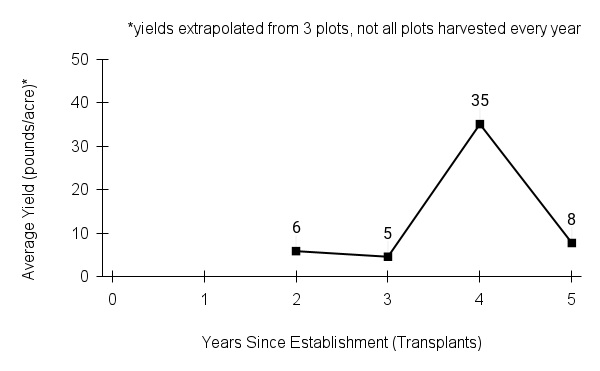 First harvest: Some flowering and seed set occurs in the second growing season from greenhouse grown transplants. Seed production may occur the first year from transplanted rhizomes.
Yield: 10-30 bulk pounds/acre at TPC. Other growers report yields of 30 to 75 pounds/acre (USDA-NRCS Plant Guide).
Stand life: Irrigation is critical to successful establishment and good seed production of this species over the first few years of stand life. Expect 2-3 years for the stand to be established. Stand may become root-bound by the fifth year, and seed production declines, at which time a new stand should be established from rhizomes.
Flowering date: Mid-July to early September.
Seed maturity/Harvest date: Late September to early October.
Seed retention: Shattering occurs from mid to late October.
Harvest date range at TPC (2003-2007): Sept 28 - Nov 3
Recommended harvest method: Combine at maturity and before shattering. (No combine settings available in Appendix).
- Seed cleaning and storage
Cleaning process: Pre-clean air-dried material by scalping thru 1/2 in and 1/4 in mesh to remove large particles. Remove awns with debearder. Seeds are long and flat, and easily damaged by a brush machine. Air-screen to clean. Refer to Appendix C for settings.
Seed storage: cool/dry (33-50° F, 30-50% RH)
Released Germplasm
Source Identified material: Natural Selections/Iowa Ecotype Project Zone “Iowa”
Selected germplasm: Atkins Germplasm (NE), Kingston Germplasm (MA, ME, NH), Red River Natural Germplasm (MN, ND, SD), Southampton Germplasm (NY)
- References
Chayka, K. (n.d.). Spartina pectinata (prairie cordgrass). Minnesota Wildflowers. https://www.minnesotawildflowers.info/grass-sedge-rush/prairie-cordgrass
Hilty, J. (2019). Prairie cordgrass - Spartina pectinata. Illinois Wildflowers. https://www.illinoiswildflowers.info/grasses/plants/pr_cordgrass.htm
Houseal, G. A. (2007). Grasses warm season. In G. A. Houseal (Eds.), Tallgrass Prairie Center’s native seed production manual (pp. 80–81). Tallgrass Prairie Center - University of Northern Iowa.
Jensen, N.K. (2017, September 13) Prairie Cordgrass Spartina pectinata Bosc ex Link. USDA NRCS Plant Guide. https://www.nrcs.usda.gov/plantmaterials/nypmcpg11942.pdf
Kartesz, J.T., The Biota of North America Program (BONAP). 2023. North American Plant Atlas. (http://bonap.net/napa). Chapel Hill, N.C. [maps generated from Kartesz, J.T. 2023. Floristic Synthesis of North America, Version 1.0. Biota of North America Program (BONAP). (in press)]
NatureServe. 2024. NatureServe Network Biodiversity Location Data accessed through NatureServe Explorer [web application]. NatureServe, Arlington, Virginia. Available https://explorer.natureserve.org/. (Accessed: February 29, 2024).
USDA NRCS National Plant Data Team. (n.d.). Spartina pectinata Bosc ex Link. USDA plants database. https://plants.usda.gov/home/plantProfile?symbol=SPPE
Species Guide Updated 12/15/2025
prairie dropseed
prairie dropseed dickeye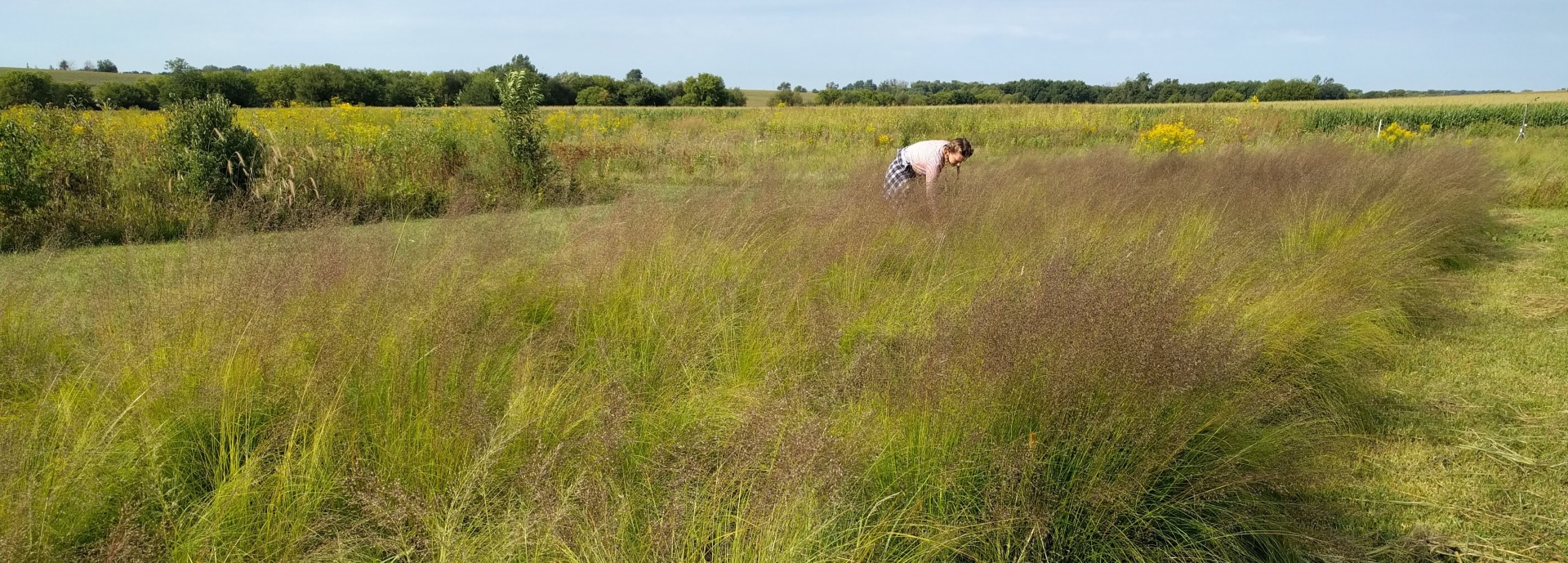
Sporobolus heterolepis (Gray) Gray
Alternate Common Name: northern dropseed
Family: grass family (Poaceae)
Functional Group: warm season grasses
Description
- Life cycle and growth form
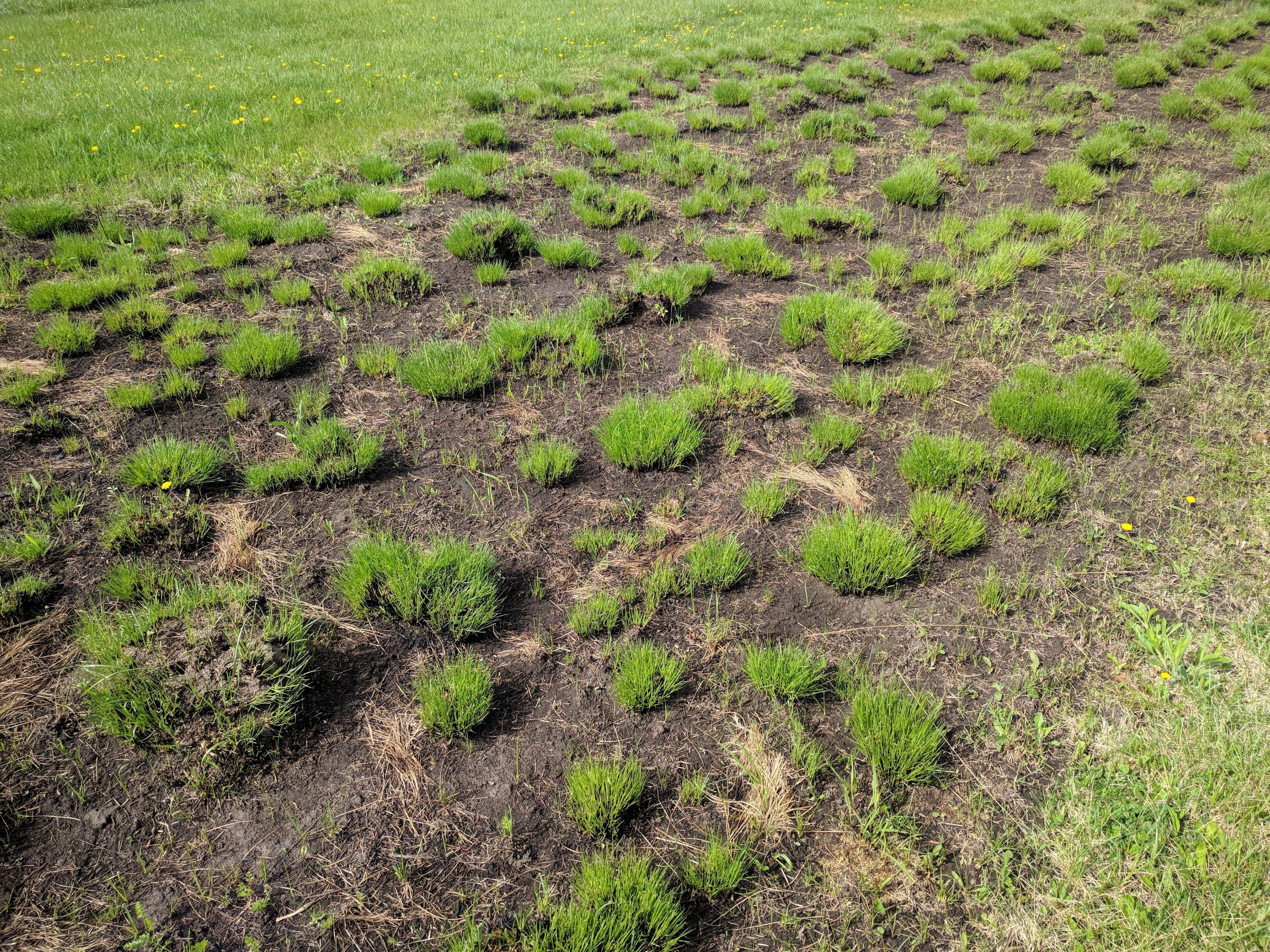
Perennial warm-season grass forming long-lived dense bunches of many stems that become hummocky over time.
Height: 1-3 ft
- Leaves and stem
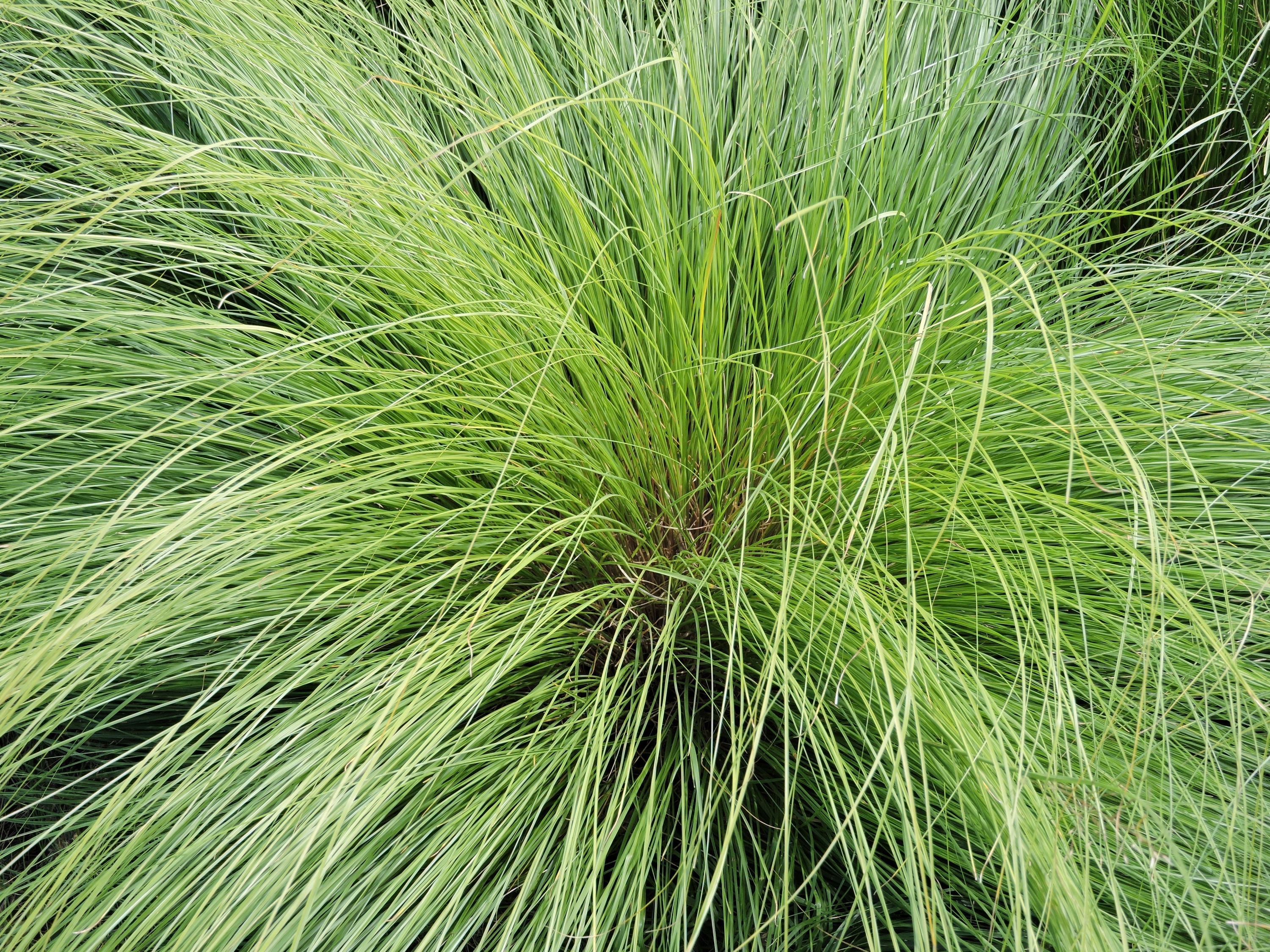
Leaves with hairless blades about 1/16 in wide and up to 2 ft long, tapered to a thread-like tip; leaf sheath smooth except for a tuft of hairs at the collar; stems are slender and hairless.
- Flower, fruit and seedhead
Fruit/seed head: Seedhead is a diffuse, openly branched panicle. Glands at the base of branches in the panicle give off a somewhat rancid buttery odor when in flower and setting seed.
Pollination: Wind-pollinated, though small flower flies visit the flowers to feed on pollen.

- Seed
Seed characteristics
Seed weight:
Seeds per ounce: 16,000 (IA NRCS)
1000 seed weight: 1.90 g (Seed Information Database)
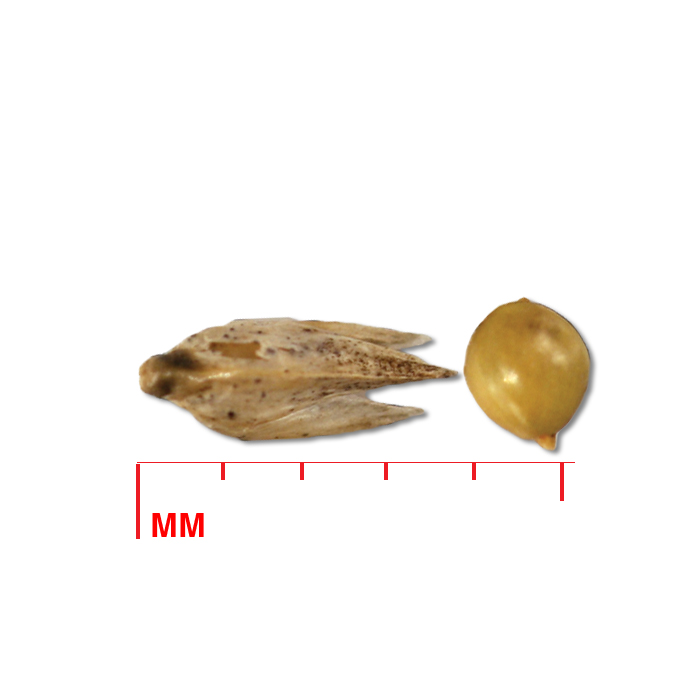
Description: Spikelets are one-flowered, no awns present, about 4 mm long (5/32 in), grain round, firm about 2.5 mm (3/32 in) long.
Typical seed test
PLS: 86% (n = 10)
Purity: 96% (n = 10)
Germination: 20% (n = 6)
Dormant: 55% (n = 7)
(averages obtained from n tests of purchased seed lots)
- Habitat and range
Habitat: Dry to moist soil; full sun; high quality remnant prairies, limestone glades, savannas; Wetland Indicator Status is Facultative Upland (FACU) for the Midwest.
Conservation status: Global- G5, secure; Massachusetts- SH, possibly extirpated; Wyoming, Connecticut, Georgia, Kentucky, Maryland, North Carolina, Ohio, Pennsylvania, Tennessee, and Virginia- S1, critically imperiled; New York and Oklahoma- S2, imperiled; Illinois- S2/S3, Colorado, Kansas, and Michigan- S3, vulnerable (NatureServe)

General Comments
This species is seldom abundant in prairies, occurring in groupings of scattered clumps. The long, slender leaves, bunching habit, and airy seedheads create a fountain-like effect, making this species desirable for horticultural landscape plantings. Seedlings develop slowly, so this species is best propagated in the greenhouse and transplanted in rows convenient for tillage equipment in a well-prepared, weed-free, and firmly packed increase field. Plants are very long-lived, forming large clumps after 2-3 growing seasons. Spring burning stimulates prolific flowering and seed production, but bunches can also be killed or damaged by burning if soil conditions are excessively dry. Timing of seed harvest is critical, since seed drops soon after maturity.
Recommendations for Seed Production
- Establishment for seed production
Direct seeding
Not recommended for this species due to slow seedling development
Greenhouse
Seed pre-treatment: Moist stratify seed at 35-40° F for 4 weeks.
Sowing: Sow seed in greenhouse 2 months before last frost-free date at 1/4 in depth. Warm temperatures in the greenhouse appear to improve germination.
Transplanting: Transplant (after all danger of frost) into rows convenient for tillage equipment or into weed barrier or plastic mulch at 8-12 in spacing.
- Stand management
Weeds: Transplant into well-prepared, weed-free increase field. Pre-emergent herbicides may be used after transplanting. Be sure to water in transplants to help seal soil around roots so pre-emergent won’t chemically damage root systems. Cultivate, hoe, and hand rogue around young plants later in the season, if necessary. Weed barrier or plastic mulch, if used, suppresses weeds in the first year or two, and buildup of thatch between burnings suppresses some weeds. Remove plastic to allow burning in subsequent years. Some native seed producers use a companion planting such as buffalo grass to suppress weeds between prairie dropseed rows.
Pests: Voles like to nest in prairie dropseed thatch and will cut and eat (or store) the base of flowering stems before seed matures, potentially decimating yields.
Diseases: None noted.
- Seed production
 First harvest: Flowering and seed set occurs at the end of the second growing season from greenhouse grown transplants.
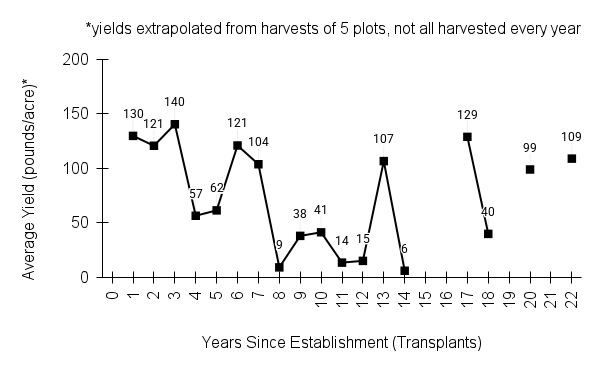
Yield: Typically around 50-150 bulk pounds/acre with much year to year variation (per acre yields extrapolated based on harvests from 5 plots). Spring burning may stimulate flowering and seed set, though bunches can be killed by fire if soil is very dry.
Stand life: Stands remain productive for 10-20 years, although yields fluctuate greatly.
Flowering date: mid-August - early September in northern Iowa
Seed maturity/Harvest date: late September - early October in northern Iowa
Seed retention: Shattering occurs soon after maturity. Check plots frequently as seed matures. A useful method to determine maturity is to crush seeds and observe for a crumbly, starchy center (no longer milky or creamy). The taste also changes from slightly sweet to starchy as seed matures.
Harvest date range at TPC (2003-2023): Sept 22 - Oct 18 (harvests after this date produced very little seed)
Recommended harvest method: combine
- Seed cleaning and storage
Cleaning process: Pre-clean air-dried material by scalping through 1/2 in and 1/4 in mesh to remove large particles, if necessary. Air-screen to clean.
Seed storage: Seed reportedly has a high oil content that can shorten viability in storage. Some producers recommend storing seed at freezing temperatures for extended storage after proper drying and cleaning. Store seed in moisture-proof containers before freezing. Seed should not be left at room temperatures for more than a few weeks after harvest. Refrigerated conditions (33-50° F, 30-50% RH) are adequate for at least a year after harvest.
Released Germplasm
Source Identified material: Natural Selections/Iowa Ecotype Zone 1 (northern Iowa), Zone 2 (central Iowa), and Zone 3 (southern Iowa).
Cultivated varieties (cultivars): Horticultural varieties selected for particular traits include Tara, Morning Mist, and Wisconsin Strain.
- References
Chayka, K. (n.d.). Spororbolus heterolepis (prairie dropseed). Minnesota Wildflowers. https://www.minnesotawildflowers.info/grass-sedge-rush/prairie-dropseed
Hilty, J. (2019). Prairie dropseed - Sporobolus heterolepis. Illinois Wildflowers. https://www.illinoiswildflowers.info/grasses/plants/pr_dropseed.htm
Houseal, G. A. (2007). Grasses warm season. In G. A. Houseal (Eds.), Tallgrass Prairie Center’s native seed production manual (pp. 78–79). Tallgrass Prairie Center - University of Northern Iowa.
Kartesz, J.T., The Biota of North America Program (BONAP). 2023. North American Plant Atlas. (http://bonap.net/napa). Chapel Hill, N.C. [maps generated from Kartesz, J.T. 2023. Floristic Synthesis of North America, Version 1.0. Biota of North America Program (BONAP). (in press)]
NatureServe. 2024. NatureServe Network Biodiversity Location Data accessed through NatureServe Explorer [web application]. NatureServe, Arlington, Virginia. Available https://explorer.natureserve.org/. (Accessed: February 29, 2024).
USDA NRCS National Plant Data Team. (n.d.). Sporobolus heterolepis (A. Gray) A. Gray. USDA plants database. https://plants.usda.gov/home/plantProfile?symbol=SPHE
Species Guide Updated 12/11/2025
sideoats grama
sideoats grama dickeye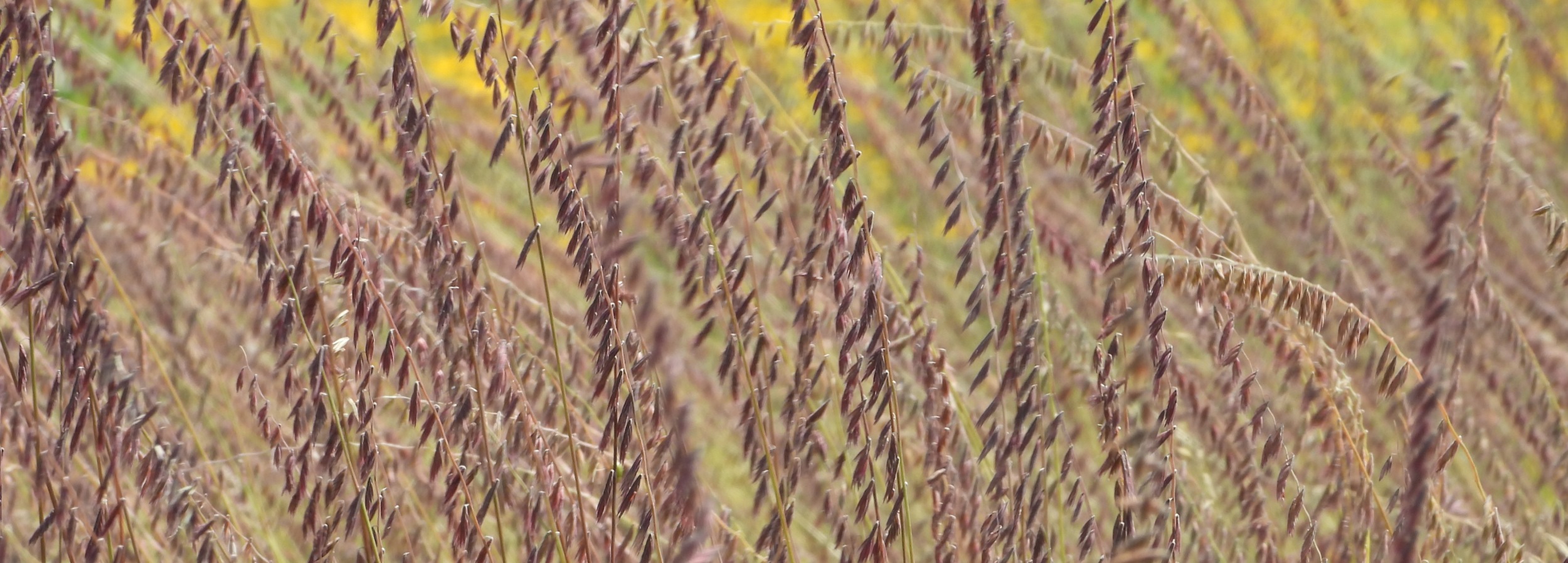
Bouteloua curtipendula (Michx.) Torr.
Alternate Common Names: sideoats, side oats grama, side-oats grama
Scientific Synonym: Atheropogon curtipendula
Family: grass family (Poaceae)
Functional Group: warm season grasses
Description
- Life cycle and growth form
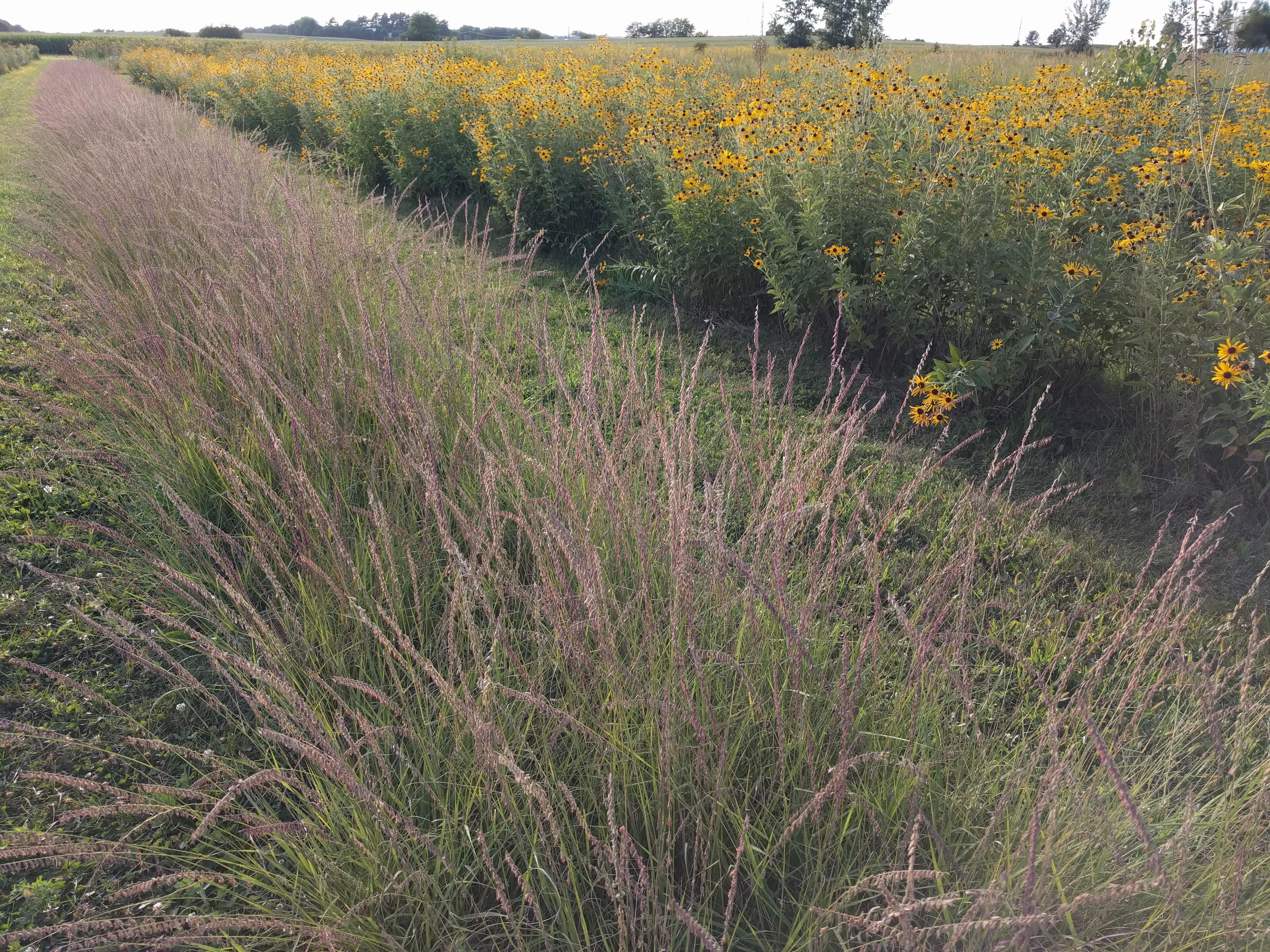
Perennial, warm-season bunchgrass, spreading slowly by short rhizomes to form loose colonies.
Height: 1-3 ft
- Leaves and stem
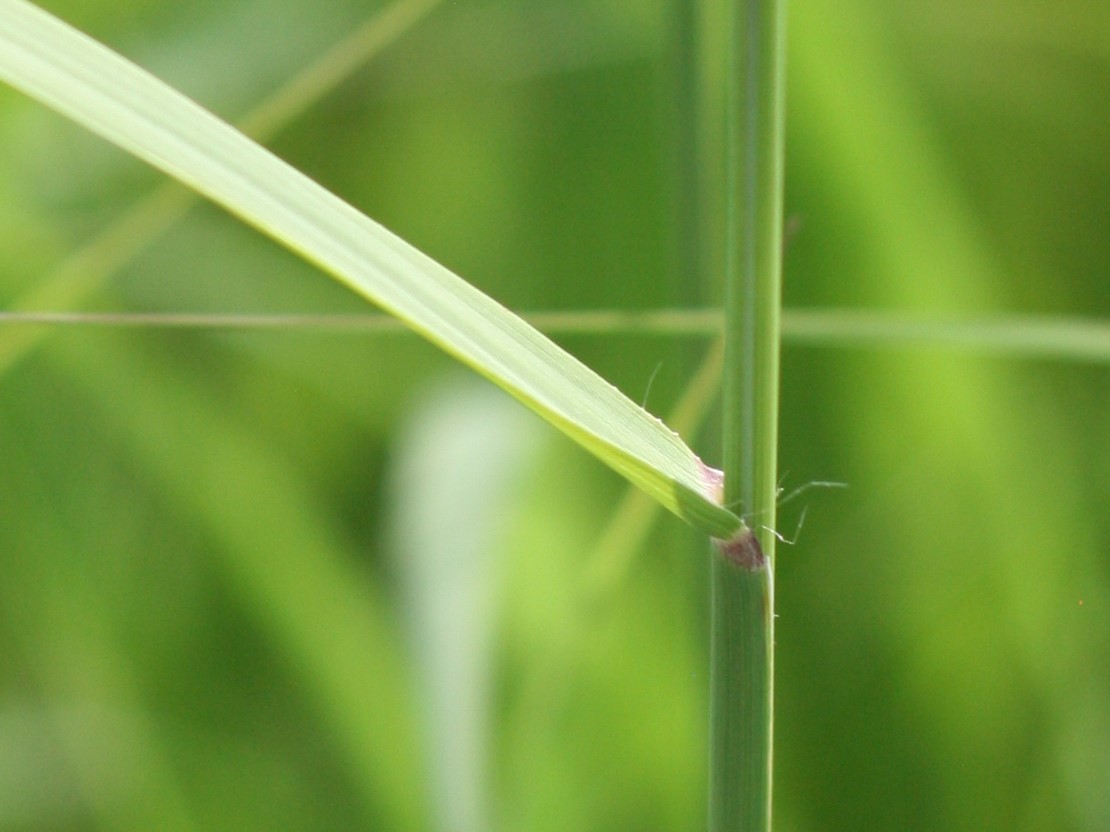
Leaves mostly basal with leaf blades 6-8 in long and tapered to a sharp point; stiff hairs with glandular bases evenly spaced along the leaf margins, sticking out at a right-angle from the main axis of the blade; lower leaves curl and turn a light, tawny color when dry; ligule a very short fringe of hair; nodes hairless and green to purple; flowering stem is smooth and erect.
- Flower, fruit and seedhead
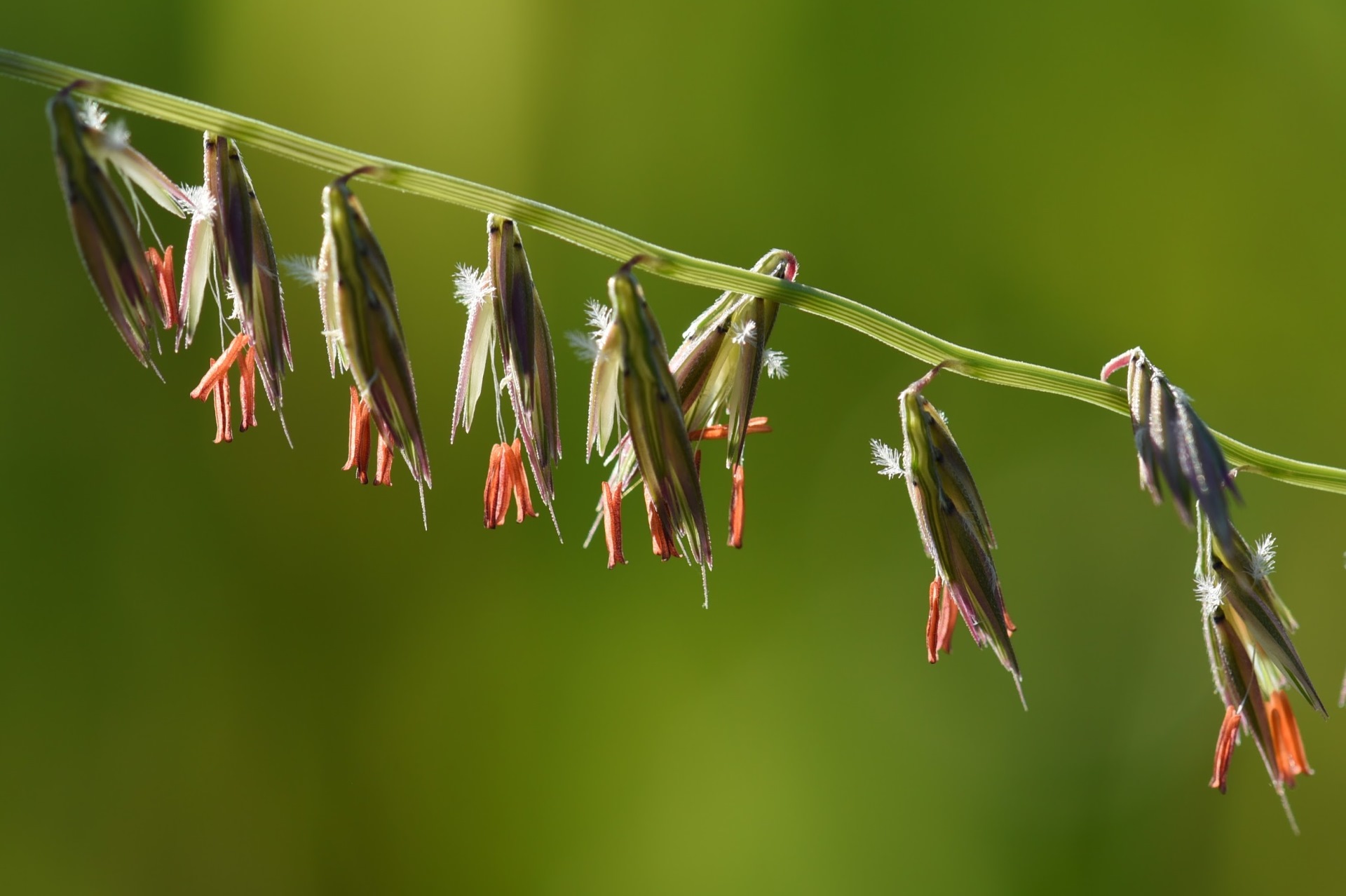
Fruit/seedhead: Seed head 4-12 in long consisting of many short oat-like spikes (0.5-1.25 in long), each with 3-7 spikelets all turned to one side of the main stem, giving rise to the common name “sideoats;” entire spike falls when mature, leaving a naked stalk with visible nodes.
Pollination: Wind
- Seed
Seed characteristics
Seeds per ounce: 6,000 (IA NRCS)
Seeds per pound: 96,000 (IA NRCS)
1000 seed weight: 1.30 g (Seed Information Database)
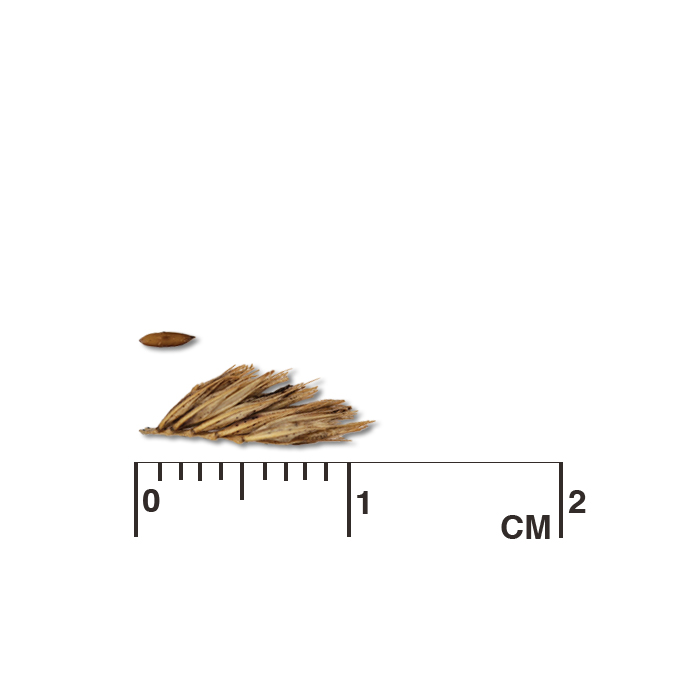
Description: Seed unit is a whole spike, fragment of spike, or floret. Although a seed unit may contain more than one germinable seed, it is counted as a single live seed in the calculation of pure live seed. Caryopsis (grain) 3-4 mm long, smooth brown.
Typical seed test
PLS: 89% (n = 12)
Purity: 96% (n = 12)
Germination: 59% (n = 11)
Dormant: 34% (n = 11)
(average of n tests of purchased seed lots)
- Habitat and range
Habitat: Dry to mesic, fine textured, calcium-rich soil; full sun; prairies, bluffs, along railroads, woodland openings. Well-drained soils are preferred for seed production.
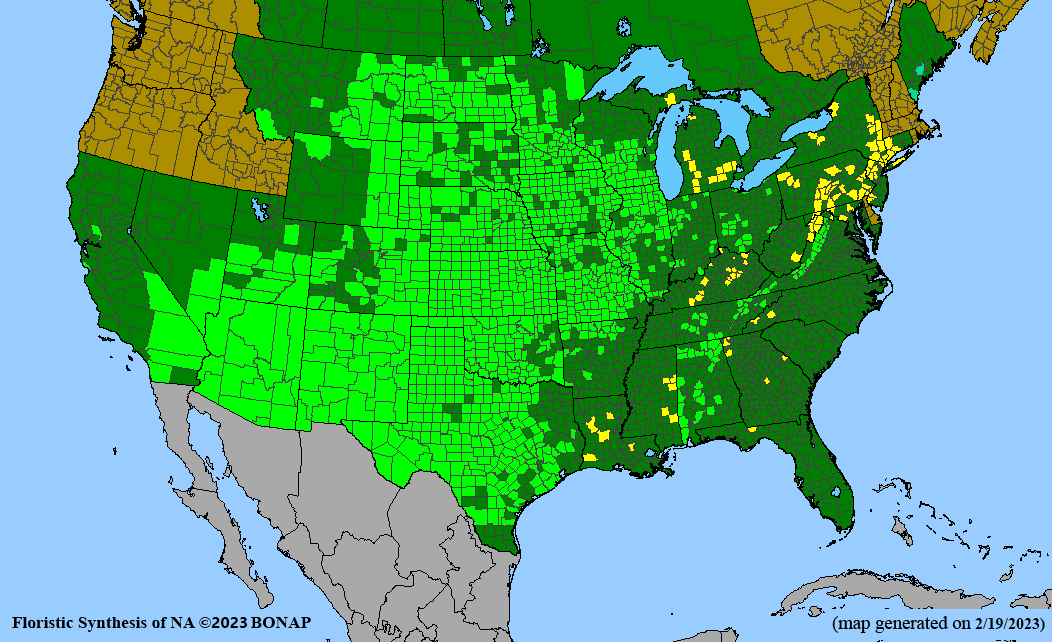
Conservation status: Global- G5, secure; District of Columbia- SH, possibly extirpated; Connecticut, Louisiana, Florida, and Michigan- S1, critically imperiled; Georgia, Maryland, Nevada, New York, and Pennsylvania- S2, imperiled; Indiana and West Virginia- S3, vulnerable (NatureServe)
General Comments
Sideoats grama is an important component of tall and mixed-grass prairies, occurring on well-drained, dry, rocky, alkaline soils. This species establishes readily from direct seeding, particularly if seeded into crop ground where good weed control has been achieved (following a glyphosate-resistant crop, for example). The foliage provides forage for mammalian herbivores as well as specialist and generalist insects, and grassland birds feed on the seeds.
Recommendations for Seed Production
- Establishment for seed production
Direct seeding
Row spacing: 36 in 24 in 12 in solid stand PLS lbs/acre: 3 4 8 9 Seeding depth: 1/4-1/2 in
Seeding method: native seed drill
Seeding time: Late spring when soil temperature reaches 55° F.
Weed control: Prepare clean, firm, weed free seedbed prior to seeding.
Greenhouse
Seed pre-treatment: No stratification necessary. Germination of grass seed usually improves with proper storage (cool, dry conditions) throughout the first year after harvest.
Sowing: Sow seed in greenhouse two months before last frost free date at 1/4 in depth.
Transplanting: Transplant into prepared beds at 12 in spacing after all danger of frost.
- Stand management
Weeds: Mow stands high (6-12 in) in first growing season to prevent weed canopy from shading seedlings. Do not use atrazine the year of establishment. On established stands, Plateau (imazapic); Outlook (dimethenamid-P), and 2,4-D have been used. Hand roguing removes weeds that could contaminate seed, cultivation or mowing can be used between rows, and burning in late spring helps control cool season weeds and may prevent buildup of disease inoculum.
Pests: Gall midge larvae have been observed within spikelets.
Diseases: Stem and leaf rust and other fungi are known to occur.
- Seed production
First harvest: Flowering and seed set end of second growing season from greenhouse grown transplants.
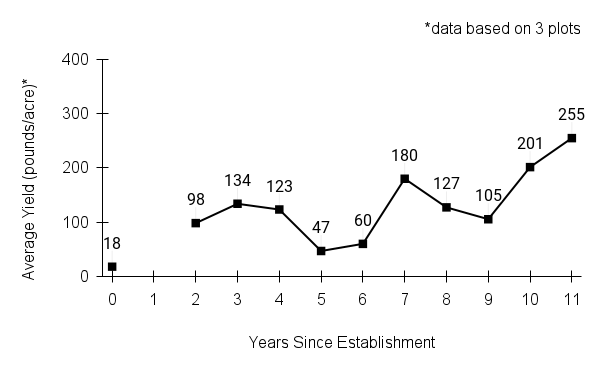
Yield: 20-255 bulk pounds/acre (per acre yields extrapolated based on production from 3 plots)
Stand life: Peak harvests third year and after. Annual late spring fire when shoots are 1 in tall helps control weeds and increase flowering and seed production. (Note: This recommendation is strictly for production fields, not remnant prairies.) Stand should persist 10 years or more if properly matched to soils and well managed.
Flowering date: mid-June - early July in northern Iowa
Seed maturity/Harvest date: September in northern Iowa
Seed retention: Holds seed fairly well, shattering occurs in October. Monitor fields fairly often as they mature and consider harvest when about 10% of stems have lost some spikelets from the top.
Harvest date range at TPC (2003-2023): Sept 1 - Oct 30
Recommended harvest method: Combine at hard dough stage.
- Seed cleaning and storage
Cleaning process: Combine-harvested sideoats grama can be air screened initially to sort spikelets from plant fragments. Larger intact spikes can be run quickly through a debearder or hammer mill to break up spikes, and re-air screen. Indent to remove foxtail or other short-seeded weeds.
Seed storage: cool/dry (33-50° F, 30-50% RH)
Released Germplasm
Source Identified material: Central Iowa Germplasm (IA Zone 2), Northern Iowa Germplasm (IA Zone 1), Southern Iowa Germplasm (IA Zone 3), Northern Missouri Germplasm
Selected Germplasm: South Texas Germplasm (TX)
Cultivated variety (cultivar): Midwest adapted cultivars include El Reno (KS), Haskell (TX), Niner (NM), Pierre (ND), Premier (TX), Vaughn (NM).
Informal Variety: Killdeer (ND)
- References
Chayka, K. (n.d.). Bouteloua curtipendula (side-oats grama). Minnesota Wildflowers. https://www.minnesotawildflowers.info/grass-sedge-rush/side-oats-grama
Gleason, H. A., & Cronquist, A. (1991). Poaceae. In Manual of Vascular Plants of Northeastern United States and Adjacent Canada (2nd ed., pp. 795-796). The New York Botanical Garden.
Hilty, J. (2019). Side oats grama - Bouteloua curtipendula. Illinois Wildflowers. https://www.illinoiswildflowers.info/grasses/plants/so_grama.htm
Houseal, G. A. (2007). Grasses warm season. In G. A. Houseal (Eds.), Tallgrass Prairie Center’s native seed production manual (pp. 68–69). Tallgrass Prairie Center - University of Northern Iowa.
Kartesz, J.T., The Biota of North America Program (BONAP). 2023. North American Plant Atlas. (http://bonap.net/napa). Chapel Hill, N.C. [maps generated from Kartesz, J.T. 2023. Floristic Synthesis of North America, Version 1.0. Biota of North America Program (BONAP). (in press)]
NatureServe. 2024. NatureServe Network Biodiversity Location Data accessed through NatureServe Explorer [web application]. NatureServe, Arlington, Virginia. Available https://explorer.natureserve.org/. (Accessed: February 29, 2024).
USDA NRCS National Plant Data Team. (n.d.). Bouteloua curtipendula (Michx.) Torr. USDA plants database. https://plants.usda.gov/home/plantProfile?symbol=BOCU
Species Guide Updated 12/13/2024
switchgrass
switchgrass dickeye
Panicum virgatum, (L.)
Alternate Common Names: thatchgrass, Wobsqua grass, blackbent, tall panic grass, old switch panicgrass
Scientific Synonyms: Panicum virgatum var. spissum, Panicum virgatum var. cubense, Panicum bavardii
Family: grass family (Poaceae)
Functional Group: warm season grass
Description
- Life cycle and growth form
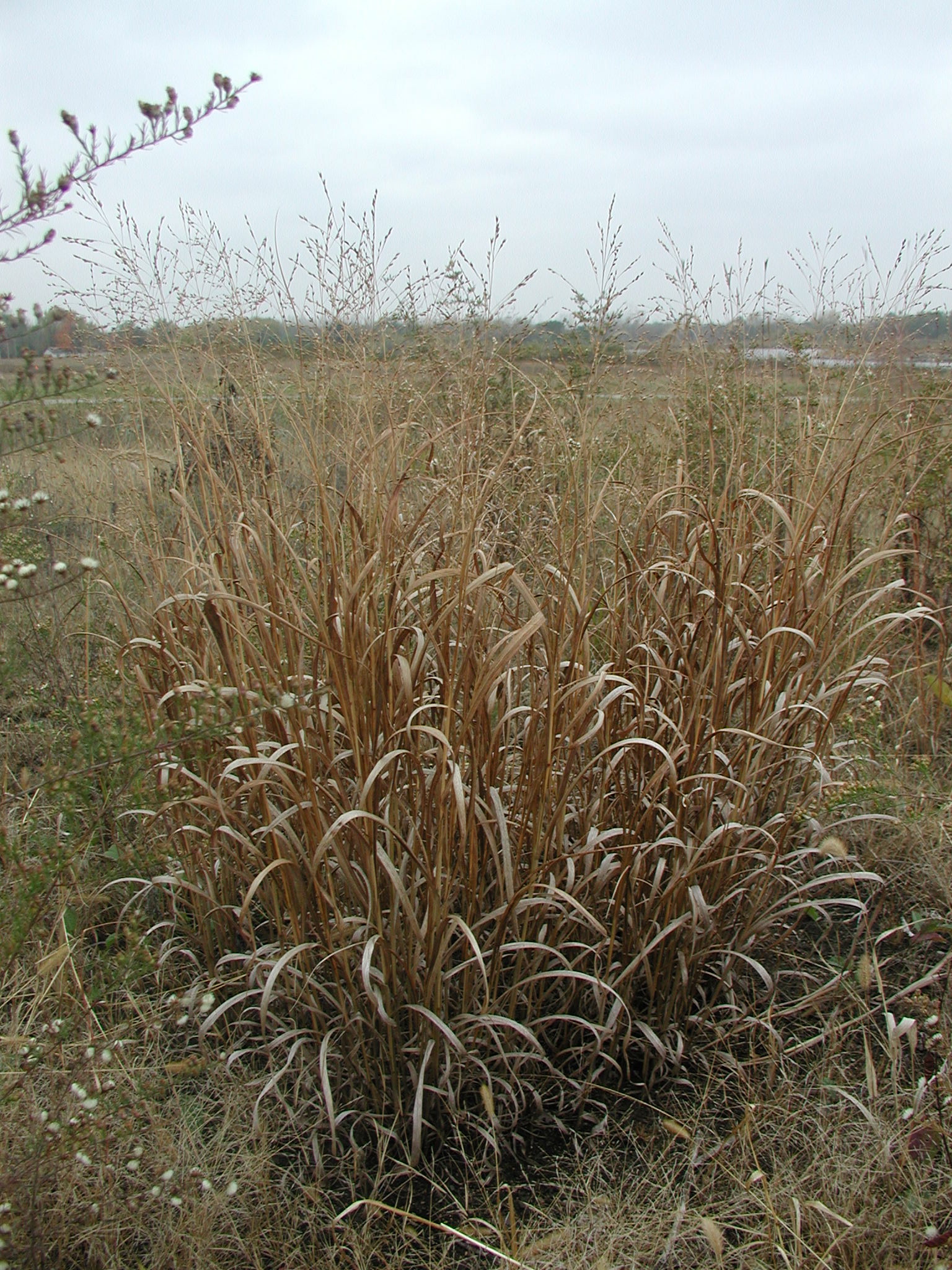
Warm season perennial, rhizomatous, forms clonal patches with many stems that expand over time.
Height: 3-6 ft
- Leaves and stem
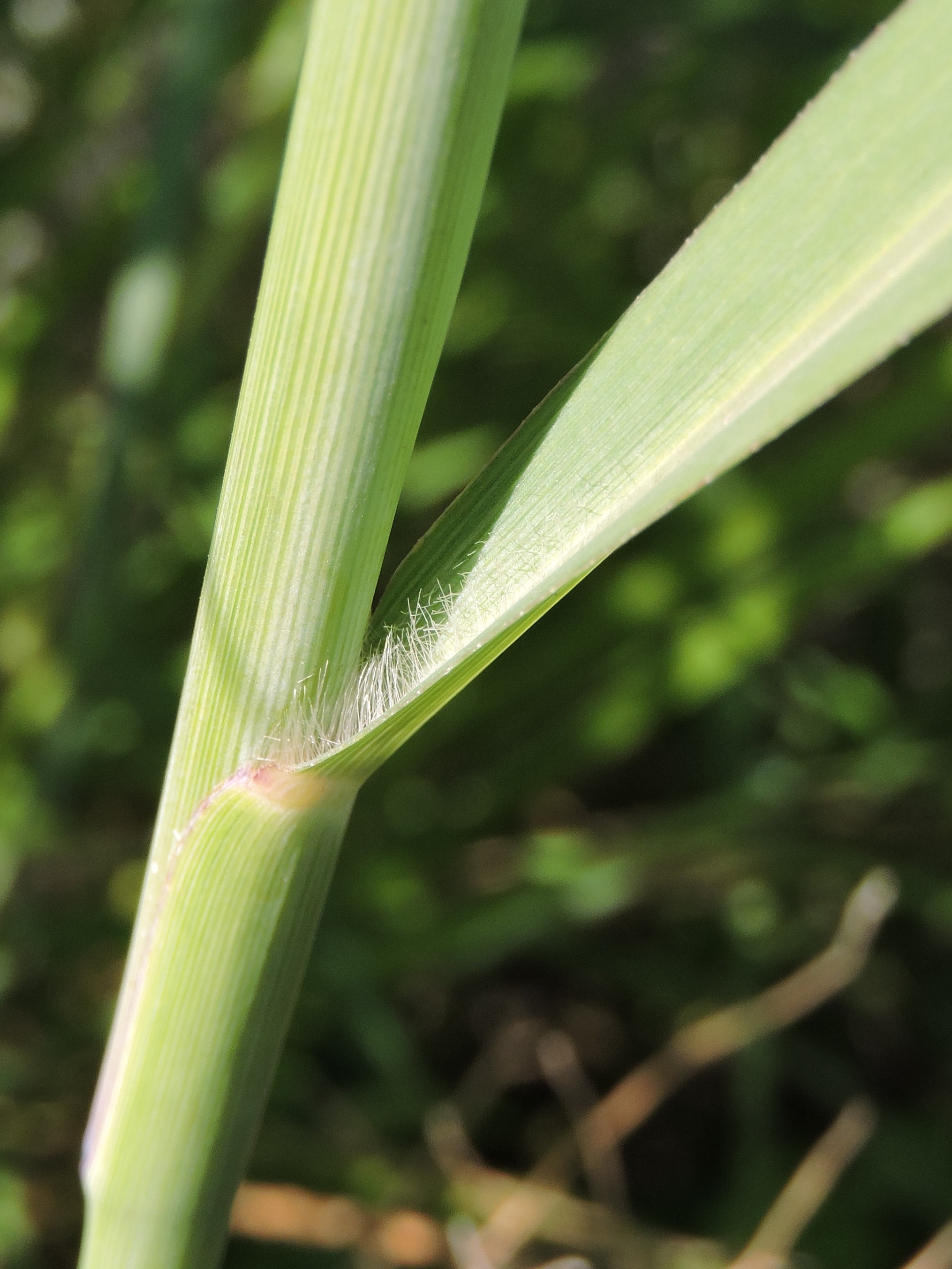
Leaf blades 5/16 in wide and 6-22 in long, often hairy on the upper surface, especially near the ligule, ligule is fringe of dense hairs about 1/8 in tall; stem erect and hairless.
- Flower, fruit and seedhead
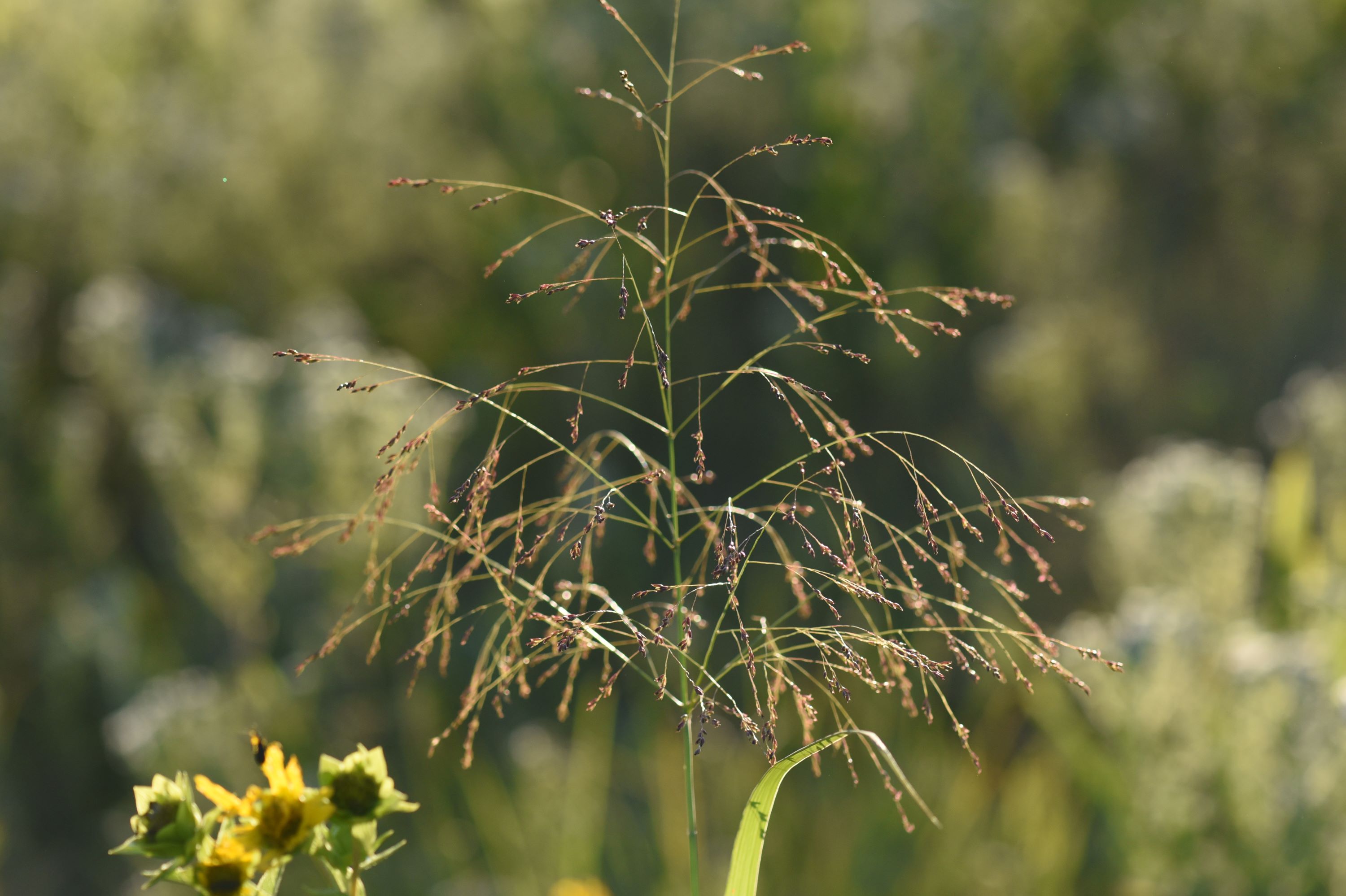
Fruit/seed head: Seedhead is an openly branched, airy panicle 8-16 in long with green to purple spikelets near the ends of the branches.
Pollination: wind
- Seed
Seed characteristics
Seed weight:
Seeds per ounce: 14,000 (IA NRCS)
Seeds per pound: 259,000 (IA NRCS)
1000 seed weight: 1.30 g (Seed Information Database)
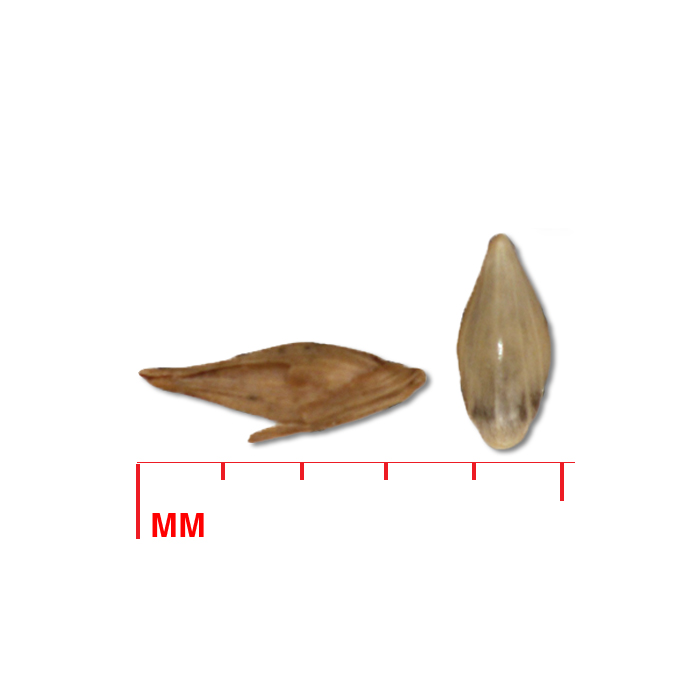
Description: Spikelet is two-flowered with the fertile floret uppermost, smooth, awnless. Grain is shiny, smooth, 3-4 mm (about 1/8 in) long.
Typical seed test
PLS: 91% (n = 9)
Purity: 97% (n = 9)
Germination: 49% (n = 7)
Dormancy: 44% (n = 7)
(averages obtained from n tests of purchased seed lots)
- Habitat and range
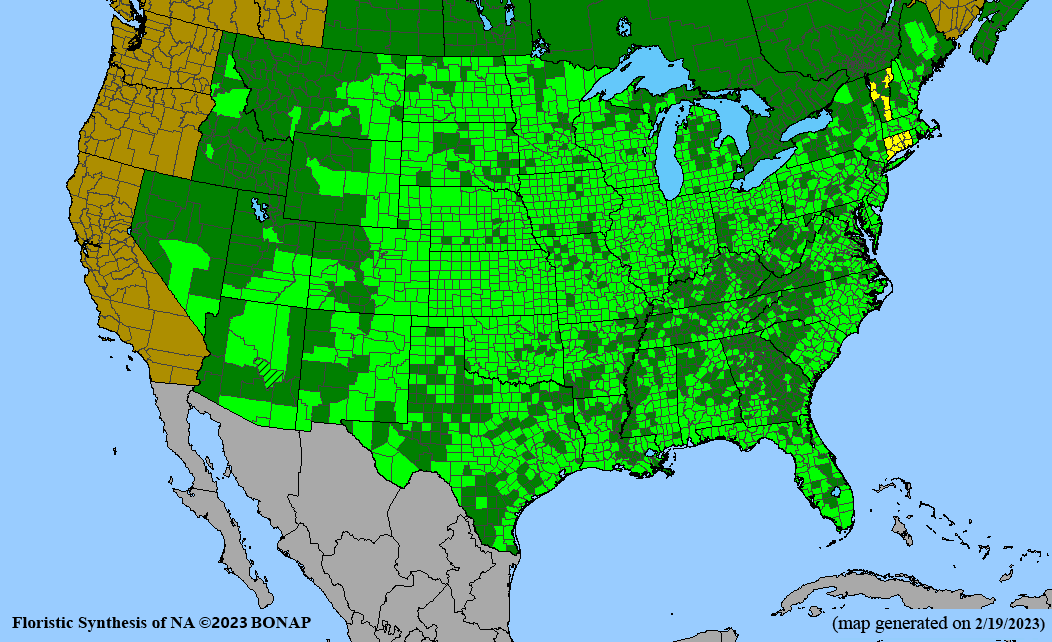
Habitat: Mesic to wet-mesic soil; full sun; prairies, savannas, streambanks, shorelines, dunes, woodland openings, roadsides, along railroads, ditches; may become abundant in disturbed prairies, much less common in high quality prairies. Wetland Indicator Status is Facultative (FAC) for the Midwest. Fertile, well-drained soils are preferred for seed production.
Conservation status: Global- G5, secure; Nevada- S2, imperiled; Vermont and Wyoming- S3, vulnerable (NatureServe)
General Comments
A number of cultivars of switchgrass have been developed for forage and seed production, winter hardiness, and grazing tolerance by the USDA-NRCS Plant Materials program. These cultivars have been planted widely as monocultures and in early prairie reconstructions. Because seed has been commercially available at affordable prices for decades, it was usually seeded heavily and tended to dominate stands. For these reasons it has been considered aggressive. Switchgrass can form dense colonies on lowland prairies, but is usually uncommon on high-quality remnant upland prairies and tends to occur in isolated patches near disturbance activities such as gopher mounds (Weaver 1954). Switchgrass establishes readily from seed, and is relatively easy to harvest and clean.
Recommendations for Seed Production
- Establishment for seed production
Direct seeding
Row spacing: 36 in 24 in 12 in Solid Stand PLS lbs/acre: 2.6 3.5 6.0 6.0 Seeding depth: 1/4 in
Seeding method: Native seed drill or broadcast seed and cultipack for solid stand.
Seeding time: Spring
Weed control: Prepare clean, firm, weed free seedbed prior to seeding.
Greenhouse
Seed pre-treatment: Moist stratify seed for 4 weeks to improve germination.
Sowing: Sow seed in greenhouse two months before the last frost free date at 1/4 in depth.
Transplanting: Transplant after all danger of frost into rows convenient for tillage equipment.
- Stand management
Weeds: Mow stands high (6-12 in) first growing season to prevent weed canopy from shading seedlings. Broadleaf herbicides can be used to control broadleaf weeds in established stands. Switchgrass is atrazine resistant, and can be applied at the label rate at planting time. Read and follow label instructions.
Pests: None noted.
Diseases: Seed smut, if left unchecked, can seriously decrease seed yields on switchgrass. The smut is caused by a fungus, Tilletia maclaganii. Glumes may exhibit an uncharacteristic purple coloration, and seeds are replaced by fungal spores that are red-orange when immature turning dark brown at maturity. Fields may need to be destroyed or relocated if diseased (NRCS 2003).
- Seed production
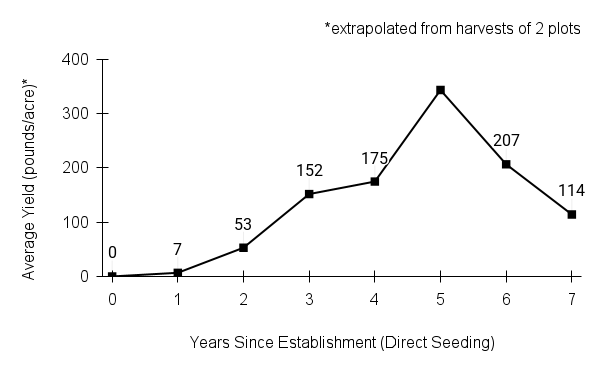 First harvest: Flowering and seed set end of first growing season from greenhouse grown transplants, second growing season from direct seeding.
Yield: 150-350 bulk pounds/acre (per acre yields extrapolated based on harvests of 2 plots)
Stand life: Stands should persist 10-15 years or more. Good seed production second year and after.
Flowering date: late July - early September in northern Iowa
Seed maturity/Harvest date: September in northern Iowa
Seed retention: Shattering begins in late September to early October
Harvest date range at TPC (2003-2010): Sept 16 - Nov 2
Recommended harvest method: Combine at hard dough stage before significant shattering has occurred.
- Seed cleaning and storage
Cleaning process: Pre-clean air-dried material by scalping thru 1/2 in and 1/4 in mesh to remove large particles. Brush to remove all floral parts from the grain, air-screen to clean.
Seed storage: cool/dry (33-50° F, 30-50% RH)
Released Germplasm
Source Identified material: Natural Selections/Iowa Ecotype Projects Zones 1 (northern Iowa), 2 (central Iowa), and 3 (southern Iowa)
Cultivated varieties (cultivars): Mid-west adapted include Blackwell (KS), Cave-In-Rock (IL), Dacotah, Forestburg (ND), Nebraska 28 (NE), Shawnee (MO)
- References
Chayka, K. (n.d.). Panicum virgatum (switchgrass). Minnesota Wildflowers. https://www.minnesotawildflowers.info/grass-sedge-rush/switchgrass
Freckmann, R. W. & Lelong, M. G. (2021, May 11). Panicum virgatum L. Flora of North America. http://floranorthamerica.org/Panicum_virgatum
Hilty, J. (2019). Switch grass - Panicum virgatum. Illinois Wildflowers. https://www.illinoiswildflowers.info/grasses/plants/switchgrass.htm
Houseal, G. A. (2007). Grasses warm season. In G. A. Houseal (Eds.), Tallgrass Prairie Center’s native seed production manual (pp. 70–71). Tallgrass Prairie Center - University of Northern Iowa.
Kartesz, J.T., The Biota of North America Program (BONAP). 2023. North American Plant Atlas. (http://bonap.net/napa). Chapel Hill, N.C. [maps generated from Kartesz, J.T. 2023. Floristic Synthesis of North America, Version 1.0. Biota of North America Program (BONAP). (in press)]
NatureServe. 2024. NatureServe Network Biodiversity Location Data accessed through NatureServe Explorer [web application]. NatureServe, Arlington, Virginia. Available https://explorer.natureserve.org/. (Accessed: February 29, 2024).
USDA NRCS National Plant Data Team. (n.d.). Panicum virgatum L. USDA plants database. https://plants.usda.gov/home/plantProfile?symbol=PAVI2
Species Guide Updated 12/5/2025