Rocky Mountain blazing star
Rocky Mountain blazing star dickeye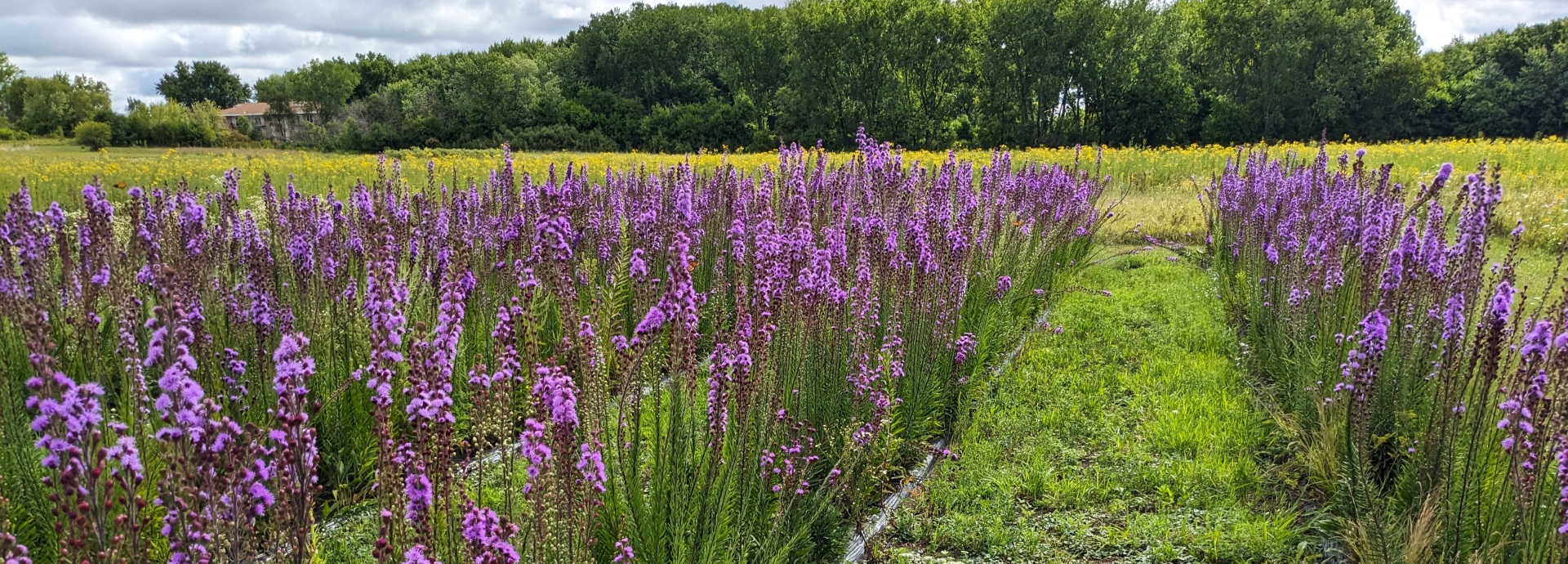
Liatris ligulistylis, (A. Nelson) K. Schum.
Alternate Common Names: northern plains gayfeather, meadow blazing star, strap-style gayfeather, northern plains blazing star, showy blazing-star
Scientific Synonym: Lacinaria ligulistylis A. Nelson
Family: aster or sunflower family (Asteraceae)
Functional Group: forbs (wildflowers)
Description
- Life cycle and growth form
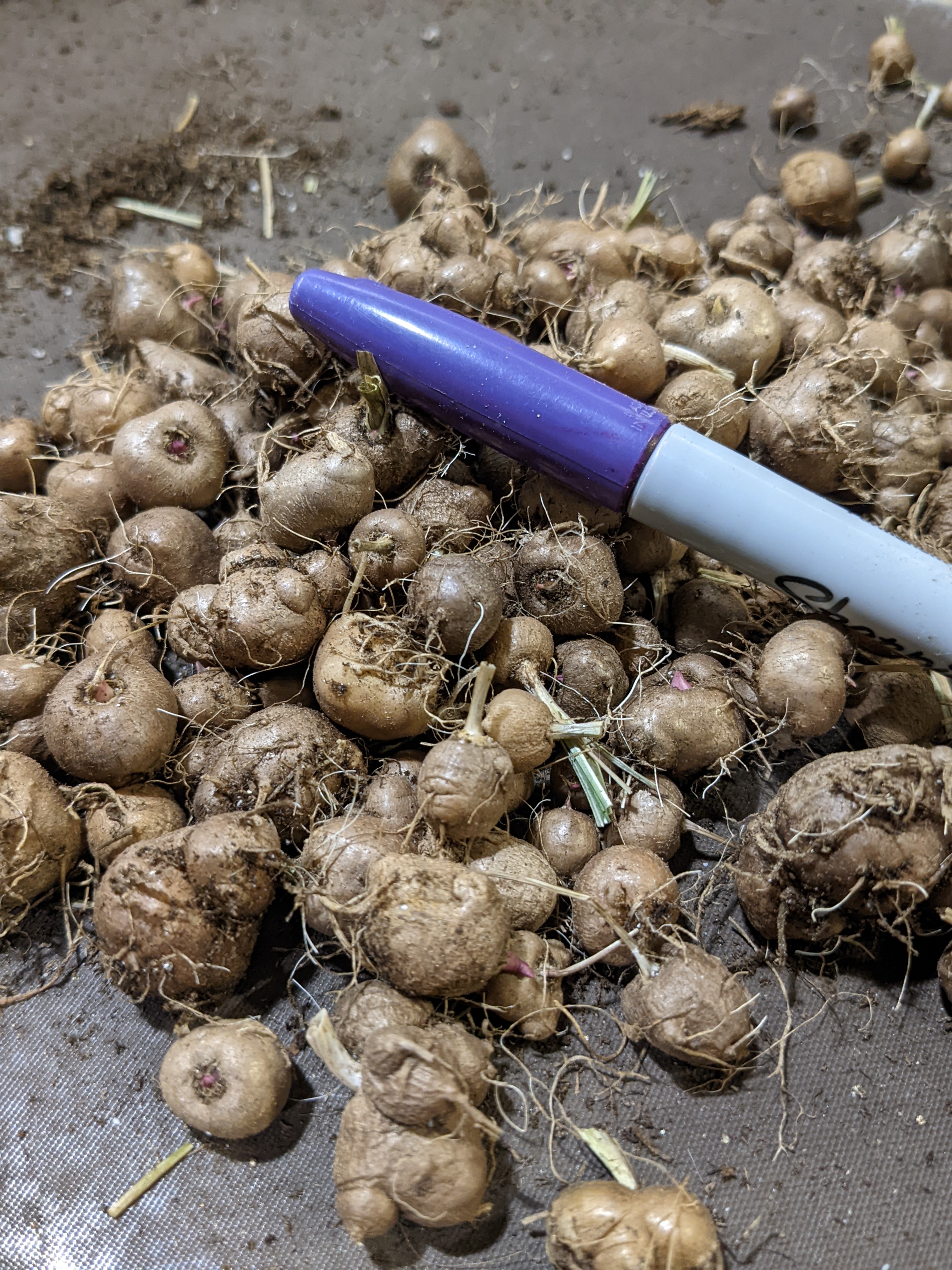
Perennial forming tight clumps from woody corms that can be divided; short-lived (3-4 years) in production.
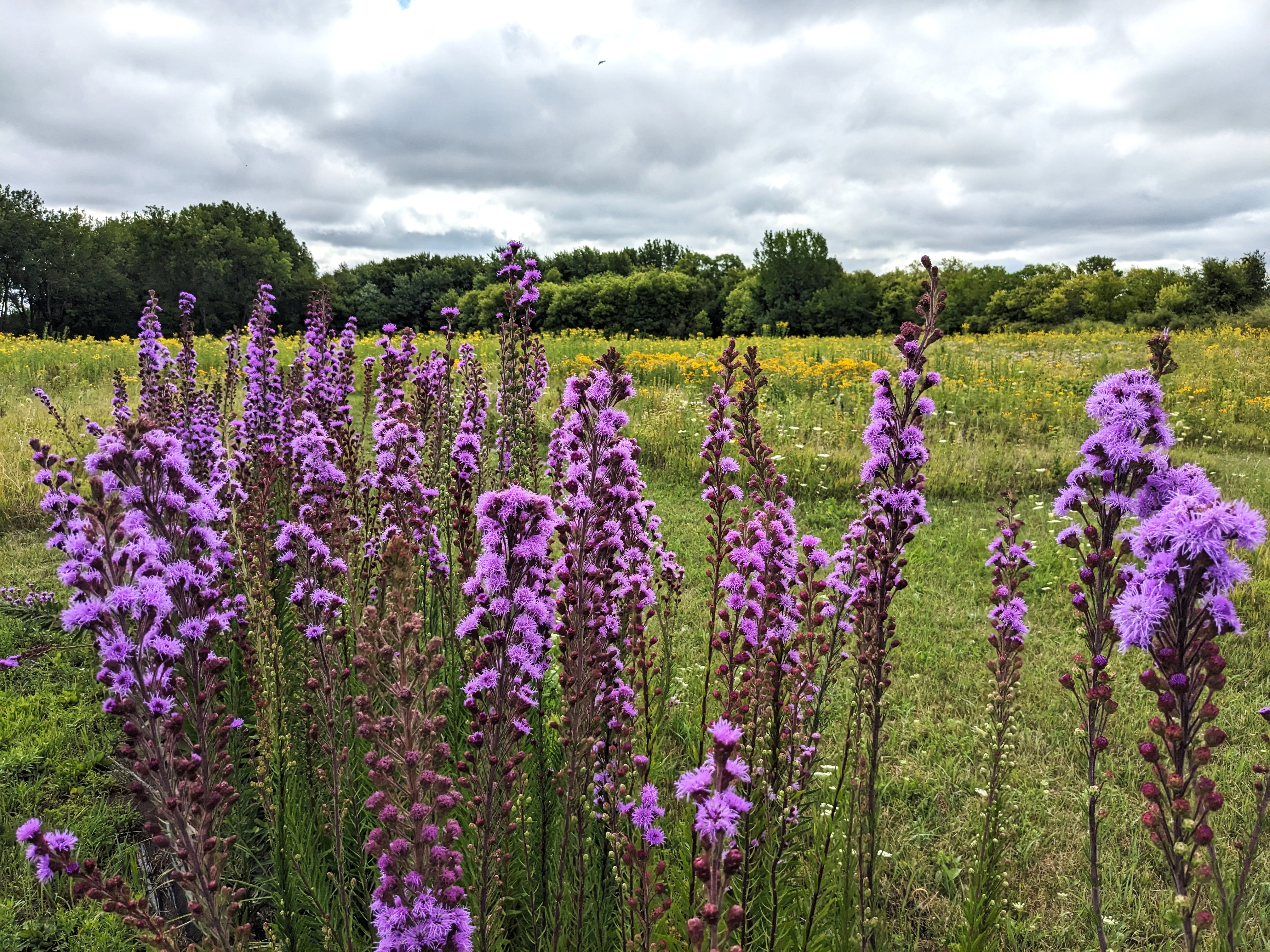
Height: 1-4 ft
- Leaves and stem
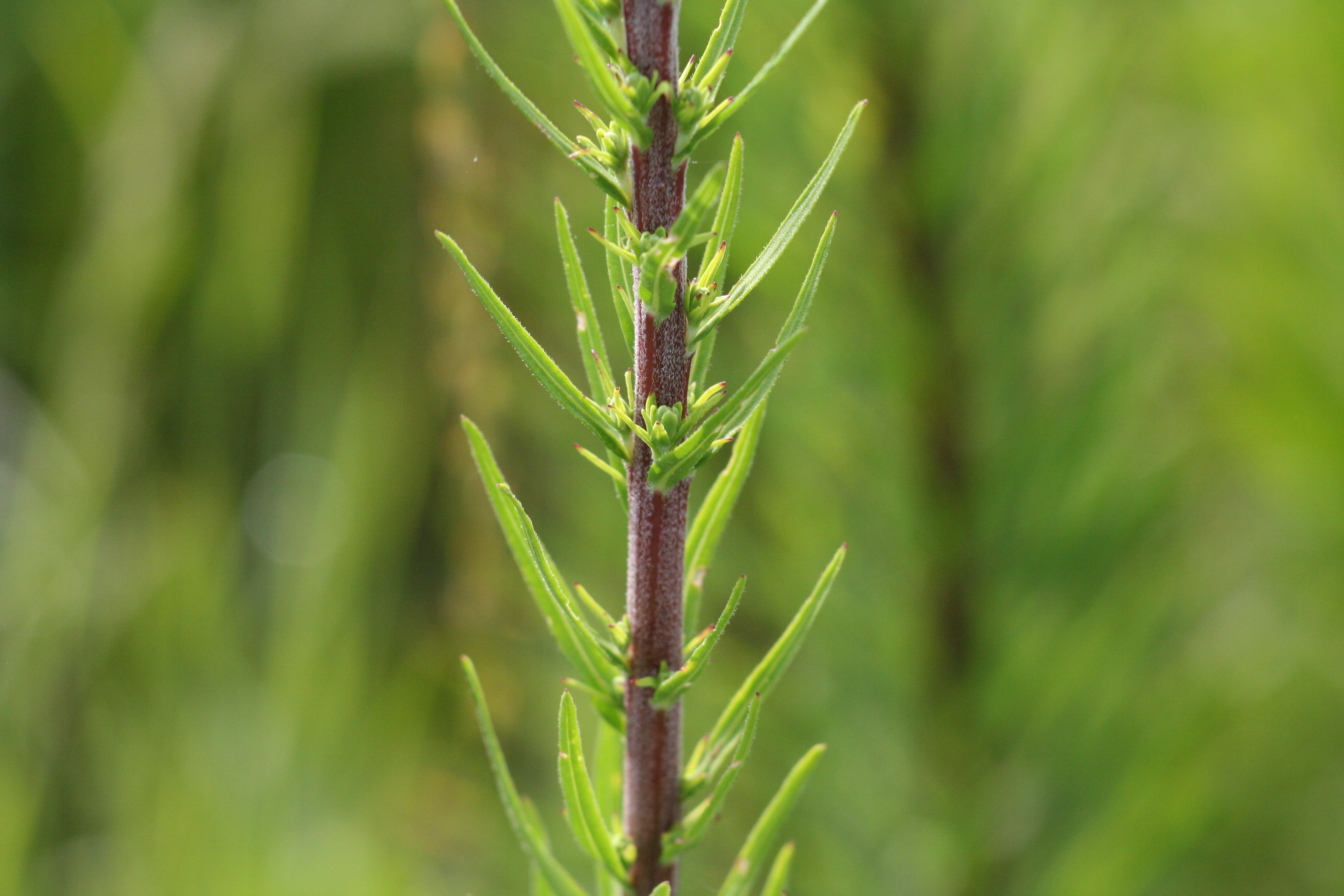
Leaves lanceolate, alternate (but appearing nearly whorled), 3-5 in long (basal leaves longer), leaves toothless but with fine, short hairs; stems unbranched, green to deep purplish red, and often covered in short, white hairs.
- Flower, fruit and seedhead
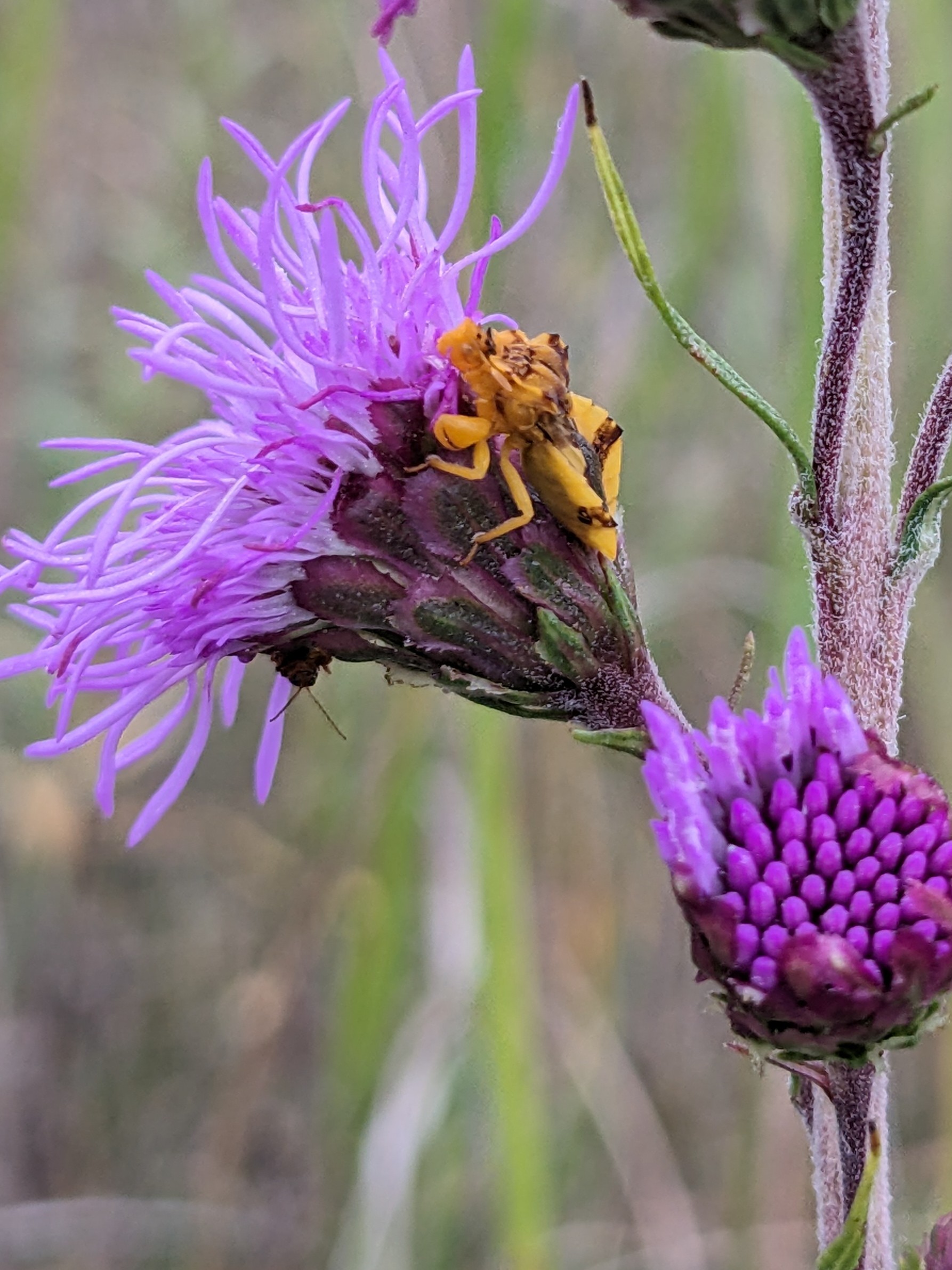
Flower: Flowers (disk florets) bright magenta (rarely white) with long, fuzzy styles exerted, in distinct 1/2 in wide composite heads (“buttons”) on stalks mostly 3/4 in or longer in a long raceme (up to 30” in production settings); overlapping bracts on the backs of the heads (fillaries) are purple-fringed and mostly flattened at maturity.
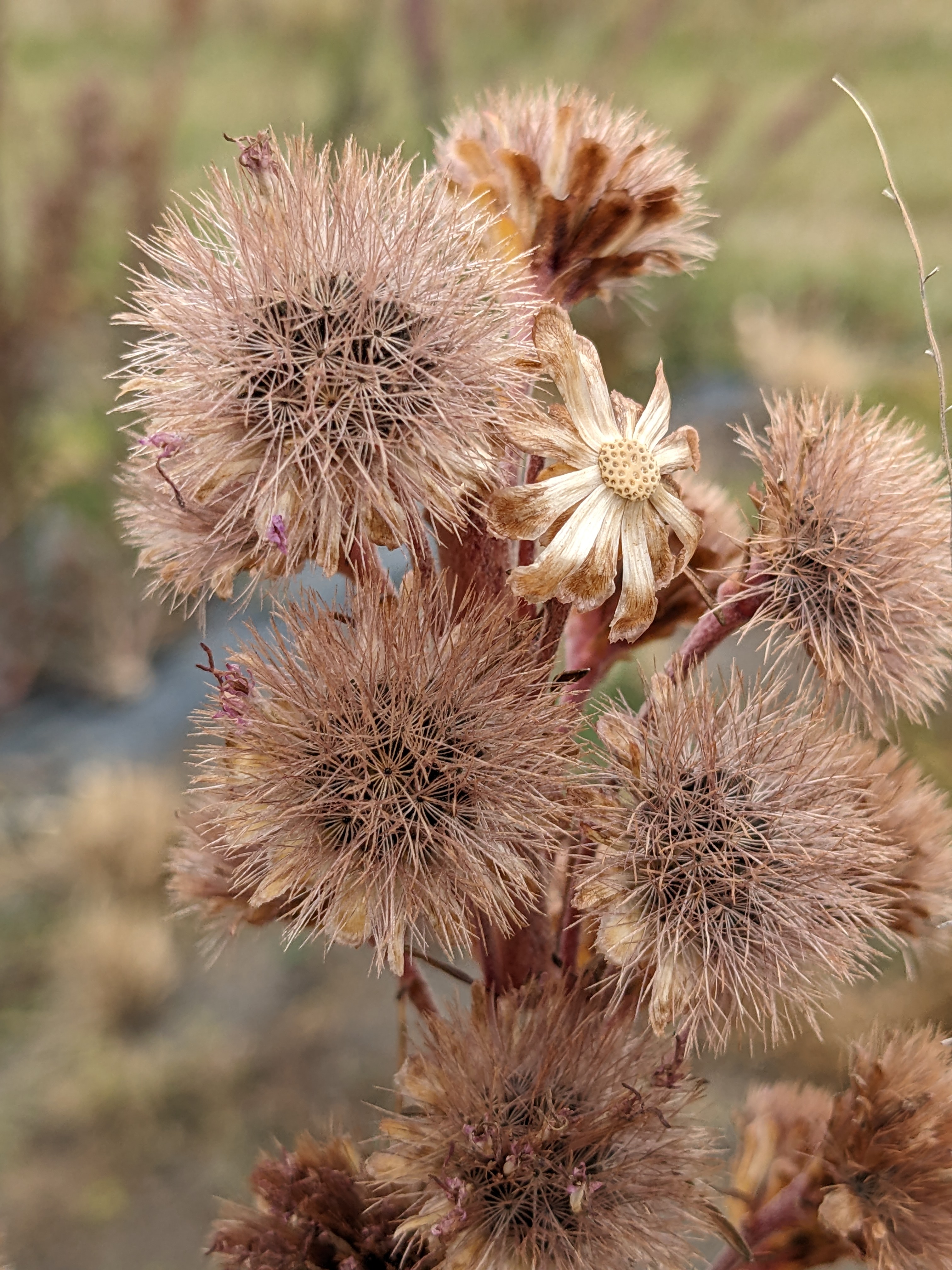
Fruit/seed head: Each floret matures into an achene with a fluffy, tan to brown pappus.
Pollination: Insects, including large butterflies and skippers, diverse species of bees, and moths.
- Seed
Seed characteristics
Seed weight:
Seeds per ounce: 10,000 (IA NRCS)
1000 seed weight: 1.62g (Seed Information Database)
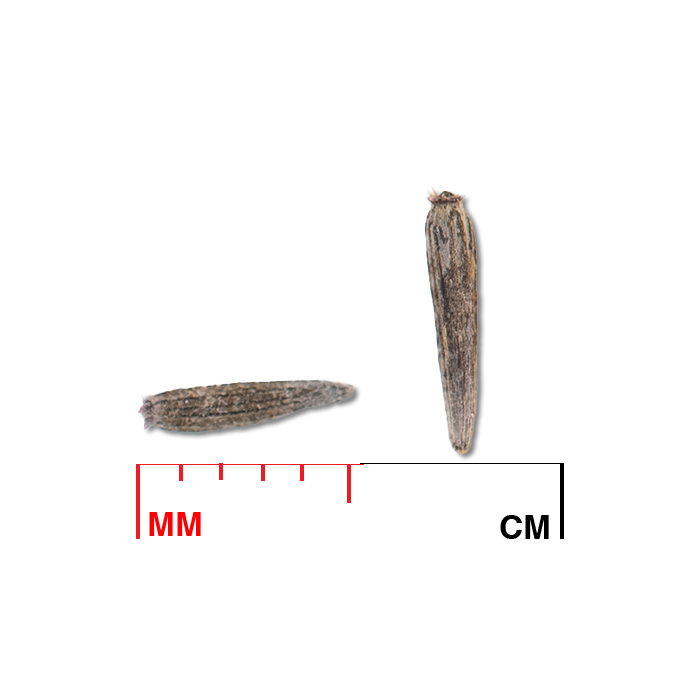
Description: “Seeds” are achenes, dark grayish brown, ridged, about 5 mm long, with tufts of light brown hairs (pappus).
Typical seed test
PLS: 84% (n = 4)
Purity: 93% (n = 4)
Germination: 32% (n = 3)
Dormancy: 45% (n = 4)
(averages obtained from n tests of purchased seed lots)
- Habitat and range
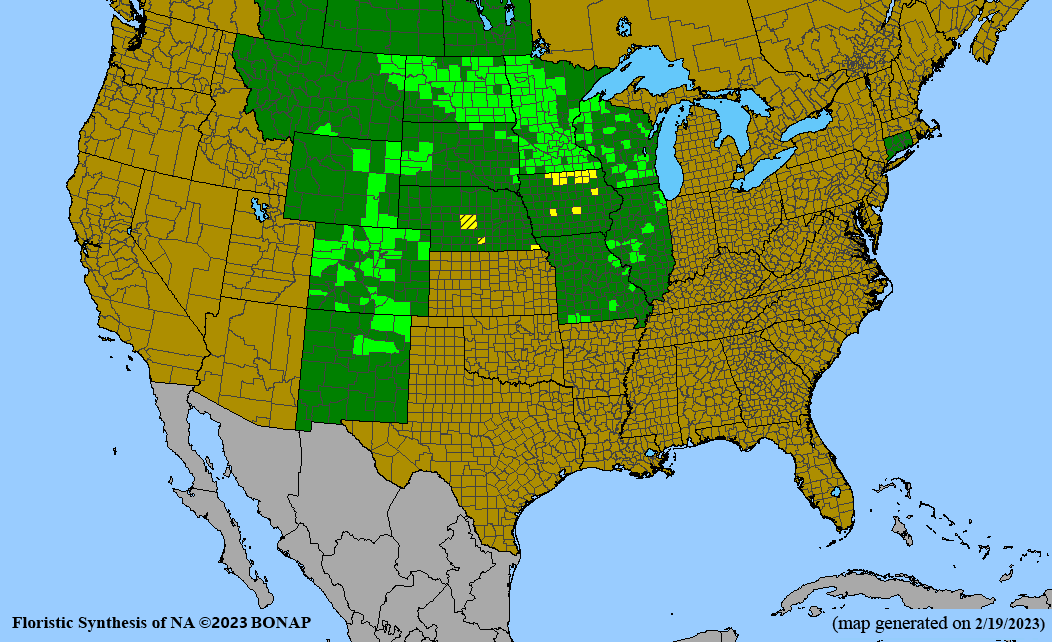
Habitat: Mesic to moist soil; full sun; prairies, meadows, streambanks, roadsides; Wetland Indicator Status is Facultative Upland (FACU) for the Midwest. We have grown this species in wet-mesic soils without irrigation.
Conservation status: Global- G5, secure; Nebraska- S1, critically imperiled; Colorado and Wyoming- S2, imperiled; Iowa- S3, vulnerable; in all other states within its natural range, status is S4 (apparently secure) to S5 (secure) or unranked (NatureServe).
General Comments
Monarchs seem to prefer the flowers of Rocky Mountain blazing star (or “meadow blazing star”) to most other nectar sources, even the very similar flowers of tall blazing star (L. aspera). Heads of L. ligulistylis are usually borne on stalks at least one inch long, while those of L. aspera are stalkless or nearly so, although this trait can be expressed differently in production populations where plants are grown with little competition. A more reliable character is the bracts (phyllaries) on the underside of each head: in L. ligulistylis, phyllaries are purple-fringed and become increasingly flattened as the heads mature, while in L. aspera, the edges of phyllaries are mostly white and distinctly cupped inward. Species in the genus Liatris are known to hybridize, therefore proper isolation should be maintained between related species to avoid hybrid seed production (Levin 1968, Menhusen 1972).
Recommendations for Seed Production
- Establishment for seed production
Direct seeding
We do not have experience with direct seeding this species for seed production.
Greenhouse
Seed pre-treatment: Cold/moist stratification for 60 days. Seeds of Liatris species have a tendency to mold in stratification, especially in seedlots with a higher proportion of nonviable seed. Some growers add fungicide to stratification media to prevent this. Periodically freezing the seed and stratification media for a day or two helps to prevent or slow mold growth during stratification.
Sowing: Sow in greenhouse about 2-3 months before the last frost. Lightly cover the seed with germination mix. Be careful not to overwater the flats once the seedlings emerge, as damping off can be an issue. Seedlings can be dibbled into plugs when the first true leaf is well expanded. At this point, the root system is adequately branched to survive even if some root damage occurs in dibbling. The seedlings grow a small corm in the first season, and the rest of the root system is small, so that the plugs are often delicate. Some growers sow a short-statured native grass with Liatris seedlings to produce a firmer plug. Alternatively, seedlings can be grown for a year in large trays or raised beds, and overwintered corms can be dug the following spring for rapid growth in large plugs or directly transplanted into production rows.
Transplanting: When growth of seedlings is sufficient to produce a plug that holds together, take flats outside to harden off, then transplant at 8-12 inch intervals in prepared beds after danger of frost.
- Stand management
Weeds: Prepare clean, weed-free beds and use plastic mulch to suppress weeds in the first growing season. Remove mulch after the first year to avoid moisture buildup. Liatris plants are sensitive to root disturbance, especially when flower stalks are forming, so avoid methods of weeding that disturb the soil. Before the Liatris seed heads mature, we hand clip weeds that could contaminate the seed crop.
Pests: Sometimes first-year corms are exposed by frost-heaving over the winter, and may be eaten by voles. Deer like to eat the developing flower stalks, there are insect larvae that feed within seed heads, and goldfinches feed eagerly on the seedheads just before they reach maturity. We have found that installing netting over the rows when they are just past peak flowering reduces seed loss to goldfinches. Other growers employ chemical repellants and/or visual/acoustic deterrents.
Diseases: The plants are susceptible to root or crown rot, but we have not identified the specific pathogens involved.
Hybridization risk: Species in the genus Liatris are known to hybridize, therefore proper isolation should be maintained between related species to avoid hybrid seed production (Levin 1968, Menhusen 1972).
- Seed production
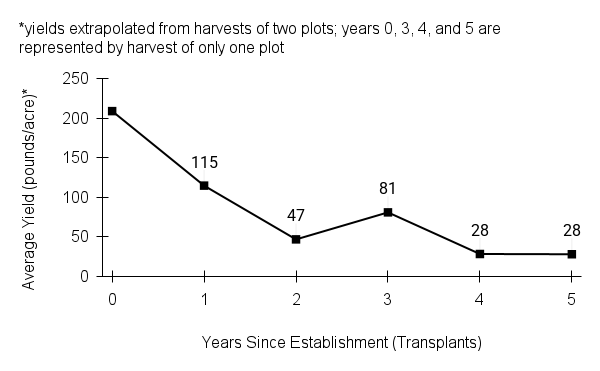
First harvest: A small harvest can be expected in the first year from seedling transplants. Large plugs grown from corms started in the previous year produce a peak harvest in the first year in the field.
Yield/acre: 50-200 pounds per acre (extrapolated from harvests of two plots)
Stand life: Three to four years of production can be expected, after which yields decline. Yields can vary greatly depending on seed predation by birds.
Flowering date: late July to early September in northern Iowa
Seed maturity/Harvest date: mid September to early October
Seed retention: Fairly high risk of shattering once pappus is fluffy.
Harvest date range at TPC (2016-2023): September 7 - October 8 (later dates are likely in the establishment year)
Recommended harvest method: For small stands, hand pick as the stalks ripen and lay them in a sheltered place to ripen and dry. For larger stands, hand harvest early ripening individuals, then mechanically harvest at peak maturity. Since heads mature from the bottom up on each stalk, there may be immature seed present at the top of a plant while seed is being lost from heads lower down.
- Seed cleaning and storage
Cleaning process: Pre-clean by scalping through 1/2 in mesh to remove large particles and make the material flowable, brush gently with soft bristles to remove fluff (pappus), using care not to damage the achenes, then air-screen. A simple test can reveal if small but filled seeds are being lost through aspiration: count out a sample of seeds and crush them on a scrap of brown paper using the end of a pen. Filled seeds leave a noticeable wet or greasy spot on the paper. If a substantial amount of filled seed is in the aspiration fraction, re-clean it with adjusted air settings.
Seed storage: cool/dry (33-50° F, 30-50% RH)
Released Germplasm
Source Identified material: Natural Selections/Iowa Ecotype Zone 1 (northern Iowa)
- References
Chayka, K. (n.d.). Liatris ligulistylis (northern plains blazing star). Minnesota Wildflowers. https://www.minnesotawildflowers.info/flower/northern-plains-blazing-star
Cochrane, T. S., Elliot, K., & Lipke, C. S. (2014). Northern plains blazing-star. In Prairie plants of the University of Wisconsin-Madison Arboretum (3rd ed., p. 97). University of Wisconsin-Madison Arboretum.
Kartesz, J.T., The Biota of North America Program (BONAP). 2023. North American Plant Atlas. (http://bonap.net/napa). Chapel Hill, N.C. [maps generated from Kartesz, J.T. 2023. Floristic Synthesis of North America, Version 1.0. Biota of North America Program (BONAP). (in press)]
Levin, D.A. (1968). The Structure of a Polyspecies Hybrid Swarm in Liatris. Evolution, 22(2), 352-372. https://doi.org/10.1111/j.1558-5646.1968.tb05903.x
Menhusen, B.R. (1972). Ecology of the Prairie Species of the Genus Liatris. Third Midwest Prairie Conference Proceedings. Manhattan, Kan.: Division of Biology, Kansas State University. https://search.library.wisc.edu/digital/AL7JMUVRYYXDZO8S/pages/A56MVY3FXXELEL8L
NatureServe. 2024. NatureServe Network Biodiversity Location Data accessed through NatureServe Explorer [web application]. NatureServe, Arlington, Virginia. Available https://explorer.natureserve.org/. (Accessed: February 29, 2024).
USDA NRCS National Plant Data Team. (n.d.). Liatris ligulistylis (A. Nelson) K. Schum. USDA plants database. https://plants.usda.gov/home/plantProfile?symbol=LILI
Species Guide Updated 02/03/2026