woolgrass
woolgrass dickeye
Scirpus cyperinus, (L.) Kunth
Alternate Common Names: common woolsedge, woolgrass bulrush, cottongrass bulrush
Scientific Synonyms: Scirpus cyperinus (L.) Kunth var. condensatus Fernald, Scirpus cyperinus (L.) Kunth var. eriophorum (Michx.) Kunth, Scirpus cyperinus (L.) Kunth var. laxus (A. Gray) Beetle, Scirpus cyperinus (L.) Kunth var. pelius Fernald, Scirpus cyperinus (L.) Kunth var. rubricosus (Fernald) Gilly, Scirpus eriophorum Michx., Scirpus rubricosus Fernald, Scirpus cyperinus (L.) Kunth var. andrewsii (Fernald) Fernald, Eriophorum cyperinum L.
Family: sedge family (Cyperaceae)
Functional Group: sedges and rushes
Description
- Life cycle and growth form
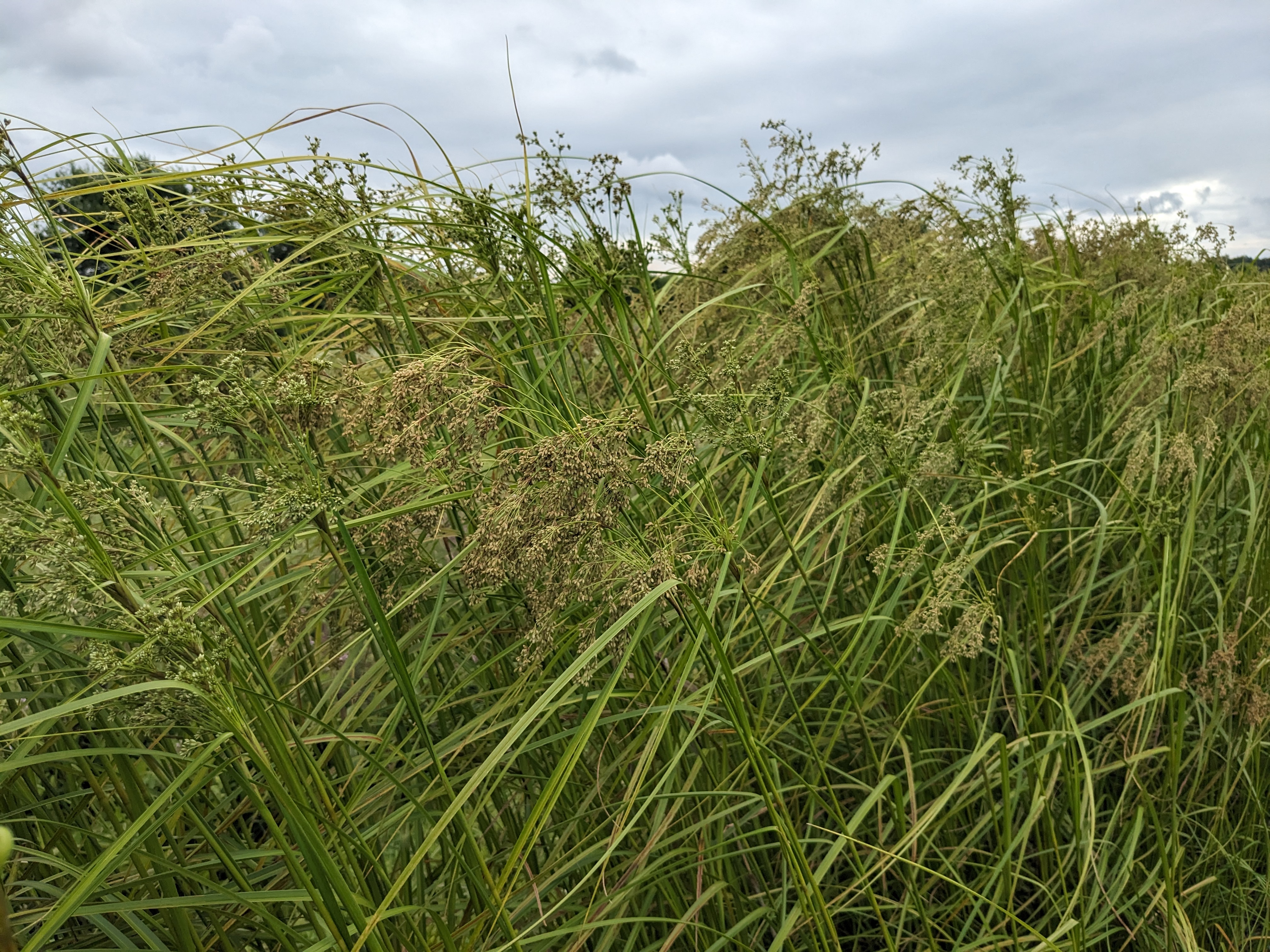
Perennial with short rhizomes, forming dense, leafy clumps with tall flowering culms.
Height: 3-6 ft
- Leaves and stem
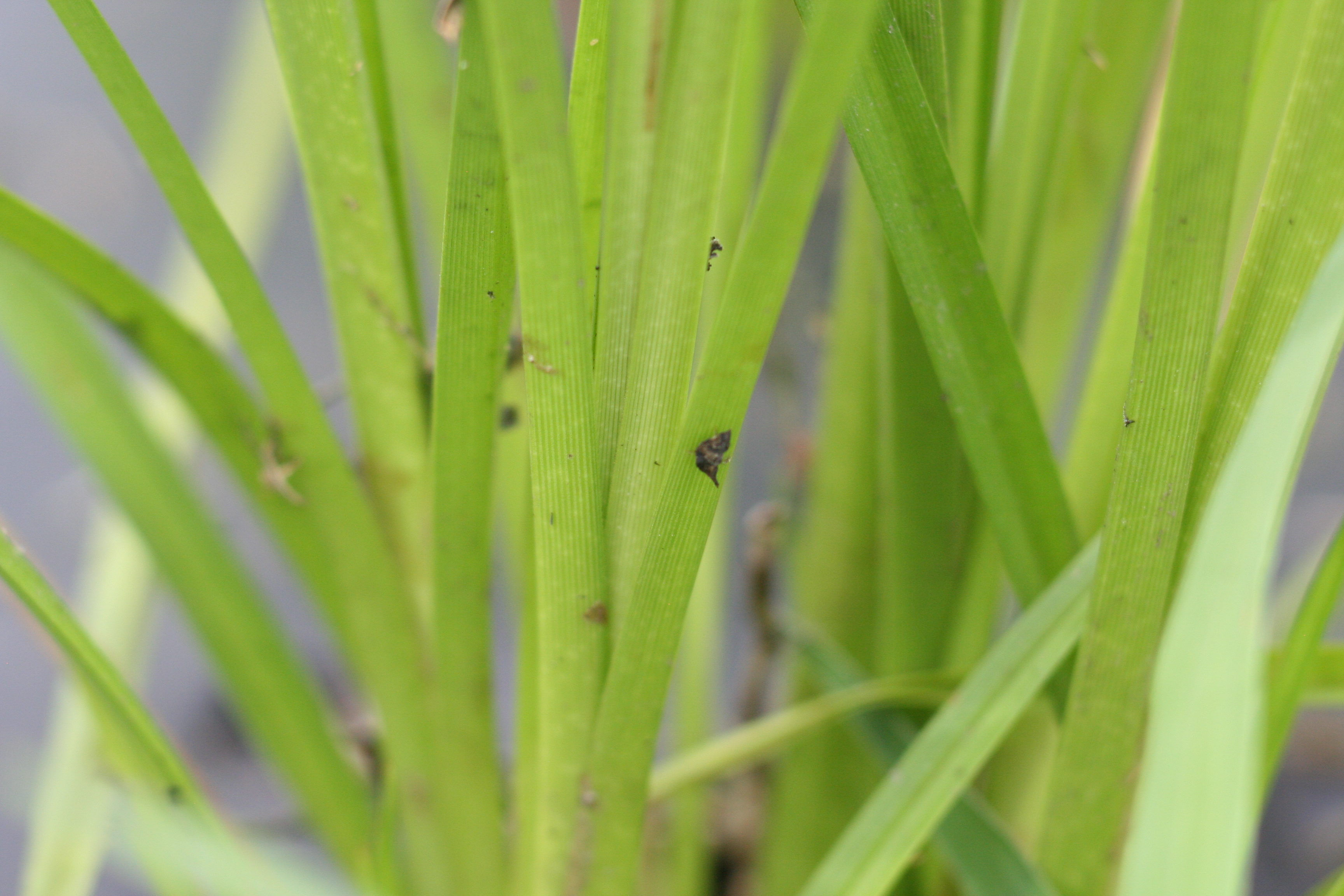
Leaves grass-like; flowering stems are smooth, round to subtly 3-sided, and sturdy; old leaves accumulate to form tussocks.
- Flower, fruit and seedhead
Flower/fruit/seed head: Clusters of 3-7 egg-shaped spikelets (each 1/3 in long) at the ends of slender branches in nodding, compound panicles 3-6 in long; spikelets are grayish green when in flower but mature to reddish brown; curly hairs on seeds expand when mature, making ripe seedheads look wooly.
Pollination: Wind

- Seed
Seed characteristics
Seed weight:
Seeds per ounce: 1,700,000 (IA NRCS)
1000 seed weight: 0.04g (Seed Information Database)
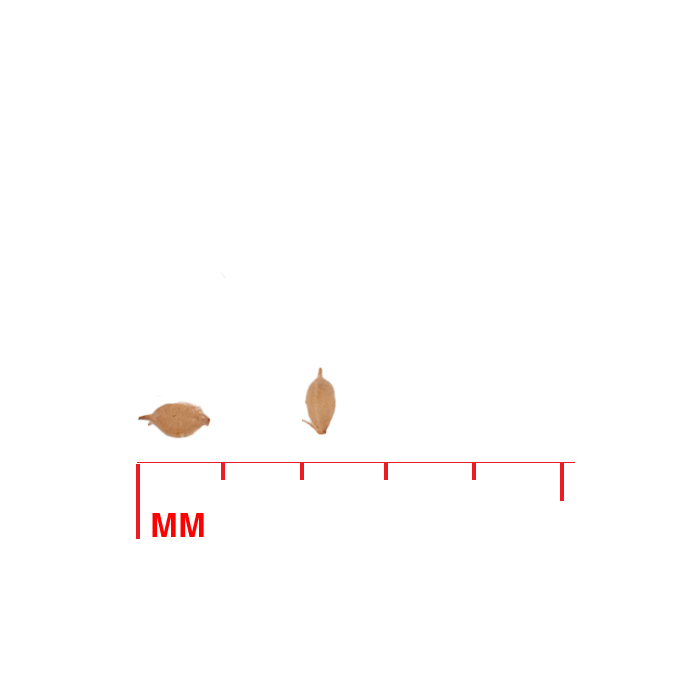
Description: “Seeds” are achenes that are 3-sided, oval-elliptical, pale gold, and tiny (less than 1 mm long and 0.5 mm wide). There is a tuft of wooly hairs at the base of each achene.
Typical seed test
PLS: 91%
Purity: 99%
Germination: 0%
Dormancy: 0%
(averages obtained from 1 tests of purchased seed lots)
- Habitat and range
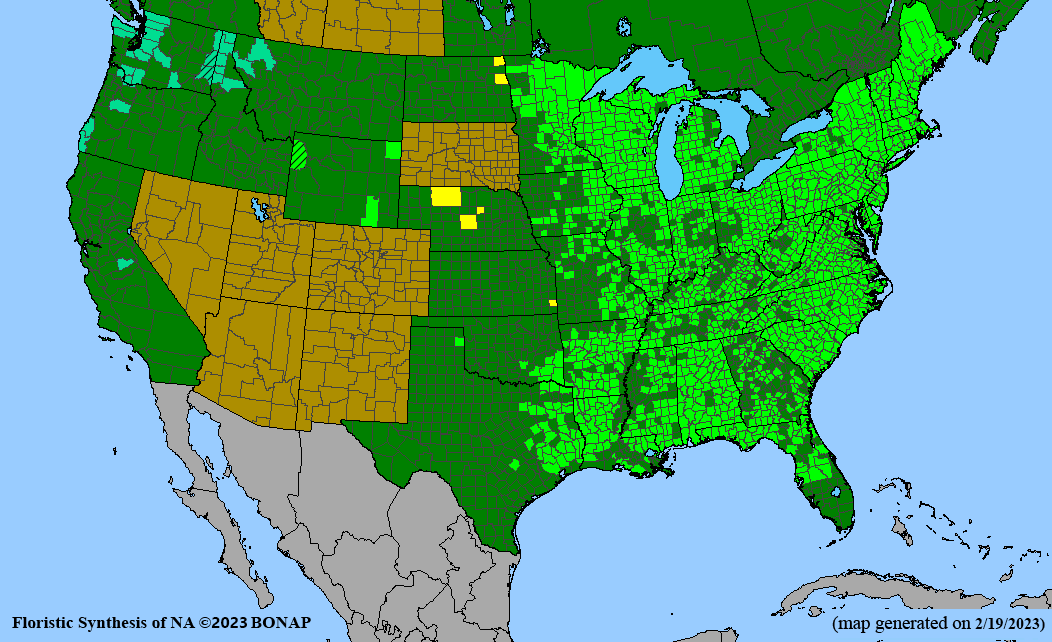
Habitat: Moist to wet soil; partial to full sun; marshes, shorelines, swamps, seeps, sedge meadows, pond edges, ditches; Wetland Indicator Status is Obligate Wetland (OBL) for the Midwest; irrigation is needed for seed production.
Conservation status: Global- G5, secure; Nebraska- S1, critically imperiled; Kansas and Wyoming- S2, imperiled; Idaho and Montana- S3, vulnerable; in all other states within its natural range, status is S4 (apparently secure) to S5 (secure) or unranked (NatureServe).
General Comments
The combination of wooly seedheads and clustered spikelets help distinguish woolgrass from similar bulrushes in the genus Scirpus. The robust, tussocky clumps of woolgrass protect soil from erosion in the wetlands and ditches where it thrives. Its leaves, stems, and seedheads provide food and nesting sites for waterfowl and other wildlife. This species is not difficult to propagate from seed, and grows well under irrigation, but the wooly hairs around its “seeds” (achenes) present some challenges for seed harvest and cleaning.
Recommendations for Seed Production
- Establishment for seed production
Direct seeding
Not recommended for this species.
Greenhouse
Seed pre-treatment: Cold/moist stratification for 30 days.
Sowing: About 3 months before the last frost, surface sow in germination flats (our preferred method) or directly into plugs. Aim for 2-3 seeds per cell, but this can be difficult to judge with such tiny seeds. In either type of container, use caution when watering to avoid splashing seed from the soil surface. Seedlings are extremely tiny but fast growing. If started in germination flats, they can be dibbled into plugs using forceps.
Transplanting: When seedlings have grown into well-rooted plugs, move them outside to harden off, then transplant into irrigated, plasticulture rows at 12 inch spacing.
- Stand management
Weeds: Prepare clean, weed-free beds and use plastic mulch to suppress weeds in the establishment year. Plants are robust and leafy, suppressing many weeds. Mow or cultivate between rows. Hand rogue to remove problematic weeds.
Pests: None noted.
Diseases: None noted.
- Seed production
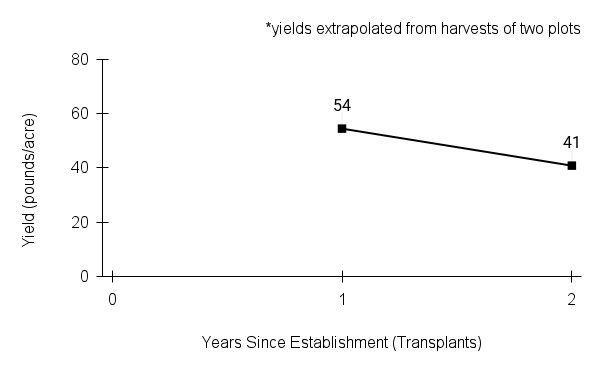 First harvest: Plants flower and set seed the year after planting.
Yield/acre: 40-60 pounds per acre (extrapolated from harvests of two production plots at TPC)
Stand life: Plants are likely long-lived, but we have not yet maintained plots for longer than three years. Yield from one plot declined from year 2 to year 3, and the plot was retired.
Flowering date: June in northern Iowa
Seed maturity/Harvest date: mid to late August in northern Iowa (the first harvest may occur later than normal)
Seed retention: Moderate risk of shattering when seedheads become “wooly.”
Harvest date range at TPC (2011-2025): August 14 - August 25
Recommended harvest method: Hand pick early maturing plants, then combine. We have had issues with the wooly hairs causing clumps to form on the combine sieves and pass out with the straw. We collected that material and passed it through a stationary combine to extract more seed.
- Seed cleaning and storage
Cleaning process: Brush with soft bristles to help break the wooly bristles from the achenes, then airscreen.
Seed storage: cool/dry (33-50° F, 30-50% RH)

Released Germplasm
Source Identified material: Natural Selections/Iowa Ecotype Zone Iowa
- References
Chayka, K. (n.d.). Scirpus cyperinus (woolgrass). Minnesota Wildflowers. https://www.minnesotawildflowers.info/grass-sedge-rush/woolgrass
Hilty, J. (2019). Wool grass - Scirpus cyperinus. Illinois Wildflowers. https://www.illinoiswildflowers.info/grasses/plants/wool_grass.htm
Kartesz, J.T., The Biota of North America Program (BONAP). 2023. North American Plant Atlas. (http://bonap.net/napa). Chapel Hill, N.C. [maps generated from Kartesz, J.T. 2023. Floristic Synthesis of North America, Version 1.0. Biota of North America Program (BONAP). (in press)]
NatureServe. 2024. NatureServe Network Biodiversity Location Data accessed through NatureServe Explorer [web application]. NatureServe, Arlington, Virginia. Available https://explorer.natureserve.org/. (Accessed: February 29, 2024).
Schultz, Jan; Beyer, Patty; Williams, Julie. 2001. Propagation protocol for production of Container (plug) Scirpus cyperinus (L.) Kunth plants USDA FS - Hiawatha National Forest Marquette, Michigan. In: Native Plant Network. URL: https://NativePlantNetwork.org (accessed 2026/01/05). US Department of Agriculture, Forest Service, National Center for Reforestation, Nurseries, and Genetic Resources.
USDA NRCS National Plant Data Team. (n.d.). Scirpus cyperinus (L.) Kunth. USDA plants database. https://plants.usda.gov/home/plantProfile?symbol=SCCY
Whittemore, A. T. & Shuyler, A. E. (2020, November 5). Scirpus cyperinus (Linnaeus) Kunth. Flora of North America. http://floranorthamerica.org/Scirpus_cyperinus
Species Guide Updated 1/5/2026