troublesome sedge
troublesome sedge dickeye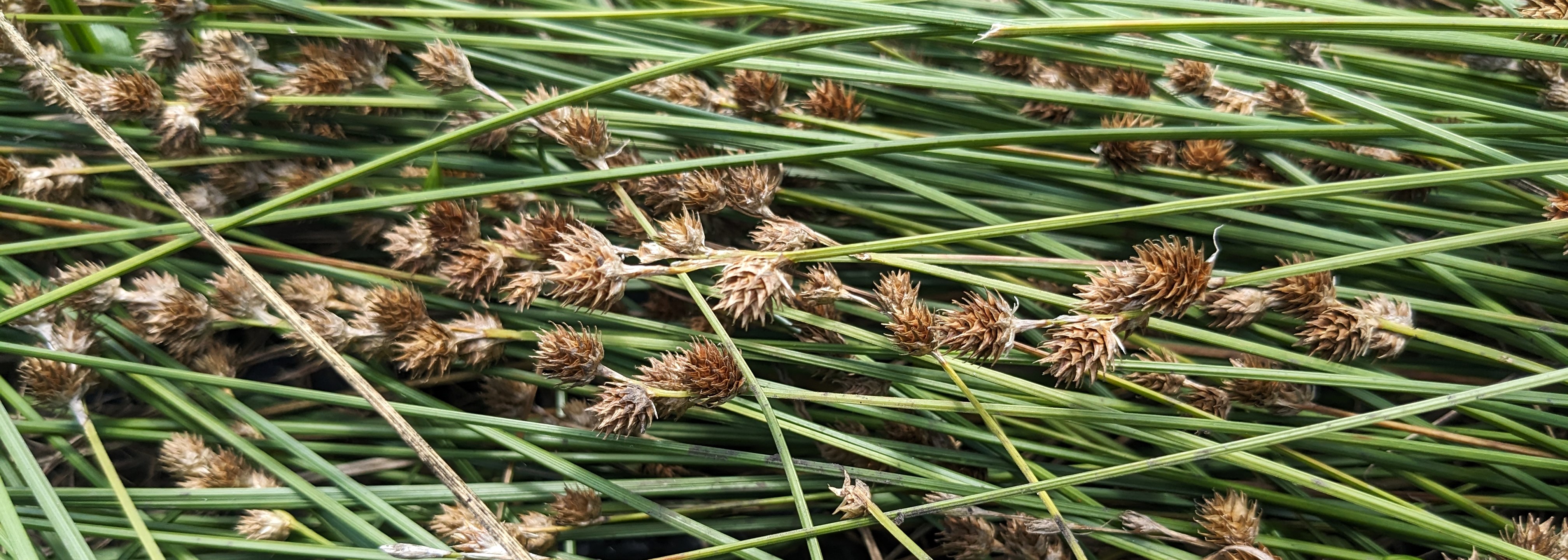
Carex molesta, Mack. ex Bright
Alternate Common Names: field oval sedge, pest sedge
Family: sedge family (Cyperaceae)
Functional Group: sedges and rushes
Description
- Life cycle and growth form
Perennial, clump-forming (cespitose) sedge, with fibrous roots.
Height: 1-3 ft

- Leaves and stem
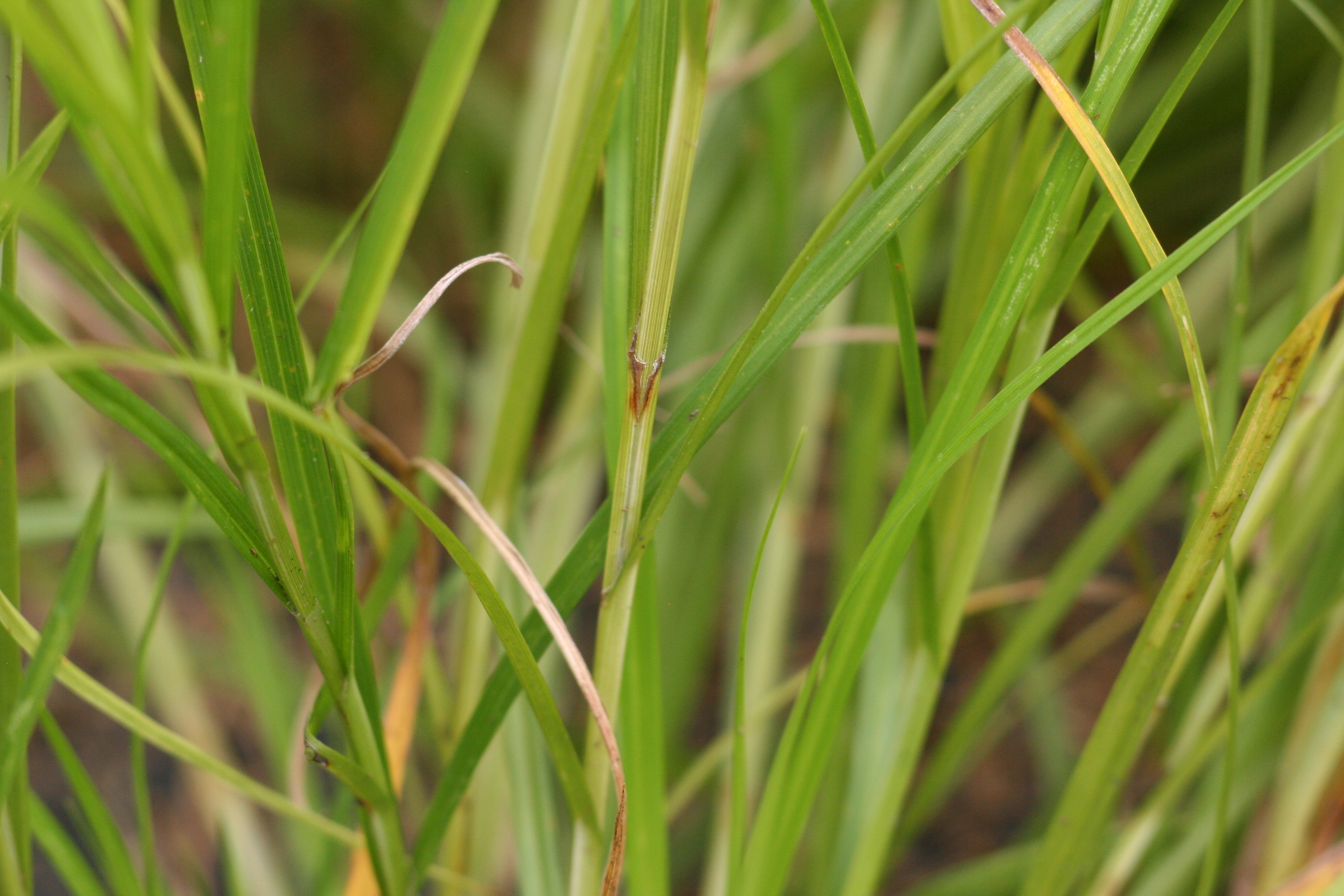
Leaves flat and hairless with rough margins, 1.5-4 (less than 1/4 in) mm wide, shorter than flowering stalks; top of sheath is ‘u’ or ‘v’ shaped and white, base of sheath is brown and somewhat fibrous; flowering culms are hairless and 3-sided.
- Flower, fruit and seedhead
Flower: Tiny greenish flowers are clustered into 2-5 nearly globular spikes, each about 1/3 in long, at the tip of a culm.
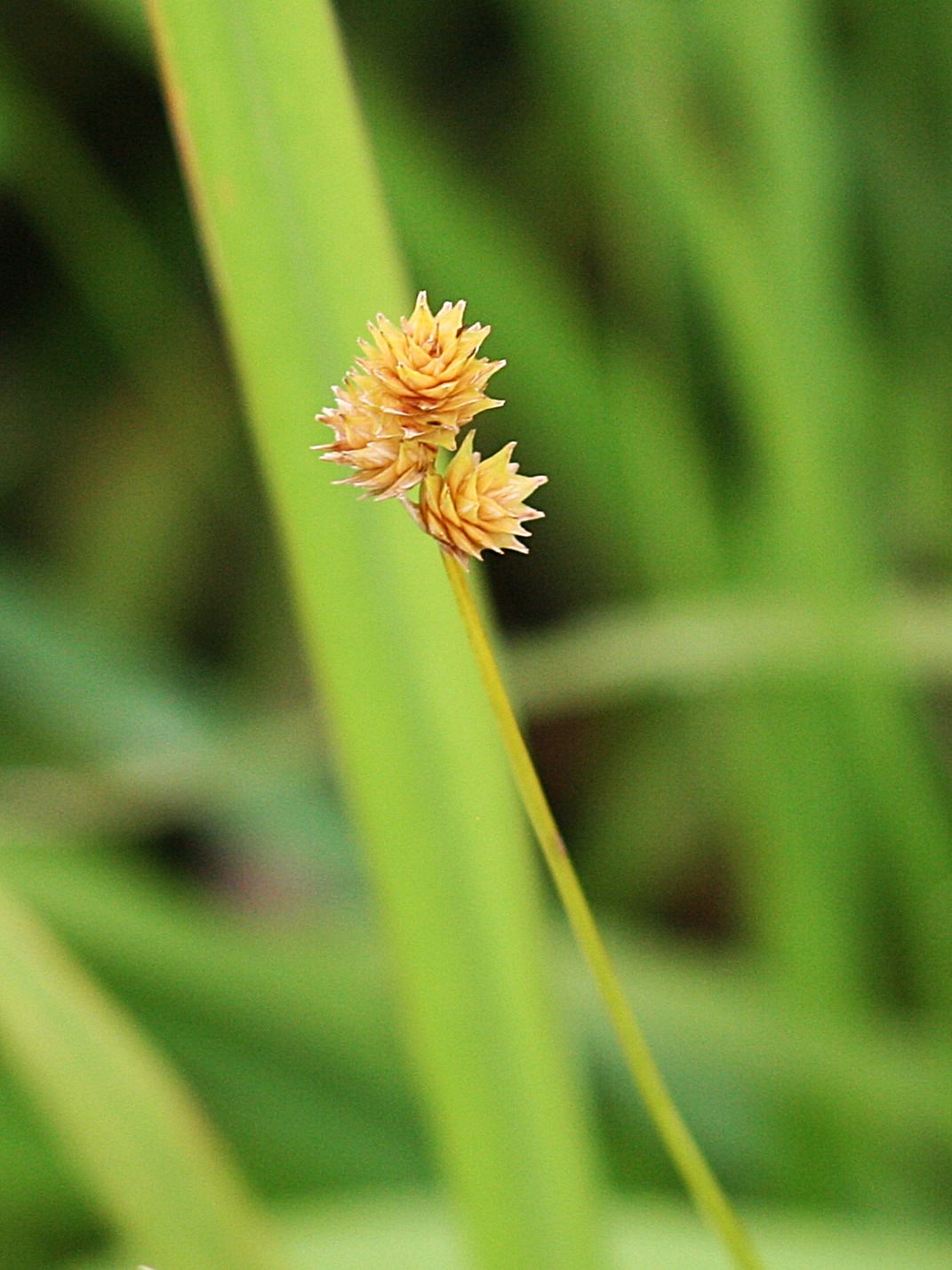
Fruit/seed head: Spikes mature to clusters of achenes, each wrapped in a perigynium, separated by delicate pistillate scales.
Pollination: Wind
Note: There are several excellent guides to the sedges of the Upper Midwest region, and it is worth having a selection of them on your bookshelf to use as references, as questions about the identity of sedges often arise, even in carefully planted production fields. This description is intended as an introduction, not a complete, definitive guide.
- Seed
Seed characteristics
Seed weight:
Seeds per ounce: 25,000 (IA NRCS)
1000 seed weight: 1.11g (Seed Information Database)
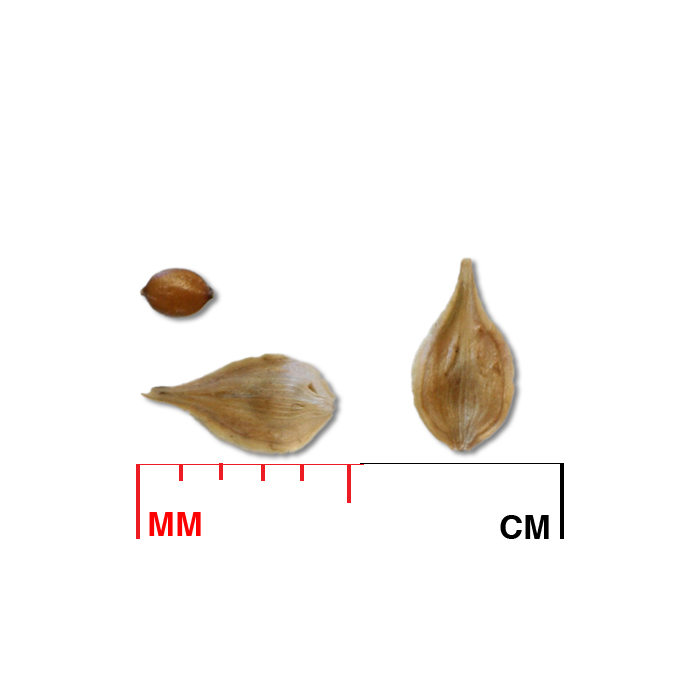
Description: “Seed” is a two-sided achene, brown, elliptic, 0.9-1.3 mm wide and 1.3-1.7 mm long, enclosed in a flattened, ovate, brown to greenish perigynium, 1.8-3 mm wide and 3.3-5 mm long, with a beak (0.7-1.6 mm long) and pale, flattened wing.
Typical seed test
PLS: 93% (n = 11)
Purity: 98% (n = 11)
Germination: 29% (n = 9)
Dormancy: 57% (n = 9)
(averages obtained from n tests of purchased seed lots)
- Habitat and range
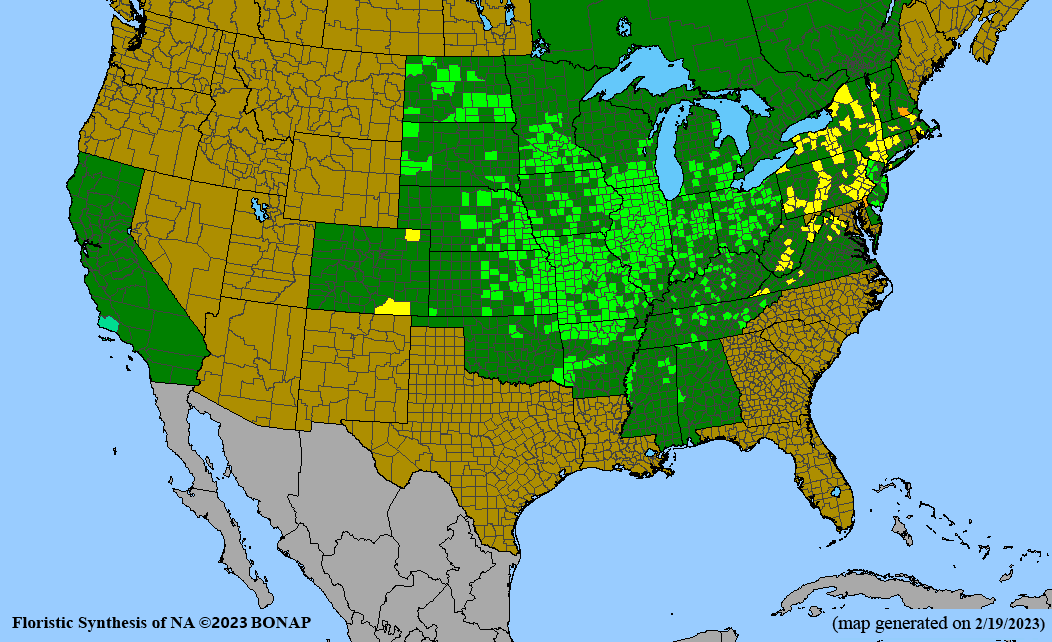
Habitat: Dry to wet soil; partial to full sun; prairies, meadows, swamps, thickets, woodland edges and floodplains, river banks, ditches; Wetland Indicator Status is Facultative (FAC) for the Midwest; mesic to wet-mesic soils are recommended for seed production.
Conservation status: Global- G5, secure; New Hampshire- SH, possibly extirpated; Connecticut, Illinois, Massachusetts, and Vermont- S1, critically imperiled; New Jersey and West Virginia- S2/S3, imperiled to vulnerable; Kansas- S3, vulnerable; in all other states within its natural range, status is S4 (apparently secure) to S5 (secure) or unranked (NatureServe).
General Comments
Sedges are a large, diverse group of grass-like plants that are important components of prairies, wetlands, and woodlands across our region. In Iowa alone, there are about 120 species of sedges. Grasshoppers and the larvae of skipper butterflies, among other insects, feed on sedge foliage, and their seeds are eaten by grassland birds. Troublesome sedge is easy to propagate for seed production and reliably establishes from seed in prairie plantings. This species has a wide tolerance for soil moisture variation and persists in areas with some disturbance. Sedges are notoriously difficult to identify to species, especially the oval sedges, the section to which troublesome sedge belongs. The development of stock seed by the Tallgrass Prairie Center in the early 2000s enabled broader access to reliably identified sedge species by native seed growers.
Recommendations for Seed Production
- Establishment for seed production
Direct seeding
We do not have experience with direct seeding this species for seed production.
Greenhouse
Seed pre-treatment: 30 days cold-moist stratification
Sowing: Sow in germination flats or directly into plugs (2-3 seeds per cell), covering seed lightly (light improves germination of many sedge species); maintain even moisture until germination. Daytime temperatures should be around 70-80°F (22-27°C) and allowed to drop at night to 50-60°F (10-15°C). We have had good success planting into 2.5 in deep, 73-cell plug flats that are ridged to direct root development downward and have 3/4 in bottom openings to encourage root pruning and the formation of firmly rooted plugs for transplanting.
Transplanting: Seedlings are ready to transplant to the field about 10 weeks after sowing. Pop out a few plugs to check for adequate root development that will provide sturdy plugs for planting. A week or two before transplanting, move flats outside to ‘harden off.’ Transplant into prepared plasticulture rows at 8-12 inch spacing.
- Stand management
Weeds: Plastic mulch reduces weed pressure in the first year or more. Holes in the plastic should be widened somewhat in subsequent years to allow the bunches to expand. In large-scale production systems or those where the use of weed barriers and/or hand weeding is not practical, herbicides (e.g., broad-leaf herbicides and/or pre-emergents) may be useful to prevent weeds from competing with the sedge plants and/or complicating the seed cleaning process. Significant weed problems may be caused by winter annuals (e.g., members of the mustard family), other small-seeded broad-leaf annuals, and annual grasses (e.g., downy brome). Herbicide applications should be timed to most effectively control specific weeds and minimize damage to the sedge plants. Care must be taken to read affected “weed” lists, as sedges are considered weeds in crop systems. Always read and follow label instructions.
Pests: None noted.
Diseases: None noted.
- Seed production
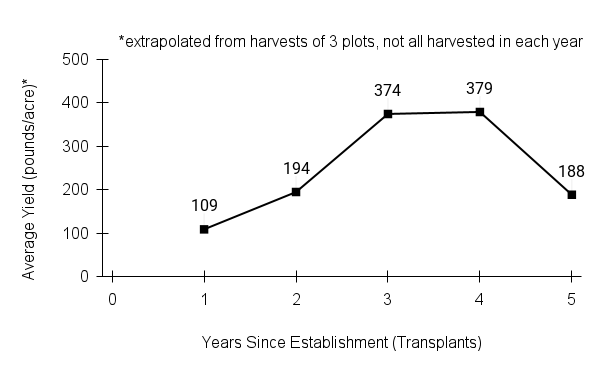 First harvest: First harvest is the year after transplanting.
Yield/acre: 100 to 380 pounds per acre (extrapolated from harvests of three plots)
Stand life: Stands remain productive for several years. We have seen a decline in production in some plots in their sixth year. Plots were retired from production after the sixth year, so it is uncertain whether or not they would have remained productive in the longer term.
Flowering date: June in northern Iowa
Seed maturity/Harvest date: late June to mid July in northern Iowa
Seed retention: Moderate risk of shattering. Ironically, the tendency of this species to lodge may protect somewhat against seed shatter.
Harvest date range at TPC (2008-2012): June 26 - July 18
Recommended harvest method: Combining is the most efficient method. However, lodging can be problematic, and we have hand harvested a badly lodged plot growing in wet-mesic soils after an exceptionally wet spring season.
- Seed cleaning and storage
Cleaning process: Air-dry seed for two weeks or more after harvest. For hand-harvested material, thresh seed from dried stalks by beating with rakes or forks, then treat similarly to combined material. Pass material through a coarse screen (1/2 in hardware cloth) to remove larger stemmy material, if needed, then air screen. If perigynia removal is desired, pass material through a brush machine with medium bristles before air screening. (Note: perigynia removal destroys several characteristics used in identification.)
Seed storage: cool/dry (33-50° F, 30-50% RH); seed may retain high viability for over 10 years under these conditions.
Released Germplasm
Source Identified material: Natural Selections/Iowa Ecotype Zone 1 (northern Iowa) and Zone 2 (central Iowa).
- References
Boeck Crew, C.M., Myers, M.C., Sherrard, M.E., Elgersma, K.J., Houseal, G.A., & Smith D.D. (2020). Stratification and perigynia removal improve total germination and germination speed in 3 upland prairie sedge species. Native Plants Journal, 21(2), 120-131. https://doi.org/10.3368/npj.21.2.120
Chayka, K. (n.d.). Carex molesta (Troublesome Sedge). Minnesota Wildflowers. (n.d.). https://www.minnesotawildflowers.info/grass-sedge-rush/troublesome-sedge
Cochrane, T. S., Elliot, K., & Lipke, C. S. (2014). Field Oval Sedge. In Prairie Plants of the University of Wisconsin-Madison Arboretum (3rd ed., p. 163). essay, University of Wisconsin-Madison Arboretum.
Hilty, J. (2019). Troublesome Sedge. Illinois Wildflowers. https://www.illinoiswildflowers.info/grasses/plants/trouble_sedge.htm
Kartesz, J.T., The Biota of North America Program (BONAP). 2023. North American Plant Atlas. (http://bonap.net/napa). Chapel Hill, N.C. [maps generated from Kartesz, J.T. 2023. Floristic Synthesis of North America, Version 1.0. Biota of North America Program (BONAP). (in press)]
Mohlenbrock, R. H. (1999). Carex bicknellii. In Illustrated Flora of Illinois - Sedges: Carex (p. 139). Southern Illinois University Press.
Murphy, M. & Spyreas, G. & Marcum, P. (2025) Carex of Illinois & Surrounding States: The Oval Sedges. University of Illinois Press
NatureServe. 2024. NatureServe Network Biodiversity Location Data accessed through NatureServe Explorer [web application]. NatureServe, Arlington, Virginia. Available https://explorer.natureserve.org/. (Accessed: February 29, 2024).
Smith, W.R. (2018) Sedges and Rushes of Minnesota: The Complete Guide to Species Identification. University of Minnesota Press.
USDA NRCS National Plant Data Team. (n.d.). Carex molesta Mack. ex Bright. USDA plants database. https://plants.usda.gov/home/plantProfile?symbol=CAMO11
Species Guide Updated 1/5/2026