common sneezeweed
common sneezeweed dickeye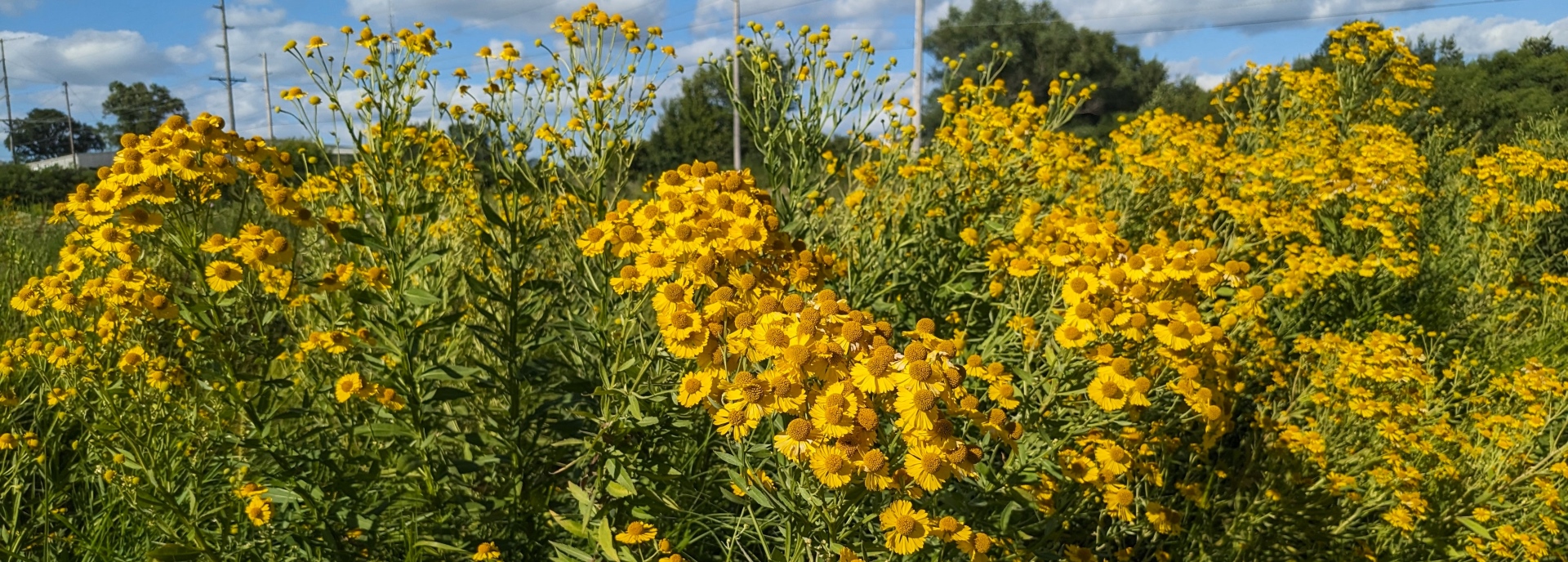
Helenium autumnale, L.
Alternate Common Names: sneezeweed, sneezewort, swamp sunflower
Scientific Synonyms: Helenium autumnale var. canaliculatum (Lamarck) Torrey & A. Gray, Helenium autumnale var. fylesii B. Boivin, Helenium autumnale var. grandiflorum Torrey & A. Gray, Helenium autumnale var. montanum (Nuttall) Fernald, Helenium autumnale var. parviflorum (Nuttall) Fernald, Helenium latifolium Helenium parviflorum
Family: aster family (Asteraceae)
Functional Group: forbs (wildflowers)
Description
- Life cycle and growth form
Perennial with shallow, fibrous rootstock, spreading slowly from rhizomes to form clumps.
Height: 2-5 ft
- Leaves and stem
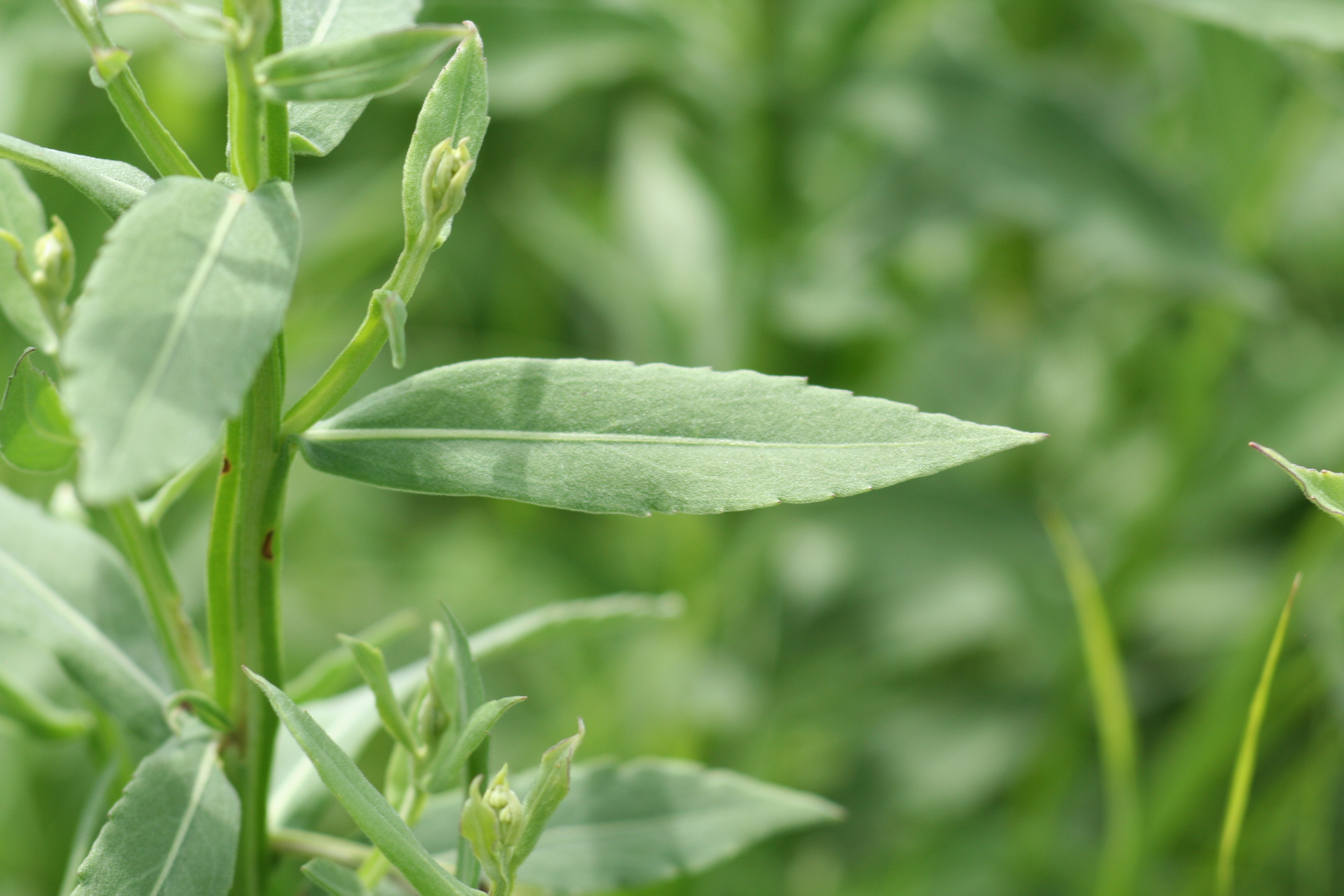
Leaves alternate, lance-shaped, 3 to 6 in long and 1 in wide, stalkless, short-hairy, with small, irregularly spaced teeth on leaf edges and a central, white vein; stem is stiff, angular, and “winged” by extensions of the leaf bases that run down the stem.
- Flower, fruit and seedhead
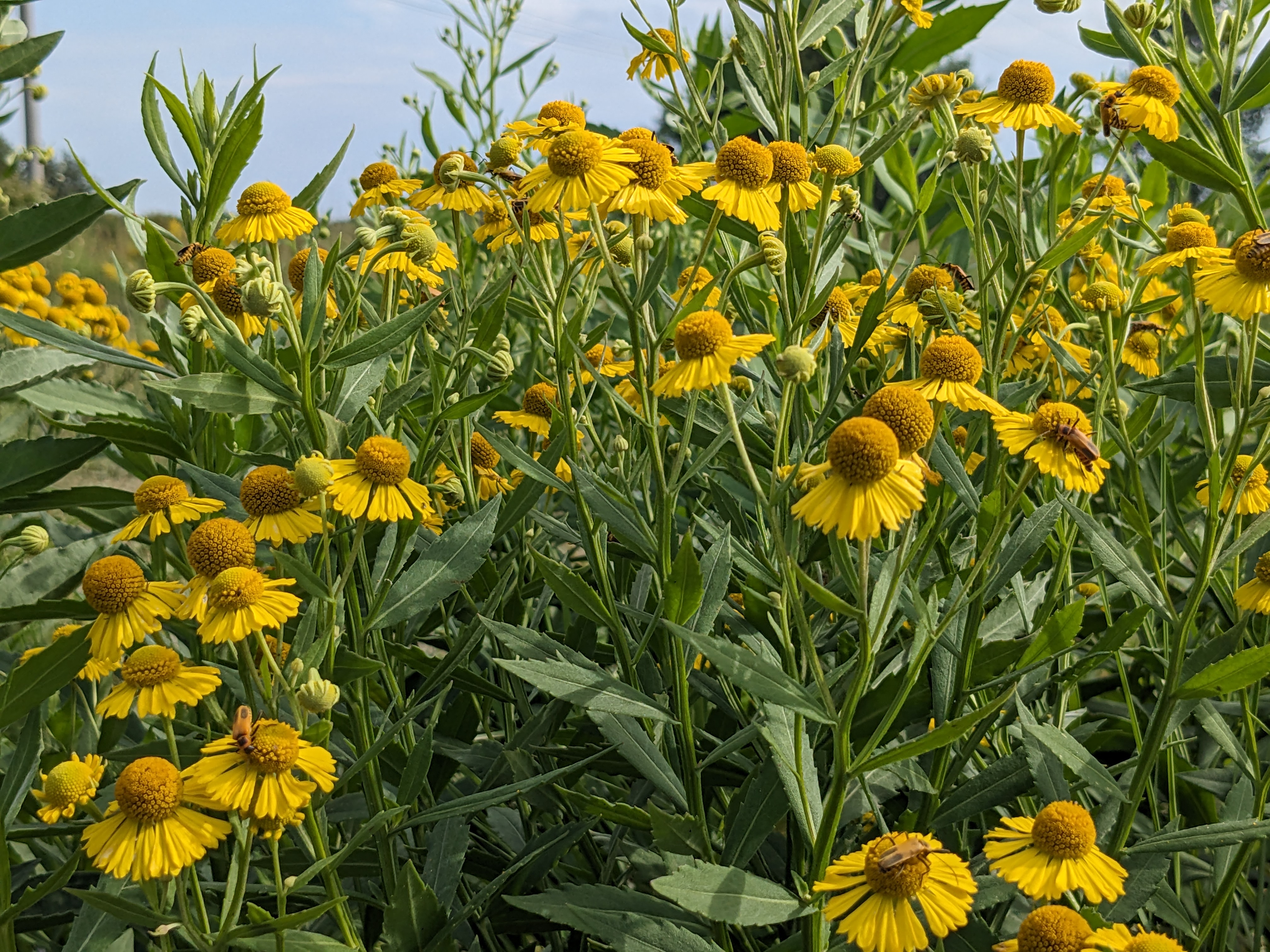
Flower: Composite heads, 1-2 in wide, are nearly globular with numerous golden yellow disk florets and 10-15 bright yellow ray florets that are narrow at the base and 3-lobed at the tip; up to 100 heads are in a branching arrangement at the top of the plant.
Fruit/seed head: Disk of the flowerhead turns into a head of brown achenes that can persist into winter, although seeds shatter as plants rub against each other on windy days.
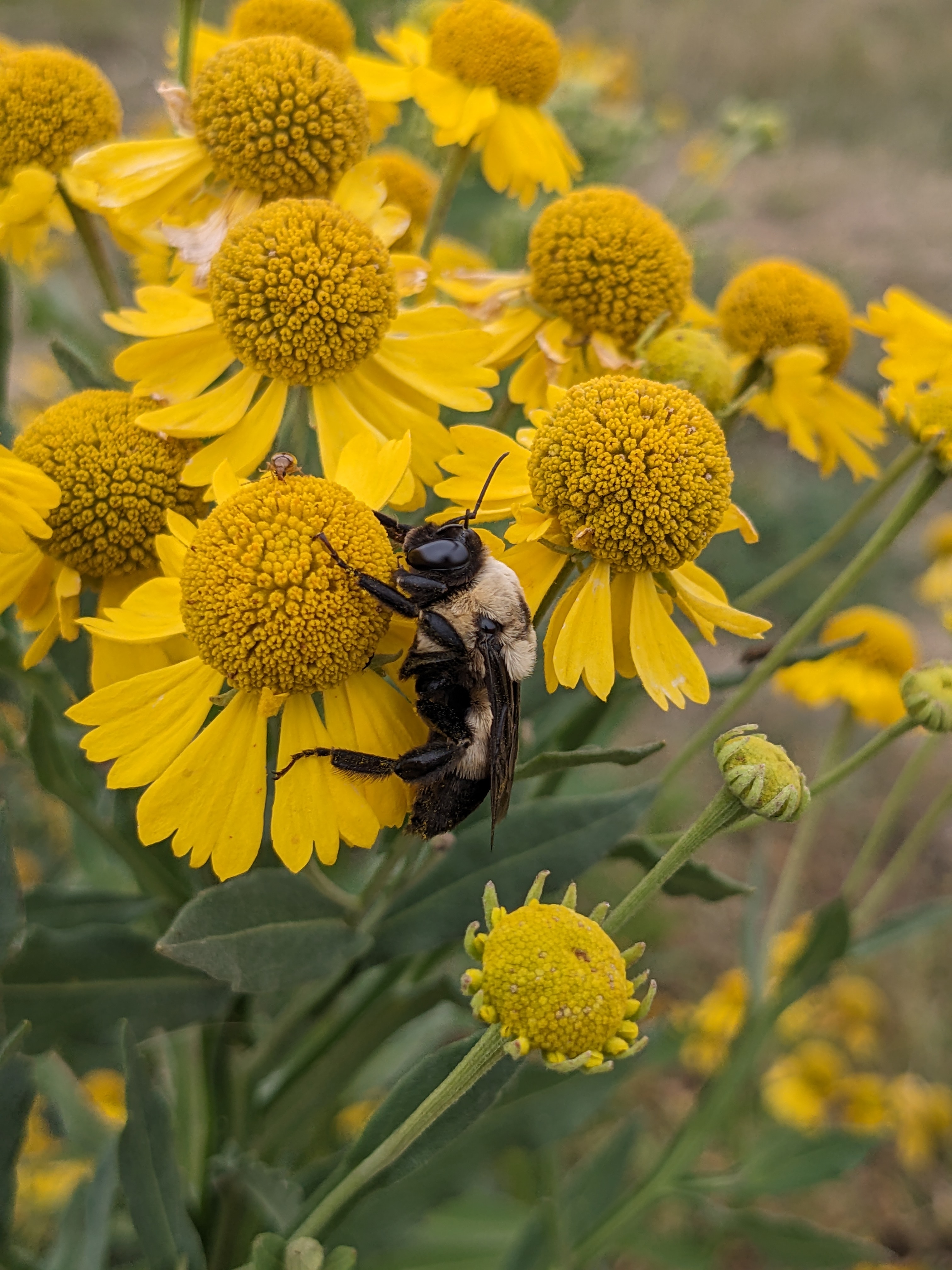
Pollination: Insects, primarily bees, but also beetles, flies, and wasps.
- Seed
Seed characteristics
Seed weight:
[Seeds per ounce: 130,000 (IA NRCS)
1000 seed weight: 0.53g (Seed Information Database)
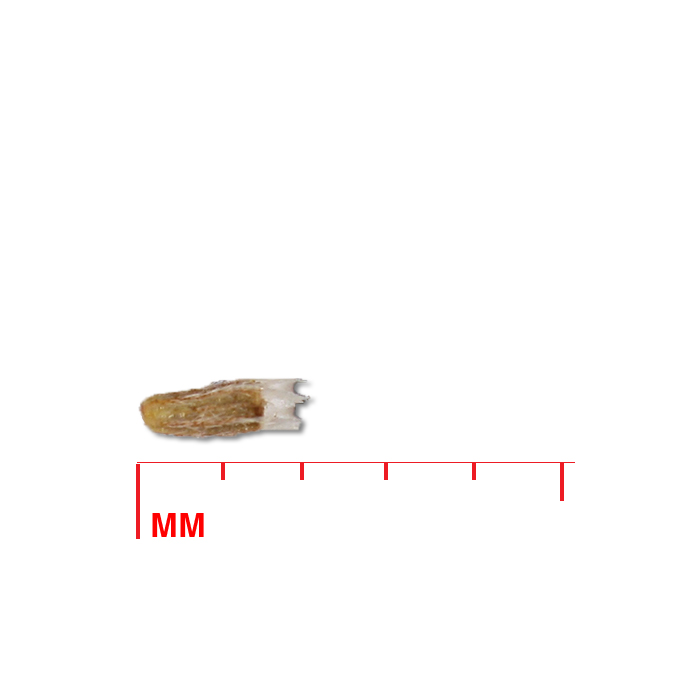
Description: “Seed” is a grayish-tan, ridged achene about 1.5 mm long with short silvery hairs and a pappus of papery scales.
Typical seed test
PLS: 86% (n = 7)
Purity: 93% (n = 7)
Germination: 28% (n = 6)
Dormancy: 52% (n = 6)
(averages obtained from n tests of purchased seed lots)
- Habitat and range
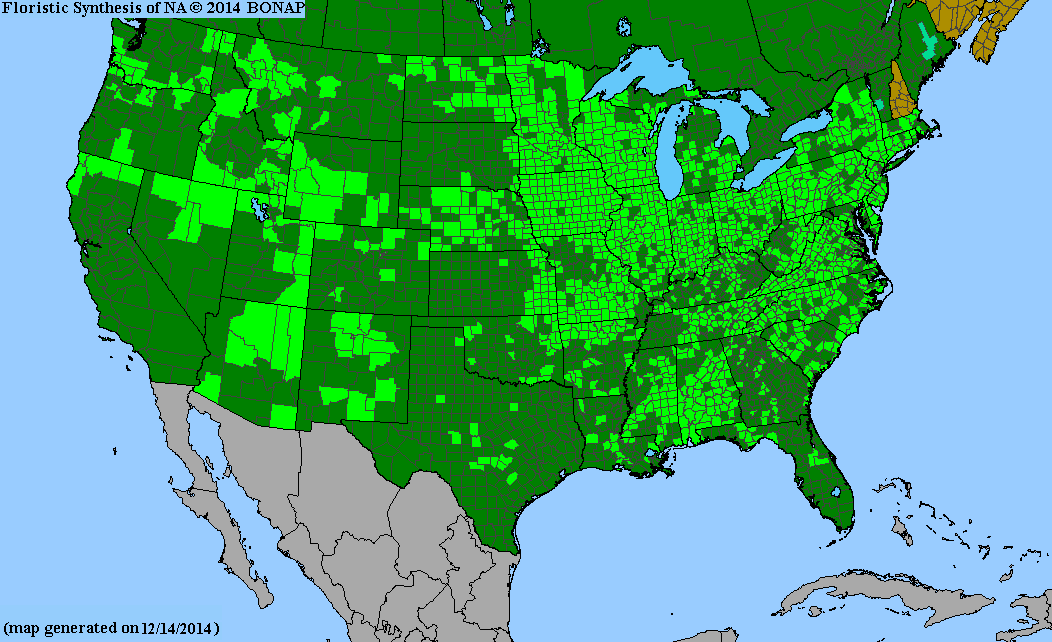
Habitat: Moist to wet soil; partial to full sun; moist prairies and meadows, fens, along streams, ponds and lakes, marshes, ditches; Wetland Indicator Status is Facultative Wetland (FACW) for the Midwest; irrigation is recommended for seed production unless the site is reliably moist.
Conservation status: Global- G5, secure; Vermont- S1, critically imperiled; Kansas, Massachusetts, and Wyoming- S3, vulnerable; in all other states within its natural range, status is S4 (apparently secure) to S5 (secure) or unranked (NatureServe).
General Comments
Common sneezeweed blooms in late summer through October in our area, making it an important resource for late season pollinators. A population of these plants is a great place to look for diverse bumble bees in fall, including vulnerable species such as the Southern Plains Bumble Bee. The pollen of sneezeweed sticks to the hairs of the insects that visit it for nectar and does not blow in the wind or cause seasonal allergies in people. The common name sneezeweed refers to Indigenous medicinal practices involving the use of dried, powdered flowerheads as a snuff to induce sneezing in people suffering from congestion. This species is easy to establish and maintain for a few years in irrigated production plots, and harvest and seed cleaning are relatively uncomplicated. Sneezeweed has become quite popular in the horticulture industry for its late-season color, and there are a number of cultivated varieties.
Recommendations for Seed Production
- Establishment for seed production
Direct seeding
We do not have experience with direct seeding this species for seed production.
Greenhouse
Seed pre-treatment: Cold/moist stratification for 30-60 days may improve germination at ambient greenhouse temperatures in February to March.
Sowing: Surface sow in the greenhouse about 2-3 months before the last frost. Use caution when watering to avoid splashing seed from the soil. A heat mat may improve germination, especially if daytime greenhouse temperatures are below 75°F, and if seed was not stratified.
Transplanting: When seedlings have formed well-rooted plugs, move them outside to harden off, then transplant into irrigated plasticulture beds at 12 inch intervals, after danger of frost has passed.
- Stand management
Weeds: Prepare a clean, weed-free bed. Plastic mulch suppresses most weeds in the first year. Mow or cultivate between rows. Hand weed or rogue to prevent weed seed from contaminating the seed crop, paying special attention to small-seeded members of the aster family (e.g., frost aster, goldenrods). We have planted H. autumnale with bluejoint as a companion grass. While sneezeweed is probably not long-lived anyway, competition from bluejoint may have accelerated its decline. However, it also suppressed most weeds.
Pests: None noted.
Diseases: None noted.
- Seed production
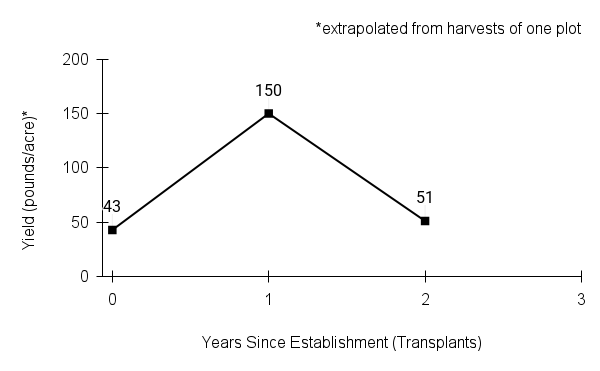
First harvest: Plants flower and set seed in the establishment year (from transplants).
Yield/acre: 40-150 pounds per acre, extrapolated from harvests of one plot at TPC.
Stand life: Peak yield appears to occur the year after planting (year 2) and subsequently decline, but this is based on experience with only one plot.
Flowering date: early August through October in northeast Iowa
Seed maturity/Harvest date: late September through mid October in northeast Iowa
Seed retention: Moderate risk of shattering; mature seedheads break up when rubbed against other plants in high winds.
Harvest date range at TPC (2023-2025): September 25 - October 17
Recommended harvest method: Hand pick early maturing plants, then combine at peak maturity of plot.
- Seed cleaning and storage
Cleaning process: Pass harvested material through 1/2 in and 1/4 in mesh to remove larger particles. Brush (soft bristles) to remove persistent dried corollas from achenes, then airscreen repeatedly.
Seed storage: cool/dry (33-50° F, 30-50% RH)
Released Germplasm
Source Identified material: Natural Selections/Iowa Ecotype Zone NI (northern Iowa), aligned with the Generalized Provisional Seed Zones of the US Forest Service
Cultivated varieties (cultivars): A number of selections have been made for the horticultural trade.
- References
Bierner, M. W. (2020, November 5). Helenium autumnale Linnaeus. Flora of North America. http://floranorthamerica.org/Helenium_autumnale
Chayka, K. (n.d.). Helenium autumnale (sneezeweed). Minnesota Wildflowers. https://www.minnesotawildflowers.info/flower/sneezeweed
Cochrane, T. S., Elliot, K., & Lipke, C. S. (2014). Common sneezeweed. In Prairie plants of the University of Wisconsin-Madison Arboretum (3rd ed., p. 82). University of Wisconsin-Madison Arboretum.
Hilty, J. (2019). Common sneezeweed - Helenium autumnale. Illinois Wildflowers. https://www.illinoiswildflowers.info/wetland/plants/sneezeweed.htm
Kartesz, J.T., The Biota of North America Program (BONAP). 2023. North American Plant Atlas. (http://bonap.net/napa). Chapel Hill, N.C. [maps generated from Kartesz, J.T. 2023. Floristic Synthesis of North America, Version 1.0. Biota of North America Program (BONAP). (in press)]
NatureServe. 2024. NatureServe Network Biodiversity Location Data accessed through NatureServe Explorer [web application]. NatureServe, Arlington, Virginia. Available https://explorer.natureserve.org/. (Accessed: February 28, 2024).
USDA NRCS National Plant Data Team. (n.d.). Helenium autumnale L. USDA plants database. https://plants.usda.gov/home/plantProfile?symbol=HEAU
Species Guide Updated 12/30/2025