Culver's root
Culver's root dickeye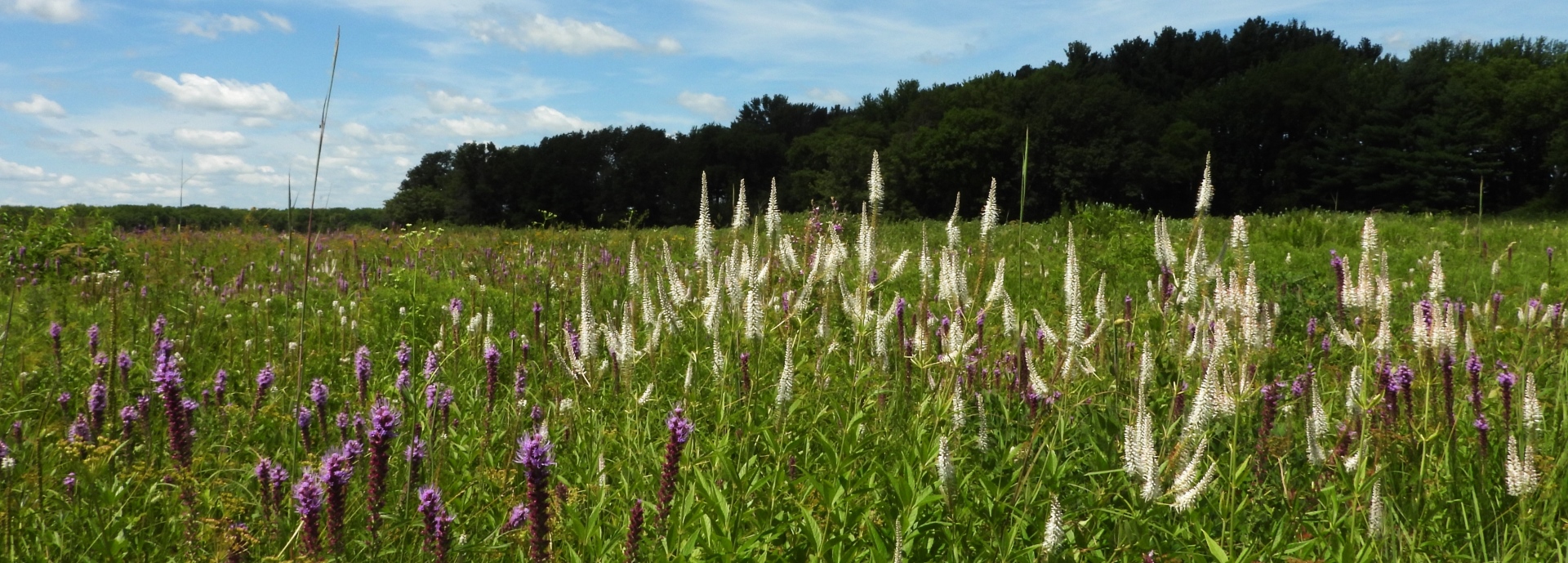
Veronicastrum virginicum, (L.) Farw.
Alternate Common Names: blackroot, Bowman’s root, Culver’s physic, high veronica, tall speedwell
Scientific Synonyms: Leptandra virginica (L.) Nutt., Veronica virginica L.
Family: figwort and snapdragon family (Scrophulariaceae); some authorities place this genus within the plantain family (Plantaginaceae)
Functional Group: forbs (wildflowers)
Description
- Life cycle and growth form
Perennial from a central taproot with side branches, spreading to form loose clumps by rhizomes.
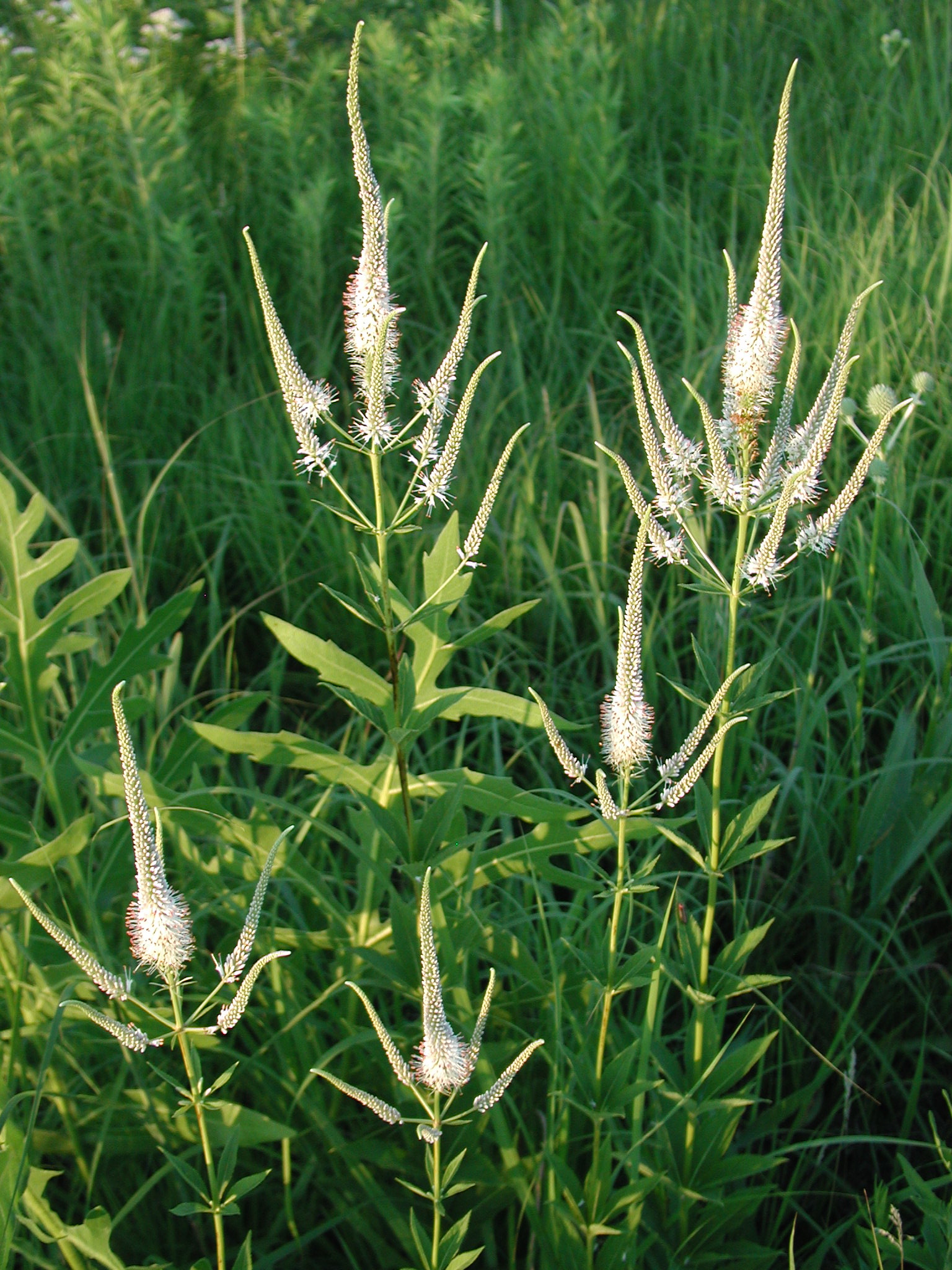
Height: 3-6 ft
- Leaves and stem
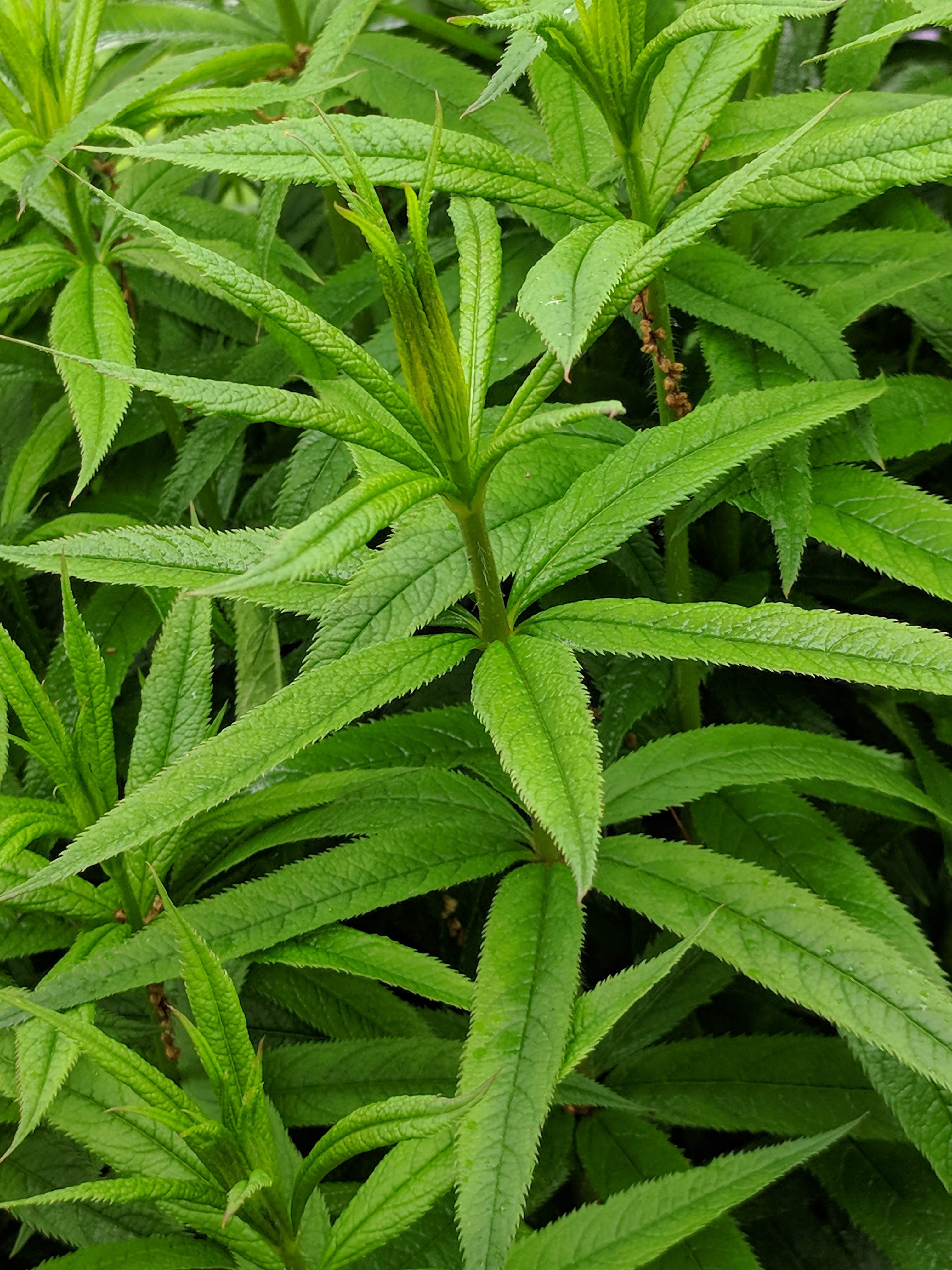
Leaves whorled at nodes in groups of 3-7, up to 6 in long and 1 1/2 in] wide, lance-shaped with a finely serrated margin and sometimes hairy underneath; stem is smooth and round.
- Flower, fruit and seedhead
Flower: Inflorescence includes a central spikelike raceme up to 10 in long surrounded by one or more whorls of smaller spikes; each spike contains numerous, small (1/4 in), white, tubular flowers with yellow to pink-tipped stamens that extend out of the floral tubes; flowers bloom from the bottom to top in each spike.
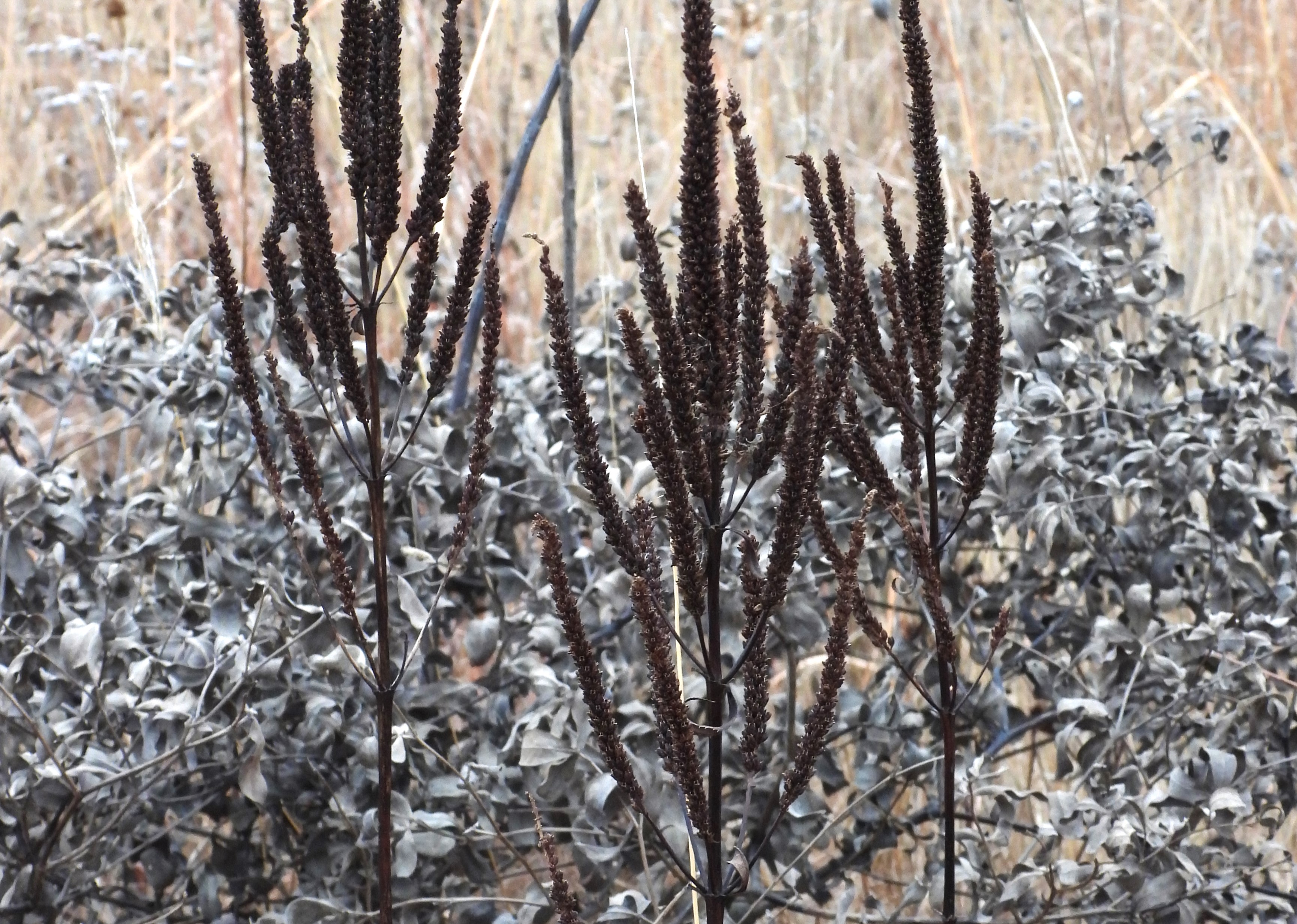
Fruit/seed head: Inflorescence turns black-brown at maturity; fruit is an egg-shaped, two-celled capsule containing numerous tiny, reddish-black seeds.
Pollination: Insects, especially bees of diverse kinds.
- Seed
Seed characteristics
Seed weight:
Seeds per ounce: 800,000 seeds/oz (IA NRCS)
1000 seed weight: 0.07g (Seed Information Database)
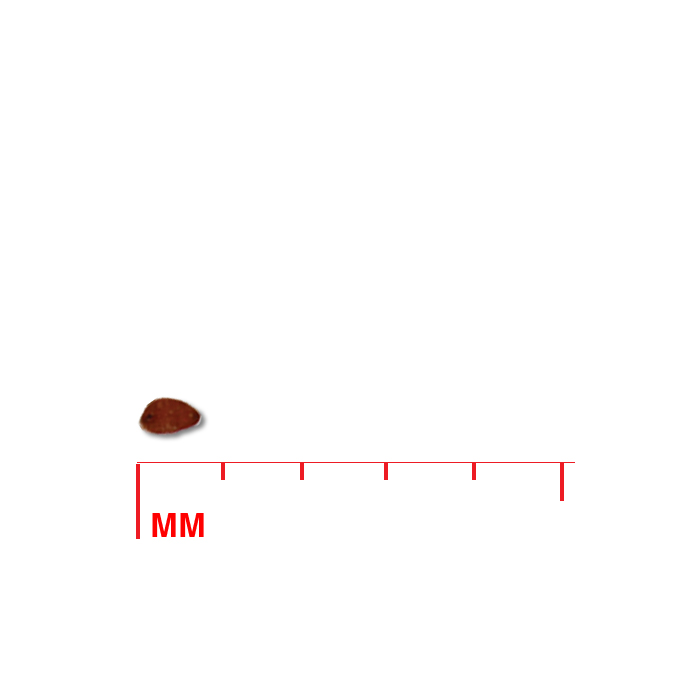
Description: Seed is dust like; individual seeds are tiny (less than 1 mm long), egg-shaped, and dark reddish brown.
Typical seed test
PLS: 90% (n = 12)
Purity: 94% (n = 12)
Germination: 21% (n = 8)
Dormancy: 77% (n = 9)
(averages obtained from n tests of purchased seed lots)
- Habitat and range
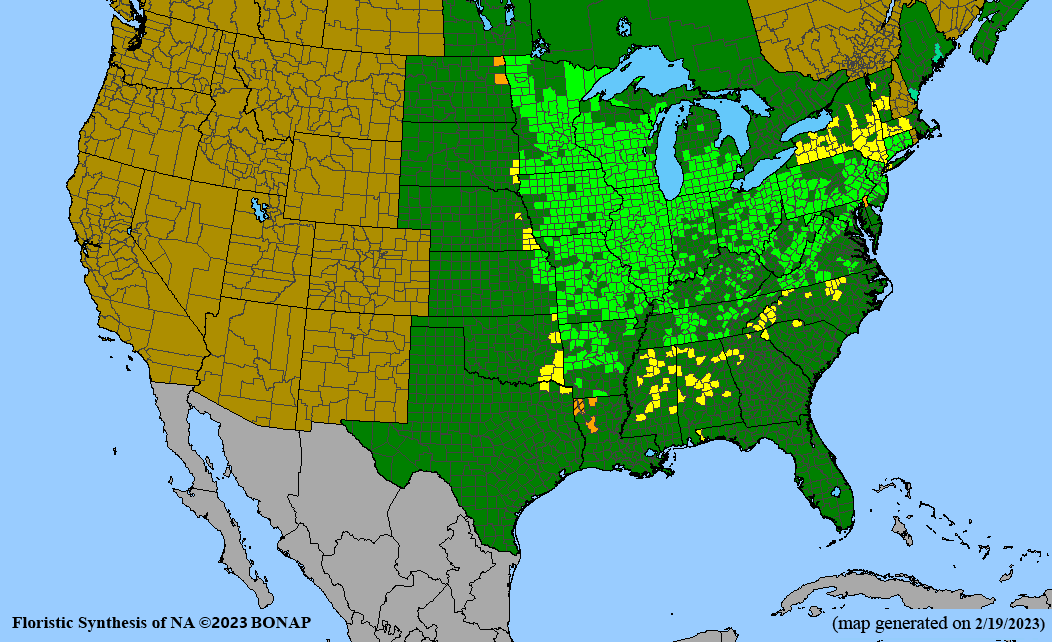
Habitat: Mesic to moist soil; partial to full sun; sand prairies, woodland openings and edges, swampy meadows, ditches, savannas, thickets; Wetland Indicator Status is Facultative (FAC) for the Midwest; wet-mesic, loamy soil is recommended for seed production, and irrigation may be beneficial, but avoid planting in areas where soil may be saturated for weeks at a time.
Conservation status: Global- G4, apparently secure; Louisiana and North Dakota- SH, possibly extirpated; Alabama, Delaware, District of Columbia, Nebraska, Oklahoma, South Carolina, South Dakota, and Vermont- S1, critically imperiled; Mississippi- S1/S2, critically imperiled to imperiled; Massachusetts, New York, and North Carolina- S2, imperiled; Kansas and Georgia- S3, vulnerable; in all other states within its natural range, status is S4 (apparently secure) to S5 (secure) or unranked (NatureServe).
General Comments
Culver’s root apparently gets its common name from a pioneer doctor who prescribed it for various ailments, but it was already used by Native tribes for treating a variety of conditions. The whorled leaves and candelabra-like flower spikes make this species easy to identify. In our experience, it is shorter-lived in single-species production rows than in mixed plantings or native prairies, where individual plants may thrive for many years.
Recommendations for Seed Production
- Establishment for seed production
Direct seeding
Not recommended for this species.
Greenhouse
Seed pre-treatment: Cold/moist stratification for 84 days.
Sowing: Surface sow in the greenhouse about 2-3 months before the last frost. Use caution when watering to avoid splashing seed from soil.
Transplanting: When seedlings have formed well-rooted plugs, move them outside to harden off, then transplant at 12 in intervals into beds prepared with plastic mulch.
- Stand management
Weeds: Prepare clean, weed-free beds. Plastic mulch suppresses weeds in the first year. Mow or cultivate between rows. Hand weed or rogue large, competitive weeds.
Pests: None noted.
Diseases: No specific diseases identified, but plants perform poorly if soil remains heavily saturated for several weeks as happened to one of our fields during a wet spring.
- Seed production
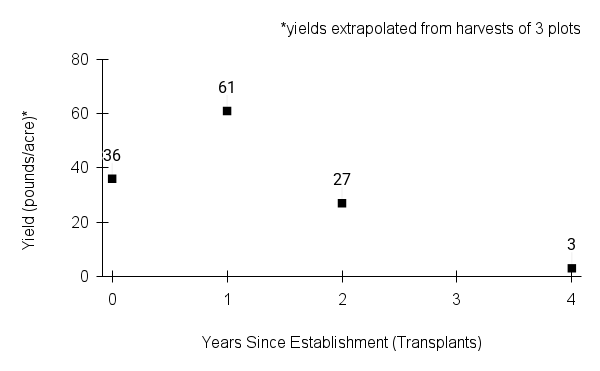 First harvest: Plants flower and set seed in the establishment year.
Yield/acre: 20-60 pounds per acre (extrapolated from harvests of three plots)
Stand life: Peak yield may occur in second year, declining thereafter.
Flowering date: Late June through early August in northeast Iowa
Seed maturity/Harvest date: Late August to early October in northeast Iowa (may be delayed in the establishment year)
Seed retention: High risk of shattering; seed shakes out of capsules as they open.
Harvest date range at TPC (2003-2023): July 17 - November 2
Recommended harvest method: Hand-clip or combine when most inflorescences have turned brown and some capsules have opened.
- Seed cleaning and storage
Cleaning process: Brush hand collected material with medium bristles to thresh seed from capsules. Pass combined material through 1/4 in mesh to remove larger particles. Air-screen repeatedly.
Seed storage: cool/dry (33-50° F, 30-50% RH)
Released Germplasm
Source Identified material: Natural Selections/Iowa Ecotype Zone 1 (northern Iowa), Zone 2 (central Iowa), and Zone 3 (southern Iowa)
Cultivated varieties (cultivars): Selections have been made for the horticultural trade.
- References
Chayka, K. (n.d.). Veronicastrum virginicum (Culver’s root). Minnesota Wildflowers. https://www.minnesotawildflowers.info/flower/culvers-root
Cochrane, T. S., Elliot, K., & Lipke, C. S. (2014). Culver’s-root. In Prairie plants of the University of Wisconsin-Madison Arboretum (3rd ed., p. 330). University of Wisconsin-Madison Arboretum.
Hilty, J. (2019). Culver’s root - Veronicastrum virginicum. Illinois Wildflowers. https://www.illinoiswildflowers.info/prairie/plantx/culverx.htm
Kartesz, J.T., The Biota of North America Program (BONAP). 2023. North American Plant Atlas. (http://bonap.net/napa). Chapel Hill, N.C. [maps generated from Kartesz, J.T. 2023. Floristic Synthesis of North America, Version 1.0. Biota of North America Program (BONAP). (in press)]
NatureServe. 2024. NatureServe Network Biodiversity Location Data accessed through NatureServe Explorer [web application]. NatureServe, Arlington, Virginia. Available https://explorer.natureserve.org/. (Accessed: February 29, 2024).
Runkel, S. T., & Roosa, D. M. (2009). Culver’s root. In Wildflowers of the tallgrass prairie: The upper Midwest (2nd ed., pp. 212–213). University of Iowa Press.
USDA NRCS National Plant Data Team. (n.d.). Veronicastrum virginicum (L.) Farw. USDA plants database. https://plants.usda.gov/home/plantProfile?symbol=VEVI4
Species Guide Updated 12/29/2025