fringeleaf wild petunia
fringeleaf wild petunia dickeye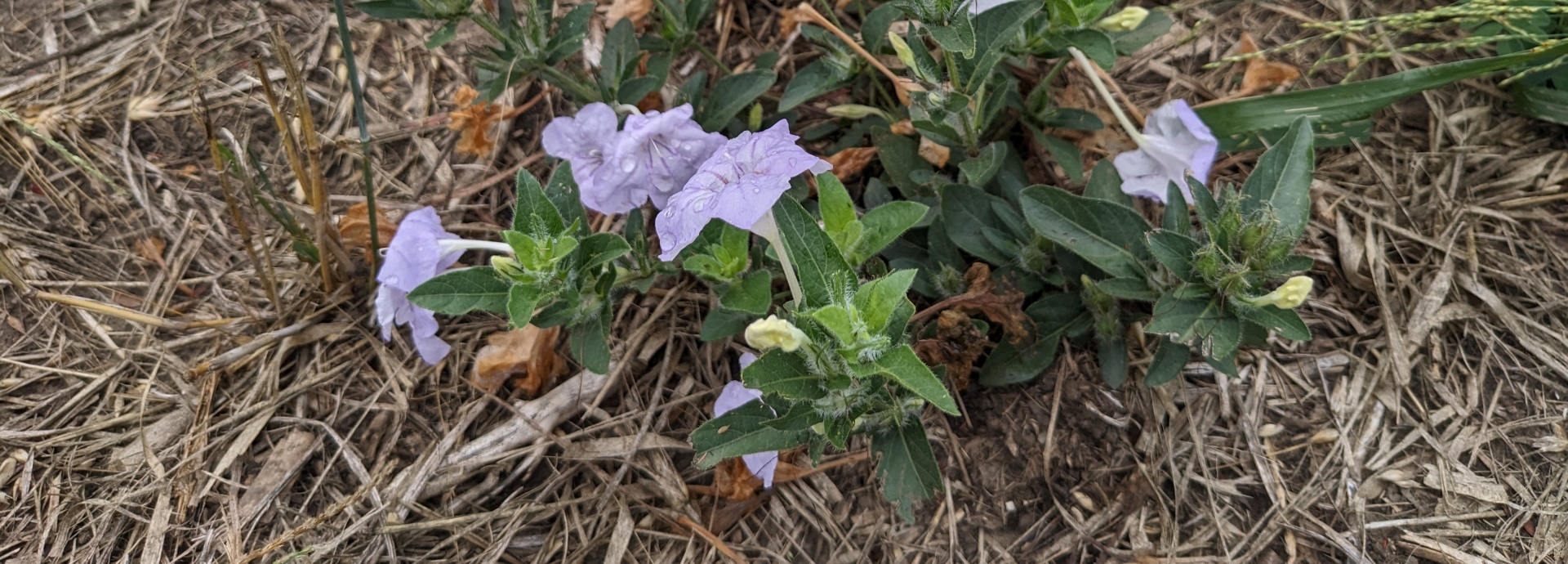
Ruellia humilis, Nutt.
Alternate Common Names: wild petunia, hairy petunia, hairy wild petunia
Scientific Synonyms: Ruellia ciliosa Pursh var. longiflora A. Gray, Ruellia humilis Nutt. var. calvescens Fernald, Ruellia humilis Nutt. var. depauperata Tharp & F.A. Barkley, Ruellia humilis Nutt. var. expansa Fernald, Ruellia humilis Nutt. var. frondosa Fernald, Ruellia humilis Nutt. var. longiflora (A. Gray) Fernald
Family: acanthus family (Acanthaceae)
Functional Group: forbs (wildflowers)
Description
- Life cycle and growth form
Perennial from a fibrous root system, often with multiple stems arising from the ground and sprawling outward, with a leafy, bushy appearance.
Height: 1-2 ft
- Leaves and stem
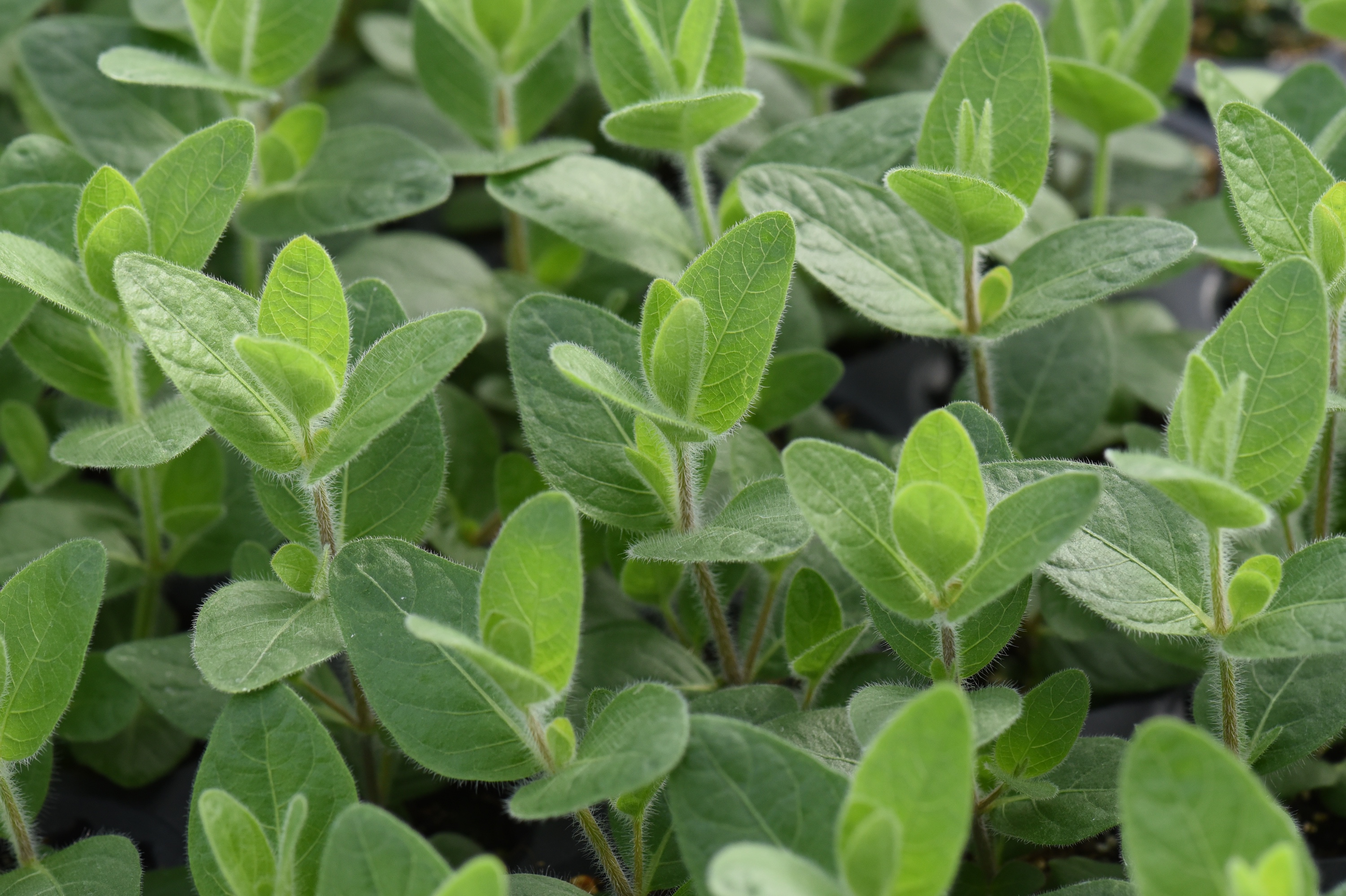
Leaves are opposite, lance- to oval-shaped, somewhat tapered, without teeth or lobes, and covered in coarse, spreading, whitish hairs; the hairy stems are somewhat sprawling.
- Flower, fruit and seedhead
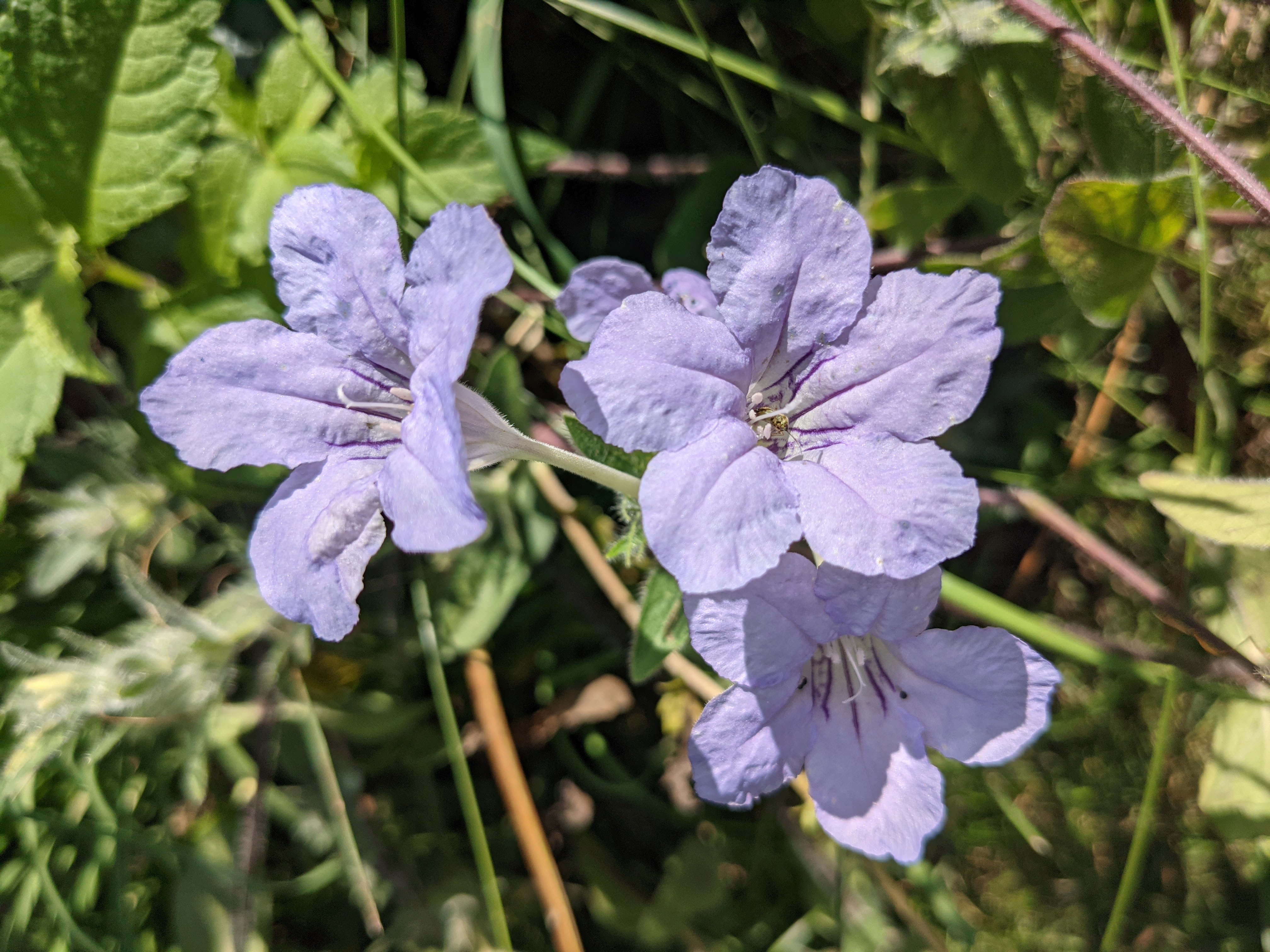
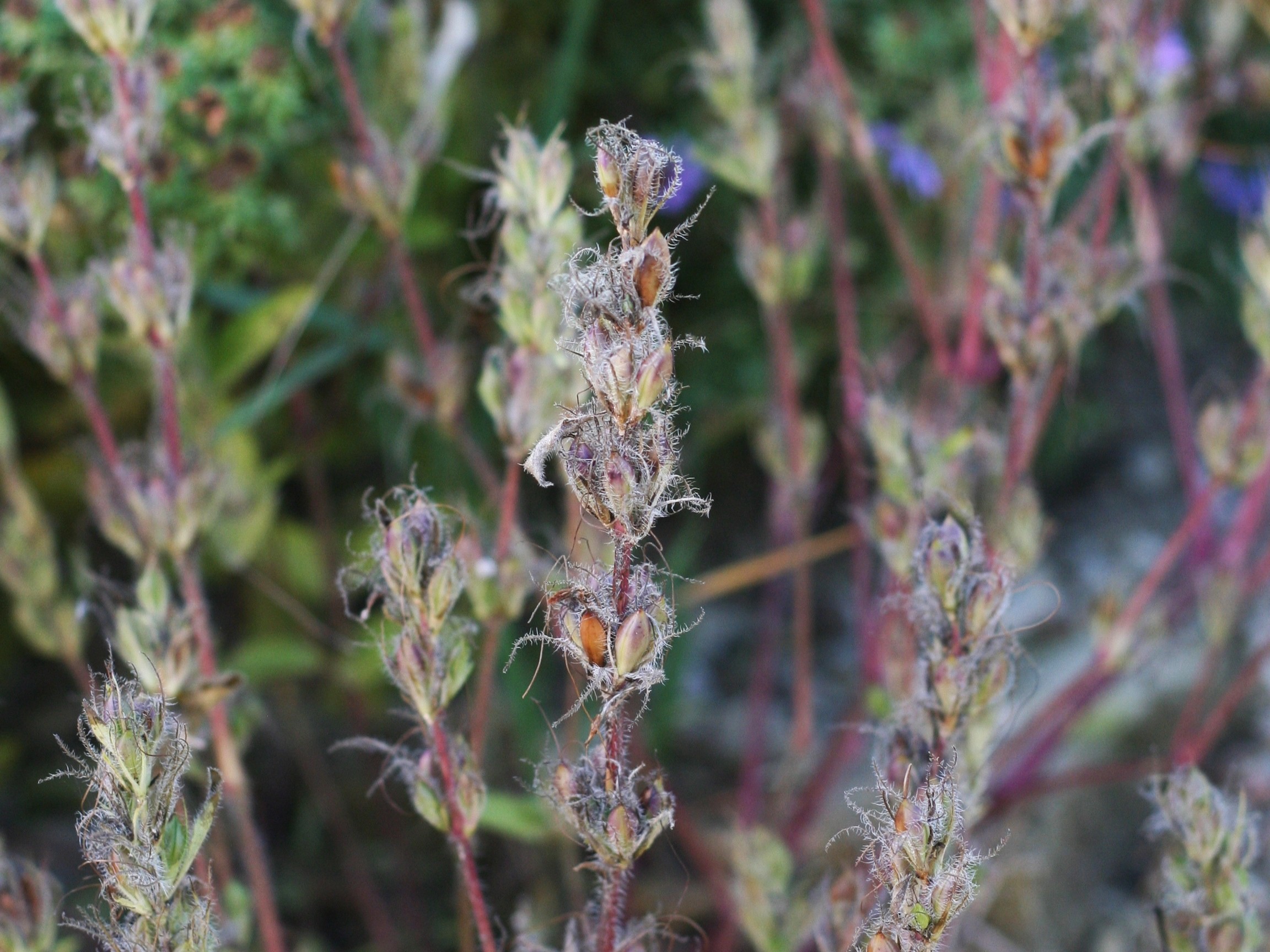
Flower: The pale purple flower is made up of 5 corolla lobes fused into a funnel shape up to 3 in long, similar in form to a cultivated petunia; the calyx with five long, very slender, hairy lobes persists as the fruit ripens.
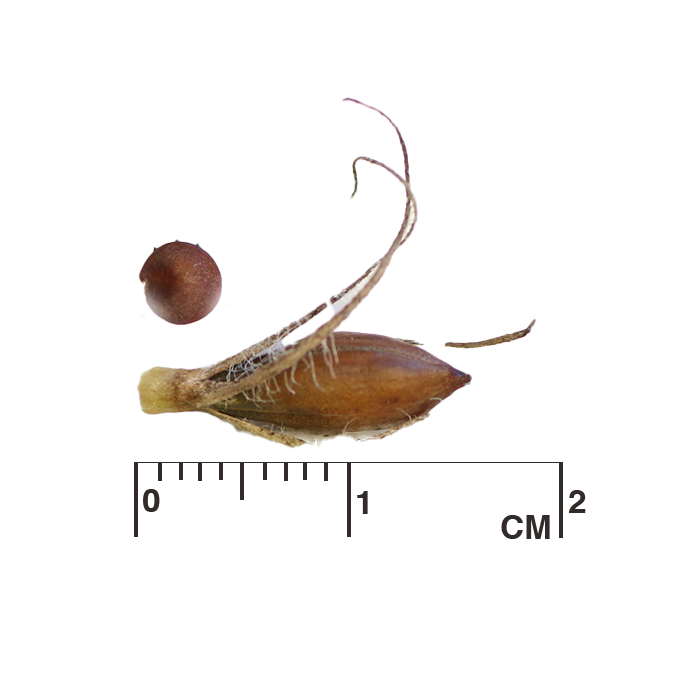
Fruit/seed head: Fruit is a thick-walled, tan to brown, dry, oval, two-chambered capsule less than 1 in long, with a sharp, curved “beak;” seeds are ejected ballistically at maturity.
Pollination: Insects, primarily long-tongued bees.
- Seed
Seed characteristics
Seed weight:
Seeds per ounce: 5,200 (IA NRCS)
1000 seed weight: 5.15g (Seed Information Database)
Description: Seed is round and flattened like a lentil, dark brown, covered in hairs that expand when the seed is wetted, helping to maintain contact with the soil.
Typical seed test
PLS: 97% (n = 6)
Purity: 100% (n = 6)
Germination: 7% (n = 5)
Dormancy: 91% (n = 5)
(averages obtained from n tests of purchased seed lots)
- Habitat and range
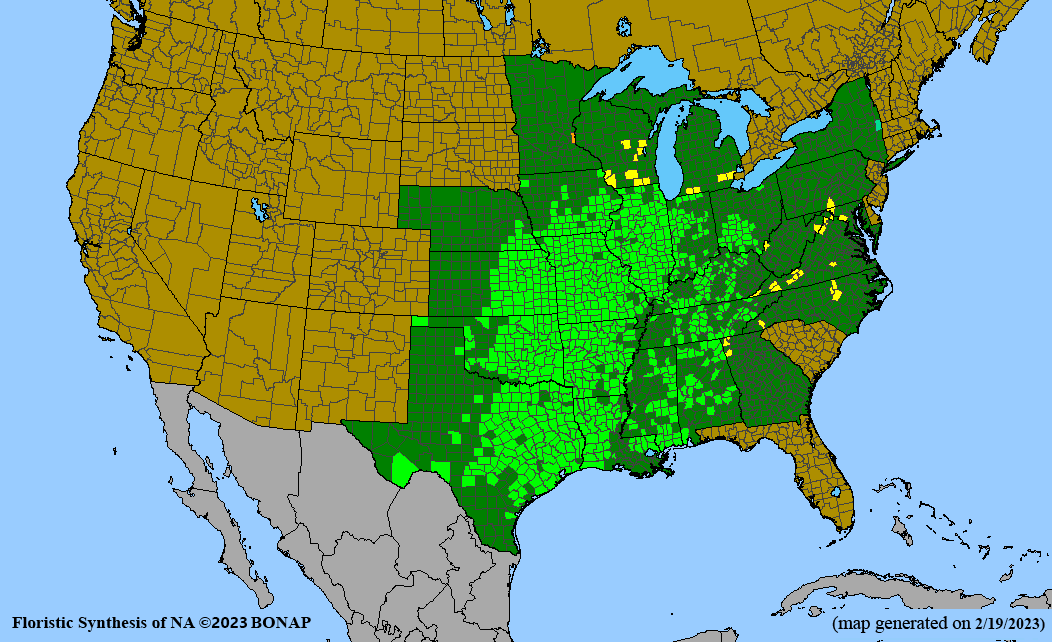
Habitat: Dry to moist soil; partial to full sun; prairies, bluffs, woodland openings, along railroads, roadsides; Wetland Indicator Status is Facultative Upland (FACU) for the Midwest; full sun and well-drained mesic soils are recommended for seed production.
Conservation status: Global- G5, secure; Maryland, Michigan, North Carolina, Pennsylvania, South Carolina, and West Virginia- S1, critically imperiled; Wisconsin- S2, imperiled; Georgia, Minnesota, and Virginia- S3, vulnerable; in all other states within its natural range, status is S4 (apparently secure) to S5 (secure) or unranked (NatureServe).
General Comments
Fringeleaf wild petunia flowers resemble the familiar garden petunia, but this species is in a different family, the Acanthaceae, which is uncommon in temperate zones. Each wild petunia flower fades and drops after a day, but the plants bloom generously from mid summer through fall. Wild petunias are small in stature and mostly encountered in prairies with a more open structure such as hill prairies. However, we have also stumbled across Ruellia in dense, mesic prairies, where such small plants might not be expected to survive the intense competition from taller grasses and forbs. Wild petunias are tolerant of a wide range of soil conditions and do well in mesic soils in seed production settings. The explosive seed capsules must be harvested before the seed is ejected. For a little fun, place some stalks with nearly mature capsules in a paper sack and give them to a friend. The sound of exploding seeds can be quite a surprise!
Recommendations for Seed Production
- Establishment for seed production
Direct seeding
We do not have experience with direct seeding this species for seed production.
Greenhouse
Seed pre-treatment: Germination improves with 70 to 84-day (10 to 12 week) cold/moist stratification. We have also had some success using a 48-hour soak in 250 ppm GA-3, but the seedlings appeared less robust than those germinated after stratification. A higher concentration of GA-3 might produce better results.
Sowing: Sow seed, lightly covered with seed starting mix, in the greenhouse about 2-3 months before the last frost. If temperatures in the greenhouse are lower than 75°F during the day, a heat mat may improve germination.
Transplanting: When plugs are well-rooted, move the flats outside to harden off, then transplant at 8-12 in intervals into beds prepared with a weed barrier such as plastic mulch.
- Stand management
Weeds: Prepare, clean, weed-free beds prior to transplanting. Use plastic mulch or a weed barrier to reduce competition from weeds during the first year or two. Mow or cultivate between rows.
Pests: None noted.
Diseases: None noted.
- Seed production
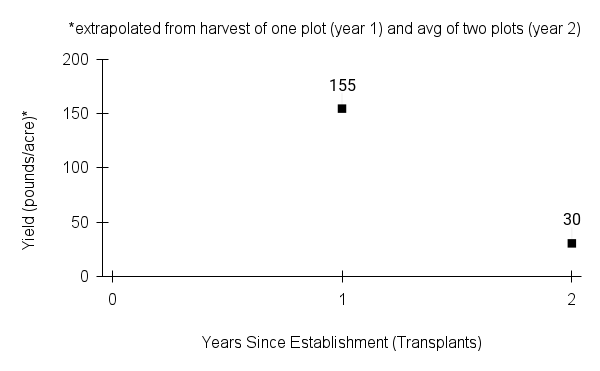 First harvest: Expect the first harvest in the year after transplanting.
Yield/acre: 30 - 150 pounds per acre (extrapolated from harvests of two plots)
Stand life: Peak yield in the second year (the year after transplanting). Our plots were retired after a disappointing harvest in year 3, so longer term yields are not known, but numerous plants have persisted (and perhaps reseeded themselves) in one of these former plot areas 10 years after the plot was abandoned.
Flowering date: early July through September in northeast Iowa
Seed maturity/Harvest date: mid to late October in northeast Iowa
Seed retention: Moderate risk of shattering. Capsules ripen rather slowly, but once mature, they eject seed explosively. Check plots frequently during ripening and observe for senescence of leaves and a change in color of capsules from green to tan or light brown.
Harvest date range at TPC (2015-2016): October 19 - 20
Recommended harvest method: Clip entire stalks when most stalks have some tan to brown capsules and capsules of some stalks have begun ejecting seeds. Dry the cut stalks in cloth bags or a bin with a screen over the top to prevent seed from shooting out.
- Seed cleaning and storage
Cleaning process: Pass the dried material through a coarse screen (1/2 in mesh) to remove stalks. If many unbroken capsules remain, brush with stiff bristles. Indent before or after air-screening.
Seed storage: cool/dry (33-50° F, 30-50% RH)
Released Germplasm
Source Identified material: Natural Selections/Iowa Ecotype Zone 2 (central Iowa) and Zone 3 (southern Iowa)
- References
Baskin, J.M. & Baskin, C.C. (1982) Temperature Relations of Seed Germination in Ruellia humilis and Ecological Implications. Castanea, 45(2)119-131 https://www.jstor.org/stable/4032944
Chayka, K. (n.d.). Ruellia humilis (Wild Petunia). Minnesota Wildflowers. https://www.minnesotawildflowers.info/flower/wild-petunia
Hilty, J. (2019). Hairy wild petunia - Ruellia humilis. Illinois Wildflowers. https://www.illinoiswildflowers.info/prairie/plantx/hw_petuniax.htm
Kartesz, J.T., The Biota of North America Program (BONAP). 2023. North American Plant Atlas. (http://bonap.net/napa). Chapel Hill, N.C. [maps generated from Kartesz, J.T. 2023. Floristic Synthesis of North America, Version 1.0. Biota of North America Program (BONAP). (in press)]
NatureServe. 2024. NatureServe Network Biodiversity Location Data accessed through NatureServe Explorer [web application]. NatureServe, Arlington, Virginia. Available https://explorer.natureserve.org/. (Accessed: February 29, 2024).
Runkel, S. T., & Roosa, D. M. (2009). Wild petunia. In Wildflowers of the tallgrass prairie: The upper Midwest (2nd ed., p. 141). University of Iowa Press.
USDA NRCS National Plant Data Team. (n.d.). Ruellia humilis Nutt. USDA plants database. https://plants.usda.gov/home/plantProfile?symbol=RUHU
Species Guide Updated 12/29/2025