great blue lobelia
great blue lobelia dickeye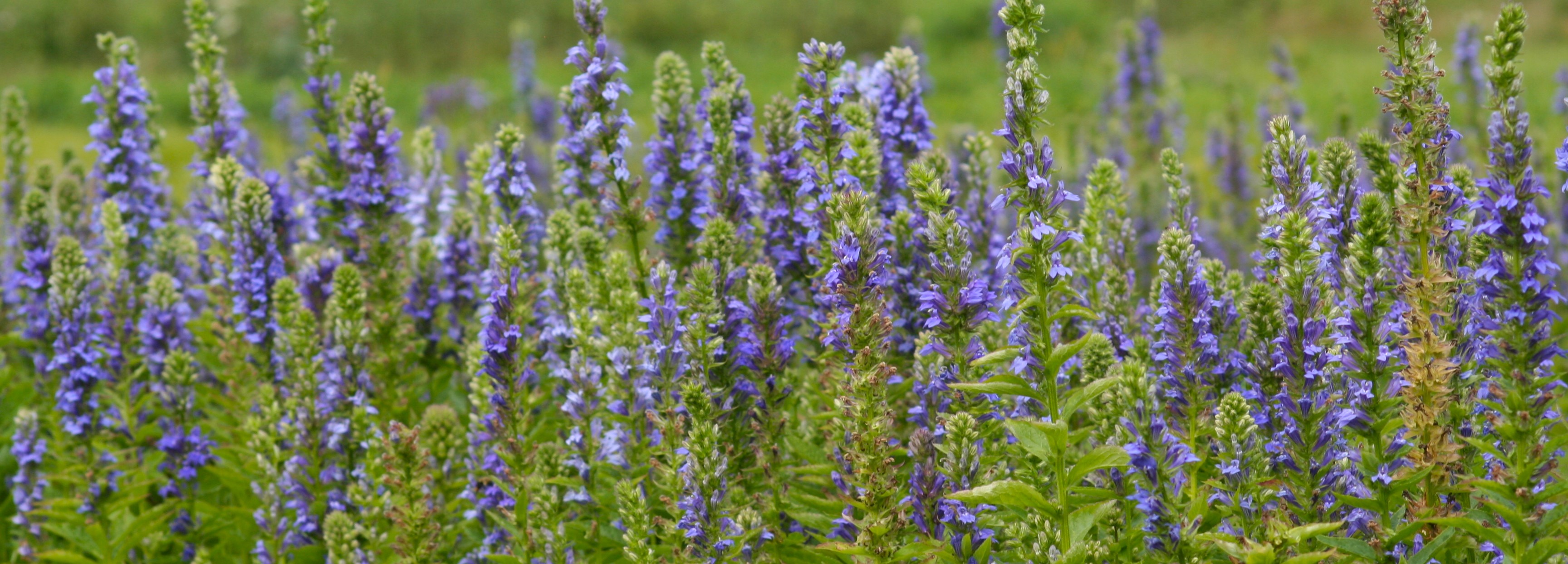
Lobelia siphilitica, L.
Alternate Common Names: blue lobelia, blue cardinal flower
Family: bellflower family (Campanulaceae)
Functional Group: forbs (wildflowers)
Description
- Life cycle and growth form
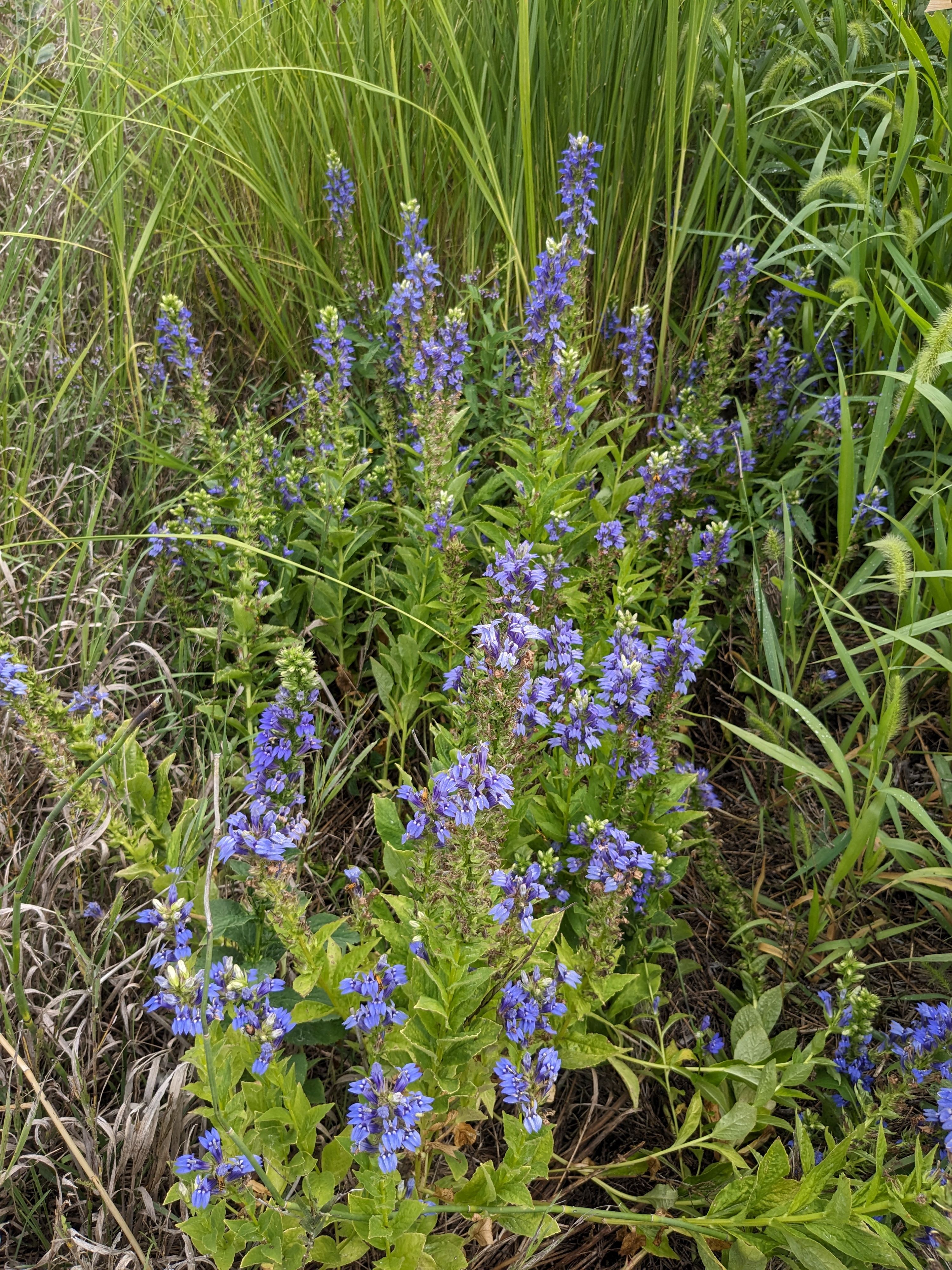
Short-lived perennial that produces small clumps of stems from vegetative offshoots.
Height: 1-4 ft
- Leaves and stem
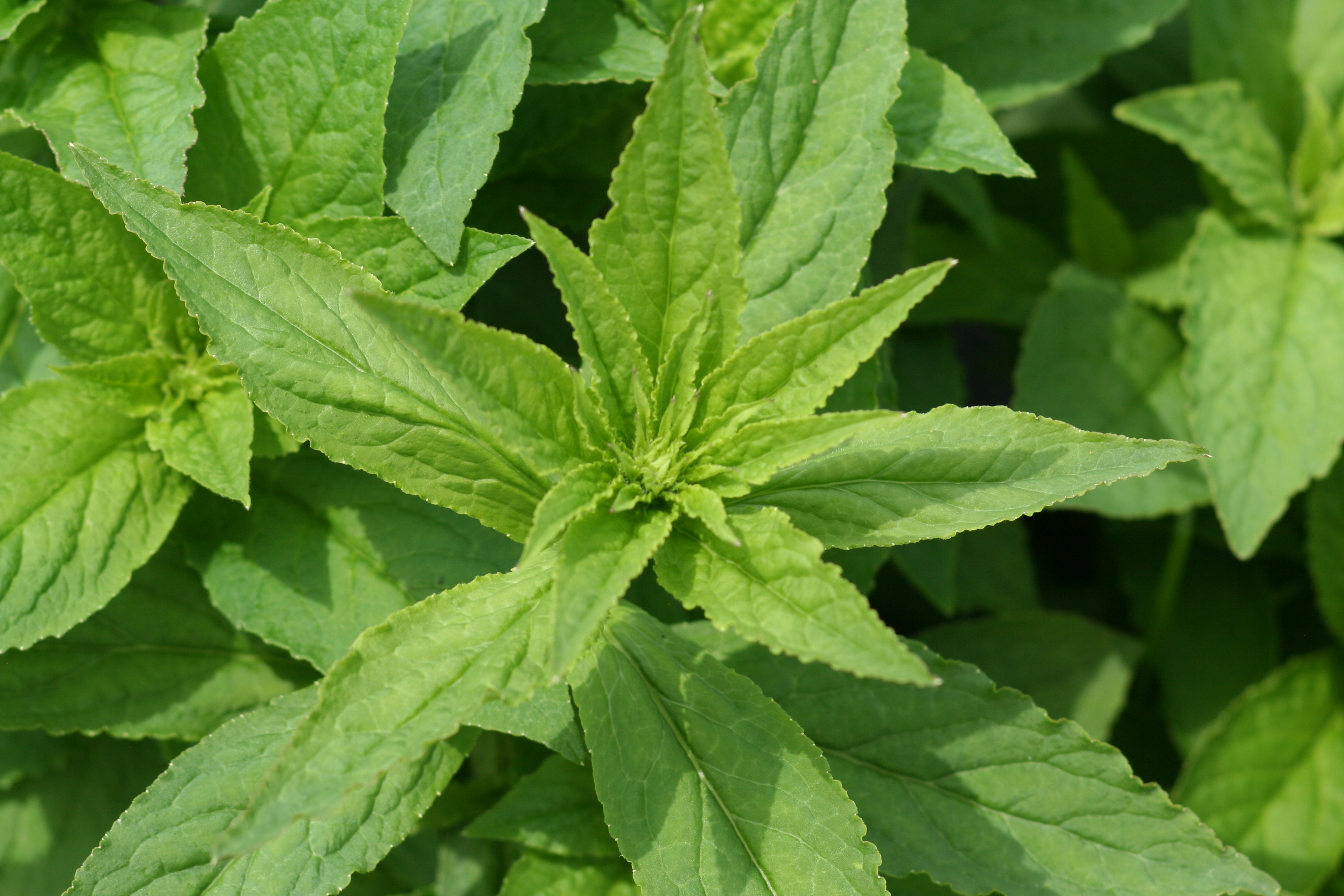
Leaves alternate, elliptical to lanceolate, 2-6 in long, with margins that are serrated and wavy, and bearing scattered short hairs; stem is usually unbranched, ridged, with short hairs on the ridges.
- Flower, fruit and seedhead
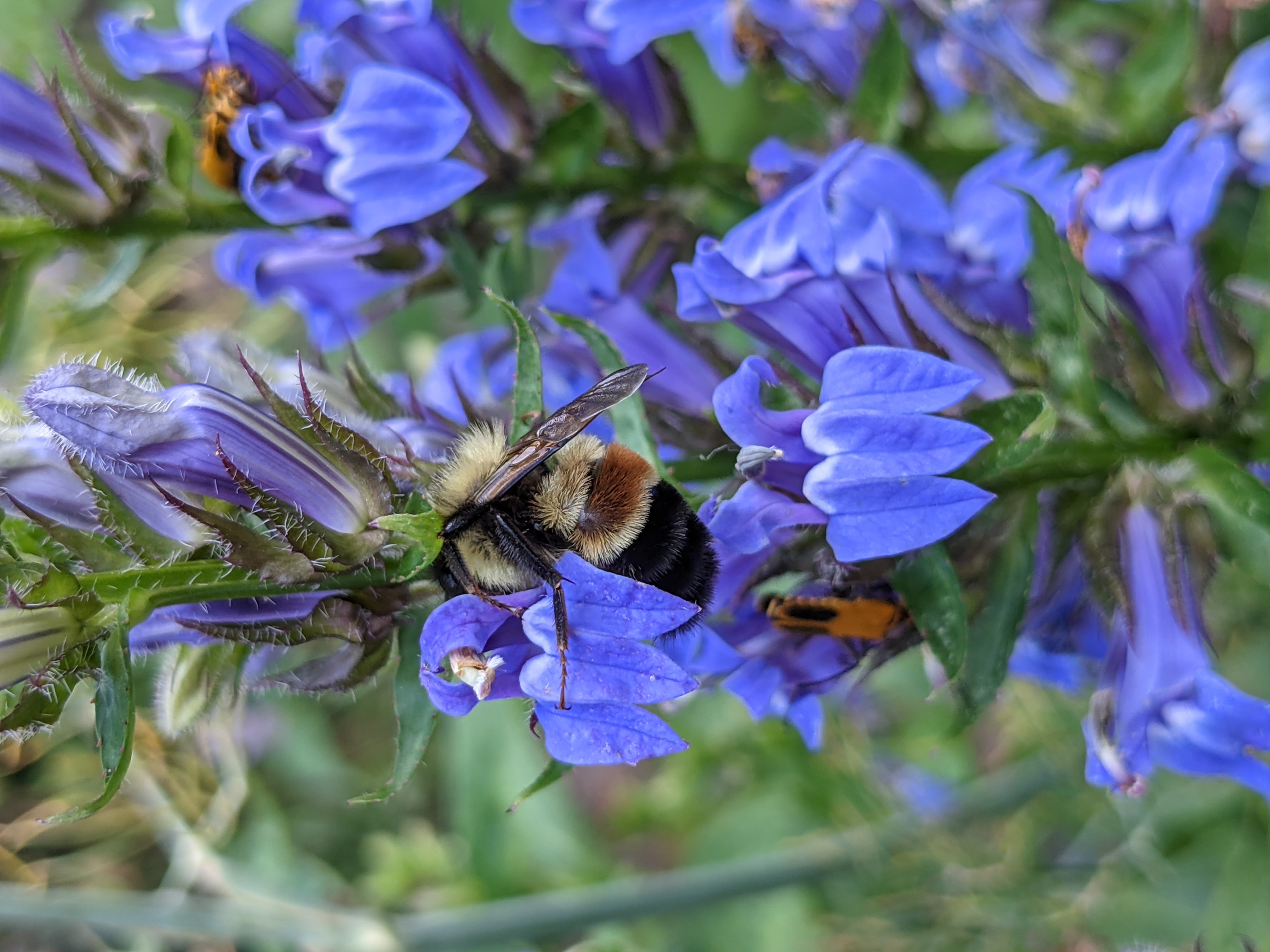
Flower: Dense, spike-like racemes 6 to 24 inches long at ends of stems; flowers (1 - 1 1/2 in wide) are intensely blue (occasionally white or light blue), two-lipped with a nectar tube.
Fruit/seed head: Two-chambered capsule releases numerous tiny seeds from openings at the top.
Pollination: Insects, primarily bumble bees and other large-bodied bees including the federally endangered rusty patched bumble bee; butterflies may also visit the flowers.
- Seed
Seed characteristics
Seed weight:
Seeds per ounce: 500,000 seeds/oz (IA NRCS)
1000 seed weight: 0.04g (Seed Information Database)
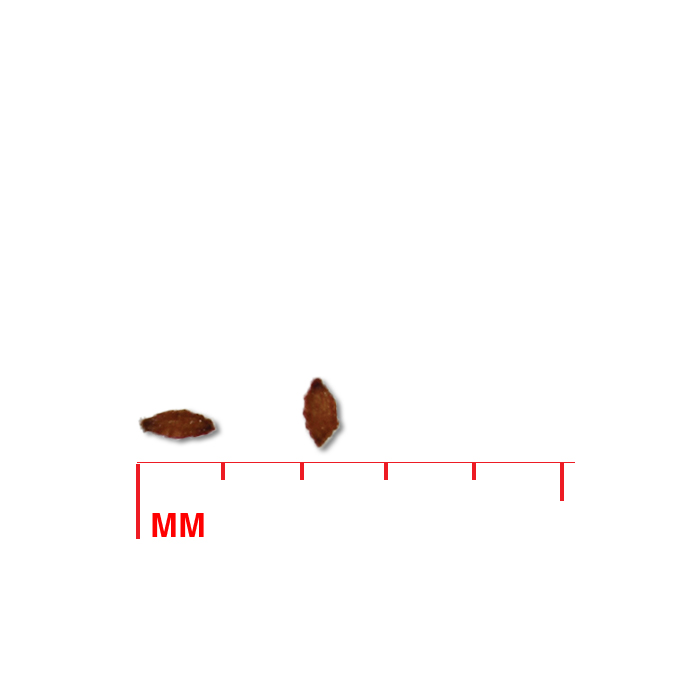
Description: Seeds are translucent, honey-colored, and elliptical in outline with an intricate, bumpy surface texture.
Typical seed test
PLS: 91% (n = 11)
Purity: 95% (n = 11)
Germination: 20% (n = 7)
Dormancy: 76% (n = 7)
(averages obtained from n tests of purchased seed lots)
- Habitat and range
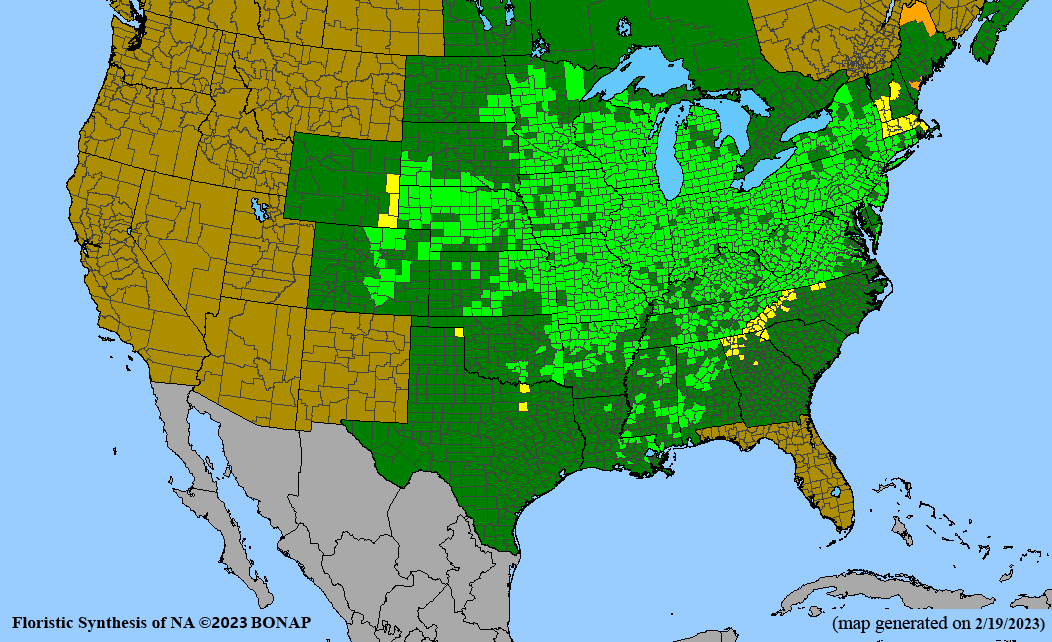
Habitat: Moist to wet soils; part shade to full sun; moist to wet prairies, fens, seeps, ditches, moist fields, openings in floodplain forests, shorelines; Wetland Indicator Status is Obligate Wetland (OBL) for the Midwest; planting in full sun in reliably moist soil or under irrigation is recommended for seed production.
Conservation status: Global- G5, secure; Maine- SX, presumed extirpated; Massachusetts and Vermont- S1, critically imperiled; Wyoming- S1/S2, critically imperiled to imperiled; Louisiana and Mississippi- S3, vulnerable; secure (S5), apparently secure (S4), or unranked in other states within its range (NatureServe)
General Comments
Great blue lobelia blooms from mid summer through fall in prairie wetlands and woodland openings, providing nectar and pollen for its primary pollinators, long-tongued bumble bees. Hummingbirds and large butterflies also visit the flowers for nectar. The plant contains toxic and bitter compounds that make it unpalatable for most mammalian herbivores. Those same toxic alkaloids have a long history of use, in controlled doses, as medicines. The species name “siphilitica” alludes to Indigenous medicinal uses, including as a treatment for syphilis and other ailments, and one of the compounds found in great blue lobelia, lobeline, has been under recent investigation for treatment of addiction and depression. The brilliant blue color and long blooming season make these flowers attractive for home gardens as well as for larger plantings. Great blue lobelia plants are relatively short-lived in seed production, but they produce heavily for a couple of years. The seed is tiny but not particularly difficult to harvest or clean.
Recommendations for Seed Production
- Establishment for seed production
Direct seeding
We do not have experience with direct seeding this species for seed production.
Greenhouse
Seed pre-treatment: Cold/moist stratification for 60 days is recommended. Some sources suggest this step is unnecessary, however seed test results indicate that nearly 80% of seed has dormancy. Skipping the stratification step could reduce the proportion of plants with this trait in the restoration seed supply.
Sowing: Surface sow in the greenhouse at least 2 months before the last frost. Use caution when watering to avoid splashing seed. Seedlings are very tiny but fast growing, producing many fibrous roots and a leafy basal rosette, and starting the seeds in wide plugs that allow them room works well (e.g., 6X6 plug inserts in a standard 10X20 greenhouse flat).
Transplanting: When plugs are well rooted, move them outside to harden off and transplant them at 8-12 in spacing into irrigated rows with plastic mulch after danger of frost is past.
- Stand management
Weeds: Prepare a clean, weed-free bed and use plastic mulch to suppress weeds in the planting year. Widening the holes or removing the mulch in the second growing season allows new offsets to grow, producing small clumps of stems. Hand weed or rogue out very small-seeded weeds to avoid contaminating the seed crop.
Pests: None noted.
Diseases: None noted.
Hybridization risk: This species is known to hybridize with related species in the genus Lobelia such as L. cardinalis and L. spicata. Maintain separation distances between production fields of these species.
- Seed production
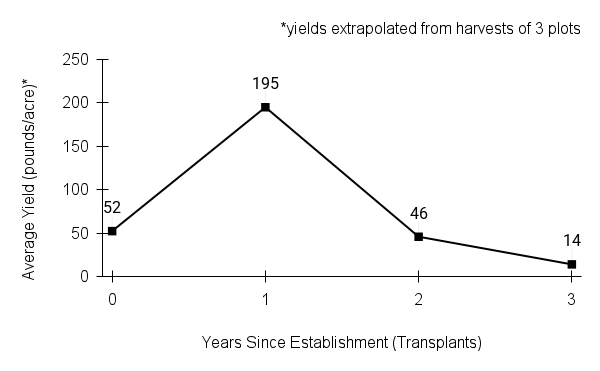 First harvest: Some flowering and seed set is expected in the establishment year, but peak harvest is in year 2.
Yield/acre: 50 - 200 pounds per acre (extrapolated from harvests of 3 production plots)
Stand life: Short-lived plants produce peak harvest in year 2, then production declines rapidly.
Flowering date: late July through September in northeast Iowa
Seed maturity/Harvest date: early to mid October in northeast Iowa
Harvest date range at TPC (2003-2011): Sept 5 - Oct 18
Recommended harvest method: Combine with air turned all the way down to avoid dispersing the tiny seeds. Hand pick early maturing stems to avoid losing their genetics from the production population.
- Seed cleaning and storage
Cleaning process: Pass combined material through 1/4 in mesh to remove larger debris, then airscreen. Crush handpicked stems, screen, then airscreen.
Seed storage: cool/dry (33-50° F, 30-50% RH)
Released Germplasm
Source Identified material: Natural Selections/Iowa Ecotype Zone 1 (northern Iowa), Zone 2 (central Iowa), Zone 3 (southern Iowa)
Cultivated varieties (cultivars): Horticultural selections are available for landscape design applications. However, the straight species by itself is a wonderful addition to a garden, is easy to grow from seed, and persists for years through self-seeding.
- References
Chayka, K. (n.d.). Lobelia siphilitica (blue lobelia). Minnesota Wildflowers. https://www.minnesotawildflowers.info/flower/blue-lobelia
Cochrane, T. S., Elliot, K., & Lipke, C. S. (2014). Great blue lobelia. In Prairie plants of the University of Wisconsin-Madison Arboretum (3rd ed., p. 234). University of Wisconsin-Madison Arboretum.
Hilty, J. (2019). Great Blue Lobelia - Lobelia siphilitica. Illinois Wildflowers. https://www.illinoiswildflowers.info/wetland/plants/gb_lobeliax.htm
Kartesz, J.T., The Biota of North America Program (BONAP). 2023. North American Plant Atlas. (http://bonap.net/napa). Chapel Hill, N.C. [maps generated from Kartesz, J.T. 2023. Floristic Synthesis of North America, Version 1.0. Biota of North America Program (BONAP). (in press)]
Moerman, D. (2003). Native American ethnobotany database. BRIT. http://naeb.brit.org/
NatureServe. 2024. NatureServe Network Biodiversity Location Data accessed through NatureServe Explorer [web application]. NatureServe, Arlington, Virginia. Available https://explorer.natureserve.org/. (Accessed: February 29, 2024).
Prairie Moon Nursery. (n.d.). Lobelia siphilitica. https://www.prairiemoon.com/lobelia-siphilitica-great-blue-lobelia-prairie-moon-nursery.html
Society for Ecological Restoration, International Network for Seed Based Restoration and Royal Botanic Gardens Kew. (2023) Seed Information Database (SID). Available from: https://ser-sid.org/ (February 2023)
USDA NRCS National Plant Data Team. (n.d.). Lobelia siphilitica L. USDA plants database. https://plants.usda.gov/home/plantProfile?symbol=LOSI
Species Guide Updated 12/22/2025