American water horehound
American water horehound dickeye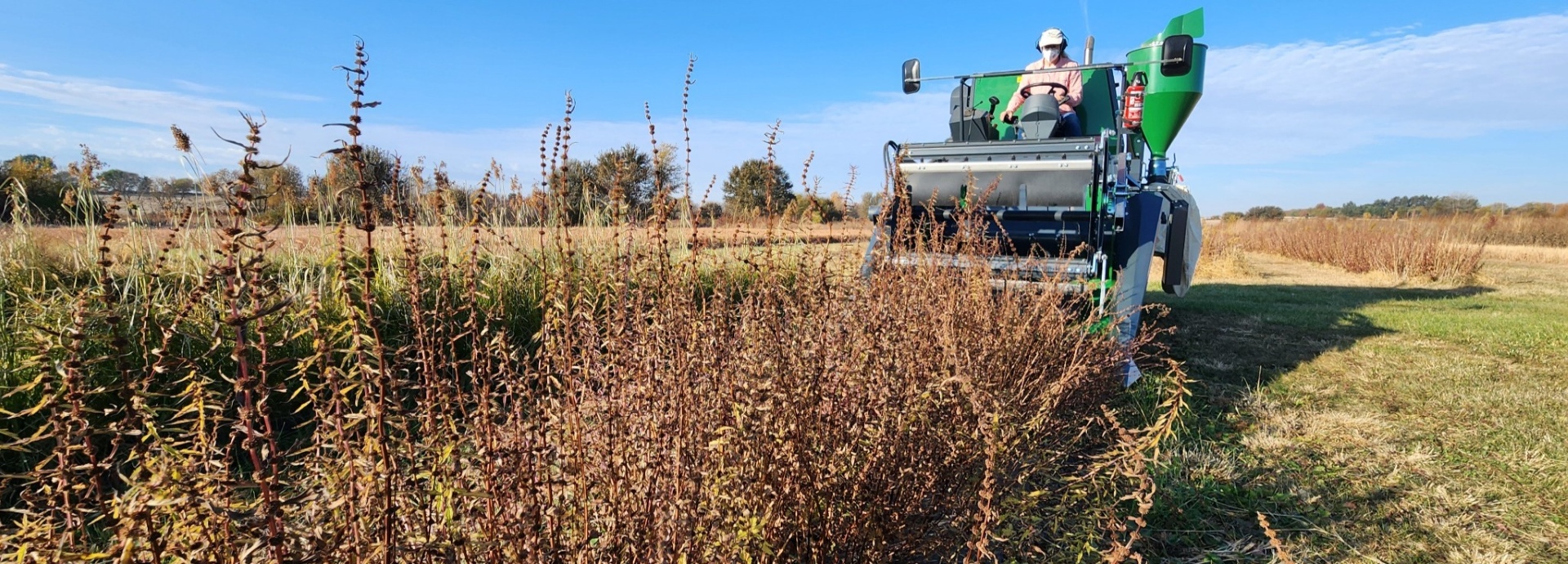
Lycopus americanus Muhl. ex W.P.C. Barton
Alternate Common Names: American bugleweed, cut-leaved bugleweed
Scientific Synonyms: Lycopus americanus Muhl. ex W.P.C. Barton var. longii Benner, Lycopus americanus Muhl. ex W.P.C. Barton var. scabrifolius Fernald, Lycopus sinuatus Elliott
Family: Mint family (Lamiaceae)
Functional Group: forbs (wildflowers)
Description
- Life cycle and growth form
Perennial with sprawling stems when not supported by neighboring plants, spreading by rhizomes to form loose to dense colonies.
Height: 1 - 2.5 ft

- Leaves and stem

Leaves opposite, larger and more deeply lobed near the base of the plant, nearly hairless, no minty scent when crushed, often turning purplish red in fall; stem four-angled, grooved, and mostly hairless, typically unbranched or with few branches.
- Flower, fruit and seedhead
Flower: Small (1/8 in) white flowers in dense clusters at leaf axils, calyx (sepals) fused into a tube with 5 triangular lobes; flower clusters bloom from the bottom to the top of the plant over the long flowering period.
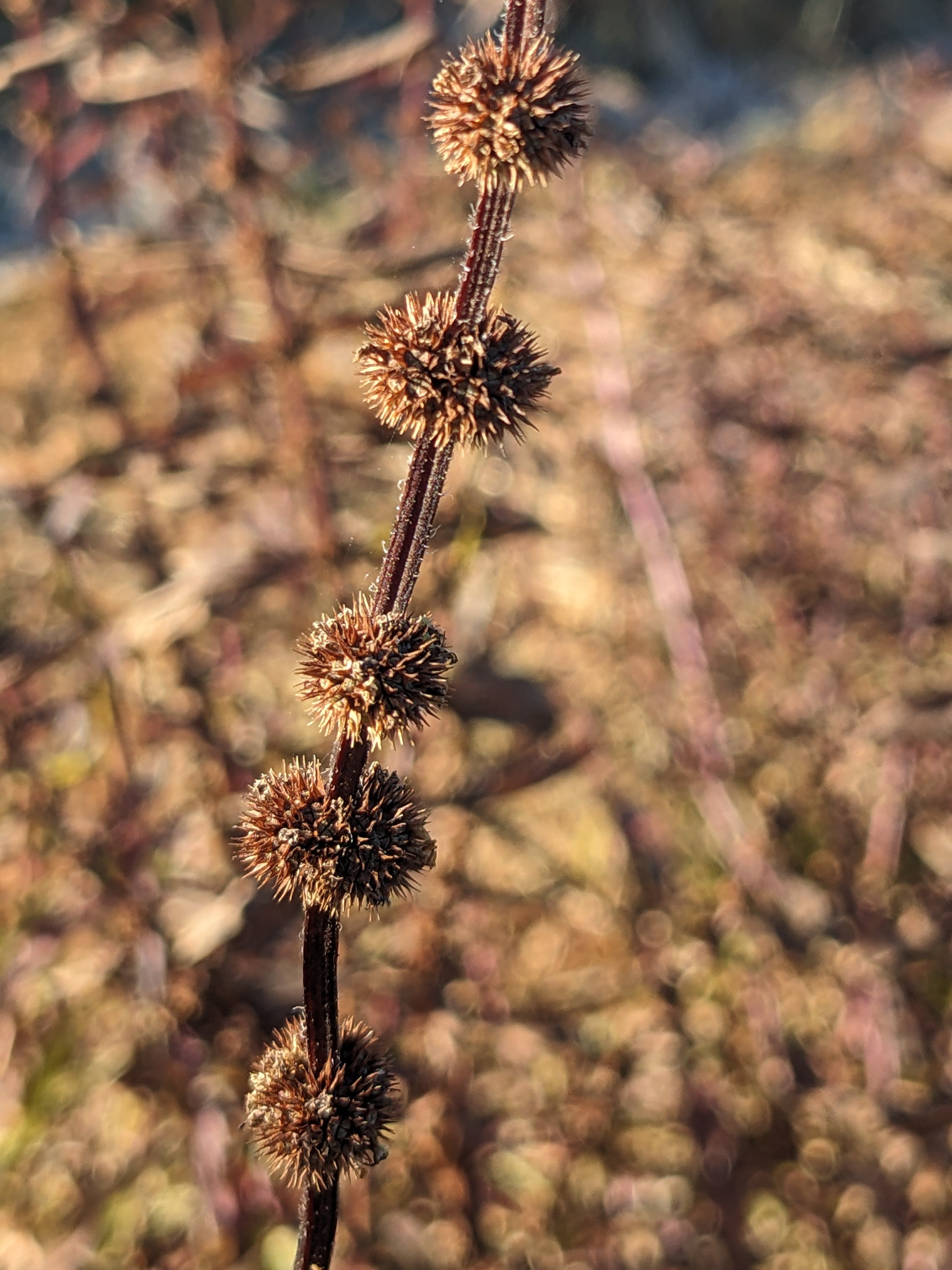
Fruit/seed head: Four nutlets form in each calyx tube; nutlets are shorter than the calyx lobe, helping to distinguish this species from northern bugleweed (L. uniflorus).
Pollination: Small bees, wasps, flies, and other insects.
- Seed
Seed characteristics
Seed weight:
Seeds per ounce: 155,000 (Prairie Moon Nursery)
1000 seed weight: 0.14 g (Seed Information Database)
Description: Seed unit is a wedge-shaped, medium-brown nutlet, about 1 mm long, with clear beads of resin on one surface. Markings in the seed photo show millimeters.
Typical seed test
PLS: 73.8% (n=4)
Purity: 81.5% (n=4)
Germination: 2% (n=2)
Dormancy: 40% (n=2)
(averages obtained from n tests of purchased seed lots)
- Habitat and range
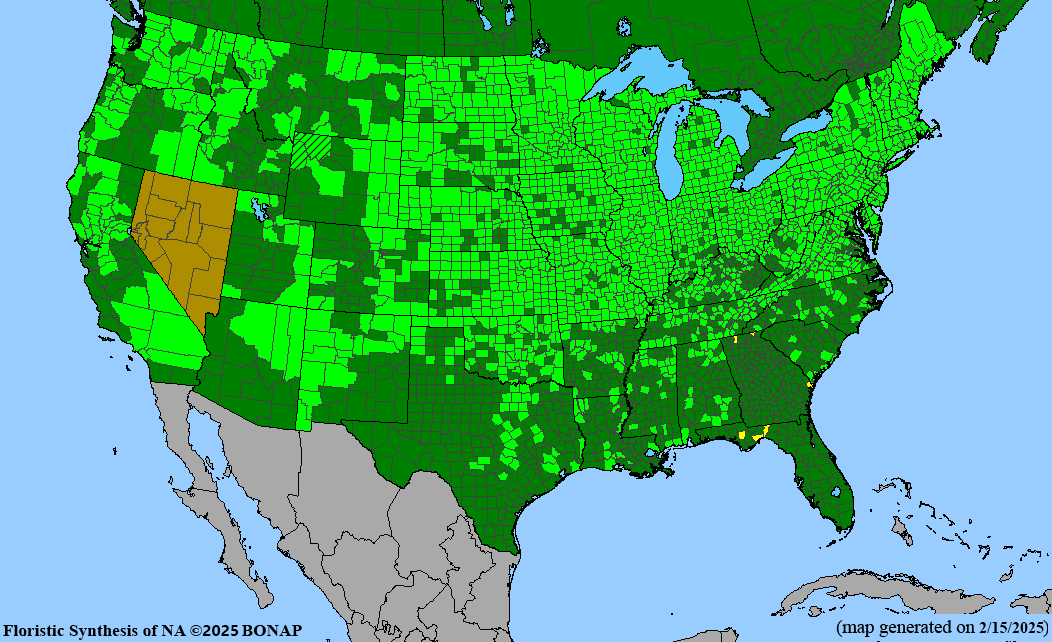
Habitat: Moist to wet soils, full sun to partial shade; disturbed to high quality wet prairies, fens, marshes, shores, ditches; Wetland Indicator Status is OBL (obligate, almost always found in wetlands); irrigation is needed for seed production.
Conservation status: Global- G5 (secure); Colorado- S3 (vulnerable); North Carolina, South Carolina- S2 (imperiled); Alaska, Georgia- S1 (critically imperiled); in all other states, status is S4 (apparently secure) to S5 (secure) or unranked.

General Comments
American water horehound is not a particularly showy plant, but its long flowering time provides nectar and pollen resources for small bees, wasps, flies, and other pollinators for much of the summer into early fall. This species is found in both high quality and more disturbed remnant habitats in our region. While collecting this species for development of Iowa Source Identified stock seed, we found American water horehound in nearly every remnant wet prairie, sedge meadow, fen, or marsh we visited. This species even persists in some sites that are now dominated by cattails and reed canary grass. This species grows quickly from plugs in irrigated production rows and is productive in the establishment year. The vegetative spread of the plants produces a dense, leafy canopy that excludes many weeds, and harvesting and cleaning the seed is uncomplicated.
Recommendations for Seed Production
- Establishment for seed production
Direct seeding
We do not have experience with direct seeding this species for seed production.
Greenhouse
Seed pre-treatment: 60 days cold/moist stratification.
Sowing: Surface sow in greenhouse about 2 months before last frost. Use caution when watering to avoid splashing out small seeds. Most seeds will germinate within two weeks of sowing and grow vigorously.
Transplanting: When plugs are well rooted, move them outside to harden off, then transplant into irrigated rows with plastic mulch at 8-12 in spacing.
- Stand management
Weeds: Prepare a clean, weed-free bed. Plastic mulch suppresses weeds in the first growing season but should then be removed to allow vegetative spread of plants. Plants grow densely and exclude many weeds. Mow or cultivate between rows. Hand rogue small seeded weeds that could contaminate the seed.
Pests: None noted.
Diseases: None noted.
- Seed production
 First Harvest: Plants grow rapidly, flower and set seed in their first growing season from transplants.
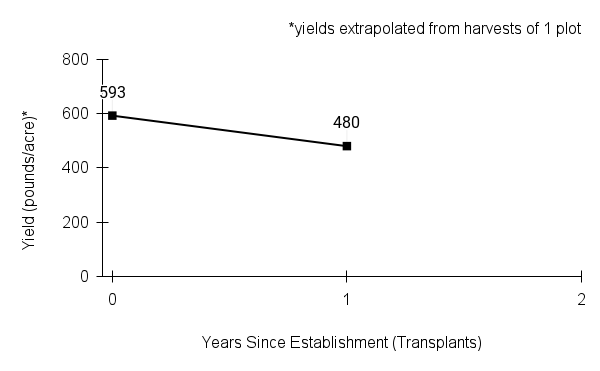
Yield: 480 - 600 pounds/acre (extrapolated from harvests of one plot)
Stand Life: The first year’s harvest may be the highest yielding. We observed slightly lower yields in the second year and will continue to track yields for another year or two.
Flowering Date: late June - early Sept
Seed maturity/Harvest date: mid to late October
Seed retention: low risk of shattering
Harvest date range at TPC (2024-2025): Oct 20 - Oct 21
Recommended Harvest Method: combine (may need fairly high threshing speed)
- Seed cleaning and storage
Cleaning process: Pass combined material through 1/2 in and 1/4 in mesh to remove larger debris, then airscreen 2-3 times.
Seed storage: cool/dry (33-50° F, 30-50% RH)
Released Germplasm
Source Identified material: Natural Selections/Iowa Ecotype Zone NI (aligned with the Generalized Provisional Seed Zones of the US Forest Service)
- References
Bower, Andrew D.; St.Clair, J. Bradley; Erickson, Vicky. 2014. Generalized provisional seed zones for native plants. Ecological Applications. 24(5): 913-919.
Chayka, K. (n.d.). Lycopus americanus (American water horehound). Minnesota Wildflowers. https://www.minnesotawildflowers.info/flower/american-water-horehound
Hilty, J. (2019). American bugleweed - Lycopus americanus. Illinois Wildflowers. https://www.illinoiswildflowers.info/wetland/plants/am_bugleweed.htm
Kartesz, J.T., The Biota of North America Program (BONAP). 2023. North American Plant Atlas. (http://bonap.net/napa). Chapel Hill, N.C. [maps generated from Kartesz, J.T. 2023. Floristic Synthesis of North America, Version 1.0. Biota of North America Program (BONAP). (in press)]
NatureServe. 2024. NatureServe Network Biodiversity Location Data accessed through NatureServe Explorer [web application]. NatureServe, Arlington, Virginia. Available https://explorer.natureserve.org/. (Accessed: December 18, 2025).
Prairie Moon Nursery. (n.d.). Lycopus americanus. https://www.prairiemoon.com/lycopus-americanus-water-horehound
Society for Ecological Restoration, International Network for Seed Based Restoration and Royal Botanic Gardens Kew. (2023) Seed Information Database (SID). Available from: https://ser-sid.org/ (February 2023)
USDA NRCS National Plant Data Team. (n.d.). Lycopus americanus Muhl. ex W.P.C. Barton. USDA plants database. https://plants.usda.gov/plant-profile/LYAM
Species Guide Updated 12/19/2025