Buxbaum's sedge
Buxbaum's sedge dickeye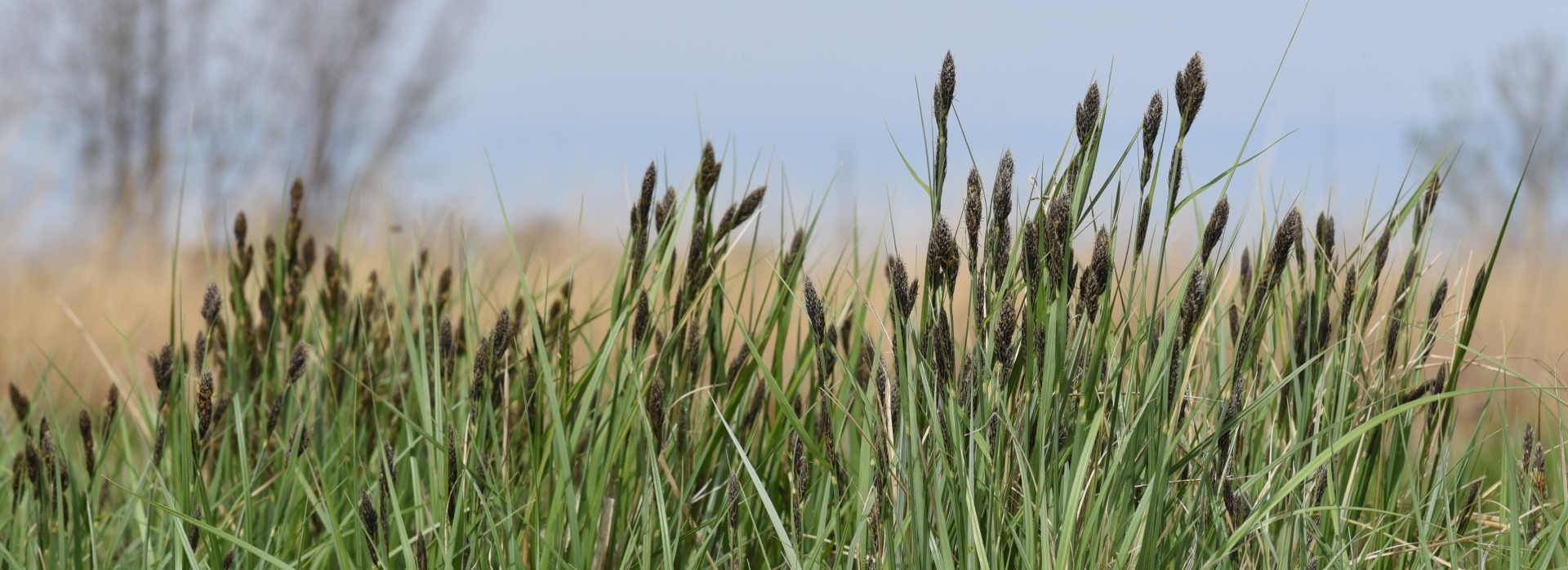
Carex buxbaumii, Wahlenb.
Alternate Common Name: brown bog sedge
Scientific Synonym(s): Carex buxbaumii var. anticostensis Raymond, Carex holmiana, Carex polygama Mackenzie
Family: sedge family (Cyperaceae)
Functional Group: sedges and rushes
Description
- Life cycle and growth form
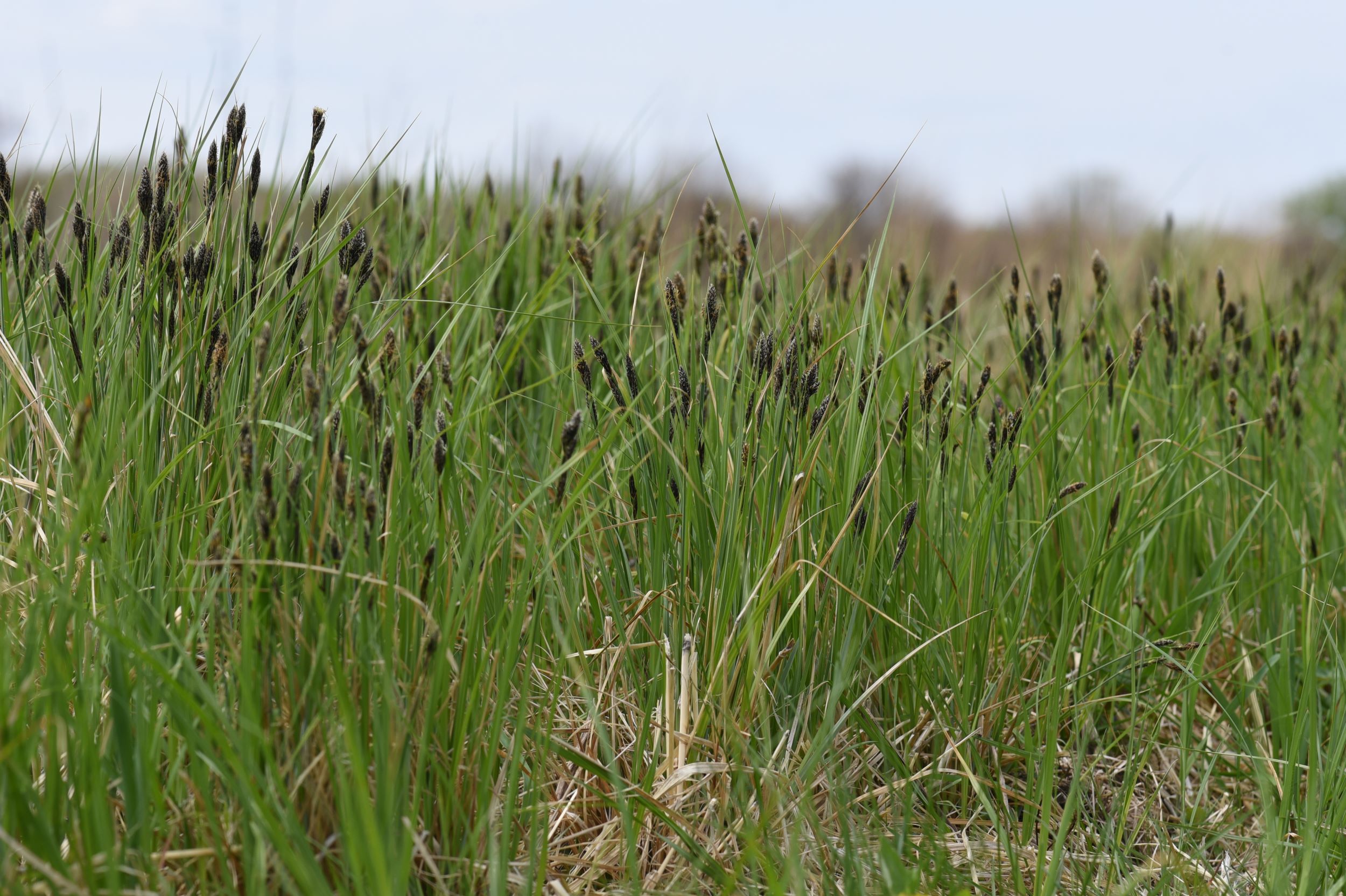
Perennial, long-rhizomatous, forming large stands with a distinctive bluish-green color compared with the yellow-green of most sedges.
Height: 1-2.5 ft
- Leaves and stem
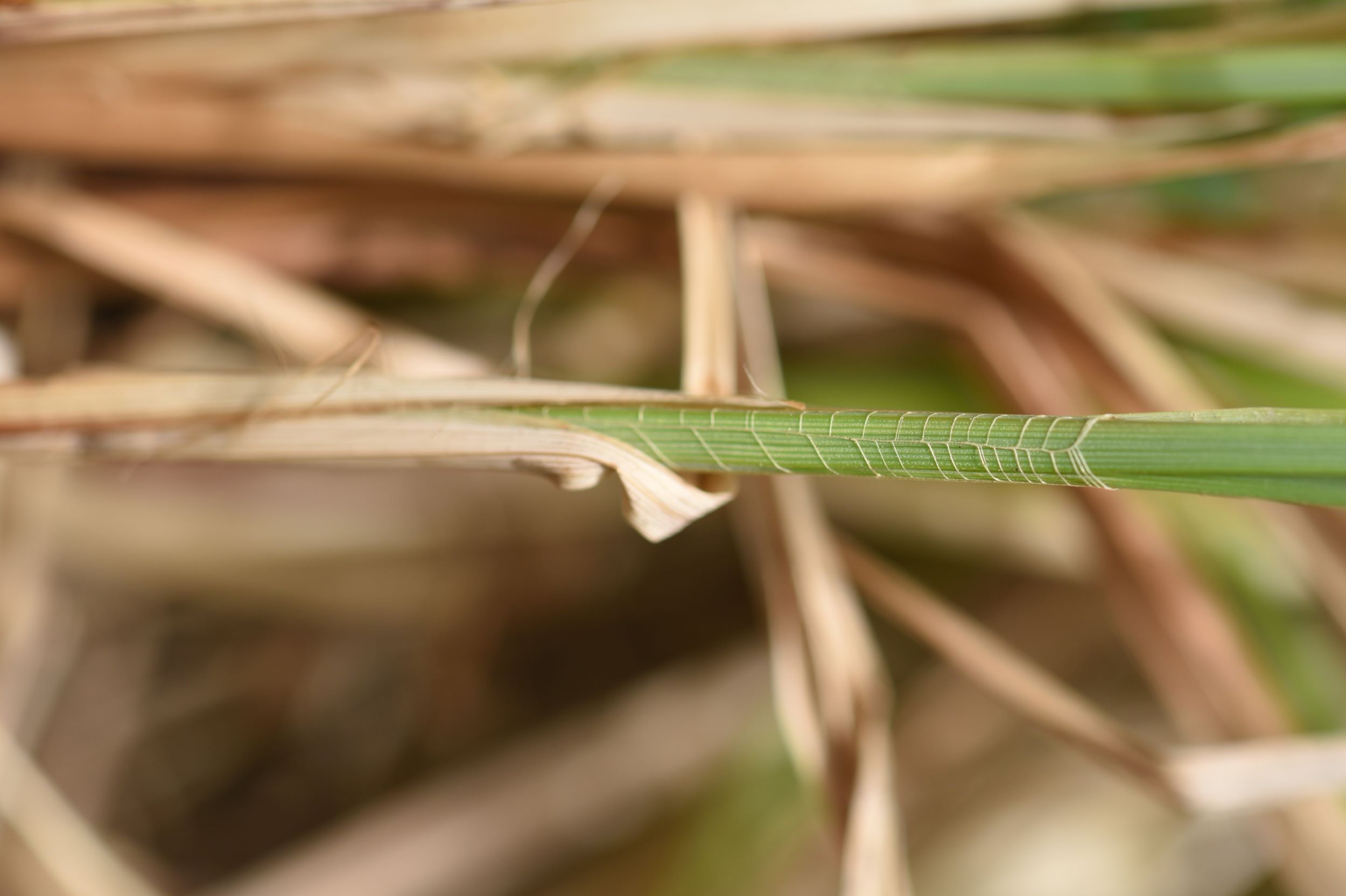
Leaves flat, hairless, and rough on the edges; lower sheaths are rusty brown and ladder fibrillose (made of evenly spaced, linked fibers) near their tops, flowering stems are stiff and 3-sided, smooth.
- Flower, fruit and seedhead
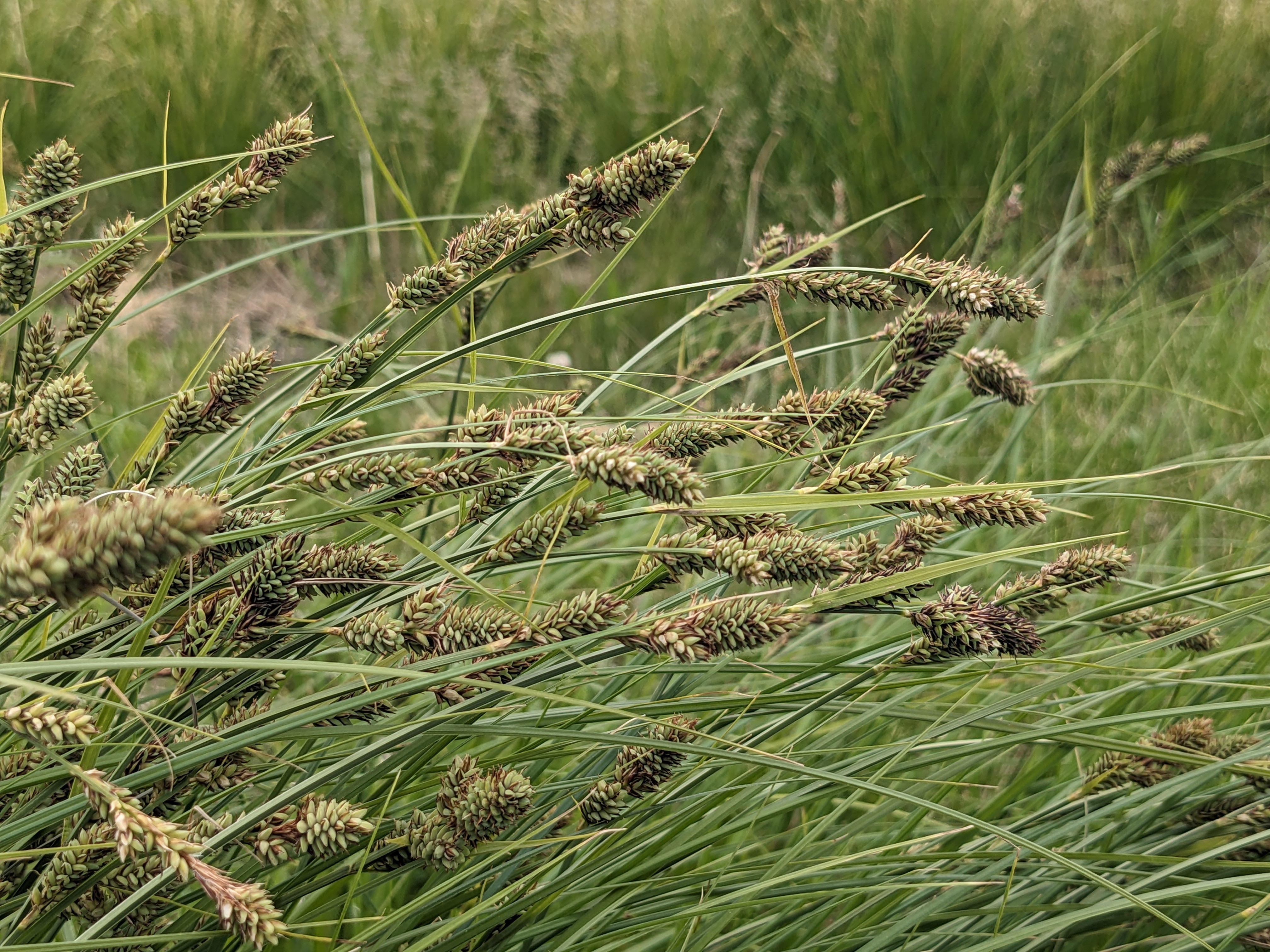
Fruit/seedhead: 1-4 spikes per plant; pistillate spikes bear up to 40 perigynia per spike, distinctive scales are red-purple to dark brown with a green midvein, perigynia (papery coverings around each “seed”) are hairless and gray-green, can be beakless or have a tiny beak, “seeds” (achenes) are 3-sided.
Pollination: wind
- Seed
Seed characteristics
Seed weight:
Seeds per ounce: 14,500 (IA NRCS)
1000 seed weight: 1.66 g (Seed Information Database)
Description: Seed unit is an achene (2 mm long) with surrounding perigynium (1.5 x 3 mm); perigynia are gray-green with lighter veins and a very short beak; achene is three-sided and brown.
Typical seed test
unknown at this time.
- Habitat and range
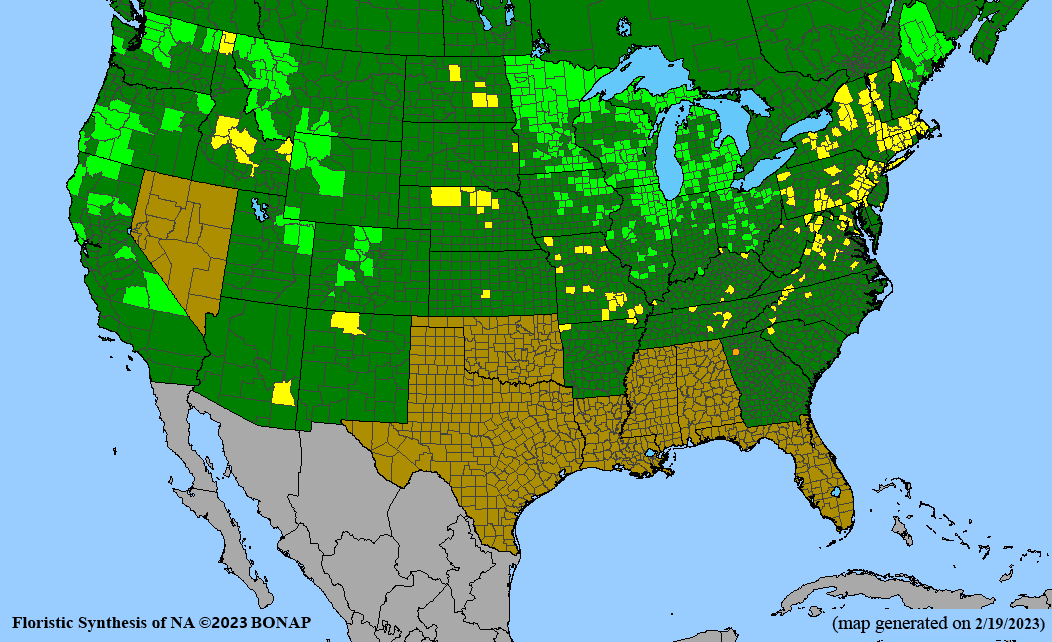
Habitat: Mesic to wet soil; partial to full sun; prairie swales, meadows, fens, marshes, ditches; Wetland Indicator Status is Obligate Wetland (OBL) for the Midwest; irrigation is recommended for seed production.
Conservation status: Global- G5, secure; District of Columbia and Georgia- SH, possibly extirpated; Arkansas, Connecticut, Delaware, Kansas, Kentucky, New Hampshire, South Carolina, South Dakota, Tennessee, and Vermont- S1, critically imperiled; Maryland, Missouri, Nebraska, Nevada, Massachusetts, New York, North Carolina, North Dakota, Virginia, and West Virginia- S2, imperiled; California, Idaho, New Jersey, Pennsylvania, Washington, Wyoming, and Illinois- S3, vulnerable (NatureServe)

General Comments
Sedges are a large, diverse group of grass-like plants that are important components of prairies, wetlands, and woodlands across our region. In Iowa alone, there are about 120 species of sedges. Grasshoppers and the larvae of skippers and other butterflies and moths feed on wetland sedge foliage, and their seeds are eaten by waterfowl and other birds. Sedges are notoriously difficult to identify to species. Buxbaum’s sedge is distinguishable by, among other characteristics, its rhizomatous habit, bluish green foliage, and dark purplish-brown scales in the seedheads (spikelets). The development of stock seed by the Tallgrass Prairie Center in the early 2000s enabled broader access to reliably identified sedge species by native seed growers. As an obligate wetland species, Buxbaum’s sedge benefits from irrigation in production settings.
Recommendations for Seed Production
- Establishment for seed production
Direct seeding
We do not have experience with direct seeding this species for seed production.
Greenhouse
Seed pre-treatment: Benefits from cold-moist stratification for at least 60 days.
Sowing: Sow in germination flats, covering seed lightly (light improves germination of many sedge species); germination may be slow and sporadic. Daytime temperatures should be around 70-80°F (22-27°C) and allowed to drop at night to 50-60°F (10-15°C). We have had good success dibbling seedlings into 2.5 in deep, 73-cell plug flats that are ridged to direct root development downward and have 3/4 in bottom openings to encourage root pruning and the formation of firmly rooted plugs for transplanting.
Transplanting: Seedlings are ready to transplant to the field about 14-16 weeks after sowing. Pop out a few plugs to check for adequate root development that will provide sturdy plugs for planting. A week or two before transplanting, move flats outside to ‘harden off.’
- Stand management
Weeds: Plastic mulch reduces weed pressure in the first year or more. Plastic must eventually be removed to allow the plants to spread by rhizomes. A well-established stand outcompetes many weeds. In large-scale production systems or those where the use of weed barriers and/or hand weeding is not practical, broad-leaf herbicides and/or pre-emergent herbicides may be useful to prevent weeds from competing with the sedge plants and/or complicating the seed cleaning process. Significant weed problems may be caused by winter annuals (e.g., members of the mustard family), other small-seeded broad-leaf annuals, and annual grasses (e.g., downy brome). Herbicide applications should be timed to most effectively control specific weeds and minimize damage to the sedge plants. Care must be taken to read affected “weed” lists, as sedges are considered weeds in crop systems. Always read and follow label instructions.
Pests: None noted.
Diseases: None noted.
- Seed production
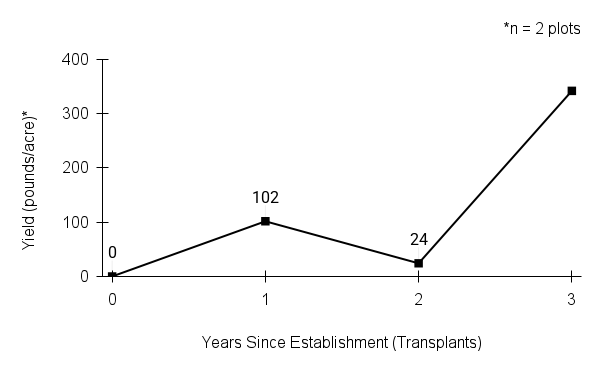 First harvest: Small amounts may be produced in the first and second years after transplanting.
Yield/acre: 24-340 lbs per acre
Stand life: Appears to take 3 years to reach peak production; plants are likely long-lived, but uncertain whether yields will be sustained or sporadic; mowing in fall or winter may improve yields in subsequent seasons.
Flowering date: May in northern Iowa
Seed maturity/harvest date: Mid to late June in NE Iowa.
Seed retention: Moderate shattering observed.
Harvest date range at TPC (2010-2011, 2025): June 16 - 27
Recommended harvest method: Combine at maturity; seed threshes cleanly.
- Seed cleaning and storage
Cleaning process: Air-dry combined material for two weeks or more after harvest. Pass material through a coarse screen (1/2 in hardware cloth) to remove larger stemmy material, if needed, then air screen.
Seed storage: Cool/dry (33-50° F, 30-50% RH)
Released Germplasm
Source Identified material: Natural Selections/Iowa Ecotype Zone Iowa
- References
Carex buxbaumii (Buxbaum’s Sedge). Minnesota Wildflowers. (n.d.). https://www.minnesotawildflowers.info/grass-sedge-rush/buxbaums-sedge
Cochrane, T. S., Elliot, K., & Lipke, C. S. (2014). Buxbaum’s Sedge. In Prairie Plants of the University of Wisconsin-Madison Arboretum (3rd ed., p. 161). essay, University of Wisconsin-Madison Arboretum.
Kartesz, J.T., The Biota of North America Program (BONAP). 2023. North American Plant Atlas. (http://bonap.net/napa). Chapel Hill, N.C. [maps generated from Kartesz, J.T. 2023. Floristic Synthesis of North America, Version 1.0. Biota of North America Program (BONAP). (in press)]
Murray, D. F. (2020, November 5). Carex buxbaumii Wahlenberg. Flora of North America. http://floranorthamerica.org/Carex_buxbaumii
NatureServe. 2024. NatureServe Network Biodiversity Location Data accessed through NatureServe Explorer [web application]. NatureServe, Arlington, Virginia. Available https://explorer.natureserve.org/. (Accessed: February 29, 2024).
USDA NRCS National Plant Data Team. (n.d.). Carex buxbaumii Wahlenb.. USDA plants database. https://plants.usda.gov/home/plantProfile?symbol=CABU6
Species Guide Updated 12/2/2024