butterfly milkweed
butterfly milkweed dickeye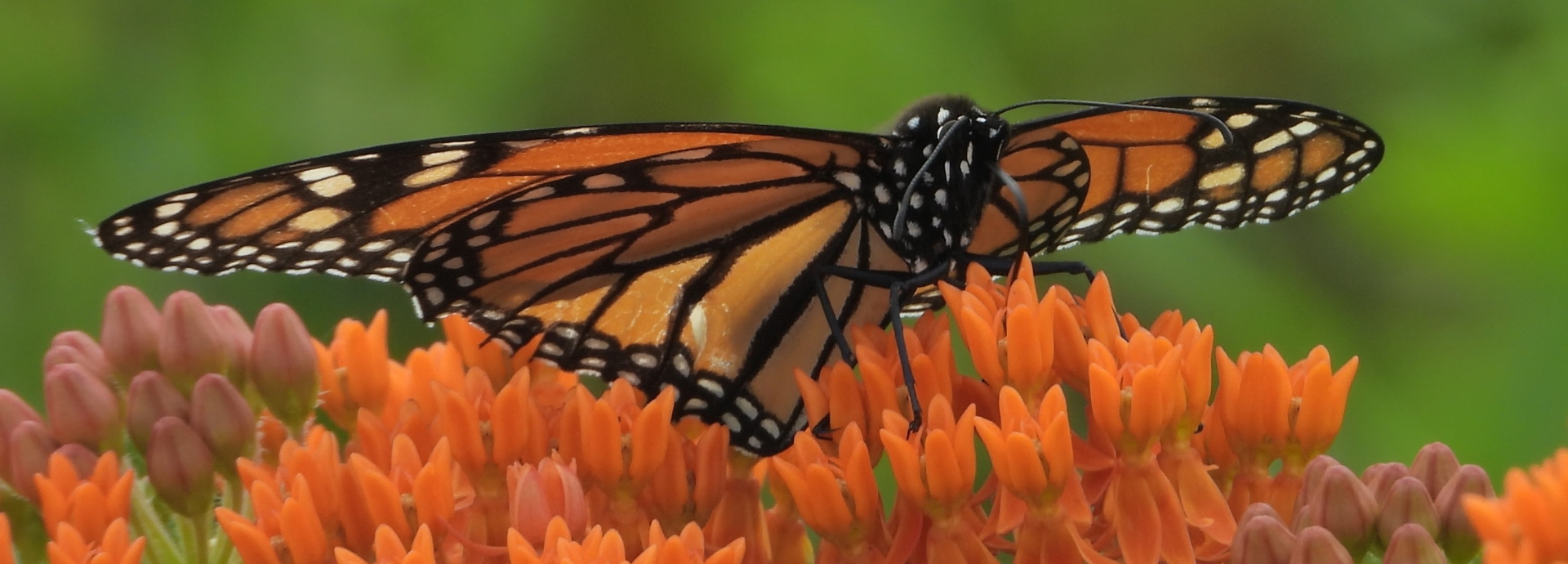
Asclepias tuberosa L.
Alternate Common Names: butterfly weed, pleurisy root, yellow milkweed, orange swallowwort, orangeroot, whiteroot, Indian posy, windroot, Canada tuber, Canada flux, chigger flower
Family: milkweed family (Asclepiadaceae)
Functional Group: forbs (wildflowers)
Description
- Life cycle and growth form
Perennial with a woody taproot that forms elongated tubers, can form clumps of many stems but does not spread by rhizomes.
Height: 1-2.5 ft
- Leaves and stem
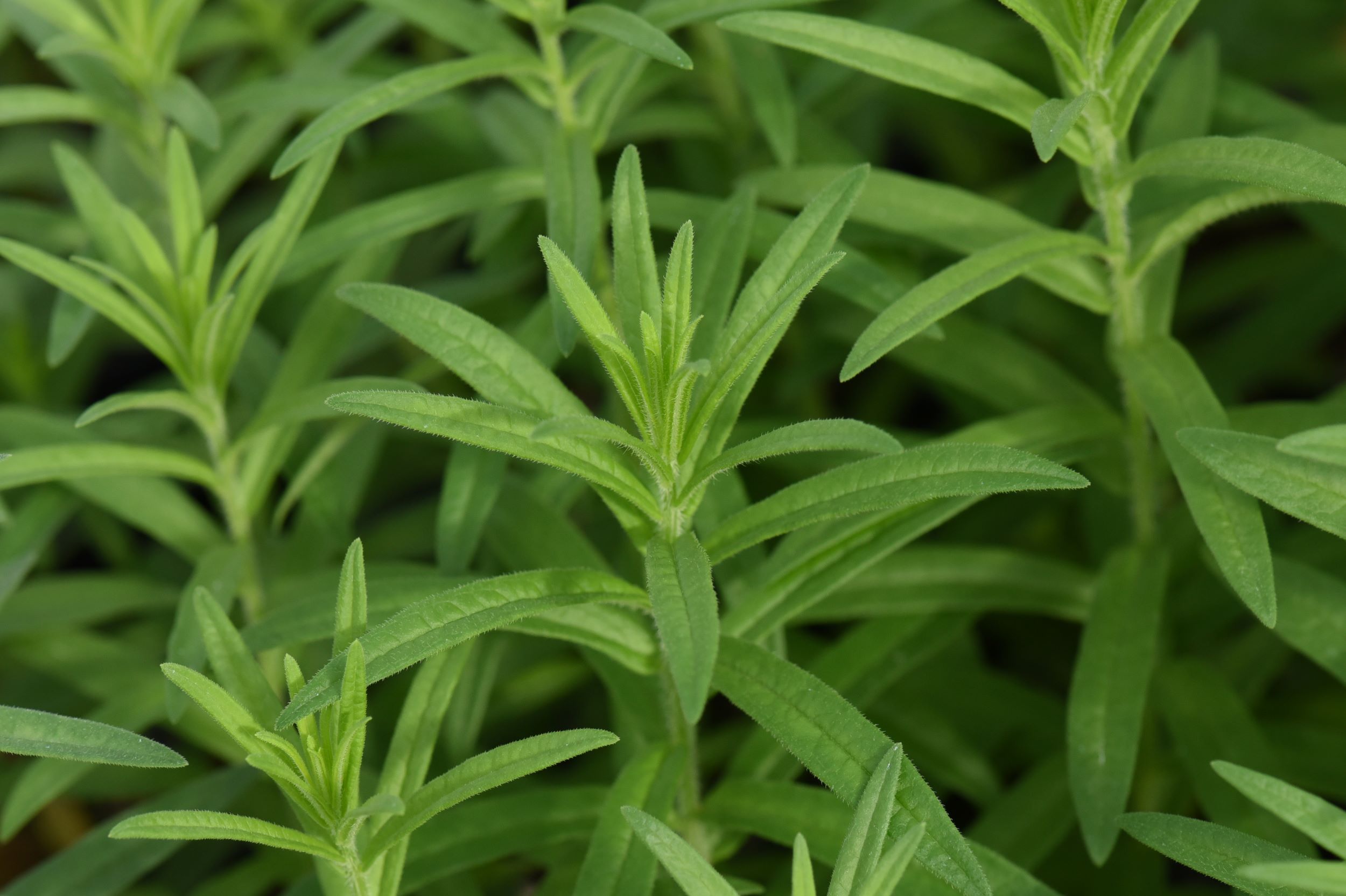
Alternate leaves are lance-shaped with entire margins and dense to scattered hairs, short stalked or nearly sessile on the stem; stems are visibly hairy, branched, green to reddish in color. Unlike other milkweeds, butterfly milkweed has no milky sap.
- Flower, fruit and seedhead
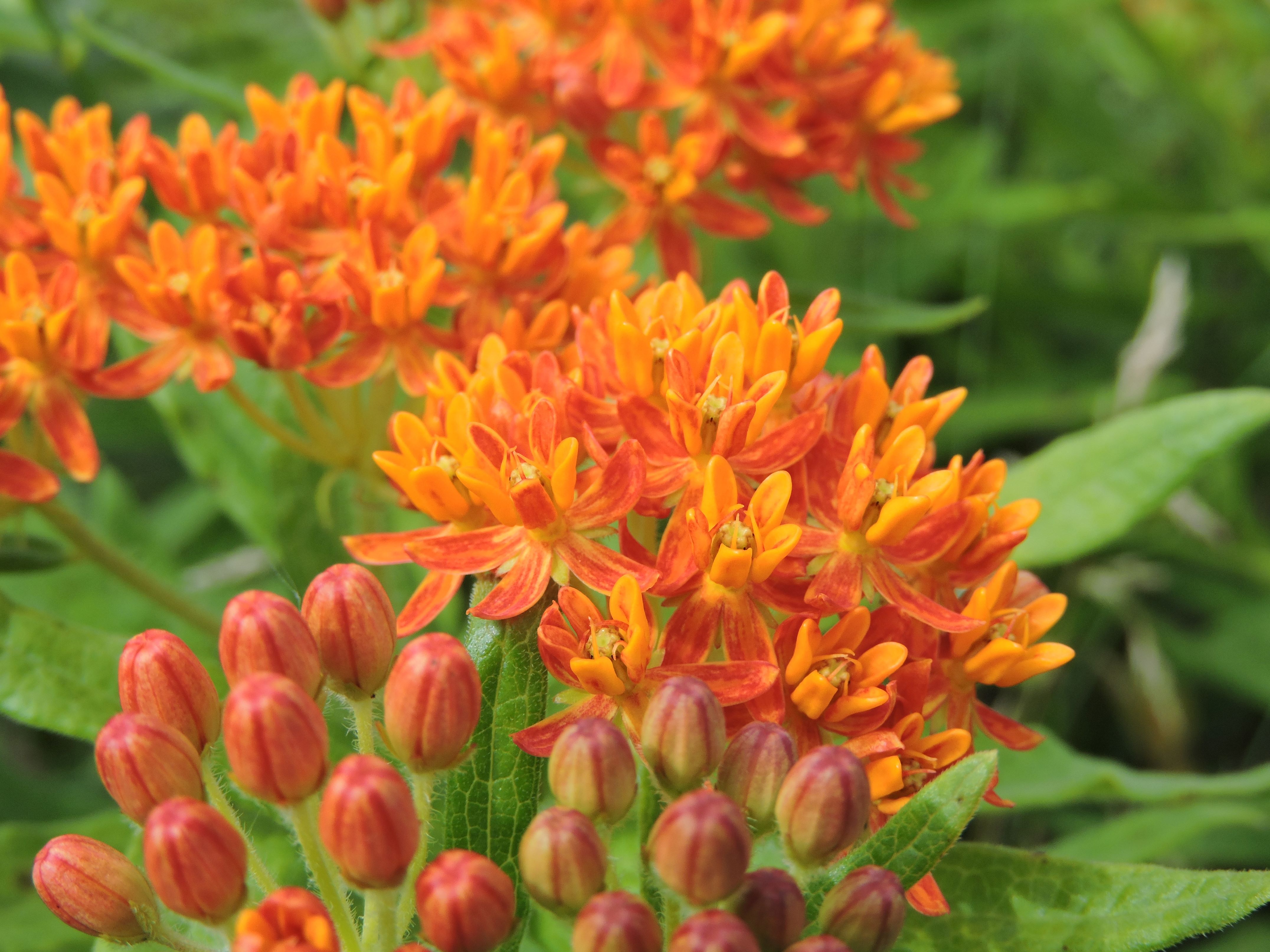
Flower: Orange (sometimes red or yellow) blooms, 5-parted, in flattened clusters of up to 25 flowers on tips of branches.
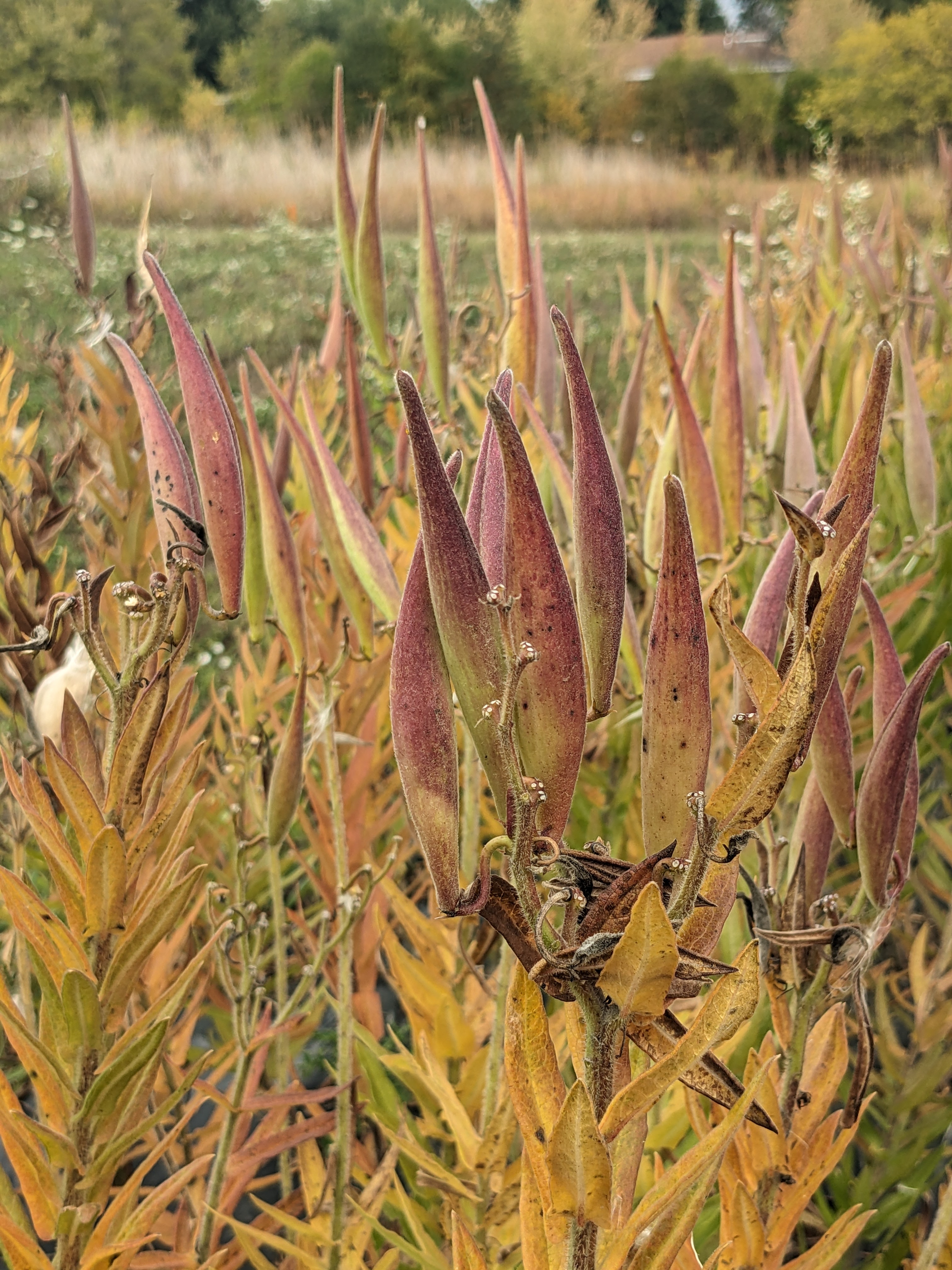
Fruit/seedhead: Seedpods (follicles), 4-6 in long, often in clusters, covered in peachlike fuzz, seeds bear a silky, white “parachute” and are distributed by the wind.
Pollination: Insects, particularly butterflies, bees, and wasps.
- Seed
Seed characteristics
Seed weight:
Seeds per ounce: 4,300 (IA NRCS)
Seeds per pound: 68,000 (IA NRCS)
1000 seed weight: 6.76 g (Seed Information Database)
Description: Seeds are flat and chocolate-brown, about 1/4 in by 3/16 in with a tuft of fine filaments (floss).
Typical seed test
PLS: 93% (n = 12)
Purity: 100% (n = 12)
Germination: 63% (n = 8)
Dormant: 48% (n = 9)
(averages obtained from n tests of purchased seed lots)
- Habitat and range
Habitat: Dry to mesic, well-drained soil; full sun; high quality remnant prairies, savannas, glades, roadsides.
Conservation status: Global- G5, secure; Maine- SX, presumably extirpated; Vermont- SH, possibly extirpated (NatureServe)


General Comments
The bright orange flowers make this a desirable species for horticultural displays as well as prairie reconstructions. This species, like other members of the genus Asclepias, is an important host plant for monarch butterfly caterpillars. Seeds germinate readily in the greenhouse with proper stratification or use of gibberellic acid. Seedlings require care in transplanting because of the taproot structure. Butterfly milkweed does best in very well-drained soils. Requires hand-harvesting as pods ripen.
Recommendations for Seed Production
- Establishment for seed production
Direct seeding
Row spacing: 30-36 in rows
PLS pounds/acre: 8.5 (40 seeds/linear foot)
Seeding depth: 1/4 in
Seeding method: native seed drill
Seeding time: dormant season
Weed control: Prepare clean, firm, weed free seedbed prior to seeding.
Greenhouse
Seed pre-treatment: Wet stratify 8 weeks at 40° F or treat for 24 hours with 250-ppm gibberellic acid.
Sowing: Sow seed in greenhouse two months before last frost free date. Susceptible to damping off in the greenhouse. Use sterile potting mix with added perlite, sanitize planting materials, and provide adequate ventilation. Also vulnerable to greenhouse pests such as thrips and aphids. If possible, empty and sanitize greenhouse between growing seasons to reduce pest pressure.
Transplanting: Plant into bare soil in 36 in rows or weed barrier at 12 in intervals.
- Stand management
Weeds: Mow or cultivate between rows and/or use a weed barrier. Post-emergence grass herbicide, tillage, and/or roguing may be used to control weeds. Always read and follow label instructions.
Pests: Yellow milkweed aphids on upper portions of plant, including pods. Light infestations may be controlled by naturally occurring aphid predators and parasites. Heavy infestations can cause abortion of pods and failure of crop. Monarch larvae eat foliage and pods, but not a serious problem on this milkweed species. Milkweed bug nymphs feed on developing seeds within pods. In small scale plantings, manual removal of clusters of bug nymphs can improve seed quantity and quality.
Diseases: Susceptible to various fungi, bacteria, a phytoplasma, and protozoan pathogens (Borders and Lee-Mäder, 2014).
Hybridization risk: Hybrids have been found between Asclepias tuberosa and some related species in the genus Asclepias, however it appears to be rare.
- Seed production
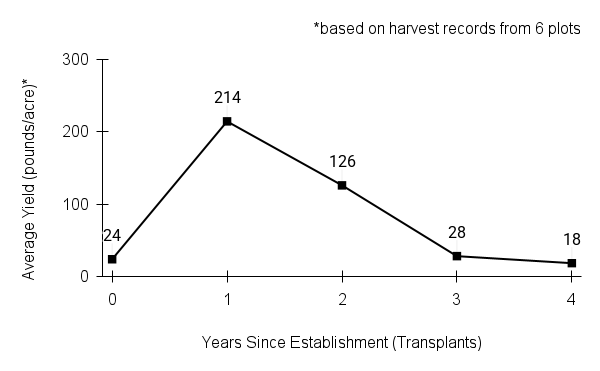 First harvest: Some flowering and minimal seed production is possible in the planting year with greenhouse transplants.
Yield: 18-214 bulk pounds/acre (yields extrapolated based on production from 6 plots)
Stand life: Peak harvests are typically in the second year. Stand persists in well-drained soils if disease free, but seed production may decline significantly in subsequent years. Aeration of the soil may improve stand life and productivity.
Flowering date: mid-June - mid-August in northern Iowa
Seed maturity/Harvest date: mid-August - mid-October in northern Iowa
Seed retention: Seed dispersed by wind soon after pods split open.
Harvest date range at TPC (2003-2023): Aug 10 - Oct 14
Recommended harvest method: For small plots, check daily and hand harvest as pods ripen. Ripe pods usually have a blush of yellow (somewhat like a ripe peach) and split readily with an audible “pop” when gently squeezed at the “seam.” Seeds are mature if they appear chocolate brown. If they’re still creamy white, leave the pod unpicked for another day or two.
- Seed cleaning and storage
Cleaning process: Seeds can be separated from freshly picked pods with a hammer mill, or from dried pods using a debearder. Winnow the debearded material through a coarse screen on a day with a steady, gentle wind or in front of a box fan to reduce the bulk and fluff, then air-screen.
Seed storage: Stores well in refrigerated conditions (32-40° F, 40-60% RH).
Released Germplasm
Source Identified material: Natural Selections/Iowa Ecotype Project Zones 1, 2, and 3; Glacial Lake Albany Germplasm (NY)
Cultivated variety (cultivars): Horticultural varieties may also exist.
- References
Borders, B. & Lee-Mäder, E. (2014). Milkweeds, A Conservation Practitioners Guide. Xerces Society for Invertebrate Conservation. https://www.xerces.org/publications/guidelines/milkweeds-conservation-practitioners-guide
Chayka, K. (n.d.). Asclepias tuberosa (butterfly-weed). Minnesota Wildflowers. https://www.minnesotawildflowers.info/flower/butterfly-weed
Hilty, J. (2019). Butterfly milkweed - Asclepias tuberosa. Illinois Wildflowers. https://www.illinoiswildflowers.info/prairie/plantx/btf_milkweedx.htm
Houseal, G. A. (2007). Forbs wildflowers. In G. A. Houseal (Eds.), Tallgrass Prairie Center’s native seed production manual (pp. 28–29). Tallgrass Prairie Center - University of Northern Iowa.
Kartesz, J.T., The Biota of North America Program (BONAP). 2023. North American Plant Atlas. (http://bonap.net/napa). Chapel Hill, N.C. [maps generated from Kartesz, J.T. 2023. Floristic Synthesis of North America, Version 1.0. Biota of North America Program (BONAP). (in press)]
NatureServe. 2024. NatureServe Network Biodiversity Location Data accessed through NatureServe Explorer [web application]. NatureServe, Arlington, Virginia. Available https://explorer.natureserve.org/. (Accessed: February 29, 2024).
Runkel, S. T., & Roosa, D. M. (2009). Butterfly milkweed. In Wildflowers of the tallgrass prairie: The upper Midwest (2nd ed., pp. 128–129). University of Iowa Press.
USDA NRCS National Plant Data Team. (n.d.). Asclepias tuberosa L.. USDA plants database. https://plants.usda.gov/home/plantProfile?symbol=ASTU
Species Guide Updated 12/2/2024