Canadian anemone
Canadian anemone dickeye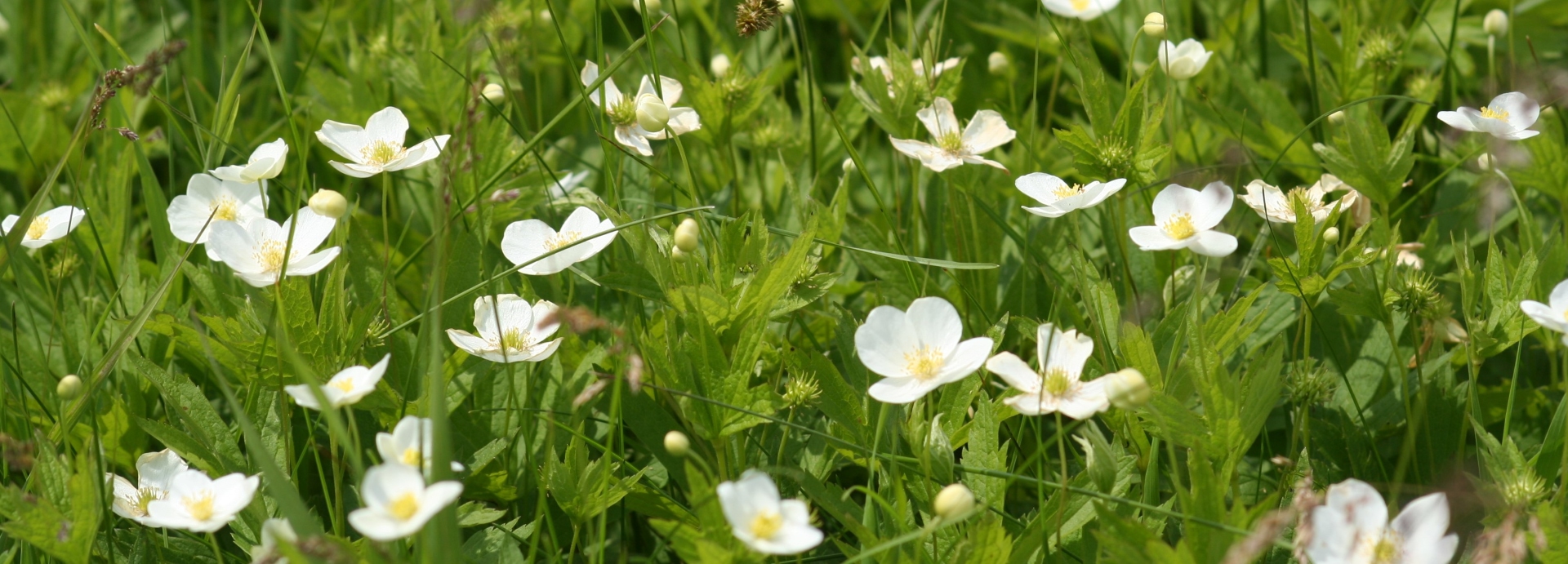
Anemone canadensis L.
Alternate Common Names: meadow anemone, Canada anemone, roundleaf thimbleweed, crowfoot, round-leaved anemone
Scientific Synonyms: Anemonidium canadense (L.) Á. Löve & D. Löve, Anemone dichotoma var. canadensis (L.) C. MacMillan
Family: buttercup family (Ranunculaceae)
Functional Group: forbs (wildflowers)
Description
- Life cycle and growth form
Perennial, rhizomatous, forms colonies.
Height: 1-2 ft
- Leaves and stem
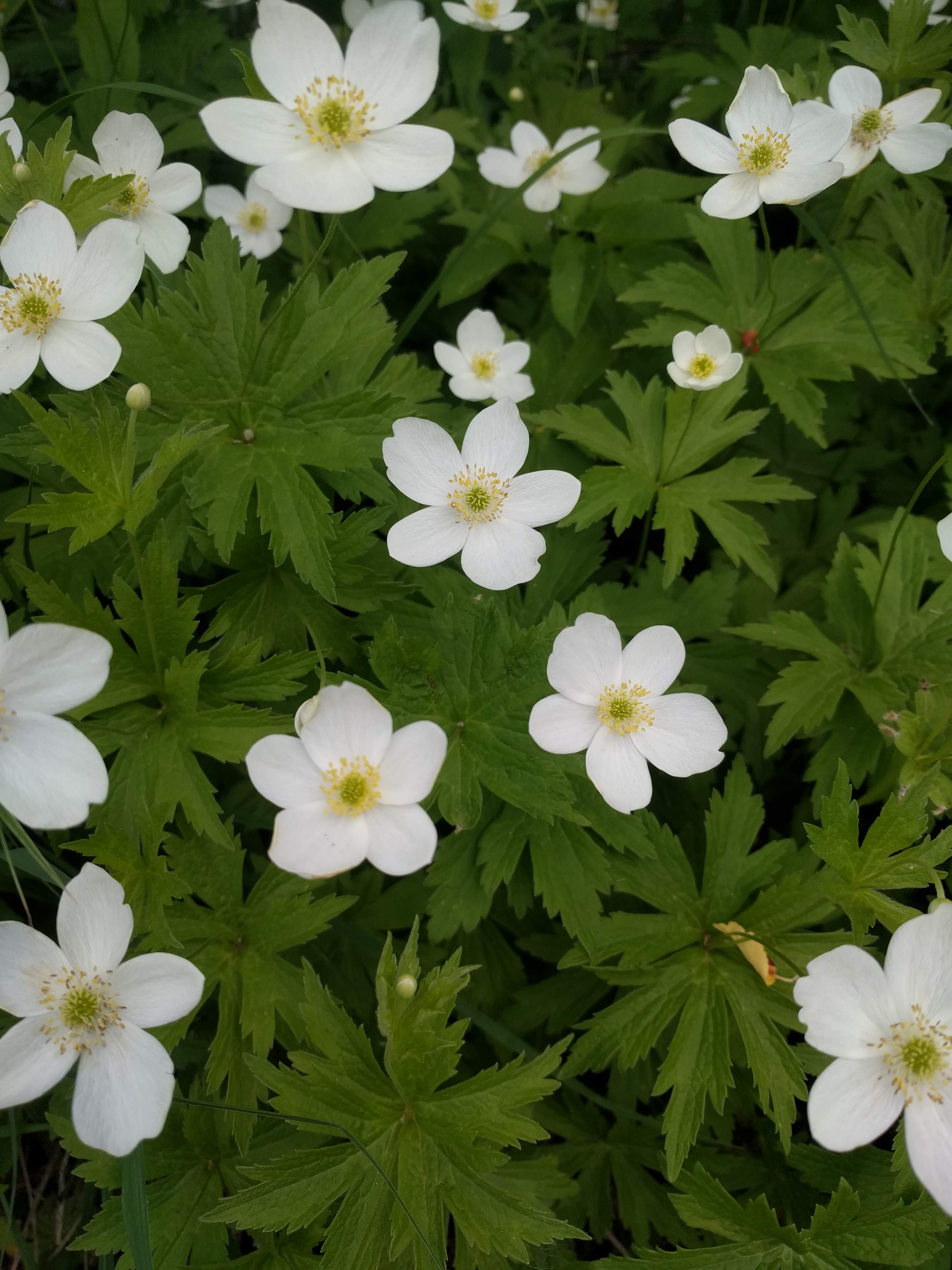
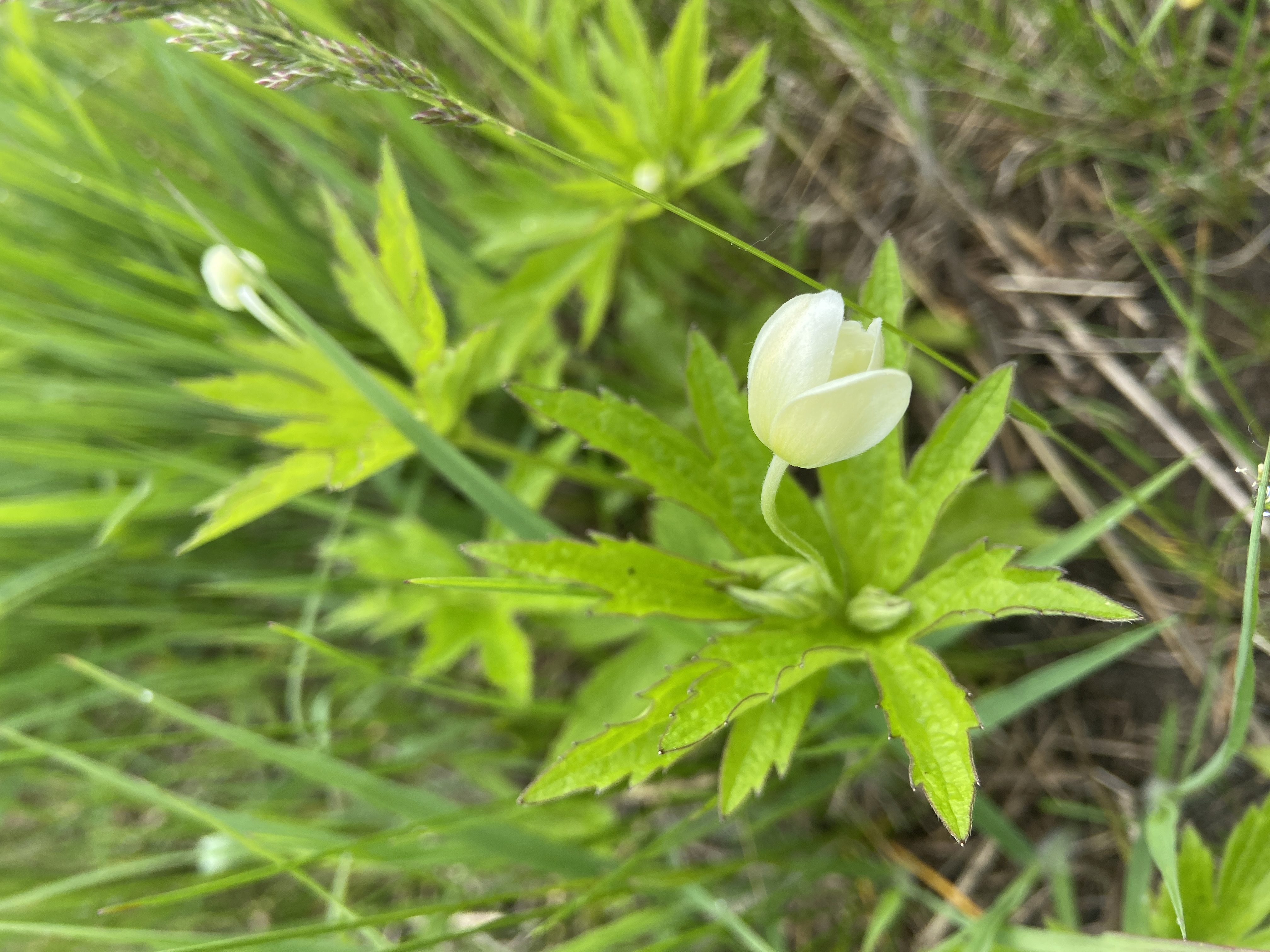
Leaves basal with long (6 in) stalks, roughly round in outline with 3-5 deep lobes, irregularly toothed margins, and flattened hairs; flowering stem is stiff and hairy and bears a whorl of three stalkless leaves.
- Flower, fruit and seedhead
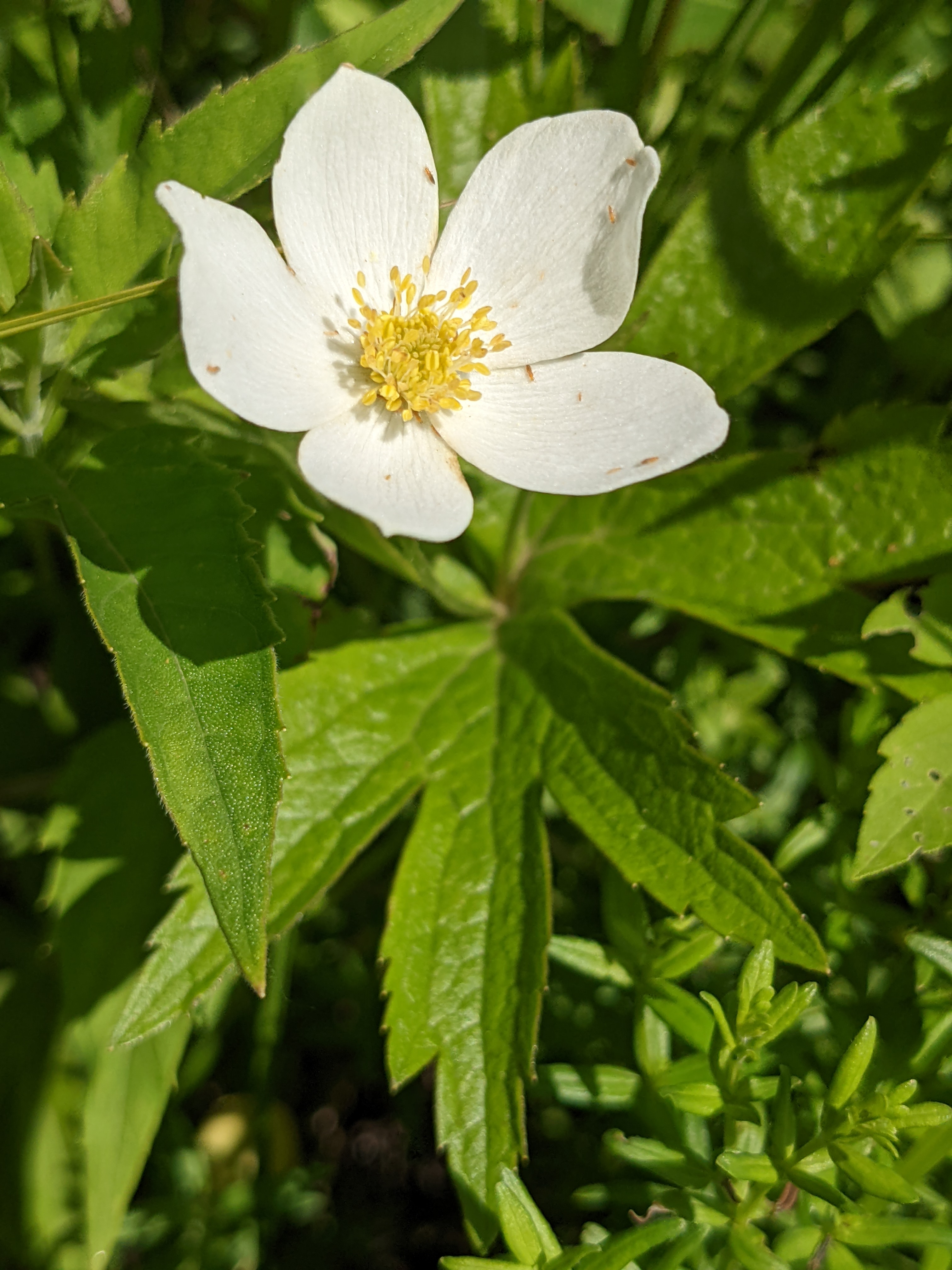
Flower: Large white flowers, 5-parted, with numerous yellow stamens and a green center, up to 1 1/2 in wide, borne singly or in loose clusters of up to 3 flowers at tops of stalks.
Fruit/seedhead: Seed head mace-like, globular, containing numerous beaked achenes, often overtopped by foliage at maturity.
Pollination: Small bees and flies.
- Seed
Seed characteristics
Seed weight:
Seeds per ounce: 8,000 (IA NRCS)
Seeds per pound: 128,000 (IA NRCS)
1000 seed weight: 2.89 g (Seed Information Database)
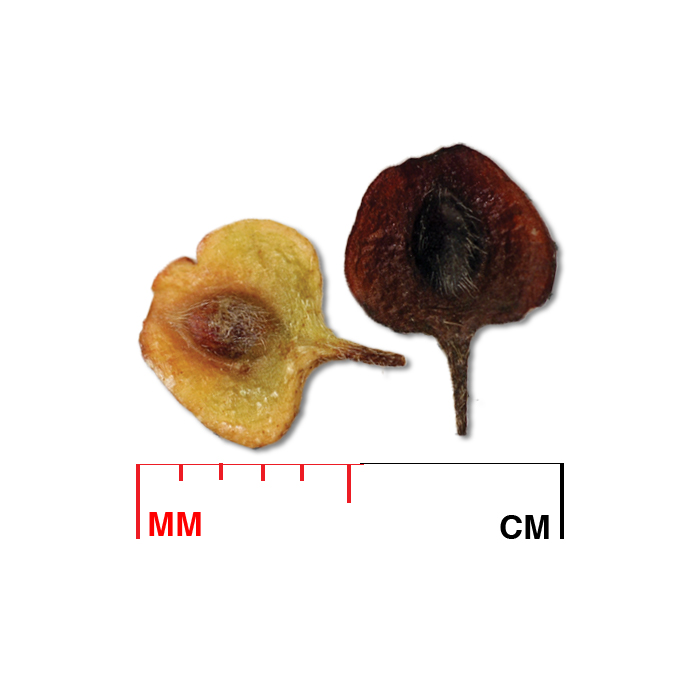
Description: ‘Seeds’ are actually one-seeded flattened fruits (achenes), about 1/8 in diameter, arranged in a ball-shape about 3/8 in diameter.
Typical seed test
PLS: 88% (n = 11)
Purity: 96% (n = 11)
Germination: 2% (n = 6)
Dormant: 91% (n = 6)
(averages obtained from n tests of purchased seed lots)
- Habitat and range
Habitat: Mesic to wet-mesic soil; partial to full sun; moist prairies, sedge meadows, openings in floodplain woodlands, woodland borders, banks of streams, swampy areas; Wetland Indicator Status is Facultative Wetland (FACW) for the Midwest.
Conservation status: Global- G5, secure; Kentucky and Tennessee- SX, presumably extirpated; District of Columbia, Maryland, and Virginia- SH, possibly extirpated; New Jersey and West Virginia- S1, critically imperiled; Connecticut and Wyoming- S2, imperiled; Kansas- S3, vulnerable (NatureServe)

General Comments
Canada anemone blooms early in the growing season, making it an important option for inclusion in pollinator habitat seed mixes. Remnant populations of this species persist along rural roads in Iowa, suggesting that it could be a long-lasting addition to roadside plantings, once established. Its low growth form, adaptability, and spreading habit may also be suitable for novel planting situations such as beneath solar panels. This species is challenging to propagate from seed because of its deep dormancy and difficulties with germination, but once established it tends to spread prolifically and is relatively easy to manage, harvest, and clean. Canada anemone may also be propagated by division of the rhizomes, but more than one genetic clone is needed for seed production.
Recommendations for Seed Production
- Establishment for seed production
Direct seeding
Row spacing: 30-36 in rows
Seeding rate: 4.5 PLS pounds/acre (40 seeds/linear foot)
Seeding method: Native seed drill.
Seeding time: Dormant season
Weed control: Prepare clean, firm, weed free seedbed prior to seeding.
Greenhouse
Seed pre-treatment: Moist stratify 12 weeks at 40° F, or alternatively in ambient winter conditions (unheated building).
Sowing: Sow seed in greenhouse two months before last frost free date. Typically this species exhibits very high dormancy (low germination) and may require two winter cycles to germinate.
Transplanting: Transplant into bare soil in rows or weed barrier at 8 in intervals after all danger of frost is past. Once plants are established they spread prolifically by rhizomes, so the weed barrier will need to be removed or slit open to accommodate growth and enhance seed production.
- Stand management
Weeds: Post-emergent grass herbicide, tillage, hand roguing. Weed control is critical to successful establishment and seed production of this species. Read and follow label instructions.
Pests: Blister beetles may forage voraciously on foliage.
Diseases: None noted.
- Seed production
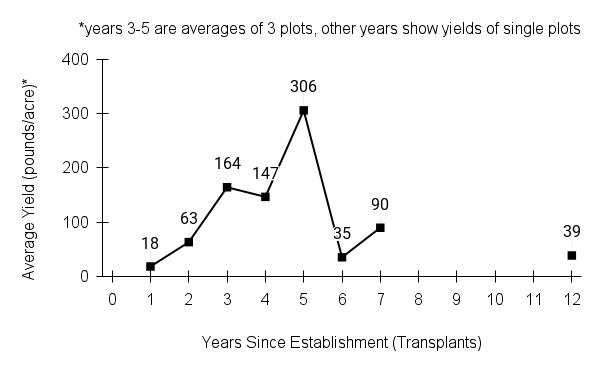
First harvest: Some flowering and seed set at the end of first growing season from greenhouse grown transplants. Direct seeded stands may take 3 years to become productive.
Yield: 18-306 pounds/acre (yields extrapolated based on production from 3 plots)
Stand life: Peak harvests occurred in the years 3-5 after transplanting. Stands at TPC have persisted for 20 years without management, but harvests made from one plot in years 7 and 12 were much smaller than peak yields.
Flowering date: mid-May - late June.
Seed maturity/Harvest date: mid - late July
Seed retention: Shattering occurs soon after (and perhaps before) seed maturity.
Harvest date range at TPC (2003-2015): July 15 - July 29
Recommended harvest method: Combine near maturity, but before seed head breaks apart.
- Seed cleaning and storage
Cleaning process: Pre-clean air-dried material by scalping thru 1/2 in and 1/4 in mesh to remove large particles. Air-screen to clean.
Seed storage: Stores well in refrigerated conditions (32-40° F, 40-60% RH).
Released Germplasm
Source Identified material: Natural Selections/Iowa Ecotype Zones 1, 2, 3
- References
Chayka, K. (n.d.). Anemone canadensis (Canada anemone). Minnesota Wildflowers. https://www.minnesotawildflowers.info/flower/canada-anemone
Dutton, B. E., Keener, C. S., & Ford, B. A. (2020, November 5). Anemone canadensis Linnaeus. Flora of North America. https://floranorthamerica.org/Anemone_canadensis
Hilty, J. (2019). Meadow anemone - Anemone canadensis. Illinois Wildflowers. https://www.illinoiswildflowers.info/prairie/plantx/mdw_anemone.html
Houseal, G. A. (2007). Forbs wildflowers. In G. A. Houseal (Eds.), Tallgrass Prairie Center’s native seed production manual (pp. 26–27). Tallgrass Prairie Center - University of Northern Iowa.
Kartesz, J.T., The Biota of North America Program (BONAP). 2023. North American Plant Atlas. (http://bonap.net/napa). Chapel Hill, N.C. [maps generated from Kartesz, J.T. 2023. Floristic Synthesis of North America, Version 1.0. Biota of North America Program (BONAP). (in press)]
NatureServe. 2024. NatureServe Network Biodiversity Location Data accessed through NatureServe Explorer [web application]. NatureServe, Arlington, Virginia. Available https://explorer.natureserve.org/. (Accessed: February 29, 2024).
Runkel, S. T., & Roosa, D. M. (2009). Canada anemone. In Wildflowers of the tallgrass prairie: The upper Midwest (2nd ed., pp. 54–55). University of Iowa Press.
Society for Ecological Restoration, International Network for Seed Based Restoration and Royal Botanic Gardens Kew. (2023) Seed Information Database (SID). Available from: https://ser-sid.org/ (February 2023)
USDA NRCS National Plant Data Team. (n.d.). Anemone canadensis L.. USDA plants database. https://plants.usda.gov/home/plantProfile?symbol=ANCA8
Species Guide Updated 12/1/2025